Your shopping cart is empty!
Welcome visitor you can login or create an account.
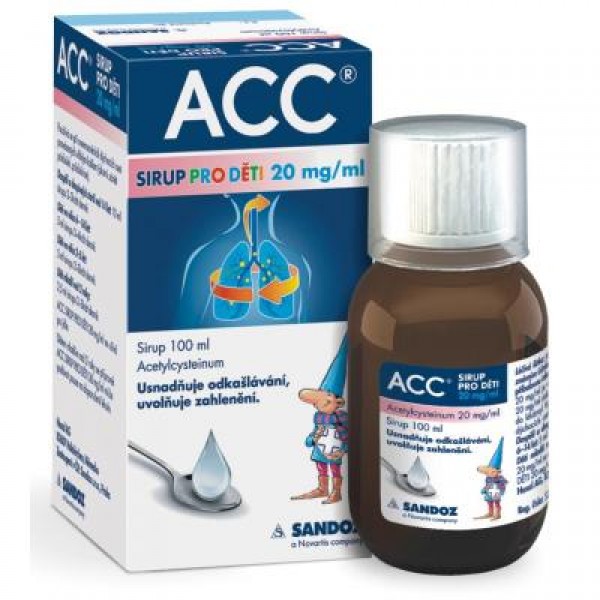
ACC Syrup 20 mg / ml. 200ml.
Product viewed: 8170


What is ACC syrup is and what it is used
ACC syrup is a medicine that liquefies thick and viscous mucus in the airways.
ACC syrup is used to liquefy secretions and facilitating expectoration in cases of respiratory diseases with thick, viscous mucus.
2. What you need to know before taking ACC Syrup
Do not take ACC syrup if you are allergic to acetyl cysteine, methyl parahydroxybenzoate or any of the other ingredients this medicine (listed in section 6).
Do not take ACC syrup if you suffer from peptic ulcer, especially if your condition is exacerbated.
Warnings and Precautions
The use of ACC syrup, especially at the beginning of the treatment, can lead to liquefaction of mucus secretions from the bronchi and increase of its amount. This could cause moisture and increased cough, leading to increased coughing. If you are catchy / and in expectoration and hard to rid of mucus must take appropriate additional measures (such as drainage or aspiration).
The emergence of severe skin reactions such as Stevens-Johnson syndrome and Lyell been reported very rarely in association with the use of acetyl cysteine. If there are changes in the skin and mucous membranes should immediately seek medical advice and the use of acetyl cysteine be terminated.
Caution if you suffer from bronchial asthma, you have had gastrointestinal problems in history or currently suffer from this disease.
Caution in patients with intolerance to histamine. Long-term therapy should be avoided in these patients, since ACC syrup influence the histamine metabolism and can cause symptoms of intolerance (ie. Headache, fever, itching).
Children under 2 years
There are other drugs with acetyl cysteine, which can be applied in this age group.
Other medicines and ACC Syrup
Tell your doctor or pharmacist if you are taking, you have recently taken or might take any other medicines.
Antitusovi (medicines, cough suppressants)
The combined use of ACC syrup antitusovi products can cause dangerous accumulation of mucus due to reduced cough reflex therefore require particularly careful diagnosis of this combination therapy. You should ask your doctor before using this combination.
antibiotics
Studies provide evidence of reduced effect of antibiotics (tetracyclines, aminoglycosides, penicillins) for acetyl cysteine. For safety reasons, antibiotics must be administered separately at intervals of at least 2 hours. This does not apply to drugs active substance cefixime and lorakarbef. They may be administered with acetyl cysteine at the same time.
Pregnancy, lactation and fertility
If you are pregnant or breast-feeding, you think you may be pregnant or planning to become pregnant, ask your doctor or pharmacist before taking this medicine.
pregnancy
Since there is no sufficient experience regarding the use of acetyl cysteine in pregnant women should use ACC syrup during pregnancy only if your doctor considers it absolutely necessary.
breastfeeding
No information is available regarding the release of acetyl cysteine in human milk. Therefore, you should use ACC syrup during breastfeeding if your doctor considers it absolutely necessary.
Ask your doctor or pharmacist before taking any medicine.
Driving and using machines
No special precautions.
Important information about some of the ingredients of ATSTS Syrup
1 ml oral solution contains 1,78 mmol (41,02 mg) of sodium. This should be considered in patients on a diet with a controlled intake of sodium.
3. How to take ACC Syrup
Always take this medicine exactly as you have been told by your doctor or pharmacist. If you're not sure, ask your doctor or pharmacist.
The recommended dose is:
Age Total Daily Dose
Children aged 2-5 years 5 ml 2-3 times a day (corresponding to 200-300 mg acetyl cysteine)
Children and adolescents aged 6-14 years 10 ml twice daily (corresponding to 400 mg acetyl cysteine)
Adults and adolescents aged 14 years 10 ml 2-3 times a day (corresponding to 400-600 mg acetyl cysteine)
10 ml oral solution corresponds to half a measuring cup or 2 filled syringes.
Directions
Take ACC syrup after meals.
ACC Syrup is taken with a syringe oral products or measuring cup, located in the package.
Dosing syringe:
Open the child-proof cap by pushing it down and turning it to the left.
Click supplied perforated stopper in the bottle neck. If it is not possible to press the stopper inside, sealing cap can be put on it and rotate. The plug connects to the syringe cylinder and remain in the bottle neck.
Firmly press the syringe into the hole in the stopper. The plunger must enter into the syringe end.
Carefully invert the bottle and syringe upside down, pull the plunger down to the prescribed number of milliliters (ml). If you see bubbles in syrup, push the plunger in the syringe and refill slowly. If you are prescribed more than 5 ml, the syringe must be filled several times.
Stand the bottle with a syringe and then pull the syringe from the perforated stopper.
The syrup may be applied directly from the syringe into the mouth of the child or to be placed in a spoon before administration. The child must sit upright when taking the syrup directly into his mouth. Best syringe is emptied slowly to the inside of the cheek, so the child can not swallow wrong.
Clean the syringe after use by repeatedly filling and emptying with clean water.
Duration of use
If your symptoms worsen or do not improve after 4-5 days, you should consult a doctor.
If you think the effect of ACC syrup is too strong or too weak, talk to your doctor or pharmacist.
If you take more than the amount ACC Syrup
In case of overdose can occur irritation of the gastrointestinal tract (eg. Abdominal pain, nausea, vomiting, diarrhea).
However, so far, there were no serious adverse effects or symptoms of toxicity, even in the case of a large overdose. If you suspect an overdose of ACC syrup, tell your doctor.
If you forget to take ACC Syrup
If you miss a dose of ACC syrup or you take too little, continue to take ATSTS syrup next time, as described in the instructions for admission.
If you have any further questions on the use of this product, ask your doctor or pharmacist.
4. Possible side effects
Like all medicines, ACC syrup can cause side effects, although not everybody gets them.
Assessment of adverse reactions is based on the following information on frequency:
Very common: may affect more than 1 in 10 patients
Common: may affect up to 1 in 10 patients
Uncommon: may affect up to 1 in 100 patients
Rare: may affect up to 1 in 1000 patients
Very rare: may affect up to 1 in 10 000 patients treated
Not known: from the available data can not be estimated
Immune System Disorders
Uncommon: hypersensitivity reactions
Very rare: anaphylaxis, anaphylactic / anaphylactoid reactions
Nervous system disorders
Uncommon: headache
General disorders and conditions of the application site
Uncommon: fever, allergic reactions
Not known: swollen face
Ear and labyrinth disorders (organ of equilibrium)
Uncommon: tinnitus
cardiac disorders
Uncommon: tachycardia (heart palpitations and increased heart rate)
vascular disorders
Uncommon: hypotension (drop in blood pressure)
Very rare: bleeding
Respiratory, thoracic and mediastinal disorders
Rare: dyspnea, bronchospasm - mainly in patients with bronchial hyper-reactive system in the presence of bronchial asthma, characterized by a sense of suffocation
Gastrointestinal disorders
Uncommon: stomatitis, abdominal pain, nausea, vomiting and diarrhea
Rare: dyspepsia (indigestion)
Skin and subcutaneous tissue disorders
Uncommon: urticaria (hives), rash, angioedema (swelling of the face and neck), itching, exanthema (skin rash).
The appearance of bleeding in connection with the implementation of acetyl cysteine is rarely reported, partly in connection with hypersensitivity reactions.
Methyl parahydroxybenzoate can cause hypersensitivity, even delayed reactions.
Precautions
5. How to store ACC Syrup
Keep out of reach of children.
Do not use after the expiry date stated on the carton and label after "EXP / EXP." The expiry date refers to the last day of that month.
Storage conditions
This medicine does not require any special storage conditions.
Note the shelf life after opening
After first opening ACC syrup is stable up to 18 days at temperatures below 25 ° C.
6. Contents of the pack and other information
What ACC Syrup
The active substance is acetyl cysteine.
1 ml of oral solution contains 20 mg acetyl cysteine.
Other ingredients are: carmellose sodium, methyl parahydroxybenzoate (E 218), sodium benzoate (E 211), sodium edetate (Ph.Eur.), Sodium hydroxide 10% solution, sodium saccharin, purified water, cherry flavor.
ACC syrup looks like and contents of the pack:
ACC syrup is a clear, slightly viscous oral solution.
ACC syrup comes in a brown glass bottle type III (100 ml, 200 ml) with white cap PP
(Tamper proof) and graduated measuring cup or measuring syringe (2,5 ml - 15 ml) of the PP.
Not all pack sizes may be marketed.
Write a review
Your Name:Your Review: Note: HTML is not translated!
Rating: Bad Good
Enter the code in the box below:
Related Products