
Your shopping cart is empty!
Welcome visitor you can login or create an account.
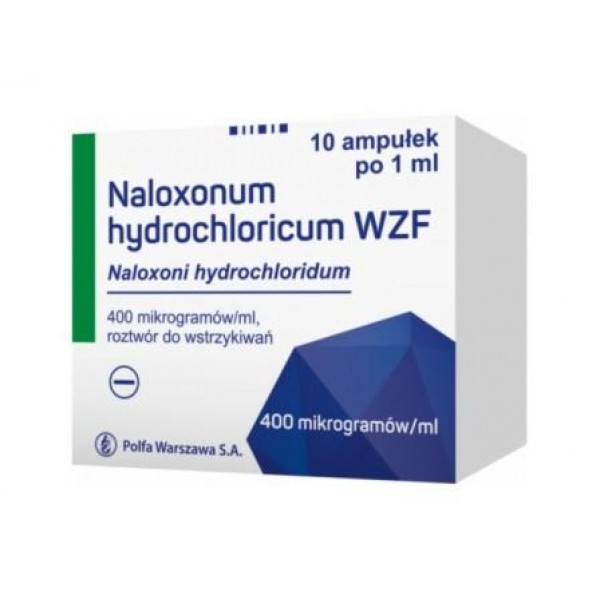
Naloxon WZF 0.4 mg / ml. 10 ampules
Product Code: Naloxon WZF 0.4 mg / ml. 10 ampules
Availability: In Stock
Product viewed: 207


What Naloxone WZF is and what it is used for
Naloxone WZF is a potent antagonist of opioid narcotics.
The product is used for:
• Opioid intoxication.
• Exit from general anesthesia induced with opioids (after general anesthesia with narcotic analgesics).
• Depressing the respiratory center in newborns, as a result of the administration of narcotic analgesics to the mother during childbirth.
• Differential diagnosis of opioid intoxication.
2. What you need to know before you take Naloxone WZF
Do not use Naloxone WZF if:
• you are allergic to naloxone hydrochloride or any of the other ingredients of this medicine (listed in section 6).
Warnings and precautions
Talk to your doctor before taking Naloxone WZF if:
patients with opioid dependence or patients who have received high doses of opioids, or those with physical dependence on opioids, as well as newborns of mothers with a history of opioid dependence. In these cases, sudden, competitive withdrawal from the narcotic effect can cause an acute withdrawal syndrome;
treatment of respiratory depression requiring buprenorphine, the response to Naloxone WZF may be incomplete. In such cases, artificial ventilation should be used;
patients with heart disease (eg heart rhythm disorders, high blood pressure);
patients with renal failure or liver disease.
It is necessary to ensure the possibility to perform oxygen therapy and resuscitation actions, as well as to ensure access to equipment allowing cardiopulmonary resuscitation.
Because the duration of action of Naloxone WZF is shorter than that of opioids, there is a risk of respiratory depression.
A sudden reversal in opioid activity after surgery can cause nausea, vomiting, sweating, tremors, changes in heart rate (fast or slow), increased blood pressure, and other symptoms.
Other drugs and Naloxone WZF
Talk to your doctor if you are taking, have recently taken or might take any other medicines.
Some drugs can interact with Naloxone WZF, significantly changing their effect. In particular, inform your doctor if you are taking:
strong pain relievers such as buprenorphine and pentazocine;
hypnotics;
drugs that may affect the heart or circulation (eg, antihypertensive drugs, cocaine, methamphetamine, cyclic antidepressants, calcium channel blockers, beta-blockers, digoxin, and clonidine).
Pregnancy, lactation and fertility
If you are pregnant or breast-feeding, suspect you may be pregnant or plan to become pregnant, consult your doctor before taking this medicine.
The potential risk to humans is unknown.
Naloxone WZF should not be used in pregnant women unless clearly necessary.
Naloxone WZF may be administered during the second stage of labor to prevent depression of the respiratory center secondary to opioids administered during obstetric anesthesia.
Administration of Naloxone WZF in nursing women should be done with caution. Breastfeeding should be avoided for 24 hours after using the medicine.
Driving and using machines
Patients treated with naloxone hydrochloride to stop the action of opioids should be warned that for at least 24 hours after administration they should not participate in road traffic, operate machinery and undertake other activities requiring physical and mental stress, as as opioid action may recur.
Naloxone WZF contains sodium
This medicine contains 3.36 mg sodium (the main ingredient of table/table salt) in each 1 ml solution/ampoule. This amount is equivalent to 0.17% of the recommended maximum daily intake of sodium for an adult.
This medicine contains 84 mg of sodium (the main ingredient of common/table salt) for the maximum daily dose of 10 mg of naloxone hydrochloride (25 ml). This amount is equivalent to 4.2% of the recommended maximum daily intake of sodium for an adult.
This medication may be diluted prior to administration in 0.9% sodium chloride. When the solvent contains sodium, it must be taken into account when calculating the total sodium content of the finished solution. For more detailed information on the sodium content of the solvent, refer to the product information provided by the solvent manufacturer.
This should be considered in patients on a sodium controlled diet.
3. How to take Naloxone WZF
Naloxone WZF is always administered by a doctor or nurse.
Naloxone WZF can be injected intravenously, intramuscularly, or subcutaneously. It can also be given through a system into a vein.
The dose and method of administration of Naloxone WZF is determined by a doctor.
If you take more Naloxone WZF than prescribed
It is unlikely that you will take more as the medicine is administered by a doctor or nurse. If you have any doubts about
4. Possible side effects
Like all medicines, Naloxone WZF can cause side effects, although not everybody gets them.
All medicines can cause allergic reactions, but serious allergic reactions are rare. Any unexpected wheezing, difficulty breathing, swelling of the eyelids, face or lips, or itching (especially if the whole body is affected) should be reported to the doctor immediately.
Other side effects that may occur are:
Very common (may affect more than 1 in 10 users):
Malaise (fatigue).
Common (may affect up to 1 in 10 users):
dizziness;
headache;
rapid heartbeat;
increased or decreased blood pressure;
vomiting;
pain after surgery.
If too high a dose is given after surgery, you may feel agitated and in pain (as it counteracts both the pain-relieving effect of the medicines you take and their effect on breathing).
Uncommon (may affect up to 1 in 100 users):
sweating;
change in heart function;
decreased heart rate;
rapid breathing (hyperventilation);
diarrhea;
dry mouth;
there are reports of inflammation of the vein walls after intravenous administration;
there have been reports of injection site inflammation, burning, and redness after intramuscular administration.
Rare (may affect less than 1 in 1,000 users):
seizures;
tension.
Very rare (may affect up to 1 in 10,000 users):
severe heart problems (fibrillations and cardiac arrest);
fluid in the lungs;
skin discoloration and lesions;
allergic reactions
5. How to store Naloxone WZF
Store at temperatures below 25°C. Keep the ampoules in the carton in order to protect from light.
Keep out of the reach of children.
Do not use Naloxone W2F after the expiry date stated on the package. The expiration date refers to the last day of the specified month.
Do not dispose of medicines down the drain or in the household waste container. Ask your pharmacist how to dispose of your unwanted medicines. These measures will help protect the environment.
6. Contents of the package and additional information
What Naloxone WZF contains
The active substance is naloxone hydrochloride. Each milliliter of the solution for injection contains 0.4 mg (400 micrograms) naloxone hydrochloride.
Other ingredients (excipients) are: sodium chloride, hydrochloric acid, water for injections.
What Naloxone WZF looks like and contents of the pack
Naloxone WZF is a colorless, clear liquid.
The package contains 10 ampoules of 1 ml in a cardboard box
Write a review
Your Name:Your Review: Note: HTML is not translated!
Rating: Bad Good
Enter the code in the box below: