Your shopping cart is empty!
Welcome visitor you can login or create an account.
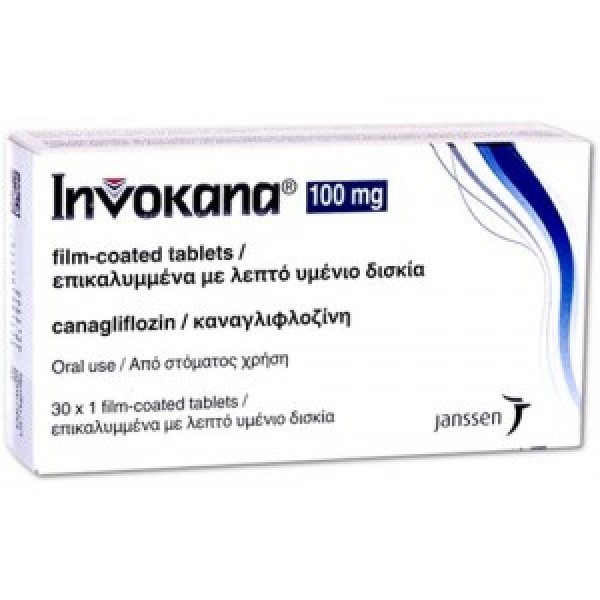
Invokana 100 mg. 30 tablets
Product Code: Invokana 100 mg. 30 tablets
Availability: In Stock
Product viewed: 135


1. What Invokana is and what it is used for
Invokana contains the active substance canagliflozin, which belongs to a group of medicines that lower blood sugar.
Medicines that lower blood sugar are used to treat type 2 diabetes in adults.
This medicine works by increasing the amount of sugar your body passes out of your body in the urine. This reduces the amount of sugar in your blood.
Invokana can be used alone or in combination with other medicines to treat type 2 diabetes (such as metformin, insulin, a dipeptidyl peptidase-4 (DPP-4) inhibitor [such as sitagliptin, saxagliptin or linagliptin], a sulphonylurea [such as glimepiride or glipizide] or pioglitazone). You may already be taking one or more of these medicines to treat your type 2 diabetes.
It is important to continue to follow the advice of your doctor or nurse about your diet and physical activity.
What is type 2 diabetes?
Type 2 diabetes is a disease in which your body does not produce enough insulin or the insulin that your body produces does not work well enough. Your body may also produce too much sugar. This causes sugar (glucose) to build up in your blood. This can lead to serious conditions such as heart disease, kidney failure, blindness and amputation.
2. What you need to know before you take Invokana
Do not take Invokana:
if you are allergic to canagliflozin or any of the other ingredients of this medicine (listed in section 6).
Warnings and precautions
Talk to your doctor, pharmacist or nurse before taking this medicine and during treatment:
about what to do to prevent dehydration.
if you have type 1 diabetes (your body does not produce any insulin). Invokana should not be used to treat this condition.
if you experience rapid weight loss, nausea or vomiting, stomach pain, excessive thirst, rapid and deep breathing, confusion, unusual sleepiness or tiredness, a sweet smell to your breath, a sweet or metallic taste in your mouth, or a change in the smell of your urine or sweat, contact a doctor or the nearest hospital straight away. These symptoms may be signs of “diabetic ketoacidosis” – a rare but serious, sometimes life-threatening complication that can develop in people with diabetes due to increased levels of “ketone bodies” in the urine or blood, which can be detected by laboratory tests. The risk of developing diabetic ketoacidosis may be increased by prolonged fasting, excessive alcohol consumption, dehydration, a sudden reduction in your insulin dose, or an increased need for insulin due to major surgery or a serious illness.
if you have diabetic ketoacidosis (a complication of diabetes characterised by high blood sugar, rapid weight loss, nausea or vomiting). Invokana should not be used to treat this condition.
if you have serious kidney problems or are on dialysis.
if you have serious liver problems.
if you have ever had serious heart disease or if you have had a stroke.
if you are taking medicines to lower blood pressure (antihypertensives) or have ever had low blood pressure (hypotension). Further information is provided below under “Other medicines and Invokana”.
It is important to examine your feet regularly and follow any other advice about foot care and adequate hydration given by your healthcare professional. You should tell your doctor immediately if you notice any sores or discoloration, or if you experience increased sensitivity or pain in your feet. Some studies suggest that taking canagliflozin may contribute to the risk of lower limb amputation (mainly toe amputations).
If any of the above apply to you (or you are not sure), talk to your doctor, pharmacist or nurse before taking this medicine.
Kidney function
Your kidney function will be checked with a blood test before you start and while you are taking this medicine.
Glucose in your urine
Because of the way this medicine works, your urine will test positive for sugar (glucose) while you are taking it.
Children and adolescents
Invokana is not recommended for children and adolescents under 18 years of age.
Other medicines and Invokana
Tell your doctor or pharmacist if you are taking, have recently taken or might take any other medicines. This is because this medicine can affect the way other medicines work. Also, some medicines can affect the way this medicine works.
In particular, tell your doctor if you are taking any of the following medicines:
other antidiabetic medicines - insulin or a sulphonylurea (such as glimepiride or glipizide) - your doctor may reduce your dose,
your blood sugar level becomes too low (hypoglycaemia);
medicines to lower blood pressure (antihypertensives), including diuretics (medicines used to remove excess water from the body, also known as water tablets), as this medicine may also lower your blood pressure by removing excess water from the body. Possible signs of excessive fluid loss from the body are described below in section 4 “Possible side effects”;
St. John’s wort (a herbal medicine used to treat depression);
carbamazepine, phenytoin or phenobarbital (medicines to control seizures);
efavirenz or ritonavir (medicines to treat HIV infections);
rifampicin (an antibiotic used to treat tuberculosis);
cholestyramine (a medicine to lower blood cholesterol levels). See section 3 “How to take Invokana”;
digoxin or digitoxin (medicines to treat certain heart conditions). Your blood levels of digoxin or digitoxin may need to be measured if you take them with Invokana;
dabigatran (a blood thinner that reduces the risk of blood clots).
Pregnancy and breast-feeding
If you are pregnant or breast-feeding, think you may be pregnant or are planning to have a baby, ask your doctor or pharmacist for advice before or during use of this medicine. Invokana should not be used during pregnancy. Ask your doctor about the best way to stop taking Invokana and monitor your blood sugar as soon as you know you are pregnant.
Do not use this medicine if you are breast-feeding. Ask your doctor whether to stop taking this medicine or stop breast-feeding.
Driving and using machines
Invokana has no or negligible influence on your ability to drive, cycle or use any tools or machines. However, there is evidence of dizziness or lightheadedness which may affect your ability to drive, cycle or use any tools or machines. machines.
Taking Invokana with other medicines to treat diabetes called sulphonylureas (such as glimepiride and glipizide) or with insulin may increase the risk of too low blood sugar (hypoglycaemia). Symptoms include blurred vision, tingling lips, tremors, sweating, paleness, mood swings, feeling restless or confused. This may affect your ability to drive, cycle or use tools or machines. Tell your doctor straight away if you have any signs of low blood sugar.
Invokana contains lactose
If your doctor has told you that you have an intolerance to some sugars, contact your doctor before taking this medicine.
3. How to take Invokana
Always take this medicine exactly as your doctor or pharmacist has told you. If you are not sure, ask your doctor or pharmacist.
How much to take
The recommended starting dose of Invokana is one 100 mg tablet daily. Your doctor will decide whether to increase your dose to 300 mg.
Your doctor may limit your dose to 100 mg if you have kidney problems.
Your doctor will prescribe the right dose for you.
Taking this medicine
Swallow the tablet whole, with half a glass of water.
You can take the tablet with or without food. It is best to take the tablet before the first meal of the day.
Try to take it at the same time each day. This will remind you to take it.
If your doctor has prescribed canagliflozin together with a bile acid sequestrant such as cholestyramine (a medicine to lower cholesterol), you should take canagliflozin at least 1 hour before or 4 to 6 hours after taking the bile acid sequestrant.
Your doctor may prescribe Invokana together with another blood sugar-lowering medicine. Remember to take all medicines exactly as your doctor has told you to get the best results for your health.
Diet and exercise
To control your diabetes, you should also follow the advice of your doctor, pharmacist or nurse about diet and exercise. In particular, if you are on a diabetic diet for weight control, continue to follow it while taking this medicine.
If you take more than you should
If you take more than the dose of this medicine you should, tell your doctor immediately.
If you forget to take Invokana
If you forget to take a dose, take it as soon as you remember. However, if it is almost time for your next dose, do not take the missed dose.
Do not take a double dose (two doses on the same day) to make up for a forgotten dose.
If you stop taking Invokana
If you stop taking this medicine, your blood sugar may increase. Do not stop taking this medicine without first talking to your doctor.
s with your doctor.
If you have any further questions on the use of this medicine, ask your doctor, pharmacist or nurse.
4. Possible side effects
Like all medicines, this medicine can cause side effects, although not everybody gets them.
Stop taking Invokana and see a doctor as soon as possible if you have any of the following serious side effects:
Dehydration (uncommon, may affect up to 1 in 100 people):
excessive loss of fluids (dehydration). This is more common in the elderly (aged 75 and over), people with kidney problems and people taking water tablets (diuretics).
Possible signs of dehydration are:
feeling dizzy and light-headed;
loss of consciousness (fainting), feeling light-headed or weak when standing up;
severe dry or sticky mouth, extreme thirst;
severe weakness or fatigue;
passing little or no urine;
rapid heartbeat.
This can happen regardless of your blood sugar level. Your doctor may decide to temporarily or permanently stop your treatment with Invokana.
Contact a doctor or the nearest hospital straight away if you experience any of the following side effects:
Diabetic ketoacidosis (rare, may affect up to 1 in 1,000 people):
These are the signs of diabetic ketoacidosis (see also section 2 “Warnings and precautions”):
increased levels of “ketone bodies” in your urine or blood;
rapid weight loss;
feeling sick (nausea) or being sick (vomiting);
stomach pain;
excessive thirst;
fast and deep breathing;
confusion;
unusual sleepiness or tiredness;
a sweet smell to your breath, a sweet or metallic taste in your mouth, or an unusual smell to your urine or sweat.
This can happen regardless of your blood sugar level. Your doctor may decide to temporarily or permanently stop your treatment with Invokana.
Tell your doctor as soon as possible if you notice any of the following side effects:
Hypoglycaemia (very common, may affect more than 1 in 10 people):
low blood sugar (hypoglycaemia) - when taking this medicine with insulin or a sulphonylurea (such as glimepiride or glipizide).
Possible signs of low blood sugar are:
blurred vision;
tingling lips;
trembling, sweating, paleness;
mood swings or feeling anxious or confused.
Your doctor will tell you how to deal with low blood sugar and what to do if you have any of the signs listed above.
Other side effects:
Very common (may affect more than 1 in 10 people):
yeast infection of the vagina.
Common (may affect up to 1 in 10 people):
rash or redness of the penis or foreskin (yeast infection);
urinary tract infection;
change in urination (including urinating more often or passing more urine than usual, urgent need to urinate, and needing to urinate at night);
constipation;
thirst;
nausea;
blood tests may show changes in fat levels (cholesterol) and increased red blood cell count (haematocrit).
Uncommon (may affect up to 1 in 100 people):
rash or redness of the skin – may be itchy and may include bumps, tears or blisters;
hives;
blood tests may show changes in kidney function (creatinine or urea) or potassium levels;
blood tests may show an increase in phosphate levels in the blood;
bone fracture;
kidney failure (mainly as a result of losing too much fluid from your body);
amputation of a lower limb (mostly a finger), especially if you are at high risk of heart disease.
Rare (may affect up to 1 in 1,000 people):
severe allergic reaction (which may include swelling of the face, lips, mouth, tongue or throat which may cause difficulty breathing or swallowing).
Reporting side effects
If you get any side effects, talk to your doctor, pharmacist or nurse. This includes any possible side effects not listed in this leaflet. You can also report side effects directly via the national reporting system. By reporting side effects, you can help to obtain more information on the safety of this medicine.
5. How to store Invokana
Keep out of the reach and sight of children.
Do not use this medicine after the expiry date which is stated on the blister and carton after “EXP” and “EXP:”. The expiry date refers to the last day of that month.
This medicine does not require any special storage conditions.
Do not throw away any medicines via wastewater or household waste. Ask your pharmacist how to throw away medicines you no longer use. These measures will help protect the environment.
6. Contents of the pack and other information
What Invokana contains
The active substance is canagliflozin. Each tablet contains 100 mg or 300 mg of canagliflozin.
The other ingredients are:
tablet core: croscarmellose sodium, hydroxypropylcellulose, anhydrous lactose, magnesium stearate and microcrystalline cellulose;
film-coating: macrogol (3350), polyvinyl alcohol, talc and titanium dioxide (E171). The 100 mg tablets also contain iron oxide yellow (E172).
What Invokana looks like and contents of the pack
Invokana 100 mg film-coated tablets (tablets) are yellow, capsule-shaped, 11 mm long, marked with “CFZ” on one side and “100” on the other.
Invokana 300 mg film-coated tablets (tablets) are white, capsule-shaped, 17 mm long, marked with “CFZ” on one side and “300” on the other.
Invokana is supplied in PVC/aluminium perforated unit dose blisters. Cardboard packs of 10 x 1, 30 x 1, 90 x 1 or 100 x 1 tablets are available.
Not all pack sizes may be marketed.
Write a review
Your Name:Your Review: Note: HTML is not translated!
Rating: Bad Good
Enter the code in the box below: