
Your shopping cart is empty!
Welcome visitor you can login or create an account.
Eslibon 800 mg. 30 tablets
Product Code: Eslibon 800 mg. 30 tablets
Availability: In Stock
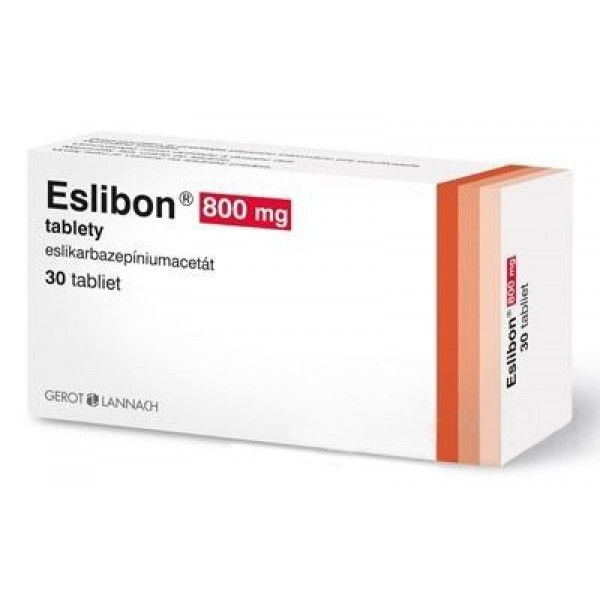
Product viewed: 408


1. What Eslibon is and what it is used for
What Eslibon is
Eslibon contains the active substance eslicarbazepine acetate.
Eslibon belongs to a group of medicines called antiepileptics, which are used to treat epilepsy - a condition in which a person has repeated fits or seizures.
Eslibon is used:
on its own (monotherapy) in adult patients with newly diagnosed epilepsy.
together with other antiepileptic medicines (adjunctive therapy) in adult patients, adolescents and children over 6 years of age who have fits that affect one part of the brain (partial seizure). These fits may or may not be followed by a fit that affects the whole brain (secondary generalisation).
Eslibon has been prescribed to you by your doctor to reduce the number of fits.
2. What you need to know before you take Eslibon
Do not take Eslibon
if you are allergic to eslicarbazepine acetate, to other carboxamide derivatives (e.g. carbamazepine or oxcarbazepine, medicines used to treat epilepsy) or to any of the other ingredients of this medicine (listed in section 6);
if you suffer from a certain type of heart rhythm disorder (second or third degree atrioventricular (AV) block).
Warnings and precautions
A small number of people being treated with antiepileptics have thoughts of harming or killing themselves. If at any time while taking Eslibon you get such thoughts, contact your doctor immediately.
Talk to your doctor or pharmacist before taking Eslibon
Contact your doctor immediately:
if you have a rash, problems swallowing or breathing, swelling of the lips, face, throat or tongue. These may be signs of an allergic reaction.
if you experience confusion, worsening seizures or a lowered level of consciousness, which may be signs of low levels of salts in your blood.
Please tell your doctor:
if you have kidney problems. Your doctor may need to adjust your dose.
Eslibon is not recommended in patients with severe kidney disease.
if you have liver problems. Eslibon is not recommended in patients with severe liver problems.
if you are taking a medicine that can cause an abnormality in the ECG (electrocardiogram) called a prolonged PR interval. If you are not sure whether the medicines you are taking could have this effect, discuss this with your doctor.
if you suffer from a heart condition such as heart failure or have had a heart attack, or have any heart rhythm disorder.
if you get seizures that start with a widespread electrical discharge that affects both sides of the brain.
Eslibon may make you feel dizzy and/or drowsy, especially at the beginning of treatment. Take special care when using Eslibon to avoid accidental injury such as falling.
In patients of Han Chinese or Thai origin, the risk of serious skin reactions associated with carbamazepine or compounds with a similar chemical structure can be predicted by testing a blood sample from these patients. Your doctor will tell you whether a blood test is necessary before taking Eslibon.
Children
Eslibon should not be given to children aged 6 years and under.
Other medicines and Eslibon
Tell your doctor or pharmacist if you are taking, have recently taken or might take any other medicines. This is necessary in case any of them affect the way Eslibon works, or Eslibon affects their effect.
Tell your doctor if you are taking:
phenytoin (a medicine used to treat epilepsy) as your dose may need to be adjusted,
carbamazepine (a medicine used to treat epilepsy) as your dose may need to be adjusted and the following side effects of Eslibon may occur more frequently; double vision, impaired coordination and dizziness.
hormonal contraceptives (e.g. birth control pills) as Eslibon may make them less effective.
simvastatin (a medicine used to lower cholesterol levels) as your dose may need to be adjusted.
rosuvastatin, a medicine to lower cholesterol levels.
the blood thinner warfarin,
tricyclic antidepressants, e.g. amitriptyline.
Do not take oxcarbazepine (a medicine used to treat epilepsy) at the same time as Eslibon, as it is not known whether it is safe to take these medicines together.
See the section "Pregnancy and breast-feeding" for advice on preventing pregnancy.
Pregnancy and breast-feeding
If you are pregnant or breast-feeding, think you may be pregnant or are planning to have a baby, ask your doctor or pharmacist for advice before taking this medicine.
There are no adequate data from the use of eslicarbazepine acetate in pregnant women. Studies have shown an increased risk of birth defects.
birth defects in children of women taking antiepileptic medicines. On the other hand, effective antiepileptic treatment should not be interrupted, as worsening of the disease is harmful to both the mother and the unborn child.
Do not breast-feed while taking Eslibon. It is not known whether it passes into breast milk.
Eslibon may make hormonal contraceptives, such as the pill, less effective. Therefore, it is recommended that you use other forms of safe and effective contraception while taking Eslibon and for the rest of your current menstrual cycle after stopping treatment.
Driving and using machines
Eslibon may make you feel dizzy, drowsy and affect your vision, especially at the beginning of treatment. If this happens to you, do not drive or use any tools or machines.
Eslicarbazepine acetate contains sodium:
This medicinal product contains less than 1 mmol (23 mg) sodium per dose, which means it is essentially “sodium-free”.
3. How to take Eslibon
Always take this medicine exactly as your doctor has told you. If you are not sure, ask your doctor or pharmacist.
Adults
Starting dose
400 mg once a day for one or two weeks before increasing to the maintenance dose. Your doctor will decide whether you should take this dose for one or two weeks.
Maintenance dose
The usual maintenance dose is 800 mg once a day.
Depending on how you respond to Eslibon, your dose may be increased to 1200 mg once a day. If you are taking Eslibon on its own, your doctor may decide that you will benefit from a dose of 1600 mg once a day.
Patients with kidney problems
If you have kidney problems, you will usually be given a lower dose of Eslibon. Your doctor will decide the right dose for you. Eslibon is not recommended if you have severe kidney problems.
Elderly patients (over 65 years):
If you are elderly and taking Eslibon alone, the 1600 mg dose is not suitable for you.
Children over 6 years of age
Initial dose
The starting dose is 10 mg/kg body weight, taken once a day for one or two weeks, before increasing to the maintenance dose.
Maintenance dose
Depending on the response to Eslibon, the dose may be increased by 10 mg per kg body weight at intervals of one or two weeks, up to 30 mg per kg body weight. The maximum dose is 1200 mg once a day.
Children >60 kg
Children weighing 60 kg or more should take the same dose as adults.
Another form of this medicine, such as an oral suspension, may be more suitable for children.
Ask your doctor or pharmacist.
Method of administration and route of administration
Eslibon is for oral use. Swallow the tablet with a glass of water. Eslibon tablets can be taken with or without food.
If you take more Eslibon than you should
If you accidentally take more Eslibon than you should, you are potentially at risk of having more seizures or you may feel that your heart is beating unevenly or faster. If you experience any of the symptoms listed above, contact a doctor or go to hospital immediately. Take the medicine pack with you. This is so that the doctor knows what you have taken.
If you forget to take Eslibon
If you forget to take a tablet, take it as soon as you remember and continue as usual. Do not take a double dose to make up for a forgotten dose.
If you stop taking Eslibon
Do not stop taking the tablets suddenly. If you do, you risk having more seizures. Your doctor will decide how long you should take Eslibon. If your doctor decides to stop your treatment with Eslibon, the dose is usually reduced gradually. It is important to continue your treatment as prescribed by your doctor, otherwise your symptoms may get worse.
If you have any further questions on the use of this medicine, ask your doctor or pharmacist.
If you take more Eslibon than you should
If you accidentally take more Eslibon than you should, you may feel unsteady or experience muscle weakness on one side of your body. Tell a doctor or go to a hospital or emergency department immediately. Take the medicine pack with you. This is so that the doctor knows what you have taken.
If you forget to take Eslibon
If you forget to take a tablet, take it as soon as you remember and continue as usual. Do not take a double dose to make up for a forgotten dose.
If you stop taking Eslibon
Do not stop taking the tablets suddenly. If you do, you are at risk of having more seizures. Your doctor will decide how long you should take Eslibon. If your doctor decides to stop your treatment with Eslibon, the dose will usually be reduced gradually. It is important to take your treatment as your doctor has told you, otherwise your symptoms may get worse.
If you have any further questions on the use of this medicine, ask your doctor or pharmacist.
4. Possible side effects
Like all medicines, this medicine can cause side effects, although not everybody gets them.
The following side effects can be very serious. If they happen to you, stop taking Eslibon and tell a doctor immediately or go to hospital, as you may need urgent medical treatment:
Rash, difficulty swallowing or breathing, swelling of the lips, face, throat or tongue. These may be signs of an allergic reaction.
Very common (may affect more than 1 in 10 people) side effects are:
Dizziness or drowsiness
Common (may affect up to 1 in 10 people) side effects are:
feeling unsteady or dizzy
nausea or vomiting
headache
diarrhoea
double or blurred vision
difficulty concentrating
tration
feeling of lack of energy or tiredness
tremors
skin rash
blood tests showing that you have low levels of sodium in your blood decreased appetite
sleep problems
difficulty coordinating movements (ataxia)
weight gain
Uncommon (may affect up to 1 in 100 people) side effects are:
clumsiness
allergy
constipation
fits
underactive thyroid. Symptoms include low levels of thyroid hormones (seen in blood tests), intolerance to cold, enlarged tongue, thin and brittle nails or hair and low body temperature.
liver problems
high blood pressure or a sudden increase in blood pressure
low blood pressure or a drop in blood pressure when standing up
blood tests that show you have low levels of salts (including chlorides) in your blood or a reduced number of red blood cells
dehydration
changes in eye movement, blurred vision or red eyes
falls
thermal burns
poor memory or forgetfulness
crying, feeling depressed, nervous or confused, lack of interest or emotion
inability to speak or write or understand spoken or written language
agitation
attention deficit/hyperactivity disorder
irritability
mood swings or hallucinations
slurred speech
nosebleed
chest pain
tingling and/or numbness in any part of the body
migraine
burning sensation
unnatural sense of touch
changes in sense of smell
ringing in the ears
reduced hearing
swelling of feet and hands
heartburn, upset stomach, abdominal pain, bloating and discomfort in the abdomen or dry mouth
dark stools
sore gums or toothache
sweating or dry skin
itching skin changes (e.g. redness of the skin)
hair loss
urinary tract infection
feeling generally weak, unwell or chills
weight loss
muscle pain, pain in the limbs, muscle weakness
disorder of bone metabolism
increased bone proteins
redness, cold extremities
slower or irregular heart rate
feeling extremely sleepy
sedation
a neurological movement disorder in which muscles contract and cause twisting and repetitive movements or unusual body positions. Symptoms include tremors, pain, stiffness.
drug toxicity
anxiety.
Not known (frequency cannot be estimated from the available data):
reduction in platelet count, which increases the risk of bleeding or bruising
severe back and stomach pain (caused by inflammation of the pancreas)
reduction in white blood cells, which makes infections more likely
Drug reaction with eosinophilia and systemic symptoms (DRESS): signs and symptoms include skin rash, fever, fatigue, swollen lymph nodes, increased number of eosinophils (a type of white blood cell) and abnormalities in liver, kidney or lung function. DRESS can develop weeks after starting treatment.
The use of Eslibon has been associated with an abnormality in the ECG (electrocardiogram) called PR interval prolongation. Side effects related to this abnormality in the ECG (e.g. decreased and slowed heart rate) may occur.
Bone disorders, including osteopenia and osteoporosis (thinning of the bone), and fractures have been reported with structurally related antiepileptic drugs such as carbamazepine and oxcarbazepine. Consult your doctor or pharmacist if you are on long-term antiepileptic treatment, have a history of osteoporosis, or are taking steroids.
5. How to store Eslibon
Keep out of the reach and sight of children.
Do not use this medicine after the expiry date which is stated on the blister, bottle and carton after EXP. The expiry date refers to the last day of that month.
This medicinal product does not require any special storage conditions.
Do not throw away any medicines via wastewater or household waste. Ask your pharmacist how to dispose of medicines you no longer use. These measures will help protect the environment.
6. Contents of the pack and other information
What Eslibon contains
The active substance is eslicarbazepine acetate.
Each tablet contains 200 mg of eslicarbazepine acetate.
Each tablet contains 400 mg of eslicarbazepine acetate.
Each tablet contains 600 mg of eslicarbazepine acetate.
Each tablet contains 800 mg of eslicarbazepine acetate.
The other ingredients are croscarmellose sodium, povidone K30 and magnesium stearate.
What Eslibon looks like and contents of the pack
Eslibon 200 mg tablets are white to off-white, oblong and biconvex tablets, with a score line on both sides, with a length of about 11.8 mm and a thickness of about 3.9 mm.
The tablet can be divided into equal doses.
Eslibon 400 mg tablets are white to off-white, oblong and biconvex tablets, with a score line on both sides, with a length of about 15.0 mm and a thickness of about 4.9 mm.
The tablet can be divided into equal doses.
Eslibon 600 mg tablets are white to off-white, oblong and biconvex tablets, with a score line on both sides, with a length of about 17.0 mm and a thickness of about 5.7 mm.
The tablet can be divided into equal doses.
Eslibon 800 mg tablets are white to off-white, oblong and biconvex tablets, scored on both sides, approximately 18.9 mm long and approximately 6.1 mm thick.
The tablet can be divided into equal doses.
The tablets are packed in transparent or opaque blisters in cardboard boxes containing 10, 14, 20, 28, 30, 40, 42, 50, 56, 60, 70, 80, 84, 90 or 100 tablets.
Not all pack sizes may be marketed.
Write a review
Your Name:Your Review: Note: HTML is not translated!
Rating: Bad Good
Enter the code in the box below: