
Your shopping cart is empty!
Welcome visitor you can login or create an account.
Febuxostat 80 mg. 28 tablets
Product Code: Febuxostat 80 mg. 28 tablets
Availability: In Stock
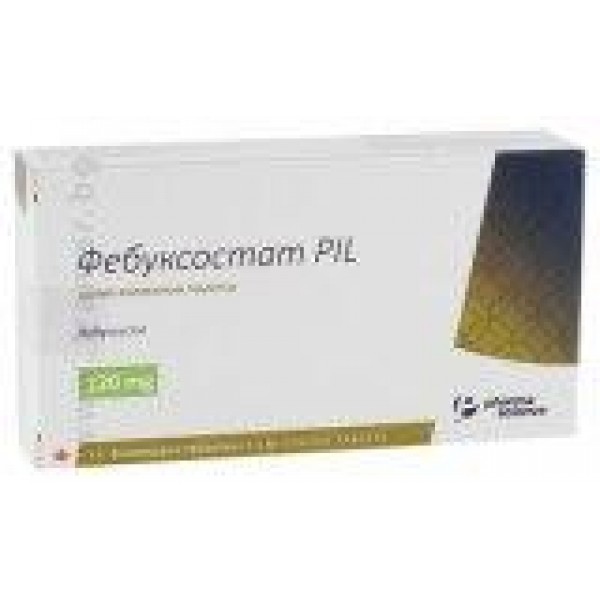
Product viewed: 120


1. What Febuxostat is and what it is used for
Febuxostat tablets contain the active substance febuxostat and are used to treat gout, which is caused by too much of a chemical called uric acid (urate) in the body. In some people, uric acid builds up in the blood in amounts that may be too high to stay dissolved. When this happens, urate crystals can form in and around the joints and kidneys. These crystals can cause sudden severe pain, redness, warmth and swelling of the joint (known as a gout attack). If left untreated, larger deposits called tophi can form in and around the joints. Tophi can cause damage to the joints and bones.
Febuxostat works by lowering the level of uric acid. Keeping your uric acid levels low by taking Febuxostat Zentiva once a day, every day, stops the crystals from forming and over time reduces your symptoms. Keeping the uric acid concentration low enough for a long enough period of time may also reduce the size of the tophi.
Febuxostat Zentiva 120 mg tablets are also used to treat and prevent high levels of uric acid in the blood, which can occur when starting chemotherapy for blood cancers.
When chemotherapy is given, the cancer cells are destroyed and this increases the concentration of uric acid in the blood if prophylaxis against the formation of uric acid is not used.
Febuxostat Zentiva is for adults.
2. What you need to know before you take Febuxostat Zentiva
Do not take Febuxostat Zentiva
if you are allergic to febuxostat or any of the other ingredients of this medicine (listed in section 6).
Warnings and precautions
Talk to your doctor before taking Febuxostat Zentiva:
if you have or have had heart failure or heart problems.
if you have or have had kidney disease and/or a serious allergic reaction to allopurinol (a medicine used to treat gout).
if you have or have had liver disease or abnormal liver function tests.
if you are being treated for high uric acid levels due to Lesch-Nyhan syndrome (a rare hereditary disease in which there is too much uric acid in the blood).
if you have thyroid problems.
If you experience allergic reactions to Febuxostat Zentiva, stop taking this medicine (see also section 4). Possible symptoms of allergic reactions may include:
rash, including severe forms (e.g. blisters, nodules, itchy, scaly rash), itching.
swelling of the limbs or face, difficulty breathing.
fever with enlarged lymph nodes, but also serious life-threatening allergic conditions with cardiac and circulatory arrest. Your doctor may decide to permanently stop your treatment with Febuxostat Zentiva.
Rare cases of potentially life-threatening skin rashes (Stevens-Johnson syndrome) have been reported with Febuxostat Zentiva, which appear on the body initially as reddish, target-like spots or circular patches, often with a central blister. They may also include sores in the mouth, throat, nose, genitals and conjunctivitis (red and swollen eyes). The rash may progress to blistering or peeling of large areas of skin.
If you have developed Stevens-Johnson syndrome with febuxostat, you should never start taking Febuxostat Zentiva again. If you develop a rash or such skin symptoms, consult a doctor immediately and tell him that you are taking this medicine.
If you are currently having a gout attack (sudden onset of severe pain, tenderness, redness, warmth and swelling in a joint), wait until the gout attack has passed before starting treatment with Febuxostat Zentiva for the first time.
Some people may experience a gout attack when they start taking certain medicines that control uric acid levels. Not everyone will have a flare-up, but you may have a flare-up even though you are taking Febuxostat Zentiva, especially during the first weeks or months of treatment. It is important to continue taking Febuxostat Zentiva even if you have a flare-up, as Febuxostat Zentiva continues to work to lower uric acid. Over time, gout attacks will occur less frequently and be less painful if you continue to take Febuxostat Zentiva every day.
Your doctor will often prescribe other medications if needed to prevent or treat symptoms of attacks (such as pain and swelling of a joint).
In patients with very high uric acid levels (e.g. those undergoing cancer chemotherapy), treatment with uric acid-lowering drugs
acid, may lead to a build-up of xanthine in the urinary tract with possible stone formation, although this has not been observed in patients taking Febuxostat Zentiva for tumour lysis syndrome.
Your doctor may want to do blood tests to check that your liver is working normally.
Children and adolescents
Do not give this medicine to children under 18 years of age because safety and efficacy have not been established.
Other medicines and Febuxostat Zentiva
Tell your doctor or pharmacist if you are taking, have recently taken or might take any other medicines, including medicines obtained without a prescription. It is especially important to tell your doctor or pharmacist if you are taking medicines containing any of the following substances, as they may interact with Febuxostat Zentiva and your doctor may consider the necessary measures:
mercaptopurine (used to treat cancer).
azathioprine (used to suppress the immune response).
theophylline (used to treat asthma).
Pregnancy and breast-feeding
It is not known whether Febuxostat Zentiva may harm your unborn baby. Febuxostat Zentiva should not be used during pregnancy. It is not known whether Febuxostat Zentiva may pass into breast milk. You should not use Febuxostat Zentiva if you are breast-feeding or planning to breast-feed.
If you are pregnant or breast-feeding, think you may be pregnant or are planning to have a baby, ask your doctor or pharmacist for advice before taking this medicine.
Driving and using machines
You should be aware that dizziness, drowsiness, blurred vision and numbness or tingling sensations may occur during treatment and in such cases you should not drive or use machines.
Febuxostat Zentiva contains lactose and sodium
Febuxostat Zentiva tablets contain lactose (a type of sugar). If you have been told by your doctor that you have an intolerance to some sugars, contact your doctor before taking this medicine.
This medicine contains less than 1 mmol sodium (23 mg) per tablet, i.e. essentially sodium-free.
3. How to take Febuxostat Zentiva
Always take this medicine exactly as your doctor has told you. If you are not sure, ask your doctor or pharmacist.
The recommended dose is one tablet a day. The days of the week are marked on the back of the blister pack so that you can check that you have taken a dose each day.
The tablets should be taken by mouth and can be taken with or without food.
The score line is only to make it easier to break the tablet if you have difficulty swallowing it whole.
Gout
Febuxostat Zentiva is available as 80 mg tablets or 120 mg tablets. Your doctor will prescribe the most appropriate dosage for you.
Continue to take Febuxostat Zentiva every day, even when you are not experiencing a gout flare-up or gout attack.
Prevention and treatment of high uric acid levels in patients undergoing cancer chemotherapy Febuxostat Zentiva is available as 120 mg tablets.
Start taking Febuxostat Zentiva two days before chemotherapy and continue as directed by your doctor. Treatment is usually short-term.
If you take more Febuxostat Zentiva than you should
In case of accidental overdose, ask your doctor what to do or contact the nearest emergency department.
If you forget to take Febuxostat Zentiva
If you miss a dose of Febuxostat Zentiva, take it as soon as you remember, unless it is almost time for your next dose. In this case, skip the missed dose and take the next dose at the usual time. Do not take a double dose to make up for a forgotten dose.
If you stop taking Febuxostat Zentiva
Do not stop taking Febuxostat Zentiva without your doctor's advice, even if you feel better. If you stop taking Febuxostat Zentiva, your uric acid levels may start to rise and your symptoms may get worse due to the formation of new urate crystals in and around your joints and kidneys.
If you have any further questions on the use of this medicine, ask your doctor or pharmacist.
4. Possible side effects
Like all medicines, this medicine can cause side effects, although not everybody gets them.
Stop taking this medicine and contact your doctor immediately or go to the nearest emergency department if the following rare side effects occur (may affect up to 1 in 1,000 people) as a serious allergic reaction may occur:
Anaphylactic reactions, drug hypersensitivity (see also section 2. "Warnings and precautions").
Potentially life-threatening skin rashes characterised by blistering and peeling of the skin and mucous membranes of body cavities, e.g. of the mouth and genitals, painful ulcers in the mouth and/or genital area accompanied by fever, sore throat and tiredness (Stevens Johnson syndrome/toxic epidermal necrolysis) or with enlarged lymph nodes/enlarged liver, hepatitis (up to liver failure), increased white blood cell count (Drug Reaction with Eosinophilia and Systemic Symptoms - DRESS) (see section 2).
Skin rashes all over the body.
Common side effects (may affect up to 1 in 10 people) are:
Abnormal liver function tests.
Diarrhoea.
Headache.
Rash (including different types of rash, see the "uncommon" and "rare" side effects below).
Nausea.
Worsening of gout symptoms.
Localised swelling due to fluid retention in the tissues (oedema).
Dizziness.
Shortness of breath. Itching.
Pain in the extremities, muscle/joint pain/ache.
Tiredness.
Other side effects not mentioned above are described below.
Uncommon side effects (may affect up to 1 in 100 people) are:
Decreased appetite, changes in blood sugar levels (diabetes), symptoms of which may include excessive thirst, increased levels of fat in the blood, weight gain.
Loss of sex drive.
Trouble sleeping, drowsiness.
Numbness, tingling sensation, reduced or altered sense of touch (hypoesthesia, hemiparesis or paraesthesia), altered or reduced sense of taste (hyposmia).
Abnormalities in the electrocardiogram, irregular or rapid heartbeat, feeling of the heartbeat (palpitations).
Hot flushes or flushing (e.g. flushing of the face or neck), increased blood pressure, bleeding (haemorrhage, which is only seen in patients undergoing chemotherapy for blood disorders).
Cough, chest pain or discomfort, inflammation of the nasal passages and/or throat (upper respiratory tract infection), bronchitis, lower respiratory tract infections.
Dry mouth, abdominal pain/discomfort or gas, upper abdominal pain, heartburn/indigestion, constipation, more frequent bowel movements, vomiting, stomach discomfort.
Itchy rash, hives, skin inflammation, skin discoloration, small red or purple spots on the skin, small flat red spots on the skin, flat red areas on the skin covered with small, coalescing bumps, rash, areas of redness and spots on the skin, increased sweating, night sweats, alopecia, redness of the skin (erythema), psoriasis, eczema other types of skin diseases. Muscle cramps, muscle weakness, bursitis or arthritis (inflammation of the joints, usually accompanied by pain, swelling and/or stiffness), back pain, muscle spasms, muscle and/or joint stiffness.
Blood in the urine, passing urine more often than normal, abnormal urine test results (increased protein in the urine), reduced kidney function, urinary tract infections
Chest pain, chest discomfort.
Stones in the gallbladder or bile ducts (cholelithiasis).
Increased concentration of thyroid-stimulating hormone (TSH) in the blood.
Changes in blood chemistry or blood cell or platelet counts (blood test results outside the normal range).
Kidney stones.
Erection problems.
Underactive thyroid
gland, blurred vision, change in vision. Ringing in the ears.
Runny nose,
Mouth ulcers.
Inflammation of the pancreas: common symptoms are abdominal pain, nausea and vomiting.
Urgent need to urinate.
Pain.
Feeling unwell.
Increased INR.
Bruising.
Swelling of the lips.
Rare side effects (may affect up to 1 in 1,000 people) are:
Muscle damage, which in rare cases can be serious. It can cause muscle problems and may be due to abnormal muscle breakdown, especially if at the same time you feel unwell or have a high temperature. Contact your doctor immediately if you experience muscle pain, tenderness or weakness.
Severe swelling of the deeper layers of the skin, eyes, genitals, hands, feet or tongue, with possible sudden difficulty in breathing.
High fever in combination with measles-like skin rash, enlarged lymph nodes, enlarged liver, hepatitis (up to liver failure), increased white blood cell count (leukocytosis with or without eosinophilia).
Various types of rash (e.g. with white spots, with blisters, with pus blisters, with peeling skin, measles-like rash), redness of large areas, necrosis, blistering of the upper layer of the skin and mucous membranes, leading to peeling and possible sepsis (Stevens-Johnson syndrome/toxic epidermal necrolysis).
Nervousness.
Thirst.
Weight loss, increased appetite, uncontrolled loss of appetite (anorexia). Abnormally low blood cell count (white or red blood cells or platelets).
Change or decrease in the amount of urine due to inflammation of the kidneys (tubulointerstitial nephritis).
Inflammation of the liver (hepatitis).
Yellowing of the skin (jaundice).
Bladder infection.
Liver damage.
Increased levels of creatine phosphokinase in the blood (a marker of muscle damage).
Sudden cardiac death.
Low red blood cell count (anaemia).
Depression. Sleep disturbance.
Loss of sense of taste.
Burning sensation.
Vertigo.
Poor circulation.
Lung infection (pneumonia).
Mouth sores; mouth inflammation.
Gastrointestinal perforation.
Rotator cuff syndrome.
Polymyalgia rheumatica.
Feeling hot.
Sudden loss of vision due to blockage of an artery in the eye.
If you get any side effects, talk to your doctor or pharmacist.
This includes any possible side effects not listed in this leaflet.
5. How to store Febuxostat Zentiva
Keep out of the reach and sight of children.
Do not use this medicine after the expiry date which is stated on the carton and blister foil after "EXP". The expiry date refers to the last day of that month
This medicine does not require any special storage conditions.
Do not throw away any medicines via wastewater or household waste. Ask your pharmacist how to dispose of medicines you no longer use. These measures will help protect the environment.
6. Contents of the pack and other information
What Febuxostat Zentiva contains
The active substance is febuxostat.
Each tablet contains 80 mg or 120 mg of febuxostat (as hemihydrate).
The other ingredients are: Tablet core: lactose monohydrate, microcrystalline cellulose, croscarmellose sodium, hydroxypropylcellulose, micronized poloxamer 407, colloidal hydrated silica, magnesium stearate, Film coating: poly(vinyl alcohol), titanium dioxide E171, polyethylene glycol/macrogol 4000, talc, yellow iron oxide E172
What Febuxostat Zentiva looks like and contents of the pack
Febuxostat Zentiva 80 mg film-coated tablets are pale yellow, round, film-coated tablets with dimensions of approximately 11 mm in diameter, debossed with “80” on one side.
Febuxostat Zentiva 120 mg film-coated tablets are pale yellow, oblong, film-coated tablets with dimensions of approximately 19 mm x 8 mm, with a score line on one side. The score line is only to facilitate breaking for easier swallowing and not to divide into equal doses.
Febuxostat Zentiva is packaged in transparent PVC/PVDC-aluminium blister packs.
Febuxostat Zentiva is available in packs of 14, 28, 42, 56, 84 and 98 film-coated tablets.
Not all pack sizes may be marketed.
Write a review
Your Name:Your Review: Note: HTML is not translated!
Rating: Bad Good
Enter the code in the box below: