
Your shopping cart is empty!
Welcome visitor you can login or create an account.
Ticagrelor 60mg. 56 tablets
Product Code: Ticagrelor 60mg. 56 tablets
Availability: In Stock
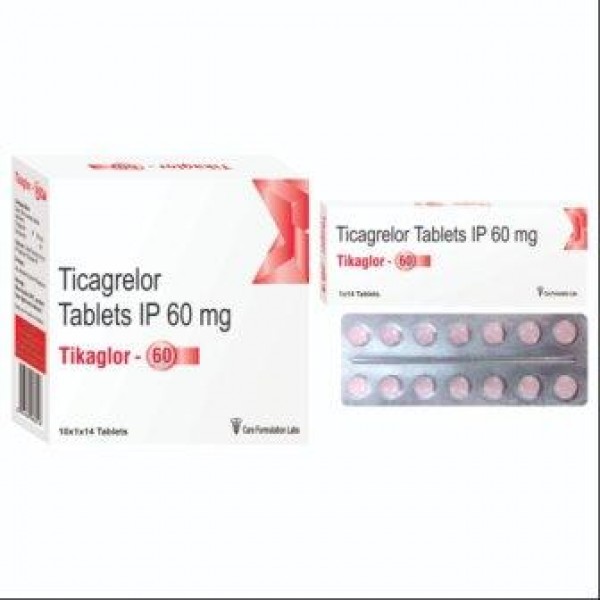
Product viewed: 188


1. What Ticagrelor is and what it is used for
What Ticagrelor is
Ticagrelor contains a medicine called ticagrelor. It belongs to a group of medicines called antithrombotic medicines.
What Ticagrelor is used for
Ticagrelor Teva in combination with acetylsalicylic acid (another antithrombotic medicine) is for use in adults only. This medicine has been given to you because you have had:
Ticagrelor 60 mg film-coated tablets
a heart attack (myocardial infarction) more than a year ago. Ticagrelor 60 mg film-coated tablets
a heart attack (myocardial infarction) or
unstable angina (angina or chest pain that is not well controlled). It reduces the chance of having another heart attack or stroke, or dying from a disease related to your heart or blood vessels.
How does Ticagrelor work?
Ticagrelor Teva works on cells called 'platelets' (also called 'platelets'). These very small blood cells help to stop bleeding by sticking together and plugging small cuts or injuries to blood vessels.
However, platelets can also form clots inside diseased blood vessels in the heart and brain. This can be very dangerous because:
the clot can completely cut off the blood supply - this can cause a heart attack or stroke, or
the clot can partially block a blood vessel in the heart - this reduces the blood supply to the heart and can cause chest pain that comes and goes (called 'unstable angina').
Ticagrelor Teva helps to stop platelets from sticking together. This reduces the chance of a blood clot forming, which can cut off the blood supply.
2. What you need to know before you take Ticagrelor Teva
Do not take Ticagrelor Teva if:
you are allergic to ticagrelor or any of the other ingredients of this medicine (listed in section 6); you are currently bleeding;
you have had a stroke caused by bleeding in the brain;
you have severe liver disease;
you are taking any of the following medicines:
ketoconazole (used to treat fungal infections);
clarithromycin (used to treat bacterial infections);
nefazodone (an antidepressant);
ritonavir and atazanavir (used to treat HIV infection and AIDS).
If any of the above apply to you, do not take Ticagrelor Teva. If you are not sure, talk to your doctor or pharmacist before taking this medicine.
Warnings and precautions
Talk to your doctor or pharmacist before taking Ticagrelor Teva if:
you have an increased risk of bleeding due to:
recent serious injury;
recent surgery (including dental surgery, ask your dentist about this);
a condition that affects blood clotting;
recent bleeding from the stomach or intestines (such as from a stomach ulcer or "polyps" in the colon).
if you are due to have surgery (including dental surgery) at any time while taking Ticagrelor Teva. This is because of the increased risk of bleeding. Your doctor may decide to stop taking this medicine 5 days before the surgery.
if you have an unusually slow heart rate (usually less than 60 beats per minute) and you do not yet have a device that regulates your heart rhythm (pacemaker).
you have asthma or other lung problems, or difficulty breathing, your breathing becomes irregular, such as fast, slow or short-term. Your doctor will decide if you need further assessment if you have had problems with your liver or have previously had a disease that may have affected your liver.
if you have had a blood test that showed more than normal amounts of uric acid.
If any of the above apply to you (or you are not sure), talk to your doctor or pharmacist before taking this medicine.
If you are taking Ticagrelor Teva and heparin at the same time:
Your doctor may ask for a blood sample for diagnostic tests if they suspect a rare platelet disorder caused by heparin. It is important to tell your doctor that you are taking Ticagrelor Teva and heparin, as Ticagrelor Teva may affect the diagnostic test.
Children and adolescents
Ticagrelor Teva is not recommended for children and adolescents under 18 years of age.
Other medicines and Ticagrelor Teva
You should tell your doctor or pharmacist if you are taking, have recently taken or might take any other medicines. This is because Ticagrelor Teva can affect the way some medicines work and some medicines can affect the way Ticagrelor Teva works.
Tell your doctor or pharmacist if you are taking any of the following medicines:
rosuvastatin (a medicine to treat high cholesterol);
more than 40 mg a day of simvastatin or lovastatin (medicines used to treat high cholesterol); rifampicin (an anti-
antibiotics);
phenytoin, carbamazepine and phenobarbital (used to control seizures);
digoxin (used to treat heart failure);
ciclosporin (used to weaken the body's defences);
quinidine and diltiazem (used to treat abnormal heart rhythms);
beta-blockers and verapamil (used to treat high blood pressure);
morphine and other opioids (used to treat severe pain).
Tell your doctor or pharmacist, in particular, if you are taking any of the following medicines, which increase the risk of bleeding:
"oral anticoagulants", often called "blood thinners", which include warfarin;
non-steroidal anti-inflammatory drugs (NSAIDs), often taken as painkillers such as ibuprofen and naproxen;
selective serotonin reuptake inhibitors (SSRIs), used as antidepressants, such as paroxetine, sertraline and citalopram;
other medicines such as ketoconazole (used to treat fungal infections), clarithromycin (used to treat bacterial infections), nefazodone (an antidepressant), ritonavir and atazanavir (used to treat HIV infection and AIDS), cisapride (used to treat heartburn), ergot alkaloids (used to treat migraines and headaches).
Also, tell your doctor that because you are taking Ticagrelor Teva, you may have an increased risk of bleeding if your doctor gives you fibrinolytics, often called "clot-busting medicines", such as streptokinase or alteplase.
Pregnancy and breast-feeding
Ticagrelor Teva is not recommended if you are pregnant or may become pregnant. Women should use appropriate contraception to prevent pregnancy while taking this medicine.
If you are breast-feeding, talk to your doctor before taking this medicine. Your doctor will discuss with you the benefits and risks of taking Ticagrelor Teva during this period.
If you are pregnant or breast-feeding, think you may be pregnant or are planning to have a baby, ask your doctor or pharmacist for advice before taking this medicine.
Driving and using machines
Ticagrelor Teva is unlikely to affect your ability to drive or use machines. operate machinery. If you feel dizzy or confused while taking this medicine, take care when driving or operating machinery.
Ticagrelor Teva contains sodium
This medicinal product contains less than 1 mmol sodium (23 mg) per tablet, that is to say essentially sodium-free.
3. How to take Ticagrelor Teva
Always take this medicine exactly as your doctor has told you. If you are not sure, ask your doctor or pharmacist.
How much to take
Ticagrelor Teva 60 mg film-coated tablets
The usual dose is one 60 mg tablet twice a day. Continue taking Ticagrelor Teva for as long as your doctor tells you.
Take this medicine at the same time each day (for example, one tablet in the morning and one in the evening).
Ticagrelor Teva 90 mg film-coated tablets
The starting dose is two tablets at the same time (a loading dose of 180 mg). This dose will usually be given to you in hospital.
After this initial dose, the usual dose is one 90 mg tablet twice a day for up to 12 months, unless your doctor tells you otherwise.
Take this medicine at about the same time each day (for example, one tablet in the morning and one in the evening).
Taking Ticagrelor Teva with other medicines that affect blood clotting
Your doctor will usually tell you to also take acetylsalicylic acid. This is a substance that is present in many medicines used to prevent blood clotting. Your doctor will tell you how much to take (usually between 75-150 mg a day).
How to take Ticagrelor Teva
You can take the tablet with or without food.
You can check when you last took your Ticagrelor Teva tablet by looking at the blister. It has a sun (for morning) and a moon (for evening). This will show you whether you have taken your dose.
If you have difficulty swallow the tablet
If you have difficulty swallowing the tablet, you can crush it and mix it with water as follows:
Crush the tablet into a fine powder.
Pour the powder into half a glass of water.
Stir and drink it straight away.
To make sure there is no medicine left, rinse the empty glass with another half a glass of water and drink it.
If you are in hospital, the tablet may be given to you mixed with a little water and given through a tube through your nose (nasogastric tube).
If you take more Ticagrelor Teva than you should
If you take more Ticagrelor Teva than you should, contact your doctor or go to hospital immediately. Take the medicine pack with you. You may be at increased risk of bleeding.
If you forget to take Ticagrelor Teva
If you forget to take your dose, take the next one as usual.
Do not take a double dose (two doses at the same time) to make up for miss the missed dose.
If you stop taking Ticagrelor Teva
Do not stop taking Ticagrelor Teva without talking to your doctor. Take this medicine regularly for as long as your doctor tells you to. If you stop taking Ticagrelor Teva, it may increase the chance of having another heart attack or stroke, or of dying from a disease related to your heart and blood vessels.
If you have any further questions on the use of this medicine, ask your doctor or pharmacist.
4. Possible side effects
Like all medicines, this medicine can cause side effects, although not everybody gets them. The following side effects may occur with this medicine:
Ticagrelor Teva affects blood clotting, so most of the side effects are related to bleeding. Bleeding can occur in any part of the body. Some types of bleeding are common (such as bruising and nosebleeds). Severe bleeding is uncommon but can be life-threatening.
If you notice any of the following symptoms, you should see a doctor immediately - you may need urgent treatment:
A bleeding in the brain or inside the skull is an uncommon side effect and can cause signs of a stroke such as:
sudden numbness or weakness in your arm, leg or face, especially on one side of your body;
sudden confusion, difficulty speaking or understanding others;
sudden difficulty walking, loss of balance or coordination;
sudden dizziness or sudden severe headache with no clear cause.
Signs of bleeding such as:
bleeding that is heavy or that you cannot control;
unexpected bleeding or bleeding that lasts for a long time;
pink, red or brown urine;
vomiting red blood or vomit that looks like “coffee grounds”;
red or black stools (that look like tar);
coughing up or vomiting blood clots.
Fainting (syncope):
temporary loss of consciousness due to a sudden decrease in blood flow to the brain (common)
Signs of a blood clotting problem called thrombotic thrombocytopenic purpura (TTP), such as:
high fever and purple spots (called purpura) on the skin or inside the mouth, with or without yellowing of the skin or eyes (jaundice), unexplained tiredness or confusion.
Talk to your doctor if you notice any of the following symptoms:
Feeling short of breath - this is very common. It may be due to your heart disease or another cause, or it may be a side effect of Ticagrelor Teva. Shortness of breath associated with Ticagrelor Teva is usually mild and is characterised by sudden unexpected shortness of breath, usually occurring at rest, and may occur during the first few weeks of treatment and may go away in many people. If your feeling short of breath gets worse or lasts a long time, tell your doctor. Your doctor will decide whether this requires treatment or further tests.
Other possible side effects
Very common (may affect more than 1 in 10 people)
High level of uric acid in the blood (detected by a test);
Bleeding caused by blood disorders.
Common (may affect up to 1 in 10 people)
Bruising;
Headache;
Feeling dizzy or the room is spinning;
Diarrhoea or indigestion;
Feeling sick (nausea);
Constipation;
Rash;
Itching;
Severe pain and swelling in the joints - these are signs of gout;
Feeling dizzy or light-headed or having blurred vision - these are signs of low blood pressure;
Nosebleed;
Bleeding after surgery or from cuts (for example, when shaving) and wounds more than normal;
Bleeding from the stomach lining (ulcer);
Bleeding gums.
Uncommon (may affect up to 1 in 100 people)
Allergic reaction - rash, itching or swelling of the face, or swelling of the lips/tongue may be signs of an allergic reaction;
Confusion;
Vision problems caused by blood in the eye;
Vaginal bleeding that is heavier or occurs at a different time to your normal (menstrual) bleeding;
Bleeding into joints and muscles causing painful swelling;
Blood in the ear
Internal bleeding - this may cause dizziness or lightheadedness.
Not known (frequency cannot be estimated from the available data)
Unusually slow heart rate (usually less than 60 beats per minute).
5. How to store Ticagrelor Teva
Keep out of the reach and sight of children.
Do not use this medicine after the expiry date which is stated on the blister.
a, the carton and the bottle, after the words "EXP" The expiry date refers to the last day of that month.
This medicine does not require any special storage conditions.
Do not throw away any medicines via wastewater or household waste. Ask your pharmacist how to dispose of medicines you no longer use. These measures will help protect the environment.
6. Contents of the pack and other information
What Ticagrelor Teva contains
The active substance is ticagrelor.
Each Ticagrelor Teva 60 mg film-coated tablet contains 60 mg ticagrelor.
Each Ticagrelor Teva 90 mg film-coated tablet contains 90 mg ticagrelor.
The other ingredients are:
Tablet core: mannitol (E421), calcium hydrogen phosphate, povidone, sodium starch glycolate type A, magnesium stearate (E470b).
Tablet film coating:
Ticagrelor Teva 60 mg: hypromellose (E464), titanium dioxide (E171), macrogol (E1521), talc (E553b) and red iron oxide (E172).
Ticagrelor Teva 90 mg: hypromellose (E464), titanium dioxide (E171), talc (E553b), macrogol (E1521), yellow iron oxide (E172) and red iron oxide (E172).
What Ticagrelor Teva looks like and contents of the pack
Ticagrelor Teva 60 mg film-coated tablets: Light pink to pink, round tablets, marked with "137" on one side and 'A' on the other side, approximately 8 mm in size.
Ticagrelor Teva 90 mg film-coated tablets: Light yellow to yellow, round tablets, marked with "A91" on one side and plain on the other side, approximately 9 mm in size.
The following pack sizes are available:
OPA/A1/PVC-A1 and PVC/PVDC-A1 blister with sun/moon symbols.
Pack sizes: 10, 30, 60, 100, 120 and 180 tablets
OPA/A1/PVC-A1 and PVC/PVDC-A1 calendar blister with sun/moon symbols.
Pack sizes: 14, 56, 168 and 196 tablets
OPA/A1/PVC-A1 and PVC/PVDC-A1 perforated unit dose blister with sun/moon symbols.
Pack sizes: 10x1, 30x1, 60x1, 90x1, and 180x1 tablets
OPA/A1/PVC-A1 and PVC/PVDC-A1 calendar perforated unit dose blister with sun/moon symbols.
Pack sizes: 14x1, 56x1,168x1 and 196x1 tablets
HDPE bottle with child-resistant cap and desiccant Pack sizes: 60, 100 and 180 tablets
Not all pack sizes may be marketed.
Write a review
Your Name:Your Review: Note: HTML is not translated!
Rating: Bad Good
Enter the code in the box below: