
Your shopping cart is empty!
Welcome visitor you can login or create an account.
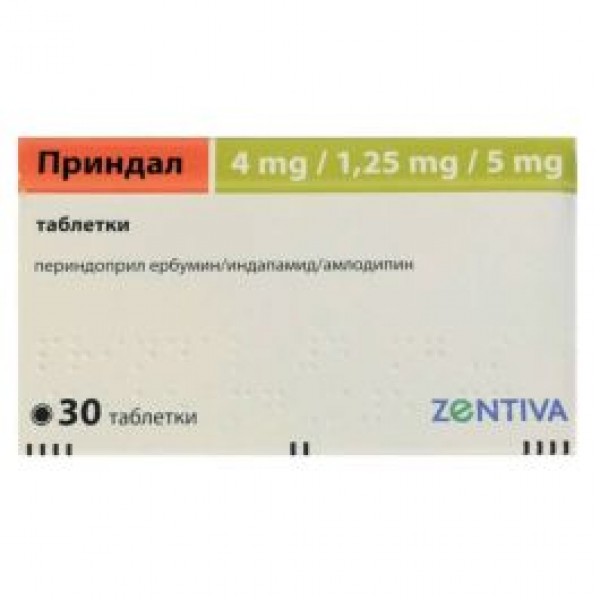
Prindal 4 mg / 1,25 mg / 5 mg. 30 tablets
Product Code: Prindal 4 mg / 1,25 mg / 5 mg. 30 tablets
Availability: In Stock
Product viewed: 220


1. What Prindal is and what it is used for
Prindal is a combination of three active substances called perindopril, indapamide and amlodipine. It is an antihypertensive medicine and is used to treat high blood pressure (hypertension).
Prindal is used to treat high blood pressure in patients whose blood pressure is already controlled with a combination of perindopril/indapamide and amlodipine taken at the same doses.
Each of the active substances lowers blood pressure and they work together to control your blood pressure.
Perindopril belongs to a group of medicines (substances) called angiotensin converting enzyme inhibitors (ACE inhibitors). They work by widening the blood vessels, making it easier for the heart to pump blood through them.
Indapamide is a diuretic. Diuretics increase the amount of urine produced by the kidneys. However, indapamide is different from other diuretics because it causes a very slight increase in the amount of urine produced.
Amlodipine belongs to a group of medicines called calcium channel blockers. In patients with high blood pressure, this medicine works by relaxing the blood vessels so that blood can pass through them more easily.
2. What you need to know before you take Prindal
Do not take Prindal
if you are allergic to perindopril or any other ACE inhibitor, to indapamide, other sulphonamides, to amlodipine or any other calcium channel blocker, or to any of the other ingredients of this medicine (listed in section 6).
if you have had symptoms such as wheezing, swelling of the face or tongue, severe itching or severe skin rashes with previous treatment with an ACE inhibitor or if you or a member of your family has had these symptoms in any other circumstances (a condition called angioedema).
if you are taking or have recently taken sacubitril/valsartan, a medicine used to treat long-term (chronic) heart failure in adults, as there is an increased risk of angioedema (rapid swelling under the skin in an area such as the throat).
if you have diabetes or impaired kidney function and are being treated for high blood pressure with a medicine containing aliskiren.
if you have severe liver disease or suffer from a disease called hepatic encephalopathy (a degenerative disease of the brain).
if you have severe kidney disease where the blood supply to your kidneys is significantly reduced (renal artery stenosis).
if you are undergoing haemodialysis or any other type of blood filtration. Depending on the equipment used, Prindal may not be suitable for you.
if you have low or high levels of potassium in your blood.
if there is evidence of untreated decompensated heart failure (high water retention, difficulty breathing),
if you have a narrowed aortic heart valve (aortic stenosis) or cardiogenic shock (a condition in which the heart cannot supply enough blood to the body).
if you suffer from heart failure after a heart attack.
if you have very low blood pressure (hypotension).
if you are more than 3 months pregnant (it is also better to avoid Prindal in early pregnancy - see section "Pregnancy and breast-feeding"),
if you are breast-feeding.
Warnings and precautions
Talk to your doctor or pharmacist before taking Prindal. Tell your doctor if you have or have ever had any of the following conditions:
aortic stenosis (narrowing of the main blood vessel leaving the heart) or hypertrophic cardiomyopathy (a disease of the heart muscle) or renal artery stenosis (narrowing of the artery that supplies blood to the kidney).
a recent heart attack.
heart failure or any other heart problems
kidney problems or you are on haemodialysis
if you have abnormally high levels of the hormone aldosterone in your blood (primary aldosteronism).
a serious increase in blood pressure (hypertensive crisis).
liver disease.
a collagen disease (skin disease), such as systemic lupus erythematosus or scleroderma.
atherosclerosis (hardening of the arteries),
hyperparathyroidism (overactivity of the parathyroid glands).
gout.
diabetes,
if you are on a salt-restricted diet or use salt substitutes that contain potassium.
if you are taking lithium or potassium-sparing medicines (spironolactone, triamterene) or potassium supplements, as their use with Prindal should be avoided,
if you are elderly and your dose needs to be increased.
if you experience decreased vision or eye pain. These may be symptoms of fluid buildup in the vascular layer of the eye (choroidal effusion) or increased pressure in your eye and may occur within hours to a week of taking Prindal. If left untreated, this may lead to permanent loss of vision. If you have previously had an allergy to penicillin or sulphonamide, you may be at higher risk of developing this.
if you have photosensitivity reactions.
if you have severe allergies
allergic reactions with rapid swelling under the skin of areas such as the face, lips, mouth, tongue or throat which may cause difficulty in swallowing or breathing (angioedema). This condition can occur at any time during treatment. If you develop these symptoms, you should stop treatment and contact a doctor immediately. See also section 4.
If you are taking any of the following medicines, the risk of angioedema is increased:
Racecadotril, a medicine used to treat diarrhoea.
Medicines used to prevent organ transplant rejection and in cancer (e.g. temsirolimus, sirolimus, everolimus and other medicines belonging to the class of mTOR inhibitors).
Vildagliptin, a medicine used to treat diabetes.
If you are of black origin, as you have a higher risk of angioedema and this medicine may be less effective in lowering your blood pressure than in patients of other races.
if you are undergoing haemodialysis with high-flux membranes.
if you are taking any of the following medicines used to treat high blood pressure:
angiotensin II receptor blockers (also known as sartans - for example valsartan, telmisartan, irbesartan), especially if you have kidney problems related to diabetes.
aliskiren.
Your doctor may check your kidney function, blood pressure and electrolytes (e.g. potassium) in your blood at regular intervals.
See also the information under the heading “Do not take Prindal”.
You must tell your doctor if you think you are (or might become) pregnant. Prindal is not recommended in early pregnancy, and must not be taken when more than 3 months pregnant, as it may cause serious harm to your baby if used after the third month of pregnancy (see the heading “Pregnancy and breast-feeding”).
When taking Prindal, you should also tell your doctor or medical staff:
if you are going to have anaesthesia and/or major surgery.
if you have recently had diarrhoea or vomiting, or are dehydrated.
if you are going to have haemodialysis or LDL-apheresis (which is the removal of cholesterol from your blood by a machine).
if you are going to have desensitisation treatment to reduce the effects of an allergy to bee or wasp stings.
if you are going to have a medical examination with a contrast agent containing iodine (a substance that makes organs such as the kidneys or stomach visible on X-rays).
Athletes should be aware that Prindal contains an active substance (indapamide) which may give positive results in doping controls.
Children and adolescents
Prindal should not be given to children and adolescents.
Other medicines and Prindal
Tell your doctor or pharmacist if you are taking, have recently taken or might take any other medicines.
Taking Prindal with:
lithium (a medicine to treat mania and depression),
aliskiren (a medicine used to treat high blood pressure), if you do not have diabetes or kidney problems,
potassium supplements (including salt substitutes), potassium-sparing diuretics and other medicines that may increase the amount of potassium in the blood (e.g. trimethoprim and co-trimoxazole for infections caused by bacteria; ciclosporin, a medicine that suppresses the immune system used to prevent organ transplant rejection; and heparin, a medicine used to thin the blood to prevent blood clots).
estramustine (used to treat cancer).
other medicines used to treat high blood pressure: angiotensin-converting enzyme inhibitors and angiotensin receptor blockers,
sacubitril/valsartan - used to treat long-term (chronic) heart failure (see also information under the heading “Do not take Prindal”),
Treatment with Prindal may be affected by other medicines. Tell your doctor if you are taking any of the following medicines - Your doctor may need to change your dose or take other precautions:
other medicines to treat high blood pressure, including angiotensin II receptor blockers (ARBs) or aliskiren (see also information under the headings “Do not take Prindal” and “Warnings and precautions”),
potassium-sparing medicines used in the treatment of heart failure: eplerenone and spironolactone at doses between 12.5 mg and 50 mg daily,
anaesthetic medicines,
iodine-containing contrast media,
moxifloxacin, sparfloxacin (antibiotics used to treat infections),
methadone (used to treat addiction),
procainamide (to treat rhythm disorders),
allopurinol (to treat gout),
mizolastine, terfenadine or astemizole (antihistamines for hay fever or allergies),
corticosteroids used to treat various conditions including severe asthma and rheumatoid arthritis,
immunosuppressants such as tacrolimus, (used to control the immune response to the bone marrow, allowing your body to accept transplanted organs)
injectable gold
o to treat rheumatoid arthritis),
medicines to treat cancer,
halofantrine (used to treat some types of malaria),
pentamidine (used to treat pneumonia),
injectable gold (used to treat rheumatoid arthritis),
vincamine (used to treat symptomatic cognitive disorders in the elderly, including memory loss),
bepridil (used to treat angina pectoris),
sultopride (used to treat psychosis),
medicines used for heart rhythm problems (e.g. quinidine, hydroquinidine, disopyramide, amiodarone, sotalol),
cisapride, diphemanil (used to treat stomach and digestive problems),
digoxin or other cardiac glycosides (used to treat heart problems),
baclofen (used to treat muscle stiffness in diseases such as multiple sclerosis).
medicines to treat diabetes such as insulin, metformin or gliptins (e.g. ildagliptin),
calcium, including calcium supplements,
stimulant laxatives (e.g. senna),
non-steroidal anti-inflammatory drugs (NSAIDs) (e.g. ibuprofen) or high doses of salicylates (e.g. aspirin),
amphotericin B by injection (to treat severe fungal diseases),
medicines to treat mental disorders such as depression, anxiety, schizophrenia e.g. tricyclic antidepressants, antipsychotics),
tetracosactide (to treat Crohn's disease),
medicines most often used to treat diarrhoea (racecadotril) or to prevent rejection of transplanted organs (sirolimus, everolimus, temsirolimus and other medicines belonging to the class of mTOR inhibitors). See section "Warnings and precautions",
medicines used to treat low blood pressure, shock or asthma (e.g. ephedrine, noradrenaline or adrenaline),
ketoconazole, itraconazole (antifungal medicines),
ritonavir, indinavir, nelfinavir (so-called protease inhibitors used to treat HIV),
rifampicin, erythromycin, clarithromycin (antibiotics: for infections caused by bacteria),
Hypericum perforatum (St. John's wort),
verapamil, diltiazem (medicines for heart disease),
dantrolene (infusion for severe changes in body temperature),
simvastatin (a medicine to lower cholesterol).
Prindal with food, drink and alcohol
Grapefruit and grapefruit juice should not be consumed by people taking Prindal. Grapefruit and grapefruit juice may lead to an increase in the active ingredient amlodipine in the blood, which may cause an unexpected increase in the blood pressure lowering effect of Prindal.
Pregnancy, breast-feeding and fertility
If you are pregnant or breast-feeding, think you may be pregnant or are planning to have a baby, ask your doctor or pharmacist for advice before taking this medicine.
Pregnancy
You should tell your doctor if you think you are (or might become) pregnant. Your doctor will usually advise you to stop taking Prindal before you become pregnant or as soon as you know you are pregnant and will advise you to take another medicine instead of Prindal.
Prindal is not recommended in early pregnancy and must not be taken when more than 3 months pregnant, as it may cause serious harm to your baby if used after the third month of pregnancy.
Breast-feeding
You should not take Prindal if you are breast-feeding.
Tell your doctor immediately if you are breast-feeding or planning to breast-feed. Contact your doctor immediately.
Driving and using machines
Prindal may affect your ability to drive or use machines. If the tablets make you feel sick, dizzy or tired, or cause a headache, do not drive or use machines and contact your doctor immediately.
Prindal contains sodium
This medicine contains less than 1 mmol sodium (23 mg) per tablet, that is to say essentially 'sodium-free'.
3. How to take Prindal
Always take this medicine exactly as your doctor or pharmacist has told you. If you are not sure, ask your doctor or pharmacist.
The recommended dose is 1 tablet a day.
Your doctor may decide to change the dosage if you suffer from kidney failure.
Swallow the tablet with a glass of water, preferably at the same time each day, in the morning before a meal.
If you take more Prindal than you should
If you take too many tablets, contact your nearest hospital emergency department or tell your doctor immediately. Taking too many tablets can cause a sometimes dangerous drop in your blood pressure. You may feel dizzy, light-headed, faint or feel weak. If the drop in blood pressure is severe enough, shock may occur. Your skin may feel cold and clammy, and you may lose consciousness. Increased fluid may accumulate in the lungs (pulmonary oedema), causing shortness of breath, which may develop within 24-48 hours of taking it. Seek immediate medical attention if you take too many Prindal tablets.
If you forget to take Prindal
It is important to take your medicine every day, as regular treatment is more effective. However, if you forget to take a dose of Prindal, take the next dose at the usual time. Do not take a double dose to make up for a forgotten tablet.
If you stop taking Prindal
As treatment for high blood pressure is usually lifelong, you should talk to your doctor before stopping the medicine. Your condition may get worse if you stop taking the medicine before discussing it with your doctor.
If you have any further questions on the use of this medicine, ask your doctor or pharmacist.
4. Possible side effects
Like all medicines, this medicine can cause side effects, although not everybody gets them.
Stop taking the medicine and see a doctor straight away if you experience any of the following side effects, which may be serious:
sudden onset of wheezing, chest pain, shortness of breath or difficulty breathing (uncommon) (may affect up to 1 in 100 people),
swelling of the eyelids, face, lips, mouth, tongue or throat which may cause difficulty breathing (angioedema) (see section 2 “Warnings and precautions”) (uncommon) (may affect up to 1 in 100 people).
severe dizziness or fainting due to low blood pressure (common) (may affect up to 1 in 10 people).
cardiovascular diseases - irregular heartbeat, angina pectoris (pain in the chest, jaw and back, occurring with physical exertion), heart attack (very rare) (may affect up to 1 in 10,000 people).
abnormally fast or irregular life-threatening heartbeat (Torsade de Pointes) (frequency not known) (frequency cannot be estimated from the available data),
severe skin reactions including intense skin rash that starts with red itchy spots on the face, arms and legs (erythema multiforme), intense skin cloud, hives, redness of the skin all over the body, severe itching, blistering, peeling and swelling of the skin, inflammation of the mucous membranes (Stevens-Johnson syndrome toxic epidermal necrolysis) or other allergic
reactions (very rare) (may affect up to 1 in 10,000 people).
weakness in the arms or legs or problems with speech, which may be a sign of a stroke (very rare) (may affect up to 1 in 10,000 people).
inflammation of the pancreas, which may cause severe pain in the abdomen and back, accompanied by general malaise (very rare) (may affect up to 1 in 10,000 people),
yellowing of the skin and eyes (jaundice), which may be a sign of hepatitis (very rare) (may affect up to 1 in 10,000 people).
brain disease caused by liver disease (hepatic encephalopathy) (frequency not known) (frequency cannot be estimated from the available data).
Other possible side effects:
Since Prindal is a combination of three active substances, the side effects that have been reported are related to the use of the perindopril/indapamide combination or amlodipine.
Side effects associated with the use of perindopril/indapamide
Common (may affect up to 1 in 10 people);
skin reactions in people with a predisposition to allergic and asthmatic reactions,
headache,
dizziness,
vertigo,
tingling and pins and needles in the extremities,
visual disturbances,
ringing in the ears (tinnitus),
cough, shortness of breath (dyspnoea),
feeling sick (nausea), vomiting, abdominal pain, changes in taste, dyspepsia, indigestion, diarrhoea, constipation,
skin reactions such as rash, itching,
muscle cramps,
feeling weak.
Uncommon (may affect up to 1 in 100 people):
mood changes,
sleep disorders,
depression,
hives (urticaria),
red pinpoint skin rash (purpura),
multiple blisters in one place,
kidney problems,
impotence,
sweating,
increased eosinophil count (a type of white blood cell),
changes in laboratory values;
high levels of potassium in the blood, reversible on discontinuation, low levels of sodium,
sleepiness,
seizures,
palpitations,
rapid heart rate (tachycardia),
very low levels of sugar in the blood (hypoglycaemia) in patients with diabetes,
inflammation of the blood vessels (vasculitis),
dry mouth,
increased sensitivity of the skin to the sun (photosensitivity),
joint pain (arthralgia),
muscle pain (myalgia),
chest pain,
malaise,
peripheral oedema,
fever (high temperature),
increased levels of urea in the blood, increased levels of creatinine in the blood,
fall.
Rare (may affect up to 1 in 1,000 people):
darkening of the urine, nausea or vomiting, muscle cramps, confusion and fits. These may be symptoms of a condition called SIDH (syndrome of inappropriate antidiuretic hormone secretion),
flushing,
worsening of psoriasis,
decreased or no urine output,
acute kidney failure,
changes in laboratory values: increased liver enzymes, high serum bilirubin levels,
tiredness.
Very rare (may affect up to 1 in 10,000 people):
reduced platelet count which may lead to unusual bruising or easy bleeding,
reduced white blood cell count,
reduced red blood cell count (anaemia),
reduced haemoglobin,
high levels of calcium in the blood,
changes in liver function,
confusion,
eosinophilic pneumonia (a rare type of pneumonia),
blocked or runny nose (rhinitis).
Not known (frequency cannot be estimated from the available data)
abnormal ECG results,
changes in laboratory values; low potassium levels, high uric acid levels and high blood sugar levels,
short-sightedness (myopia), blurred vision,
reduced vision or pain in the eye due to high pressure (possible signs of fluid accumulation in the vascular layer of the eye (choroidal effusion) or acute angle-closure glaucoma)
if you suffer from systemic lupus erythematosus (a type of collagen disease), your condition may worsen.
discolouration, numbness and pain in the fingers or toes (Raynaud's phenomenon)
Blood, kidney, liver or pancreas disorders and abnormal laboratory parameters (blood test results). Your doctor may decide to carry out blood tests to assess your health
Side effects associated with the use of amlodipine Very common (may affect more than 1 in 10 people):
fluid retention (oedema).
Common (may affect up to 1 in 10 people):
shortness of breath,
headache, dizziness, drowsiness (especially at the beginning of treatment),
palpitations (feeling your heart beating), facial flushing,
abdominal pain, feeling sick (nausea),
irregular bowel movements, diarrhoea, constipation, indigestion,
tiredness, weakness,
visual disturbances, double vision,
muscle cramps,
swelling of the ankles,
Uncommon (may affect up to 1 in 100 people):
mood swings, anxiety, depression, insomnia,
tremors, taste disturbances, fits,
numbness or tingling sensation in the extremities, loss of pain sensitivity,
ringing in the ears (tinnitus),
irregular heartbeat,
blocked or runny nose (rhinitis),
cough,
dry mouth, vomiting,
hair loss,
increased sweating, itchy skin, red spots
change in skin colour, hives,
urinary disorders, increased need to urinate, frequency of urination,
inability to get an erection (impotence), discomfort or enlargement of the breasts in men,
pain, general malaise,
joint or muscle pain, back pain, chest pain,
weight gain or loss.
Rare (may affect up to 1 in 1,000 people):
confusion.
Very rare (may affect up to 1 in 10,000 people):
reduction in the number of white blood cells,
reduction in the number of platelets, which can lead to unusual bruising or easy bleeding,
increased blood sugar (hyperglycaemia),
nerve disorder which can cause muscle weakness, tingling or numbness,
swollen gums,
unusual bloating of the stomach (gastritis),
inflammation of the liver (hepatitis), yellowing of the skin (jaundice), increase in liver enzymes,
increased muscle tone,
skin rash which often starts with red itchy spots on the face, arms and legs (erythema multiforme),
inflammation of the blood vessels, often with skin rashes,
change in the appearance of the skin after exposure to the sun or artificial UVA light (photosensitivity reaction).
Not known (frequency cannot be estimated from the available data): tremor, stiffness/rigidity, expressionless face (like a mask), slow movements, wobbly, unbalanced gait.
5. How to store Prindal
Keep out of the reach and sight of children.
Do not use this medicine after the expiry date which is stated on the carton and blister after "EXP". The expiry date refers to the last day of that month.
This medicine does not require any special temperature storage conditions. Store in the original blister in order to protect from light and moisture
Do not throw away any medicines via wastewater or household waste. Ask your pharmacist how to throw away medicines you no longer use. These measures will help protect the environment.
6. Contents of the pack and other information
What Prindal contains
The active substances are: perindopril erbumine, indapamide and amlodipine besylate.
Prindal 4 mg /1.25 mg / 5 mg tablets: Each tablet contains 4 mg perindopril erbumine, equivalent to 3.338 mg perindopril, 1.25 mg indapamide and 5 mg amlodipine, as amlodipine besylate,
Prindal 8 mg / 2.5 mg / 5 mg tablets: Each tablet contains 8 mg perindopril erbumine, equivalent to 6.676 mg perindopril, 2.5 mg indapamide and 5 mg amlodipine, as amlodipine besylate.
The other ingredients are:
microcrystalline cellulose, grade PH-112, anhydrous calcium hydrogen phosphate, red iron oxide (E 172), croscarmellose sodium, colloidal anhydrous silica, magnesium stearate.
What Prindal looks like and contents of the pack
Prindal 4 mg /1.25 mg / 5 mg tablets: dark pink, marbled, round tablets with a diameter of 7 mm, embossed with "4 1.25 5" on one side.
Prindal 8 mg / 2.5 mg / 5 mg tablets: light pink, marbled, round tablets with a diameter of 9.4 mm, embossed with "8 2.5 5" on one side,
Prindal is available in OPA/Alu/PVC//Alu blisters
Pack sizes: 30, 60, 90 tablets
Not all pack sizes may be marketed.
Write a review
Your Name:Your Review: Note: HTML is not translated!
Rating: Bad Good
Enter the code in the box below: