
Your shopping cart is empty!
Welcome visitor you can login or create an account.
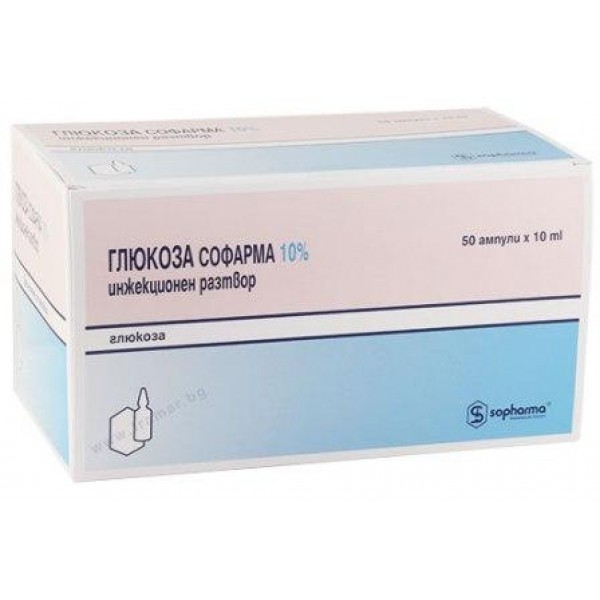
Glucose 10% 10 ml. 50 ampules
Product Code: Glucose 10% 10 ml. 50 ampules
Availability: In Stock
Product viewed: 24


1. WHAT GLUCOSE 10% IS AND WHAT IT IS USED FOR
Glucose 10% belongs to the class of parenteral nutrition solutions and serves as a source of carbohydrates. It is a hypertonic (concentrated) solution administered for hypoglycemic conditions (low blood sugar levels) and for carbohydrate correction.
2. BEFORE YOU USE GLUCOSE 10%
Do not use Glucose 10%:
if you are allergic (hypersensitive) to the active substance or other similar products.
Glucose 10% should not be administered to patients with cerebral hemorrhage or anuria (lack of urine production), nor to dehydrated patients with delirium tremens (an alcohol withdrawal syndrome).
Take special care with Glucose 10%
Blood sugar levels must be checked before the administration of Glucose 10% begins.
Glucose tolerance may be impaired in patients with renal failure, following severe trauma, or in cases of sepsis (systemic infection).
It should be administered with caution to patients with diabetes or sugar intolerance.
Taking other medicines
Please inform your doctor or pharmacist if you are taking or have recently taken any other medicines, including medicines obtained without a prescription.
No interactions with other medicinal products are known.
Pregnancy and breastfeeding
Ask your doctor or pharmacist for advice before using any medicine. The product may be used by pregnant and breastfeeding women.
Driving and using machines
The medicinal product does not affect the ability to drive or use machines.
3. HOW TO USE GLUCOSE 10%
Glucose 10% solution for injection is administered slowly via intravenous injection or infusion by medical professionals.
Before starting the administration of Glucose 10% solution for injection, it is necessary to check blood sugar levels.
If you have any further questions regarding the use of this product, please ask your doctor or pharmacist.
4. POSSIBLE SIDE EFFECTS
Like all medicines, Glucose 10% solution for injection can cause side effects, although not everybody gets them.
Intravenous administration of a 10% glucose solution may cause irritation of the vessel wall. A decrease in blood phosphorus levels is possible during prolonged use of the product.
If any of the side effects becomes serious, or if you notice any side effects not listed in this leaflet, please inform your doctor or pharmacist.
5. HOW TO STORE GLUCOSE 10%
Store in the original package. Store below 25°C.
Do not freeze!
Keep out of the reach of children.
Do not use Glucose 10% after the expiry date stated on the package. The expiry date refers to the last day of the month indicated.
Medicines should not be disposed of via wastewater or household waste. Ask your pharmacist how to dispose of medicines no longer required. These measures will help to protect the environment.
6. FURTHER INFORMATION
What Glucose 10% contains
The active substance is: glucose 1 g (100 mg/ml), as glucose monohydrate.
The other ingredients are: sodium chloride, hydrochloric acid (for pH adjustment), water for injections.
What Glucose Sopharma 10% looks like and contents of the pack
Glucose Sopharma 10% is a clear, transparent, colourless solution.
10 ml colourless glass ampoules, with an ampoule opening mark – a coloured dot/ring.
5 ampoules in a PVC foil blister; 1 or 10 blisters in a cardboard box, together with a leaflet.
Write a review
Your Name:Your Review: Note: HTML is not translated!
Rating: Bad Good
Enter the code in the box below: