
Your shopping cart is empty!
Welcome visitor you can login or create an account.
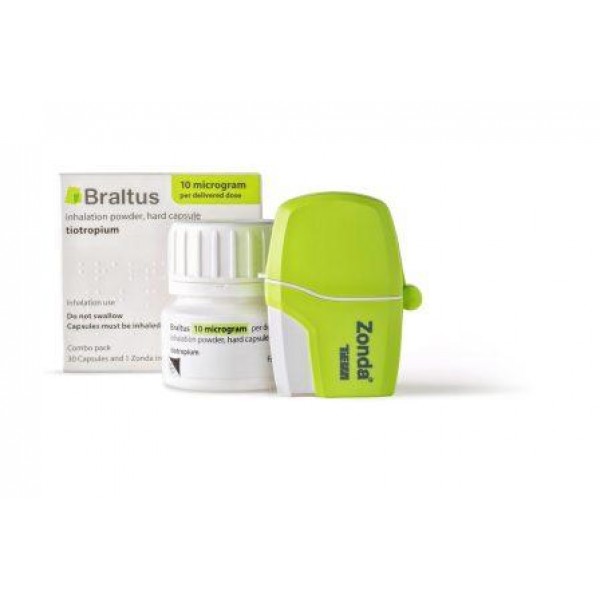
Braltus 10 mcg powder for inhalation 30 capsules
Product Code: Braltus 10 mcg powder for inhalation 30 capsules
Availability: In Stock
Product viewed: 325


What Braltus 10 micrograms is and what it is used for
Braltus 10 micrograms contains the active substance tiotropium. Tiotropium helps people with chronic obstructive pulmonary disease (COPD) to breathe easier. COPD is a chronic lung disease that causes shortness of breath and coughing. The term COPD is associated with conditions of chronic bronchitis and emphysema. Because COPD is a chronic disease, you should use this medicine every day, not just when you have breathing problems or other symptoms of COPD.
Braltus 10 micrograms is a long-acting bronchodilator that widens the airways and helps you breathe in and out more easily. Regular use of this medicine may also help you when you have an existing condition characterized by shortness of breath associated with your disease and will help reduce the effects of the disease on your daily life. It also helps to extend your activity period. Daily use of this medicine will also prevent episodes of sudden, short-term worsening of your COPD-related symptoms that can last for several days. The effect of this medicinal product lasts for 24 hours, so it is necessary to use it once a day.
This medicine should not be used as a rescue medicine to treat sudden chest tightness, cough, or sudden onset of shortness of breath or wheezing. Please use a fast acting (rescue) inhaler such as salbutamol instead. Please carry this reliever inhaler with you at all times.
2. What you need to know before you use Braltus 10 micrograms
Do not use Braltus 10 micrograms
if you are allergic (hypersensitive) to tiotropium or any of the other ingredients of this medicine (listed in section 6);
if you are allergic (hypersensitive) to atropine or substances related to it, such as ipratropium or oxytropium;
if you are allergic (hypersensitive) to lactose or other sugars.
Warnings and precautions
Talk to your doctor or pharmacist before using Braltus 10 micrograms:
if you are taking any other medicinal products containing ipratropium or oxitropium;
if you suffer from narrow-angle glaucoma, an enlarged prostate gland or have difficulty urinating;
if you have any kidney problems;
if you have had a heart attack (myocardial infarction) in the last 6 months, or due to other cases of unstable life-threatening arrhythmic heart activity or severe heart failure in the past year.
Braltus 10 micrograms is indicated for the maintenance treatment of your chronic obstructive pulmonary disease; it should not be used to treat a sudden attack of breathlessness or wheezing.
Allergic reactions of the rapid type such as rash, swelling, itching, wheezing or shortness of breath may occur after administration of Braltus 10 micrograms. If this happens, please consult your doctor immediately (see point 4).
Inhaled medicines such as Braltus 10 micrograms may cause chest tightness, coughing, wheezing or shortness of breath (bronchospasm) immediately after inhalation. In this case, you should immediately use a fast-acting relief inhaler such as salbutamol. If such symptoms occur, stop using Braltus 10 micrograms inhaler and consult your doctor immediately.
Be especially careful not to get the powder in your eyes, as this may cause tearing or cause or worsen narrow-angle glaucoma. Narrow-angle glaucoma is an eye disease. Symptoms of an acute attack of narrow-angle glaucoma may include pain or discomfort in the eyes, blurred vision, colored circles or bright spots associated with eye redness. Ocular symptoms may be accompanied by headache, nausea and vomiting. You should stop using tiotropium bromide immediately and seek advice from your doctor, preferably an eye specialist, if signs and symptoms of narrow-angle glaucoma occur.
The medicine in your inhaler can reduce the normal secretion (saliva) in your mouth and make your mouth feel dry. In the long term, this may be associated with dental caries (damage to the tooth). For this reason, pay special attention to oral hygiene, regularly rinse the mouth and brush the teeth.
If you have had a heart attack (myocardial infarction) in the last 6 months, or other cases of unstable life-threatening arrhythmic heart activity or severe heart failure in the past year, please tell your doctor.
This is important for your doctor to assess whether Braltus 10 micrograms is the right medicine for you.
Do not use this medicine more than once a day (see section 3).
Children and adolescents
Braltus 10 micrograms is not recommended for children and adolescents under the age of
Other medicines and Braltus 10 micrograms
Inform your doctor or
Pregnancy and breastfeeding
If you are pregnant or breast-feeding, think you may be pregnant or are planning to become pregnant, consult your doctor before using this medicine. You should not stop using this medicine unless your doctor tells you to.
Driving and using machines
The appearance of dizziness, blurred vision or headache may affect the ability to drive and use machines.
Braltus 10 micrograms contains lactose
Lactose is a type of sugar found in milk. If you know from your doctor that you have an intolerance to some sugars, consult your doctor before taking this product. Lactose may contain traces of milk proteins, which may cause a reaction in people with severe hypersensitivity or allergy to milk protein. When used according to dosage recommendations, ie. one capsule once daily, each dose contains up to 18 mg lactose monohydrate,
3. How to use Braltus 10 micrograms
Always take this medicine exactly as your doctor has told you. If you are not sure, ask your doctor or pharmacist.
The recommended dose is inhalation of the contents of one capsule once daily with the Zonda inhaler. One capsule provides the required daily dose of tiotropium (delivered dose of 10 micrograms of tiotropium); do not take more than the recommended dose.
You should try to use this medicine at the same time every day. This is important because the effect of this medicine lasts for 24 hours.
The capsules are intended for inhalation only, not for oral administration.
Capsules should not be swallowed.
The Zonda inhaler, in which you need to insert the Braltus 10 microgram capsule, makes holes in the capsule and allows you to inhale the powder. The capsules should only be inhaled with the Zonda inhaler. You should not use other inhalers to administer Braltus 10 microgram capsules.
Make sure you know how to use the Zonda inhaler correctly. Instructions for use of the Zonda inhaler are on the other side of this leaflet. Be sure to carefully follow these instructions for use. Illustrations are also provided for the correct placement of the capsule into the inhaler, which are located on the inside of the carton lid. To avoid the risk of choking/suffocation, NEVER place the capsule directly into the mouthpiece. If you have problems using the Zonda inhaler, ask your doctor, pharmacist or nurse to show you how it works.
If necessary, you can wipe the mouthpiece of the Zonda inhaler with a dry cloth after use.
Do not blow into the Zonda inhaler. When using Braltus 10 micrograms, be careful not to get dust in your eyes. If dust gets into your eyes, which may cause blurred vision, eye pain and/or red eyes, you should immediately wash your eyes with warm water. Then seek advice from your doctor immediately.
If you feel that your breathing is getting worse, you should tell your doctor as soon as possible.
Use in children and adolescents
Braltus 10 micrograms is not recommended for children and adolescents under 18 years of age.
If you have used more than the required dose of Braltus 10 micrograms
If you inhale the contents of more than 1 capsule of Braltus 10 micrograms per day, you must immediately notify your doctor. You may be at increased risk of side effects such as dry mouth, constipation, difficulty urinating, increased heart rate, or blurred vision.
If you forget to use Braltus 10 micrograms
If you miss a dose, do it as soon as you remember, but do not take two doses at once or on the same day. Then take the next dose at the usual time. Do not take a double dose to make up for a missed dose.
If you have stopped using Braltus 10 micrograms
Before you stop using Braltus 10 micrograms, you should consult your doctor or pharmacist. If you stop using this medicine, the signs and symptoms of COPD may get worse.
If you have any further questions on the use of this medicine, ask your doctor, pharmacist or nurse.
4. Possible side effects
Like all medicines, this medicine can cause side effects, although not everybody gets them.
Serious side effects include allergic reactions that cause swelling of the face and throat (angioedema) or other hypersensitivity reactions (such as a sudden drop in blood pressure or dizziness) or increased wheezing and shortness of breath, which may occur alone or as part of a severe allergic reaction. reaction (anaphylactic reaction) after using this medicine. These serious side effects are rare. In addition, as with all inhaled medicines, some patients may experience sudden chest tightness, coughing, wheezing or shortness of breath immediately after inhalation (known as bronchospasm
Uncommon: may affect up to 1 in 100 people
Dizziness
Headache
Taste disturbances
Blurred vision
Irregular heart rhythm (atrial fibrillation)
Sore throat (pharyngitis)
Hoarseness (dysphonia)
A cough
Heartburn (gastroesophageal reflux disease)
Constipation
Fungal infections of the mouth and throat (oropharyngeal cystidosis)
A rash
Difficulty urinating (urinary retention)
Pain when urinating (dysuria)
Rare: may affect up to 10 in 1,000 people
Insomnia (insomnia)
Seeing a halo around lights or colored images associated with eye redness (glaucoma)
Increase in measured eye pressure
Irregular heart rhythm (supraventricular tachycardia)
Fast heart rate (tachycardia)
Feeling the heartbeat (palpitations)
Chest tightness associated with coughing, wheezing or shortness of breath immediately after inhalation (bronchospasm)
Nosebleeds (epistaxis)
Inflammation of the larynx (laryngitis)
Inflammation of the sinuses (sinusitis)
Intestinal obstruction or lack of bowel movement (intestinal obstruction, including paralytic ileus)
Inflammation of the gums (gingivitis)
Inflammation of the tongue (glossitis)
Difficulty swallowing (dysphagia)
Inflammation of the mouth (stomatitis)
Nausea
Hives (urticaria)
Itching (pruritus)
Urinary tract infections
From the available data, an estimate of frequency cannot be made:
Loss of water in the body (dehydration)
Damage to the teeth (dental caries)
Skin infections or ulcers
Dry skin
Swelling of the joints
5. How to store Braltus 10 micrograms
Keep out of the reach of children.
Do not use this medicine after the expiry date which is stated on the carton and bottle label after EXP. The expiration date corresponds to the last day of the specified month.
Do not refrigerate or freeze.
Keep the bottle tightly closed. Store in original packaging to protect from moisture. To be used up to 30 days (bottle of 15 capsules) or 60 days (bottle of 30 capsules) after opening the bottle.
The Zonda inhaler should only be used with the capsule bottle provided, which will be placed either in the same box as the inhaler or in a separate box that will be included with the inhaler box. Do not reuse the inhaler with another capsule bottle.
Do not dispose of medicines down the drain or in the household waste container. Ask your pharmacist how to dispose of medicines you no longer use. These measures will help protect the environment.
The inhaler must be disposed of in accordance with local requirements.
6. Contents of the package and additional information
What Braltus 10 micrograms contains
The active substance is tiotropium. Each capsule contains 13 micrograms of the active substance tiotropium (as bromide). For inhalation, 10 micrograms of tiotropium are delivered to the patient from each capsule through the mouthpiece of the Zonda inhaler and inhaled into the lungs.
The other ingredients are lactose monohydrate (capsule contents) and hypromellose (capsule shell).
What Braltus 10 micrograms looks like and contents of the pack
Braltus 10 micrograms is a colorless and transparent hard capsule containing a white powder.
The medicine is supplied in bottles with a screw cap. The bottle is placed in a cardboard package together with a Zonda inhaler. The Zonda inhaler has a green body and cap with a white push button.
Braltus 10 micrograms is available in packs of 15 or 30 capsules and a Zonda inhaler, and also in a multicomponent pack of 60 capsules (2 packs of 30) and 2 Zonda inhalers, or 90 capsules (3 packs of 30) and 3 Zonda inhalers.
Set: 30 capsules (bottle) in a cardboard box complete with 1 Zonda inhaler. packed in a separate cardboard box.
Not all types of packaging can be put on sale.
Write a review
Your Name:Your Review: Note: HTML is not translated!
Rating: Bad Good
Enter the code in the box below: