Your shopping cart is empty!
Welcome visitor you can login or create an account.
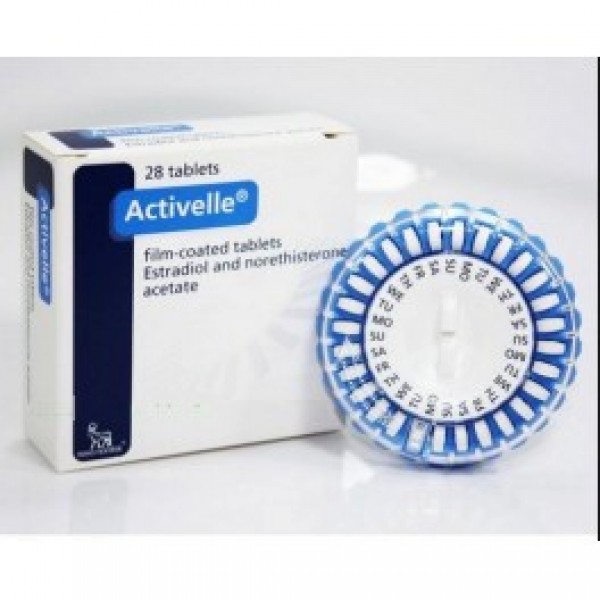
ACTIVELLE 28 tablets
Product Code: ACTIVELLE 28 tablets
Availability: In Stock
Product viewed: 2119


ACTIVELLE 28 tablets
ACTIVELLE film tabletkiAktivnite substances are estradiol hemihydrate and norethisterone acetate.
One white tablet contains: Estradiol anhydrous 1 mg as estradiol hemihydrate and norethisterone acetate 0,5 mg.
Other ingredients: The tablet core contains: lactose monohydrate, maize starch, copovidone, talc and magnesium stearate.
Film coating: Hypromellose, triacetin and talc.
1. What ACTIVELLE is and what it is used
ACTIVELLE contains female hormones 17B-estradiol and norethisterone acetate. 17? -estradiol Is identical to the 17? -estradiol, Which is produced in the ovaries of women and belong to the natural estrogens. Norethisterone acetate is a synthetic progestogen, which acts in a similar way to progesterone, another important female sex hormone
ACTIVELLE is hormone replacement therapy (HRT), which is used for:
Alleviate or eliminate estrogen deficiency symptoms (hot flushes, night sweats, vaginal dryness, etc., due to lack of female sex hormones produced by the ovaries) in women who still have a uterus and are in menopause more one year. ACTIVELLE is intended for prevention of osteoporosis (thinning of the bones), if you are at high risk of future fractures and if you can not take other medicines for this tsel.Opitat of treating women older than 65 years is ogranichen.Aktivel® is available in 1 or 3 calendar pack, each containing 28 tablets. ACTIVELLE film-coated tablets are indicated with NOVO 288 on one side and the APIS bull (logo Novo Nordisk) on the other.
2. Before using active
You should not take ACTIVELLE if:
• Do you have or suspect you have, or have had breast cancer
• Do you have or suspect you have a hormone dependent tumor (eg. Cancer of the lining of the uterus)
• You have abnormal vaginal bleeding
• You have a condition that is called endometrial hyperplasia (excessive growth of the uterine lining) and are treated for it
• Have or have had deep vein thrombosis (formation of a blood clot in the blood vessels of the leg) or pulmonary embolism (formation of a blood clot in the blood vessels of the lungs)
• Do you have or have recently had arterial thromboembolic events (eg. Angina or heart attack)
• Have or have had liver problems where your liver tests have not returned to normal
• You are allergic to estradiol or norethisterone acetate or any of the other ingredients of ACTIVELLE
• You have porphyria (a metabolic disease that affects the formation of blood pigment).
Take special care with ACTIVELLE:
Medical examination / follow
Before you start hormone replacement therapy (HRT) and at regular intervals thereafter, your doctor will evaluate whether the treatment is appropriate for you. This will include the personal and family history and physical examination, if required. It is necessary to regularly check your breasts and report any changes to your doctor or nurse. Should conduct studies, including mammography according to currently accepted screening practices and tailored to your clinical needs.
Conditions which need supervision
Tell your doctor if you have or have had any of the following conditions as he may want to monitor you more closely. Rarely, these conditions may come back or get worse during treatment with ACTIVELLE:
Leiomyomas (benign tumor of the uterus) or endometriosis (presence of uterine tissue outside the womb) A history of or risk factors for blood clots (see below)
Risk factors for the development of estrogen-dependent tumors, for example:
heredity for breast cancer in the first line
High blood pressure
Liver disorders such as liver adenoma (benign tumor)
diabetes mellitus
Gallstones
• Migraine or severe headache
• Systemic lupus erythematosus (erythematosus) (autoimmune disease)
• Previous endometrial hyperplasia (excessive growth of the lining of the uterus) (see below)
• Epilepsy
• Asthma
• Otosclerosis (progressive hearing loss due to a chronic disease of the inner ear) Reasons for immediate withdrawal of therapy:
Therapy should be discontinued immediately if you experience any of the following conditions or any of the conditions mentioned in section "Do not take ACTIVELLE if":
• Jaundice (yellow skin and eyes) or other liver problems
• Significant increase in blood pressure New onset of migraine headache
• Pregnancy
Endometrial hyperplasia (excessive growth of the uterine lining)
It has been found that the use of estrogen alone for a long period of time increases the risk of endometrial hyperplasia and endometrial cancer (cancer of the lining of the uterus). Intake of progestogen in combination with estrogen, even for a short time in your cycle, helping to significantly reduce this additional risk.
Some women may experience breakthrough bleeding or spotting during the first months of treatment with HRT. If you have breakthrough bleeding or spotting that lasts more than the first few months or starts after some time on HRT or continues even after you have stopped your HRT, you should tell your doctor as soon as possible.
Breast Cancer
Every woman at risk of developing breast cancer, whether it accepts or HRT. This risk increased slightly in women who used HRT for more than 5 years compared with women of the same age who have never used HRT. The risk increases with duration of intake and returned to normal within a few (at most 5) years after cessation of HRT. There is evidence that breast cancer in patients taking continuous combined (no bleeding) therapy with conjugated equine estrogen (CEE) and medroxyprogesterone acetate (MPA) is a little - big in size and often spreads to local lymph nodes than in women who have not used this product.
In women aged between 50 and 64 years who are not taking HRT, diagnose about 32 of I 000 cases of breast cancer. Using HRT women aged between 50 and 64 were detected in 6 and 19 extra cases per 1000 treatment after 5 and 10 years of treatment. The risk is independent of age and remains the same, if you start HRT 40, 50 or 60 godini.Ako you are anxious about the risk of breast cancer, discuss the risks and benefits of HRT with your doctor.
blood clots
Venous thrombosis (sometimes called deep vein thrombosis) is a very rare complication that occurs when the veins, usually in the calf, form blood clots that cause redness, swelling and often pain in the leg. Rarely, these clots can travel in the bloodstream, a process that is called venous thromboembolism (VTE) If the clot gets into the lungs, it can cause a blockage (pulmonary embolism), which may cause shortness of breath and severe chest pain and / or collapse or pripadak.V most cases, these clots can be successfully treated, but very rare condition can be severe and even fatalno.Pri all women there is little likelihood of blood clots in the veins of the legs, lungs or other parts of body, whether accepted or not HRT. This means that for women between 50 and 59 years who took HRT for five years, additional cases of VTE were about 4 of 1000 for the entire 5-year period, compared with 3 cases in Failure HRT. The risk of VTE, however, increases with age; so that women aged between 60 and 69 years who took HRT for five years, additional cases of VTE are about 9 per 1,000 for the entire 5-year period, compared with 8 cases in Failure HRT. These blood clots occur more often during the first year of treatment with HRT than later.
Studies have shown that the relative risk of VTE is higher in women receiving HRT. The risk is 2 to 3 times higher in women taking HRT than non-users. In healthy women this means I to 2 additional cases of VTE in 10,000 patient-years of treatment with HRT. The probability of VTE is higher in the first year of treatment.
For some patients already at risk of VTE, which may be increased by the use of HRT. If you or a member of your family have had VTE, if you are very overweight, if you suffer from a disease called systemic lupus erythematosus (SLE) (erythematosus) or have had several miscarriages, or are being treated with medication to thin the blood (eg. warfarin), then HRT may increase the risk of VTE. If any of the above statements apply to you, please tell your doctor.
The risk of VTE may be temporarily increased with prolonged immobilization, with massive trauma or major surgery. If you know that your surgery with subsequent long-term immobilization, especially surgical intervention affecting the abdomen or legs, please tell your doctor. To reduce the risk of VTE, you may be asked to stop taking HRT 4 to 6 weeks before the surgery. Once you have completely mobilized, you will be able again to continue with your treatment.
If a painful swelling in your legs or sudden chest pain with a feeling of shortness of breath, you should stop taking your HRT and immediately contact your doctor as it may be early symptoms of VTE.
Heart disease;
Coronary artery disease occurs when the flow of blood and nutrients to the heart is restricted. This may be caused by the deposition of fat (eg. In atherosclerosis) or the presence of blood clots (thrombosis). The result is -gradna angina pain that spreads to the left arm, neck, jaw or shoulder, in severe cases - heart infarkt.Rezultatite 2 large studies suggest that HRT has no beneficial effect on heart disease. Women in these studies ^ taking HRT tablets containing conjugated equine estrogens (CEE) and medroxyprogesterone acetate (MPa) probably had a slightly increased risk of heart disease in the first year of use. For other HRT products there are only limited data from randomized controlled trials studying the effects on cardiovascular morbidity or mortality. Therefore, it is uncertain whether these findings also extend to other HRT products.If you have ever suffered from angina or have had a heart attack, you should discuss with your doctor the risks and benefits of HRT use.
stroke
The risk of stroke is increased in all women with age. The incidence of stroke is about 3 per 1 000 women aged 50-59 years and 11 per 1000 women aged 60-69 years. The likelihood of having a stroke is increased in the presence of high blood pressure, smoking, excessive use of alcohol or irregular heartbeat (atrial fibrillation) .Skoroshni studies have shown that HRT slightly increases the risk of insult.3 of 1000 women aged between 50 and 59 years would receive stroke za.vseki 5 year period. In women receiving HRT will be 4 1 000 11 1 000 women aged between 60 and 69 years would receive stroke over a 5 year period, while those taking HRT, the number will be 15 in 1000.
Ovarian Cancer
Recent data suggest that women with a uterus, who have received at least 5-10 years HRT with estrogen, there may be a small increased risk of developing ovarian cancer compared to those who have never been HRT. It is presently unknown whether the combined estrogen / progestogen HRT gives a different risk than estrogen-only therapy.
other conditions
Your doctor may want to monitor you more closely:
• If you have kidney disease, renal failure or heart function
• If during hormone replacement therapy you have hypertriglyceridemia (high levels of blood fat), as this can lead in rare cases to the development of pankreatit.Ako you require blood tests Inform your doctor that you are taking ACTIVELLE since estrogen can affect the results of some tests.
There is no evidence that HRT improves processes of knowing, thinking, learning and judging (cognitive function). There is some evidence that women older than 65 years, products containing conjugated equine estrogens (CEE) and medroxyprogesterone acetate (MPA) increase the risk of possible loss of intellectual abilities (dementia). It is not known whether this applies to younger women and to women taking other HZT.Ako have an intolerance to specific sugars, please consult / inform your doctor before taking ACTIVELLE.
Pregnancy and lactation
Do not take ACTIVELLE if you are pregnant or breast-feeding.
Using other medicines Please tell your doctor or pharmacist if you are taking or have recently taken any other medicines, even those not prescribed.
The following medicines may reduce the effects of ACTIVELLE:
Anticonvulsants (eg. Phenobarbital, phenytoin and carbamazepine) and antiinf ektsiozni (eg. Rifampicin, rifabutin, nevirapine, efavirenz, ritonavir and nelfinavir). Herbal preparations containing St. John's wort (Hypericum perforatum) may also reduce the effect of Aktivel®.Lekarstva containing ketoconazole (an antifungal agent) can increase the effect of ACTIVELLE.
3. How to use an active
Always take ACTIVELLE exactly as prescribed by your doctor. If you are unsure, you should consult with your doctor or farmatsevt.Lechenieto with Activelle may be started on any convenient day. However, if you were previously sequential hormone replacement therapy, treatment should begin immediately after their withdrawal bleeding you.
Take one tablet once a day, at about the same time. Take a tablet every day without interruption. After you have used all 28 tablets in a calendar pack, treatment continues with the next opakovka.Priemete tablet with a sufficient amount of fluid (eg. A glass of water) .For relieve menopausal symptoms should be given the smallest effective dose to relieve symptoms the shortest possible period. Tell your doctor if symptoms are not better after 3 months of treatment. Treatment continues until the benefits of relieving symptoms than riska.Ako for some reason you want to stop treatment with ACTIVELLE, please discuss this with your doctor. He will explain the effects of stopping treatment and will discuss other treatment options.
Instructions for administration of the calendar pack
I. Set the day of sedmitsataZavartete inner disc; that the relevant day of the week opposite the little plastic eziche.2. How to take the first tabletkaSchupete plastic tab and tip out the first tabletka.3. Each denProsto navigate with a transparent cover step in the direction of the arrow. Tip out the next tablet.
Transparent circle can be turned only after the tablet in the opening has been removed. (Illustration)
If you take more Activelle than you should:
Ask your doctor or pharmacist if you take more tablets than you should ACTIVELLE. An overdose of ACTIVELLE could make you feel sick or vomit.
If you forget to take ACTIVELLE:
Do not take a double dose to make up for missed doses. If one day you forget to take a tablet, discard and continue treatment as usual. A dose may increase the likelihood of breakthrough bleeding and spotting.
4. Possible side effects
Like all medicines, ACTIVELLE can have side effects.
During treatment with ACTIVELLE may arise following side effects:
Very common (> 10% - more than 1 in 10)
• Pain or pressure in the chest
• Vaginal bleeding
Common (> 1% and <10% - less than 1 in 10, but more than 1 in 100)
• Fungal infection of the genitals or vaginal inflammation
• Fluid retention
• Depression or worsening of depression
• Headache, migraine or worsening of migraine
• Nausea (feeling sick) Backache
• Swelling of the breasts or breast enlargement
Uterine fibroids (benign tumor of the uterus) or worsening or recurrence of uterine fibroids
Peripheral edema (swelling of the hands and feet)
"Weight gain
Uncommon (> 0.1% and <1% - less than 1 in 100, but more than 1 in 1000)
• Hypersensitivity (allergic reaction) Nervousness
• Surface inflammation of a vein associated with thrombosis (blood clot)
• Abdominal (stomach) pain, swelling or discomfort
• Flatulence / gas or bloating
• Hair loss or hirsutism (excessive hair growth on the face and body) or acne
• Itching
• Hives
• Ineffective therapy
Rare (£ 0,01% and <0.1% - less than 1 in 1000, but more than 1 in 10 000)
Pulmonary embolism (blood clot)
Deep vein inflammation associated with thrombosis (blood clot)
Very rare (up to 0.01% - less than 1 in 10,000)
Endometrial cancer (cancer of the lining of the uterus) Insomnia Anxiety
Increased or decreased libido Dizziness
Write a review
Your Name:Your Review: Note: HTML is not translated!
Rating: Bad Good
Enter the code in the box below:
Related Products