Your shopping cart is empty!
Welcome visitor you can login or create an account.
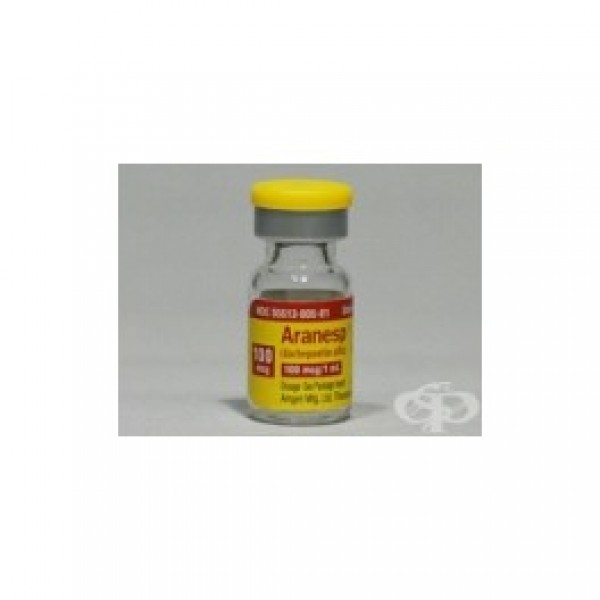
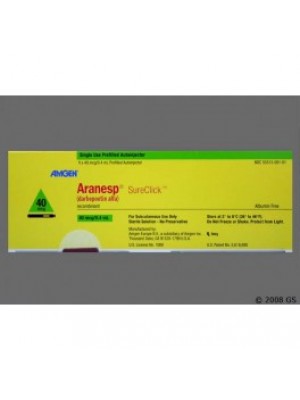
Aranesp 4 injection solution. 100 mcg. 0.5 ml.
Product Code: Aranesp 4 injection solution. 100 mcg. 0.5 ml.
Availability: In Stock
Product viewed: 3029


Aranesp 4 injection solution. 100 mcg. 0.5 ml.
What is Aranesp and what it is used
Your doctor has prescribed the Aranesp (an anti-anemic drug) to treat your anemia. Anemia is a shortage of red blood cells in the blood, some of the symptoms are fatigue, weakness and shortness of breath.
Aranesp works in the same way as the natural hormone erythropoietin. Erythropoietin is produced in the kidneys and stimulates the bone marrow to produce more red blood cells. The active substance of Aranesp is darbepoetin alfa, which is produced by gene technology into cells of Chinese hamster ovary (CHO-K1).
If you suffer from chronic kidney failure
Aranesp is used to treat symptomatic anemia associated with chronic renal failure in adults and children. In renal insufficiency, the kidneys do not produce enough of the natural hormone erythropoietin, which often causes anemia.
Because the body needs some time to start to produce more red blood cells, it will feel the effects after about four weeks. The regular course of dialysis does not interfere with Aranesp to treat your anemia.
If you are receiving chemotherapy
Aranesp is used to treat symptomatic anemia in adult cancer patients with non-myeloid entities undergoing chemotherapy.
One of the major side effects of chemotherapy is that it stops the bone marrow to produce the required cells. At the end of chemotherapy, especially if it was prolonged, the number of red blood cells can decrease and cause anemia.
2. What you should know before using Aranesp
Do not use Aranesp:
if you are allergic to darbepoetin alfa or any of the other ingredients of this medicine (listed in section 6);
if you are diagnosed with high blood pressure that is not controlled with other medicines prescribed by your doctor.
Warnings and Precautions
Talk to your doctor, pharmacist or nurse before using Aranesp. Please tell your doctor if you suffer or have suffered from:
high blood pressure, which is controlled with medicines prescribed by your doctor;
sickle cell anemia;
epileptic seizures (fits);
convulsions (fits or seizures);
liver disease;
significant refractoriness drugs used to treat anemia;
allergy to latex (the needle cover on the pre-filled syringe contains a derivative of latex);
hepatitis C.
Special warnings:
If you have symptoms including unusual tiredness and lack of energy this could mean you have pure aplaziya red blood cells (PRCA), which e observed in patients. PRCA means that the body has stopped or reduced the production of red blood cells, which causes severe anemia. If you experience these symptoms, you should call your doctor, who will determine the best way to treat your anemia.
Take special care with other products that stimulate red blood cell production. Aranesp is one of the group of products that stimulate the production of red blood cells, as human erythropoietin protein. Your healthcare professional should always record the exact product you are using.
Your doctor will try to keep your hemoglobin between 10 and 12 g / dl. Your doctor will monitor your hemoglobin does not exceed a certain level as high hemoglobin concentrations could put you at risk of heart problems or blood vessels and increase the risk of heart attack (myocardial infarction), stroke (stroke) and death .
If you have chronic renal failure there is an increased risk of serious problems with your heart or blood vessels (cardiovascular events) if your hemoglobin remain too high.
If you have symptoms that include severe headache, drowsiness, confusion, vision problems, nausea, vomiting or seizures (convulsions), this may mean that you have very high blood pressure. If you experience these symptoms you should contact your doctor.
If you are a cancer patient you should be aware that Aranesp may act as a growth factor for blood cells and in certain circumstances could have a negative impact on your cancer. Depending on the individual history, blood transfusion may be preferable. Please discuss this with your doctor.
Misuse of the product by healthy people can cause life-threatening damage to the heart or blood vessels.
Other medicines and Aranesp
Tell your doctor or pharmacist if you are using, have recently used or might use any other medicines.
Cyclosporin and tacrolimus (medicines that suppress the immune system) can be influenced by the amount of red blood cells in your blood. It is important to tell your doctor if you are taking any of these medicines.
Aranesp with food and drink
Food and drink have no impact on Aranesp.
Pregnancy and lactation
If you are pregnant or breast-feeding, you think you may be pregnant or planning to become pregnant, ask your doctor or pharmacist before taking this medicine.
Aranesp has not been tested on pregnant women. It is important to tell your doctor if:
are pregnant;
You think you may be pregnant;
planning to become pregnant.
Not known whether darbepoetin alfa is excreted in human milk. You should stop breast-feeding if you use Aranesp.
Driving and using machines
Aranesp does not affect your ability to drive or operate machinery.
Aranesp contains sodium
This product contains sodium, less than 1 mmol (23 mg) per dose, i.e. contains virtually no sodium.
3. How to use Aranesp
Always use this medicine exactly as you have been told by your doctor or pharmacist. If you're not sure, ask your doctor or pharmacist.
After blood tests, your doctor has determined that you need Aranesp, as your hemoglobin level is 10 g / dl or less. Your doctor will tell you how much and how often you should take Aranesp, to maintain hemoglobin levels between 10 and 12 g / dl. This can vary depending on whether you are an adult or a child.
How to inject Aranesp yourself
Your doctor may decide that it is better you yourself or one who cares for you to inject Aranesp. Your doctor, nurse or pharmacist will show you how to do injections prefilled syringe. Do not try to do injections, if you are not trained (a). Never inject Aranesp intravenously alone.
If you suffer from chronic kidney failure
In all adult and pediatric patients aged> 11 years with chronic renal failure, Aranesp administered as a single injection under the skin (subcutaneously) or into a vein (intravenously).
To correct the anemia your initial dose of Aranesp per kilogram of body weight will be either:
0.75 micrograms once every two weeks;
0.45 micrograms once a week.
In adult patients not on dialysis, may also be used, 1.5 microgram / kg once a month as the starting dose.
All adult and pediatric patients aged> 11 years with chronic renal failure after correction of anemia will continue to receive Aranesp, given as a single injection once weekly or once every two weeks. If you are not on dialysis, Aranesp may also be administered as an injection once a month.
Your doctor will monitor your blood regularly to determine how your anemia is influenced by treatment and may adjust your dose once every four weeks.
After correcting their anemia, your doctor will continue to monitor your blood and your dose may be further changed to long-term stabilization of anemia. Your doctor will tell you if your dose is changed.
Your blood pressure will also be checked regularly, especially at the initial stage of therapy.
In some cases, your doctor may advise you to take iron supplements.
Your doctor may decide that it is necessary to change the way the injection site (or under the skin or into a vein). If this changes you will start treatment with the same dose taken so far, and your doctor will monitor your blood to make sure that your anemia responds correctly.
If your doctor decides to replace your treatment with r-HuEPO (erythropoietin produced by gene-technology) to Aranesp, he will choose whether you should receive Aranesp injection once weekly or once every two weeks. The mode of injection is the same as with r-HuEPO, but your doctor will determine how much to take and when, and may adjust your dose if necessary.
If you are receiving chemotherapy
Aranesp is administered as a single injection, either once per week and once every three weeks under the skin.
The initial dose of Aranesp for the treatment of your anemia will be:
500 micrograms once every three weeks (6.75 micrograms of Aranesp per kilogram body weight);
2.25 micrograms of Aranesp (once a week) per kilogram body weight.
Your doctor will monitor your blood regularly to determine your response to treatment and may adjust your dose. Your treatment will last approximately four weeks after the end of chemotherapy. Your doctor will tell you exactly when to stop taking Aranesp.
In some cases your doctor may advise you to take iron supplements.
If you use more than the required dose of Aranesp
If you use more Aranesp, than you should, you may have serious problems such as high blood pressure. You should tell your doctor, nurse or pharmacist if this does happen. If you do not feel well, you should immediately contact your doctor, nurse or pharmacist.
If you forget to use Aranesp
Do not take a double dose to make up the missed dose.
If you forget to inject a dose of Aranesp, contact your doctor to discuss when you should inject the next dose.
If you stop use of Aranesp
If you wish to stop the use of Aranesp, you should first discuss this with your doctor.
4. Possible side effects
Like all medicines, this medicine can cause side effects, although not everybody gets them.
The following adverse reactions have been experienced by some patients taking Aranesp:
Patients with chronic renal failure
Very common: may affect more than 1 in 10 people:
High blood pressure (hypertension);
Allergic reactions.
Common: may affect up to 1 in 10 people:
Stroke;
Pain around the injection site;
Rash and / or redness of the skin.
Uncommon: may affect up to 1 in 100 people:
Blood clots (thrombosis);
Convulsions (fits and seizures).
Not known: from the available data can not be estimated:
Aplasia pure red blood cells (PRCA) - (anemia, unusual tiredness, lack of energy).
Cancer patients
Very common: may affect more than 1 in 10 people:
Allergic reactions;
Fluid retention (edema).
Common: may affect up to 1 in 10 people:
High blood pressure (hypertension);
Blood clots (thrombosis);
Pain around the injection site;
Rash and / or redness of the skin.
Uncommon: may affect up to 1 in 100 people:
Convulsions (fits and seizures).
All patients
Not known: from the available data can not be estimated:
Serious allergic reactions can include:
Sudden life-threatening allergic reactions (anaphylaxis);
Swelling of face, lips, mouth, tongue or throat that may cause difficulty in swallowing or breathing (angioedema);
Shortness of breath (allergic bronchospasm);
Skin rash;
Hives (urticaria).
If you get any side effects, contact your doctor, pharmacist or nurse. This includes all listed in this leaflet.
5. How to store Aranesp
Keep out of reach of children.
Do not use this medicine after the expiry date stated on the carton and label of the pre-filled syringe after EXP / EXP. The expiry date refers to the last day of that month.
Store in a refrigerator (2 ° C - 8 ° C). Do not freeze. Do not use Aranesp, if you suspect has been frozen.
Keep the pre-filled syringe in the outer carton to protect from light.
Once the pre-filled syringe is removed from the refrigerator and left at room temperature for about 30 minutes prior to injection, it must be used within 7 days or be discarded.
Do not use this medicine if the pre-filled syringe is cloudy or contains particles.
Do not dispose of medications in wastewater or household waste. Ask your pharmacist how to dispose of medicines you no longer use. These measures will help to protect the environment.
6. Contents of the pack and further information
What Aranesp
The active substance is darbepoetin alfa, r-HuEPO (erythropoietin produced by gene technology).
The pre-filled syringe contains 10, 15, 20, 30, 40, 50, 60, 80, 100, 130, 150, 300 or 500 micrograms darbepoetin alfa.
The other ingredients are sodium dihydrogen phosphate, disodium hydrogen phosphate, sodium chloride, polysorbate 80 and water for injections.
Aranesp looks like and contents of the pack
Aranesp is a clear, colorless or slightly pearly solution for injection in pre-filled syringe.
Aranesp was in packs of 1 or 4 pre-filled syringes. The syringes are supplied either with (pack of 1 and 4) or without (package 1) blister wrap.
Not all pack sizes may be marketed.
Marketing Authorisation Holder and Manufacturer:
Marketing Authorisation Holder:
Amgen Europe B.V., Netherlands.
Manufacturer:
Amgen Technology Ireland (ADL), Ireland.
7. Instructions for injection of Aranesp prefilled syringe
This section contains information on how to properly inject Aranesp. It is important you do not try to give yourself the injection unless you have received special training from your doctor, nurse or pharmacist. If you have questions about how to inject, please ask for assistance to your doctor, nurse or pharmacist.
How to use pre-filled syringe by you or the person injecting you?
Your doctor has prescribed the Aranesp pre-filled syringe for injection into the tissue just under the skin. Your doctor, nurse or pharmacist will tell you how much Aranesp you need and how frequently it should be injected.
Preparation:
To give yourself an injection you will need:
new, pre-filled syringe Aranesp;
alcohol wipes or something.
What should I do before a subcutaneous injection of Aranesp?
1. Remove the prefilled syringe from the refrigerator. Allow the pre-filled syringe at room temperature for about 30 minutes. This will make the injection more comfortable. Do not warm Aranesp in any other way (eg in a microwave or in hot water). In addition, do not leave the syringe exposed to direct sunlight.
2. Do not shake the pre-filled syringe.
3. Do not remove the syringe cap until you are ready to inject.
4. Make sure it is the right dose prescribed by your doctor.
5. Check the expiry date stated on the syringe label (EXP). Do not use if expired last day of that month.
6. Check the appearance of the solution Aranesp. It should be clear, and colorless liquid. If it is cloudy or there are particles in it, you should not use it.
7. Wash your hands thoroughly.
8. Find a comfortable, well-lit, clean surface and put the necessary equipment so that you will be easily accessible.
How to prepare the injection of Aranesp?
Before you inject Aranesp, you should do the following:
1. To avoid bending the needle gently pull the cover from the needle without twisting.
2. Do not touch the needle or push the plunger.
3. You may notice a small air bubble in the pre-filled syringe. No need to remove the air bubble before injecting. Injection of the solution with air bubble is safe.
4. You can now use the pre-filled syringe.
Where should I give my injection?
The best places to inject are the top of the thighs and abdomen. If someone else is injecting you can put it in the back of the hands.
You can change the injection site if you notice the area is red or irritated.
How to injection?
1. Disinfect the skin with an alcohol swab and hold (without squeezing) the skin between thumb and forefinger of his hand.
2. Put the needle fully into the skin as shown by your doctor, nurse or pharmacist.
3. Inject the prescribed dose subcutaneously as directed by your doctor, nurse or pharmacist.
Write a review
Your Name:Your Review: Note: HTML is not translated!
Rating: Bad Good
Enter the code in the box below:
Related Products
ARANESP 4 injection of 80 mcg. 0.5 ml. WHAT ARANESP AND WH..
890.00€
ARANESP 4 solution for injection 40 mcg. 0.5 ml.
..
169.00€