Your shopping cart is empty!
Welcome visitor you can login or create an account.
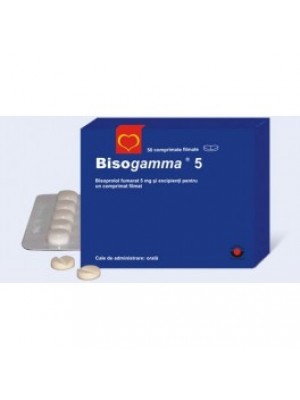
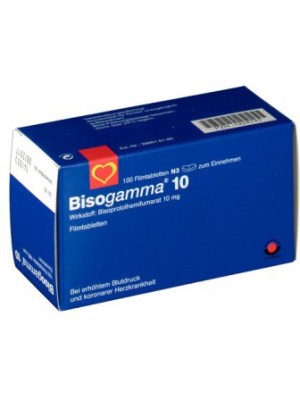
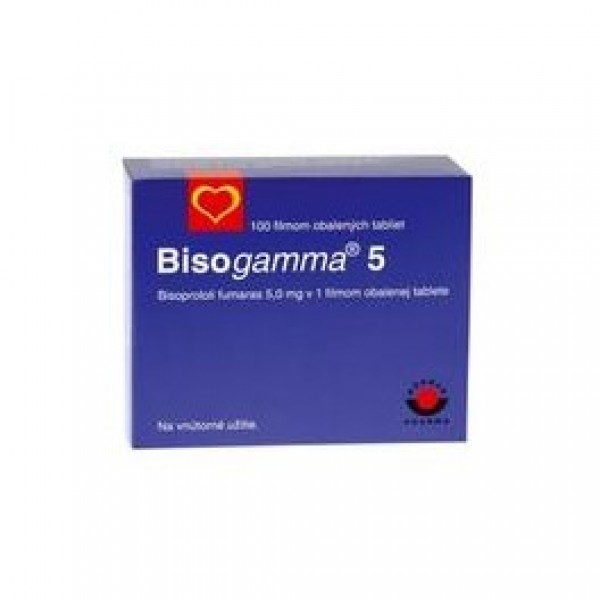
BISOGAMMA 5 mg. 30 tablets
Product Code: BISOGAMMA 5 mg. 30 tablets
Availability: In Stock
Product viewed: 1501


BISOGAMMA 5 mg. 30 tablets
WHAT BISOGAMMA 5 CASES AND WHAT IT IS USED FOR?
Bisogamma 5 is a cardioselective beta-receptor blocker.
Bisogamma 5 is used for the treatment of:
- High blood pressure (essential hypertension);
- Chest pain due to impaired blood flow in the coronary arteries of the heart (coronary artery disease - angina pectoris).
2. WHAT YOU HAVE TO TYPE BEFORE YOU TAKE BISOGAMMA 5?
Bisogamma 5 must not be applied to cases of:
- Hypersensitivity (allergy) to bisoprolol hemifumarate or any of the excipients of Bisogamma 5;
hypersensitivity to beta-receptor blockers;
- Untreated heart muscle weakness (manifested heart failure);
- Shock;
- High-rhythm-conduction disorders of the cardiac atria to the ventricles (AV-block II nd or III-rd degree);
- Syndrome sick sinus (sick sinus syndrome);
- Abnormal conduction between the sinus node and atrial heart block);
- Slow heart rate (bradycardia: resting pulse less than 50 beats per minute) predizapochvane treatment;
- Strongly reduced blood pressure (hypotension: systolic pressure less than 90 mmHg);
- Increased acidity of the blood (acidosis);
- Propensity to bronchospasm (bronchial hyperreactivity, e. Obstructive airway disease, bronchial asthma);
- Final stages of peripheral vascular disorders and Raynaud's syndrome;
- Simultaneous reception of MAO inhibitors (except MAO-B inhibitors);
- Untreated tumor nadbabrechnta gland (pheochromocytoma);
- Children (no therapeutic experience).
Intravenous administration of calcium antagonists from the group of verapamil and diltiazem or other medicines for the treatment of heart rhythm disorders (antiarrhythmic agents: eg. Disopyramide, quinidine, amiodarone) is contraindicated for patients who are treated with Bisogamma 5 (exception - in intensive medicine).
In which case you can take Bisogamma 5 only after consultation with your doctor?
It will further be described certain conditions (indications) where Bisogamma 5 can be applied only after further consultation with a doctor and a particularly great caution. Please talk about your doctor. The same applies in the event that the above statements are manifested and predi.Osobeno strict medical supervision is necessary when;
- Low-grade rhythm, conduction disorders of cardiac atria to the ventricles (AV-block I-st degree);
- Already expressed or existing but previously undetected diabetes (manifest or latent diabetes mellitus), as it can cause severe decrease in blood glucose level (severe hypoglycaemic conditions). It is possible masking of hypoglycaemic symptoms. There is a need regular blood sugar control.
- Longer strict diet (or fasting) and heavy exercise (possibly strong decrease in blood sugar);
- Patients with tumor nadbabrechnta gland (pheochromocytoma). They Bisogamma 5 can be used only after prior treatment with alpha-receptor blockers.
- Prinzmetal Angina.
Appointment of beta-receptor blockers (eg. Bisogamma® 5) in patients with psoriasis (scaly patches) in personal or family history should be done after precise assessment of the benefit-risk ratio.
Particular attention when taking Bisogamma 5 is necessary when:
Damage to the liver and kidneys - must be followed directions for dispensing the product. (See section "Dosage").
Beta-receptor blockers can increase the sensitivity to allergens and cause severe anaphylactic reactions, i.e. a common acute allergic reaction of the body. It is therefore necessary to specify strictly the indications in patients with severe hypersensitivity reaction in history, and in patients who are on treatment to reduce or eliminate the propensity to allergic reaction (desensitisation therapy). Warning - severe anaphylactic reaction.
The use of the medicinal product may mask clinical signs of hyperthyroidism - such as tachycardia (rapid heartbeat). Abrupt discontinuation may be followed by worsening of the symptoms of hyperthyroidism, or cause acute thyrotoxic kriza.Ednovremennoto application Bisogamma 5 and medicinal products for anesthesia (anesthetics) may lead to a strong decrease in blood pressure. Therefore, before placing the anesthesia, the anesthetist should be informed of therapy Bisogamma 5.
Treatment of hypertension with this medicinal product requires regular medical supervision.
Interactions with other medicinal products
If Bisogamma 5 is used together with other drugs should be observed for the occurrence of these interactions:
Reduction of high blood pressure under the action of Bisogamma 5 may be enhanced by other drugs also lower blood pressure (eg. ACE) inhibitors, diuretics, vasodilators substances (vasodilators), barbiturates, tricyclic antidepressants and fenotiazidi.
When concomitant administration of Bisogamma 5 and calcium antagonists from the group of nifedipine can lead to very low blood pressure, and in some cases, weakness of the heart muscle (heart failure).
With concomitant Bisogamma 5 and calcium antagonists of the verapamil group and Diltiazem or other medicines for the treatment of heart rhythm disorders (antiarrhythmic agents: eg. Disopyramide, quinidine, amiodarone) is careful observation of the patient, as it may lead to severely low blood pressure (hypotension), slow heart beat (bradycardia) or other cardiac arrhythmias and / or weakness of the heart muscle (heart failure).
Intravenous administration of calcium antagonists from the group of verapamil and diltiazem or other medicines for the treatment of heart rhythm disorders (antiarrhythmic agents: eg. Disopyramide, quinidine, amiodarone) is contraindicated for patients who are treated with Bisogamma 5 (except in intensive care see section "Contraindications").
Cardiodepressive properties Bisogamma 5 may potentiate the effects of antiarrhythmic drugs.
When concomitant administration of Bisogamma 5 and reserpine, alpha-methyldopa, guanfacine, clonidine or cardiac glycosides (digitalis) can lead to very slow heart rate, respectively. a delay conduction of the heart.
After abrupt discontinuation of clonidine in concomitant Bisogamma 5, it is possible sharp rise in blood pressure. Clonidine can be stopped, a few days after treatment ended with Bisogamma 5.
With concomitant Bisogamma 5 and norepinephrine, epinephrine or other sympathomimetic active substances (eg .: contained in medicines for cough, nasal and eye drops) may increase blood pressure.
Concomitant administration of ergot derivatives (eg. Ergotaminsadarzhashti migraine drugs) and Bisogamma 5 can lead to increased violations in the peripheral blood supply.
Monoamine oxidase inhibitors (MAOIs) should not be administered simultaneously with Bisogamma 5 due to possible strong increase in blood pressure (see section "Contraindications").
When concomitant administration of Bisogamma 5 and insulin or other medicines that lower blood sugar (eg. Oral antidiabetic agents). Their effect can be modified: reinforced, respectively. prolonged and may even be weakened.
Warning signs to reduce the amount of blood sugar (hypoglycemia) -uchesten pulse (tachycardia) shaking hands (tremor) - are masked or attenuated. Therefore required regular blood sugar.
Rifampicin may reduce the blood pressure lowering effect of Bisogamma 5.Deystvieto of Bisogamma 5 can be enhanced by cimetidine, hydralazine and alkohol.Pri patients with bronchial asthma or other chronic obstructive pulmonary disease should not be administered concomitantly bronchodilator therapy. Sometimes patients with asthma may be necessary to increase the dose of the beta-2-sympathomimetic (bronchodilator) medications.
Coadministration of 5 Bisogamma and agents for anesthesia (anesthetic) may lead to a strong reduction of blood pressure. The negative inotropic effect of the two mentioned medicinal product can be enhanced.
Therefore, before placing the anesthesia, the anesthetist should be informed of therapy Bisogamma 5.
Please tell your doctor or pharmacist if you are taking / using or have recently adopted / implemented other medicines, including medicines obtained without a prescription.
When taking Bisogamma 5 is both food and drink
The blood pressure lowering effect of Bisogamma 5 can be intensified by alcohol.
Pregnancy and lactation
So far, no clinical experience on the use of bizoprololov hemifumarate in pregnant women. Bisogamma 5 should be used during pregnancy only if the physician has determined that the benefits of the medicinal product for pregnant is significantly greater than its risks for the child. Treatment with bisoprolol fumarate should be discontinued 48-72 hours before birth, because of the possibility of damage to the functions of the heart and circulation of the child. If discontinuation of treatment is not possible, then 48-72 hours after birth, newborns should be monitored closely.
Passage of bisoprolol in human breast milk has not been studied. Because the active substance was found in the milk of experimental animals, infants should be well observed for beta-receptor response. In this case, breastfeeding is discontinued.
Driving and using machines
Due to the occurrence of different reactions in the body, can impair the ability to drive, operate machines when working outdoors. This is especially true at the start of treatment, when increasing the dose, change of medicinal product and interaction with alcohol.
3. HOW TO TAKE BISOGAMMA 5?
In children 5 Bisogamma always strictly follow the prescription given by your doctor. Please, if anything you are not sure, ask your doctor or pharmacist.
If it is not otherwise specified, the usual doses are:
Treatment should be initiated gradually with low doses that are gradually increased. The dosage must be determined individually for each case, be assessed on the basis of pulse rate and treatment success.
High blood pressure (hypertension esenpialna)
Unless otherwise prescribed, the recommended dose is once daily 1 coated tablets Bisogamma 5 (5 mg bizoprololov hemifumarate).
In hypertension I-Grade (ESC GUIDELINE 2007; systolic pressure 140-159 mm Hg and / or diastolic blood pressure 90-99 mm Hg) may be sufficient treatment including 1/2 coated tablets Bisogamma 5 (respectively 2,5 mg bisoprolol fumarate) once per day. In case of insufficient effect, the dose may be increased to 2 coated tablets Bisogamma 5 day (10 mg bizoprololov hemifumarate day). Further increase of the dose is appropriate only in exceptional cases.
Chest pain due to coronary artery disease - angina pectoris (impaired blood supply to the heart muskul1)
Unless otherwise prescribed, the recommended dose is once daily 1 coated tablets Bisogamma 5 (5 mg bizoprololov hemifumarate).
In case of insufficient effect, the dose may be increased to 2 coated tablets Bisogamma 5 day (10 mg bizoprololov hemifumarate day). Further increase of the dose is appropriate only in exceptional cases.
Dosage in functional disturbances of the liver and kidneys
In patients with mild or Moderate disturbances in the function of the liver and the kidney is necessary to change the dosage. But in patients with advanced renal insufficiency (creatinine clearance <20 ml / min) and in patients with severe hepatic impairment, the daily dose should not exceed 10 mg bizoprololov hemifumarate.
Elderly
Generally not a change in dosage.
Usage
Coated tablets should be taken if possible in the morning on an empty stomach or with breakfast, with plenty of fluids, without chewing.
Duration of dosing
The duration of use is not limited in time. It is determined by the type and severity of the disease.
Dosing Bisogamma 5 can not be done without a doctor appointment. Interruption or premature discontinuation of treatment should also not be done without first seeking medical opinion.
Treatment c Bisogamma 5 should not be abruptly interrupted. Discontinuation of therapy should be gradual (7-10 days), especially in patients with coronary heart disease -angina pectoris (disturbances in blood supply to the heart muscle), as an abrupt stopping the drug may lead to deterioration of patient.
The duration of treatment is determined by the attending physician.
If you take more than 5 Bisogamma amount was necessary:
Of suspected overdose with Bisogamma 5, please tell your doctor immediately! It may take appropriate measures depending on the severity of the overdose / otravyaneto.Predoziraneto of Bisogamma 5 can lead to severely low blood pressure (severe hypotension), slow heart beat (bradycardia), heart failure, heart muscle weakness (heart failure) and shock. Additionally may occur difficulty in breathing, bronchial spasm, vomiting and loss of consciousness.
Overdose should immediately stop taking Bisogamma 5.
If you forget to take Bisogamma ®5:
In this case, the next intake do not take double the amount and attach medicinal product as described in the guide dosing, or as directed by the doctor.
If you stop taking Bisogamma 5:
Please do not interrupt or stop treatment with Bisogamma 5 without talking to your doctor before your doctor!
Treatment with Bisogamma 5 should not be stopped abruptly, but gradually (about 7-10 days), especially in patients with coronary heart disease - angina pectoris (poor circulation to the heart muscle), as an abrupt stop of the medicinal product can lead to deterioration of the patient.
4. What side effects are possible?
Like all medicines, Bisogamma® 5 can show adverse reactions that occur in each patsient.Pri assessment of adverse events following data are used for the frequency of their occurrence:
Very common: more than 1 in 10 patients treated
Common: rto-less than 1 in 10 but more than 1 in 100 patients treated
Uncommon: less than 1 in 100 but more than 1 in 1,000 patients
Rare: less than 1 in 1,000, but more than 1 in 10 000 patients treated
Very rare: less than 1 in 10 000 patients treated, incl. single cases
Significant side effects or symptoms that need to be addressed or to be taken in the event that occur when you:
If you is a person any of the following side effects, please stop taking Bisogamma 5 and consult your doctor as soon as possible.
Nervous system
Common: CNS disorders such as tiredness, dizziness, headache, depressive moods, confusion, nightmares or dreams of enhanced dreaming, sleep disturbances and hallucinations. Sensory disturbances such as tingling and feeling cold in the extremities (paraesthesia).
Eye disorders
Uncommon: visual disturbances, inflammation of the conjunctiva (conjunctivitis) and decreased tears (that must be observed when wearing contact lenses).
Cardiac and vascular disorders
Common: severe drop in blood pressure, also when getting up from a lying position (orthostatic hypotension), slow heart beat (bradycardia), rhythm and conduction disorders of the cardiac atria to the ventricles (AV-conduction abnormalities) or cardiovascular strengthening muscle weakness (heart failure), fluid accumulation in the legs (peripheral edema) or shortness of breath on exertion (dyspnea under load).
Observed strengthening of complaints in patients with peripheral blood flow disabilities - including patients with vascular cramps in toes and fingers (Raynaud's syndrome).
Registered only one case of intolerance to beta-blocker (bisoprolol and carvedilol) in anthracycline-induced cardiomyopathy.
Respiratory, thoracic and mediastinal disorders
In patients with a tendency to bronchospastic reactions (especially in obstructive respiratory diseases: bronchial asthma) can lead to shortness of breath as a result of increased resistance in the airways.
Gastrointestinal disorders
Common: anorexia, and gastrointestinal complaints (eg. Nausea, vomiting, constipation, diarrhea, pain and cramps in the abdomen).
Disorders of the musculoskeletal system and connective tissue
Common: muscle weakness, muscle cramps (eg. The calf cramps) .Many rare: diseases of the joints (arthropathy) with involvement of one or more joints (mono- or polyarthritis).
Registered only one case of beta-blocker-induced acute kvadriplegichna myopathy (feeling of weakness in the muscles of the limbs) in the application of bisoprolol and carvedilol. Sometimes, allergic reactions - such as redness, itching (pruritus), skin rashes under the action of light (photoallergic exanthema), very itchy rash (urticaria);
Write a review
Your Name:Your Review: Note: HTML is not translated!
Rating: Bad Good
Enter the code in the box below:
Related Products