Your shopping cart is empty!
Welcome visitor you can login or create an account.
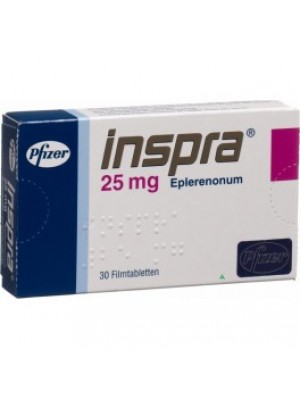
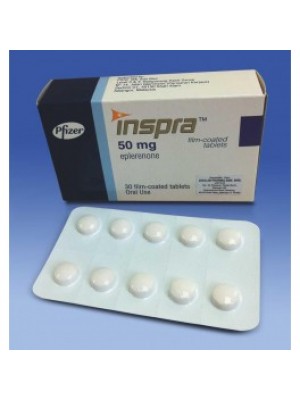
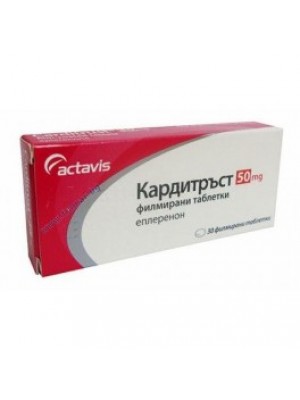
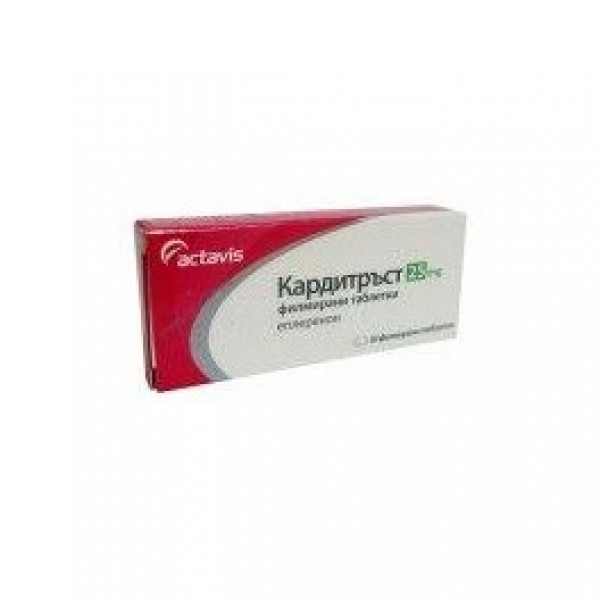
CARDITRUST 25 mg. 30 tablets
Product Code: CARDITRUST 25 mg. 30 tablets
Availability: In Stock
Product viewed: 1072


CARDITRUST 25 mg. 30 tablets
What is CARDITRUST and what it is used
CARDITRUST contains eplerenone, which belongs to a group of medicines known as selective aldosterone antagonists. These antagonists inhibit the action of aldosterone, a substance that is formed in the body and controls the blood pressure and heart rate. High levels of aldosterone can lead to changes in your body that cause heart failure.
CARDITRUST used to treat your heart failure in order to prevent deterioration and reduce hospitalizations, if you:
1 have recently suffered a heart attack, in combination with other drugs that are used to treat your heart failure, or
2. lingering, mild symptoms despite treatment you have received so far.
2. What you need to know before taking CARDITRUST
Do not take CARDITRUST tablets if:
you are allergic to eplerenone or any of the other ingredients of this medicine (listed in section 6);
if you have high levels of potassium in your blood (hyperkalemia);
if you are taking groups of drugs that help to remove excess body fluid (potassium-sparing diuretics) or "salt tablets" (potassium supplements);
if you have severe kidney disease;
if you have severe liver disease;
if you are taking medicines used to treat fungal infections (ketoconazole or itraconazole);
if taking antiviral medicines to treat HIV infection (ritonavir or nelfinavir);
if you are taking antibiotics used to treat bacterial infections (clarithromycin or telithromycin);
if you are taking nefazodone used to treat depression;
if you are taking medicines used for treatment of certain heart diseases or hypertension (m. called. ACE inhibitors (angiotensin converting enzyme) with angiotensin receptor blockers (ARB)).
Warnings and Precautions
Talk to your doctor or pharmacist before taking Karditrast tablets:
if you have kidney or liver disease (see also "Do not take Karditrast tablets');
if you are taking lithium (usually prescribed to treat manic depressive disorder, also called bipolar disorder);
if you are taking cyclosporin or tacrolimus (used to treat skin diseases such as psoriasis or eczema, and for the prophylaxis of organ rejection after transplantation).
Children and adolescents
The safety and efficacy of eplerenone in children and adolescents has not been established.
Other medicines and tablets CARDITRUST
Tell your doctor or pharmacist if you are taking, you have recently taken or might take any other medicines.
You should not take the following medicines with eplerenone (see. Section "Do not take CARDITRUST tablets"):
itraconazole or ketoconazole (used to treat fungal infections), ritonavir, nelfinavir (antiviral medication used to treat HIV infection), clarithromycin, telithromycin (used to treat bacterial infections) or nefazodone (used to treat depression), since these drugs retard the degradation of eplerenone, and thereby prolong its effect on the body;
potassium-sparing diuretics (drugs that help drainage) and potassium supplements (salt tablets) as these drugs increase the risk of high blood potassium;
angiotensin converting enzyme (ACE) inhibitors and angiotensin receptor blockers (ARB) together (which are used to treat high blood pressure, heart disease or certain kidney diseases), since these drugs can increase the risk of high levels of potassium in your blood.
Eplerenone may be reacted with:
lithium (usually applied in the treatment of manic depressive disorder, also called bipolar disorder). It has been shown that the use of lithium together with diuretics and ACE inhibitors (used to treat high blood pressure and disorders of the heart) leads to very high levels of lithium in the blood, which may cause side effects such as loss of appetite, vision disability, fatigue, muscle weakness, muscle twitching;
cyclosporin or tacrolimus (used to treat skin diseases such as psoriasis or eczema, and for the prophylaxis of organ rejection after transplantation). These drugs can cause kidney problems and thus increase the risk of high levels of potassium in your blood;
nonsteroidal antiinflammatory drugs (NSAIDs - certain analgesics such as ibuprofen, which is used for relieving pain, stiffness, and inflammation). These drugs can lead to kidney problems and thus increase the risk of high blood potassium;
Trimethoprim (used to treat bacterial infections) may increase the risk of high levels of potassium in your blood;
I alpha blockers (such as prazosin or alfuzosin) (used to treat high blood pressure and certain diseases of the prostate) can lead to low blood pressure and dizziness upon standing;
tricyclic antidepressants (such as amitriptyline or amoxapine) (for treating depression), antipsychotics (also known as neuroleptics) (such as chlorpromazine or haloperidol) (for the treatment of psychiatric disorders), amifostine (used during cancer chemotherapy) and baclofen (used for the treatment of muscle spasms). These drugs may lead to a reduction in blood pressure and dizziness upon standing;
glucocorticoids (such as hydrocortisone or prednisone) (used in the treatment of inflammation and certain skin diseases) and tetracosactide (mainly used for diagnosis and treatment of diseases of the adrenal cortex) may weaken the effect of eplerenone to lower blood pressure;
digoxin (used to treat heart disease). The values of digoxin in the blood may increase when taken together with eplerenone;
warfarin (an anti-clotting drug): Caution should be exercised when taking warfarin because high levels of warfarin in the blood may change the effect of eplerenone on the body;
erythromycin (used to treat bacterial infections), saquinavir (antiviral medication used to treat HIV infection), fluconazole (used to treat fungal infections), amiodarone, diltiazem and verapamil (for the treatment of heart disease and high blood pressure), reduced degradation eplerenone and thereby prolong its effect on the body;
St. John's wort (herbal medicine), rifampicin (used to treat bacterial infections), carbamazepine, phenytoin and phenobarbital (used, and other drugs for the treatment of epilepsy), may enhance the degradation of eplerenone and thus to reduce its effect .
Karditrast tablets with food and drink
Karditrast can be taken with or without food.
Pregnancy and lactation
If you are pregnant or breast-feeding, you think you may be pregnant or planning to become pregnant, ask your doctor or pharmacist before taking this medicine.
The effect of eplerenone has not been evaluated during pregnancy in humans.
It is not known whether eplerenone is excreted in human milk. Your doctor should consider whether to discontinue nursing or to discontinue the drug.
Driving and using machines
After taking eplerenone may feel dizzy. If this happens, do not drive or operate machinery.
CARDITRUST tablets contain lactose
CARDITRUST contain milk sugar lactose. If your doctor told you that you have an intolerance to some sugars, contact your doctor before taking this medicine.
3. How to take CARDITRUST
Always take this medicine exactly as you have been told by your doctor or pharmacist. If you're not sure, ask your doctor or pharmacist.
Karditrast tablets can be taken with meals or on an empty stomach. Swallow the tablets whole with plenty of water.
CARDITRUST usually taken with other medicines to treat heart failure, for example. beta-blockers. The recommended starting dose is one 25 mg tablet once daily, increasing after about 4 weeks to 50 mg once daily (or as one 50 mg tablet or two tablets of 25 mg). The maximum daily dose is 50 mg daily.
The level of potassium in the blood should be determined before treatment with eplerenone in the first week and one month after the beginning of treatment or after a change in dose. The dose may be adjusted by your doctor, depending on the level of potassium in your blood.
If you have kidney disease in mild, treatment should begin with one tablet of 25 mg, which is taken every day. In moderate kidney disease, treatment should begin with one tablet of 25 mg, to be taken daily. These doses can be adjusted on the advice of your doctor and depending on the level of potassium in your blood. In patients with severe kidney disease, the use of Karditrast tablets are not recommended.
In patients with mild to moderate hepatic disease do not have to adjust the initial dose. If you have liver or kidney problems may need more frequent testing of potassium levels in your blood (see. Also "Do not take CARDITRUST tablets").
For the elderly: no change to the initial dose.
For children and adolescents: use of eplerenone is not recommended.
If you take more than the amount CARDITRUST
If you take more than you need eplerenone, tell your doctor or pharmacist. If you take too much of your medicine, the most likely symptoms are: low blood pressure (expressed as lightheadedness, dizziness, blurred vision, weakness, sudden loss of consciousness) or hyperkalemia (high potassium in the blood that express themselves with muscle cramps, diarrhea, nausea, dizziness or headache).
If you forget to take CARDITRUST
If it is almost time for receiving the next dose, do not take the tablet that you missed and take your next dose on time. Otherwise take the tablet as soon as you remember, provided that they remain more than 12 hours to accept the next tablet. Then continue taking the drug in the usual manner as prescribed. Do not take a double dose to make up the missed dose.
If you stop taking tablets CARDITRUST
It is important to keep taking eplerenone, as prescribed until your doctor tells you to stop your treatment.
If you have further questions about the use of this product, ask your doctor or pharmacist.
4. Possible side effects
Like all medicines, this medicine can cause side effects, although not everybody gets them.
If any of these side effects should immediately seek medical attention:
swelling of the face, tongue or throat;
difficulty swallowing;
rash and difficulty breathing.
These are symptoms of angioneurotic edema.
Other side effects reported are:
Common side effects (affects 1 to 10 patients in 100):
elevated levels of potassium in the blood (symptoms: muscle cramps, diarrhea, nausea, dizziness or headache);
dizziness;
seizures;
heart attack;
low blood pressure;
infection;
cough;
diarrhea, nausea, constipation;
rash;
itching;
muscle spasms and pain;
impaired function of your kidneys;
elevated blood urea.
Uncommon side effects (affects 1 to 10 patients in 1000):
inflammation of the gall bladder;
increase in certain white blood cells (eosinophilia);
dehydration, an increased amount of cholesterol or triglycerides (fats) in the blood, low levels of sodium in the blood;
increased blood sugar;
sleep problems (insomnia);
headache;
cardiac symptoms, such as abnormal heart rhythm, increased heart rate and heart failure;
low blood pressure, which can cause dizziness when standing, thrombosis (blood clot) in the leg;
sore throat;
bloating, vomiting;
increased sweating;
back pains;
reduced sense of touch;
a feeling of weakness and malaise;
elevated urea and creatinine in the blood that are indicative of kidney problems, inflammation of the kidneys;
breast enlargement in men;
underactive thyroid gland;
changes in some laboratory results of blood.
5. How to store CARDITRUST
Keep out of reach of children.
This medicinal product does not require any special storage conditions.
Do not use this medicine after the expiry date stated on the blister and carton after "EXP". The expiry date refers to the last day of that month.
Write a review
Your Name:Your Review: Note: HTML is not translated!
Rating: Bad Good
Enter the code in the box below:
Related Products