Your shopping cart is empty!
Welcome visitor you can login or create an account.
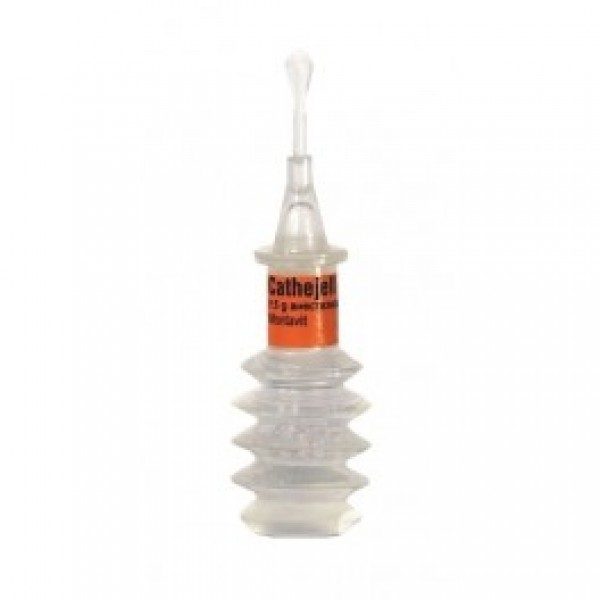
CATHEJELL GEL 12.5 g.
Product Code: CATHEJELL GEL 12.5 g.
Availability: In Stock
Product viewed: 1934


CATHEJELL GEL 12.5 g.

WHAT CATHEJELL with Lidocaine AND WHAT IT IS USED
Cathejell with Lidocaine is a sterile gel is used as a lubricant with a local anesthetic and antiseptic before use of catheters, endoscopes and other medical instruments.
Designed for use on mucous membranes. Consequently the effect of lubricant with local anesthetic and antibacterial activity, it is intended for pain relief during procedures above and to prevent many infections. Its effect is reflected at least 5-10 minutes after application and lasts for 20-30 minutes.
As a local anesthetic substance it contains Lidocaine. Superficial anesthesia, its effect lasts for 3-5 minutes. In inflamed tissue its effect is reduced.
To prevent infections at the injection site, Cathejell with Lidocaine contains Chlorhexidine. This disinfectant active against many bacteria, fungi and some viruses.
2 BEFORE USING CATHEJELL with Lidocaine
Do not use Cathejell with Lidocaine:
if you are allergic (hypersensitive) to the active substances or to any of the ingredients of Cathejell with Lidocaine;
if you are allergic (hypersensitive) to any other local anesthetics (amide type of);
in children under 2 years of age;
bulbokavernozen at reflux (injury thin urethral tissue, which can cause the lubricant to penetrate into the erectile tissue, which can be accomplished resorption);
in severe heart failure, severe bradycardia, cardiac disorder (AV - block), shock due to heart failure or decreased blood volume.
Please talk to your doctor if one or more of these conditions occur or you ever happen to you in the past.
Take special care with Cathejell with Lidocaine
if you use frequently and in high doses can be some serious side effects. Greater absorption of lidocaine, it is possible for use in the bronchial area, resulting in the partial enlarged risk of overdose;
if you have any wounds, injuries or mucosal ulcers / sores in or around the recommended site of application;
if you have severe impairment of hepatic or renal function;
with heart or respiratory malfunctions;
in adults debilni patients suffering from acute or diseases;
if you are prone to convulsions;
if you have some muscle disease (myasthenia gravis);
if you use certain drugs for the treatment of heart rhythm disturbance known as class III antiarrhythmics (eg. amiodarone) effects on the heart may be intensified;
If you suffer from porphyria (a disorder of the formation of blood).
Violation swallowing can be observed when using Cathejell of Lidocaine in the mouth and throat. There is a risk of inhalation (aspiration of the gel). Numbness of the tongue or in the mouth can lead to a risk of bites.
If the contents of more than one container is placed in the ureter, when a large amount of gel entered the bladder or urethra is ulcerative / inflamed, this may lead to increased absorption of lidocaine transmucosal, mainly in children and adults as a result of which get severe side effects (see also section 3 "If you use more than the amount of Lidocaine Cathejell than necessary").
Cathejell with Lidocaine Gel should not come in contact with eyes.
Under general anesthesia should not be used without lubricant Lidocaine.
Taking other medicines
Please tell your doctor or pharmacist if you are taking / using or often you have taken / used any other medicines, including medicines obtained without a prescription.
Cathejell with Lidocaine should not be used concomitantly with other medicinal products containing lidocaine or other local anesthetics (amide type of) because it can enhance their impact in an unpredictable way.
As can influence increased heart Lidocaine should be used with caution in patients taking anti-arrhythmic drugs (antiarrhythmics, eg. Mexileletine, tocainide), on medication for high blood pressure (beta-blockers, such as propranolol) or calcium channel blockers (eg. diltiazem, verapamil).
No studies on the specific interaction between lidocaine and class III antiarrhythmic agents; however, caution is required (see also "Be special care with Cathejell with Lidocaine"), as the effects on the heart may be increased.
If you are taking cimetidine (which blocks the release of stomach acid), talk to your doctor before applying Cathejell with Lidocaine. The use of these drugs at the same time can increase the risk of side effects.
Pregnancy and lactation
Ask your doctor or pharmacist before taking any medicine.
During pregnancy and lactation Cathejell with Lidocaine should be used only after your doctor has carefully balanced the benefits and risks of the application and has determined adequate individual dose.
Reuse during pregnancy and lactation is not recommended.
Please note that between the application of Cathejell with Lidocaine and breastfeeding should leave a space of at least 12 hours.
Women who are planning a pregnancy, or to suggest that they are pregnant should notify their physician.
Driving and using machines
Effects on ability to drive and use machines is unlikely but can not be ruled out, because of possible increased individual hypersensitivity.
3 HOW TO USE CATHEJELL with Lidocaine
This medicine should only be administered by a doctor or qualified and trained medical personnel. A suitable dose for each patient should be individually determined.
The following dosing information is only a recommendation: patient information, doctor's experience and knowledge of the physical condition of the patient is very important to determine the appropriate dose.
Extent of absorption is particularly high in the bronchial tree.
Use of the urethra prior to the insertion of a catheter, endoscope or other medical instrument
Folding syringes (accordion) (hereinafter referred to as "syringes") contain 12.5 g or 8.5 g gel, which is instilled into the urethra respectively 10 g and 6 g.
Dose recommendation:
Older men: For one man one syringe of 12.5 g is sufficient to fill the urethra. The contents of one syringe; should not be more than one instillation syringe. Anesthetic effect occurs after 5-10 minutes and lasts for 20-30 minutes.
Women, children (2-12 years) and adolescents (under 18 years): Due to insufficient data, no specific recommendations can be given for this patient group.
Method of administration:
1 Clean and disinfect the external opening of the urethra.
2 Unstick paper from the upper surface of the transparent blister to the narrowing of the transparent material of the blister.
3 is broken off tip, where possible, while still in the blisters.
4 Complete removed tip to prevent insertion into the urethra.
5 Squeezes one drop of gel, for ease of insertion of the applicator.
6 Gela is introduced slowly with a slight push of the syringe.
Cathejell syringes with Lidocaine gel is intended for single use. The gel left in the syringe after use should be discarded.
Use of general anesthesia and tracheal intubation
Adults and adolescents 15 years and older:
Place about 5 ml on the lower third of the tube (cannula). To prevent contamination, the gel must be applied to the tool before use. The gel should be within the opening of the tube before the intervention. For adults with normal body weight, the maximum dose is 16 g Cathejell with Lidocaine - anesthetic gel.
Dose recommendations for children and adolescents over 15 years:
In children under 15 years, the dose should not exceed 6 mg Lidocaine (= 0,3 ml gel) per kilogram of body weight. No more than four doses may be administered within 24 hours.
In children under 2 years Cathejell with Lidocaine should not be administered (see section 2).
Dosing recommendations in patients at risk:
In elderly patients who have debilni or in patients with acute diseases, the dose should be carefully considered. This also applies to patients with severe hepatic or renal impairment. The maximum dosage should be calculated in mg lidocaine hydrochloride per kilogram of body weight (2.9 mg lidocaine hydrochloride per kilogram of body weight).
If you use more than the amount Cathejell with Lidocaine
If this medicine is administered by a doctor or trained and qualified medical personnel, overdose is unlikely.
But if you overdose, eg. if the amount of gel is not optimally calculated according to your needs, if a large amount of gel entered the bladder or mucosa is inflamed ulcerative or damaged, this may lead to increased absorption of lidocaine, causing disruption of the activity of the central nervous system or cardiovascular system. Especially this occurs in the concomitant use of other topical anesthetics.
In overdose may occur excitation / central nervous system, which can manifest with symptoms of nervousness, dizziness, somnolence, and tremor. The first signs of overdose may have tongue numbness, twitching eyes, dizziness or fatigue.
At very high blood concentrations of lidocaine can usually be observed side-effects of the cardiovascular system as a slow pulse, poor heart function or blood pressure.
In a large overdose of Lidocaine can be observed paralysis of respiratory and cardiovascular failure.
If signs of overdose, consult a physician immediately.
If you have any further questions on the use of this medicine, ask your doctor or pharmacist.
You can find additional information about the medical professionals at the end of this leaflet: Information for the patient.
4 POSSIBLE SIDE EFFECTS
As with all medications, Cathejell with lidocaine can have side effects, although not everyone gets them.
If any of the side effects gets serious, or if you notice other effects not listed in this leaflet, please tell your doctor or pharmacist.
Side effects may include:
Very rare: affects less than 1 in 10,000 patients treated;
Not known: frequency can not be estimated from the available data.
Side effects are rarely seen after the use of Cathejell with Lidocaine, provided that the medicinal product is used as directed in the dosage recommendations / recommendations for use and taken the necessary precautions (see section 2).
Disorders of the immune system
In rare cases, observed effects of local hypersensitivity, such as redness, burning sensation or itching and / or systemic hypersensitivity reactions to lidocaine and / or Chlorhexidine they can not be completely excluded and severe reactions (often accompanied by a drop in blood pressure dizziness, vomiting and possible shortness of breath), including anaphylactic shock.
Effects on the central nervous system and cardiovascular system: They are mainly due to the rapid absorption, overdosage or hypersensitivity. May notice the following symptoms:
Nervousness, dizziness, blurred vision or tremors, drowsiness, unconsciousness and respiratory failure, low blood pressure, slow heart rate, cardiac arrest. For treatment of adverse reactions, see section "If you use more than the amount Cathejell with Lidocaine."
As the local reactions can occur roughness when used as a lubricant for the endotracheal tube (the respiratory tract).
When consumed in urology due to the low concentration of lidocaine in the blood, do not expect other systemic adverse reactions after instillation of lidocaine in Cathejell urethra.
5 HOW TO STORE CATHEJELL with Lidocaine
Keep the blister in the outer carton to protect from light.
Do not store above 25 ° C.
Keep out of reach of children.
Do not use Cathejell with Lidocaine after the expiry date stated on the carton after <EXP>. The expiry date refers to the last day of that month.
Cathejell syringes with Lidocaine are intended for single use. The amount of gel remaining in the partially emptied syringes should be used.
Medicines should not be disposed of via wastewater or household waste. Ask your pharmacist how to dispose of medicines no longer required. These measures will help to protect the environment.
6 FURTHER INFORMATION
Contents Cathejell with Lidocaine
The active substances are lidocaine hydrochloride and chlorhexidine dihydrochloride.
1 g of gel contains 20 mg of lidocaine hydrochloride, and chlorhexidine dihydrochloride 0,5 mg.
The other ingredients are hydroxyethyl cellulose, glycerol, sodium lactate solution, water for injections, hydrochloric acid and sodium hydroxide for pH adjustment.
Looks Cathejell with Lidocaine and contents of container
Sterile disposable syringe. A clear, water soluble gel fold (accordion) syringes containing 8,5 g 12,5 g or gel. The syringes are individually packaged in blister packs and are sterilized with steam. Blister strips are packaged in cartons of 1, 5 or 25 syringes.
1, 5 and 25 folding (accordion) syringes with 12,5 g gel per carton.
5 and 25 folding (accordion) syringes with 8,5 g gel per carton.
Write a review
Your Name:Your Review: Note: HTML is not translated!
Rating: Bad Good
Enter the code in the box below:
Related Products
Lidocaine amp. 10 ml of 1%. 5amp Lidocaine WHAT IS AND WHAT..
15.00€
Lidocaine. 0.5% 10 ml.5 ampules Lidocaine Sopharma WHAT IS ..
12.00€