Your shopping cart is empty!
Welcome visitor you can login or create an account.
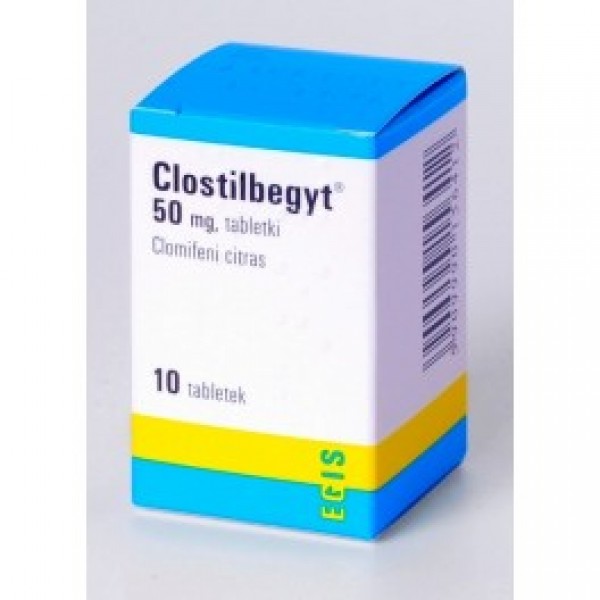
CLOSTILBEGYT 50mg. 10 tablets
Product Code: CLOSTILBEGYT 50mg. 10 tablets
Availability: In Stock
Product viewed: 4687


CLOSTILBEGYT 50mg. 10 tablets
What is Clostilbegyt and what it is used
The effect of Clostilbegyt is accelerating the maturation of the egg (ie. Called. Stimulator of ovulation).
Indication in women:
Is shown to stimulate egg maturation in some diseases of the pituitary gland or ovaries and after constant use of contraceptives (birth control);
Remove disease increased lactation (galactorrhea), which is maintained after pregnancy.
Indication in men
Decreased production of spermatozoa.
2 What you should know before taking Clostilbegyt
Before taking your medicine, talk to your doctor about the risks of:
Pregnancy with more than one child at the same time (multiple pregnancies);
Pregnancies in which the baby grows outside the womb (ectopic);
An increased risk of ovarian cancer.
Each pregnancy may lead to birth defects or miscarriage. This can happen even if you do not accept Clostilbegyt.
Do not take Clostilbegyt:
if you are allergic (hypersensitive) to clomiphene (the active ingredient of the drug), or any of the other ingredients of this medicine (listed in Section 6);
if you are pregnant. You have to do a test to make sure you are not pregnant before taking Clostilbegyt;
if you have liver disease or hepatic dysfunction;
if you have OVARIAN CYSTS, neoplasms, or loss of function of the pituitary gland;
if you have abnormal thyroid or adrenal glands;
in case of bleeding of unspecified origin or undiagnosed bleeding;
if you have recently had or have long visual disturbances;
if you have a type of cancer that is aggravated by hormones.
Take special care with Clostilbegyt:
If you get early menopause;
If you stop menstruating due to underweight
If you have experienced seizures or a history of seizures;
If you have "fibroids" in the uterus;
If you have "polycystic" ovaries;
If your ovaries are swollen;
Your doctor should check for any other causes of fertility problems before starting treatment with Clostilbegyt.
Taking other medicines
Tell your doctor or pharmacist if you are taking, have recently taken or might take other medicines.
Pregnancy and breast-feeding and fertility
Taking Clostilbegyt is contraindicated during pregnancy.
During lactation may be used only after careful consideration by your doctor the benefit / risk.
Clostilbegyt may reduce lactation.
If you are pregnant or breast-feeding, you may be pregnant or planning to become pregnant, ask your doctor or pharmacist before taking this medicine.
Driving and using machines
The drug may cause visual disturbances, therefore the extent of possible restrictions should be determined individually by your doctor.
Important information about some of the ingredients of Clostilbegyt
One tablet contains 100 mg of Clostilbegyt lactose.
If your doctor has told you that you have an intolerance to some sugars, contact before taking this medicine.
3 How to take Clostilbegyt
Always take Clostilbegyt exactly as prescribed by your doctor or pharmacist. If you are not sure, ask your doctor or pharmacist or nurse.
The recommended dose is one tablet daily before meals.
Before initiation of therapy in women should always do a thorough gynecological examination because of treatment-related side effects. Clostilbegyt can be taken only as an indication diagnosed by a gynecologist and constant medical supervision.
In the case of infertility, the dosage and duration of treatment is determined depending on the sensitivity (reactivity) of the ovaries.
If you have a regular cycle, it is recommended to begin treatment of the 5 th day of the cycle (or the 3rd day in the case of early ovulation if follicular phase is less than 12 days). In the absence of a menstrual cycle, treatment can be started at any time.
Scheme I: 50 mg daily for 5 days at which time the maturation of the egg should be monitored by clinical and laboratory tests. Maturation of the egg (ovulation) usually occurs between the 11th and 15th day of the cycle. If no egg maturation in the above treatment applies.
Scheme II: starting from the 5th day of the next cycle, taking daily doses of 100 mg over 5 days. If, after this course do not get mature egg, the same schedule (100 mg) should be repeated. In the event that there is still no ovulation after a break of three months can be held an additional 3-month course of treatment. Then not recommended continued treatment.
The total dose in each cycle should not exceed 750 mg.
Treatment should be initiated at lower doses (25 mg daily) when more cystic changes in the ovaries (called. Polycystic ovary syndrome).
If no menstruation after using contraceptives, the dose is 50 mg daily; usually 5-day course of treatment is more successful in Scheme I.
In men with reduced production of sperm, the dose is 50 mg daily for 6 weeks.
The drug should not be taken by children, adolescents and women who have undergone menopause (postmonopauzalni).
If you take more than you should Clostilbegyt
Symptoms observed after taking Clostilbegyt more tablets than prescribed are: nausea, vomiting, flushing, sweating, visual disturbances (blurred vision, the appearance of flashes before your eyes or blind spots), increased ovarian pelvic pain or in the abdomen. Overdose, unless the withdrawal of the active substance can be administered and supportive care. Contact your doctor immediately in case of overdose.
If you forget to take Clostilbegyt
Do not take a double dose to make up for a forgotten tablet. Continue course of treatment according to the prescribed manner and dose.
If you are taking this medication irregularly, the desired effect (mature egg) can not be obtained.
If you stop taking Clostilbegyt
The duration of treatment was 5 days Clostilbegyt during a menstrual cycle. If you stop taking this medication on time, the desired effect may not be obtained.
If you have further questions on the use of this medicine, ask your doctor or pharmacist, or nurse.
4 Possible side effects
As with all medications, Clostilbegyt can cause side effects, although not everyone gets them.
Stop taking Clostilbegyt and immediately go to your doctor or hospital if:
an allergic reaction. Its signs can be: rash, difficulty swallowing or breathing, swelling of the lips, face, throat or tongue (angioedema);
have numbness, weakness or paralysis on one side of the body, difficulty speaking, sudden blurred vision, confusion or dizziness. These may be signs of a stroke.
Stop taking Clostilbegyt and seek immediate medical attention if you notice any of the following serious side effects, as you may need urgent medical treatment:
ovarian hyperstimulation. This can cause pelvic pain, stomach or calf MUSCLES of the legs, swelling or feeling of swelling, decreased urine output, shortness of breath or weight gain. In this case, your doctor may reduce your dose of Clostilbegyt;
blurred vision or spots or flashes before your eyes. Usually these symptoms disappear, but sometimes can be retained permanently. Your doctor can refer you to an eye examination;
liver problems, which can cause yellowing of the eyes or skin (jaundice);
sudden and severe headache;
mental disorder, for example. psychosis.
Tell your doctor or pharmacist if any of the following side effects gets serious or lasts more than a few days:
more severe pain during menstruation, excessive bleeding or bleeding between two cycles;
pain in the lower part of the stomach. This may indicate development or worsening of endometriosis, ovarian cancer or enlarged ovaries;
dim eye lens (cataract);
seizures, fainting, disorientation or increased anxiety, and problems with balance or dizziness (vertigo);
fatigue or difficulty sleeping (insomnia), depression or mood swings or behavior;
speech problems;
rash or ITCHY SKIN;
nausea or vomiting;
redness of the skin;
headache;
swelling of the face, around the eyes, lips;
chest pain;
hair loss or thinning hair.
The frequency of possible side effects listed below are grouped as follows:
very common (affects more than 1 user in 10);
common (affects 1 to 10 users in 100);
Uncommon (affects 1 to 10 users in 1000);
rare (affects 1 to 10 users in 10,000);
very rare (affects less than 1 in 10,000 people);
not known (frequency can not be estimated from the available data).
Common side effects (affects 1 to 10 users in 100):
headache, dizziness, fatigue;
visual disturbances (blurred vision or spots or flashes, etc..)
nausea, vomiting;
flushing, sweating, hot flashes;
tightness in the chest, pain in the abdomen or pelvis, dysmenorrhea, abnormal uterine bleeding, ovarian enlargement.
Uncommon side effects (between 1 and 10 per 1000 users):
fatigue, dizziness;
constipation, diarrhea, acute abdominal pain;
more frequent urination;
skin rash, hives, allergic dermatitis, erythema multiforme, ecchymosis;
increased appetite, weight gain or weight loss;
yellowing, cholestasis;
dryness of the vagina, more frequent urination;
nervous tension, depression, insomnia.
Rare side effects (between 1 and 10 per 10 000 users):
cataracts, optic neuritis.
Very rare (less than 1 in 10,000 users):
hair loss.
Not known (frequency can not be estimated from the available data):
psychotic reactions, including paranoid psychosis, disorientation, speech disorder, a neurological disorder;
fainting, cerebrovascular accident, cerebral thrombosis, neurological disorder;
Convulsions have been reported, it is possible patients with a history of seizures are prone;
jaundice, biliary stasis;
allergic reactions, erythema multiforme (spots kind of target on the skin), ecchymosis, and angioneurotic edema;
ovarian hyperstimulation, new onset or exacerbation of endometriosis;
reported isolated cases of formation and degradation of tumors sensitive to hormones.
Hot flashes that occur during treatment disappeared after stopping treatment. It can also develop cystic ovarian enlargement, most often in a rare condition called syndrome, Stein-Leventhal. Your doctor may ask you to measure the temperature and depending on it to decide when to stop treatment. In the treatment twin pregnancy occurred more frequently than in the normal population. In women who become pregnant after a treatment with clomiphene is greater than the probability of ectopic pregnancy.
If you get any side effects, tell your doctor or pharmacist, or nurse. This includes all listed in this leaflet.
5 How to store Clostilbegyt
Do not store above 30 ° C.
Keep out of reach of children.
Clostilbegyt not use after the expiry date which is stated on the package.
The date of the expiry date is last day of the month.
Do not use Clostilbegyt if you notice discoloration.
Do not dispose of medications in wastewater or household waste. Ask your pharmacist how to dispose of medicines no longer required. These measures will help to protect the environment.
6 Package Contents and more information
Contents Clostilbegyt
The active substance is 50 mg of clomiphene citrate in a single tablet.
Other ingredients, excipients are: gelatin, magnesium stearate, stearic acid, talc, potato starch, lactose monohydrate (100 mg).
Clostilbegyt looks like and contents of container
Tablets: white or yellowish-white, round, flat, bevelled edges, with no or very faint odor tablets marked "CLO".
Packing: 10 tablets in a bottle with a secure cap or blister strip, in a cardboard box.
Write a review
Your Name:Your Review: Note: HTML is not translated!
Rating: Bad Good
Enter the code in the box below:
Related Products
FOSTIMON 150 IU. 10 solution for injectionWHAT FOSTIMON 150I..
499.00€