Your shopping cart is empty!
Welcome visitor you can login or create an account.
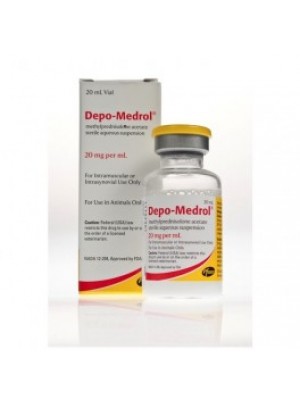
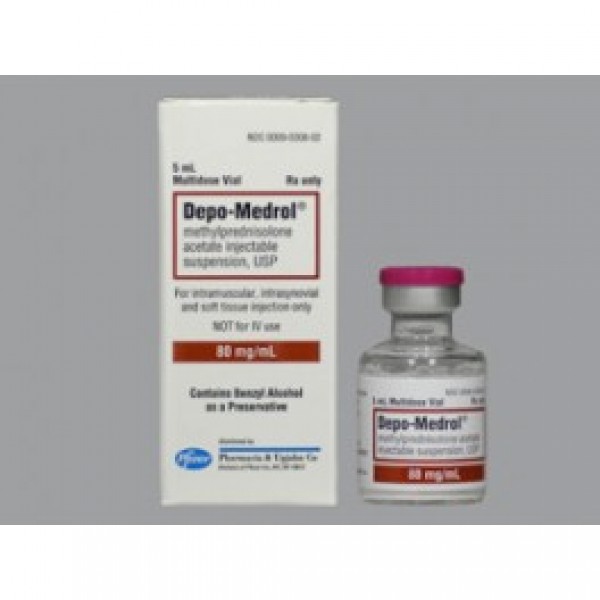
DEPO-MEDROL 80 mg.
Product Code: DEPO-MEDROL 80 mg.
Availability: In Stock
Product viewed: 1947


DEPO-MEDROL 80 mg.
What is DEPO-MEDROL?
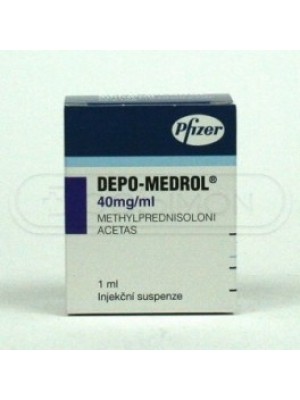
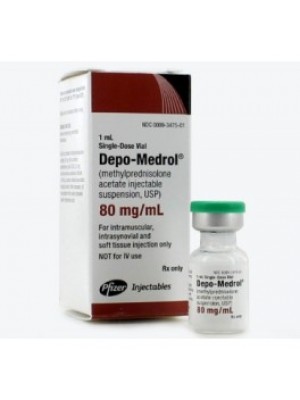
The name of your medicine is DEPO-MEDROL. The active substance is methyiprednisolone (methylprednisolone). DEPO-MEDROL contains 40 mg / ml methyiprednisolone as sterile water for injection suspension for single-upotreba.DEPO MEDROL also contains excipients: polyethylene glycol 3350, sodium chloride, myristyl-gamma piccolinium chloride and water for inzhektsii..DEPO-MEDROL you to find as vials of 1 ml (40 mg methyiprednisolone) or 2 ml (80 mg methyiprednisolone).
What is the effect of DEPO-MEDROL?
DEPO-MEDROL belongs to a group of medicines called corticosteroids or steroids. Corticosteroids are hormones which are produced naturally by the adrenal glands, which are located above the kidneys. They help the body deal with inflammation, allergic reactions and other stress conditions. This drug is a synthetic corticosteroid, similar to the natural hormone, and have the same effect.
DEPO-MEDROL has two main actions. First, it interrupts inflammation (pain, swelling, redness and warmth) in your body. Another effect is a decrease in activity of the immune system. This is useful, for example, in conditions in which the immune system attacks its own body of the patient (an autoimmune response), causing damage to, or when causing a strong reaction to the substance with which the patient comes into contact (e. Allergy) .DEPO-MEDROL not is "anabolic steroid" for weight gain.
Marketing Authorisation Holder
Pharmacia Enterprises SA, Circuit de la Foire Internationale, Luxembourg
producer
Pfizer Manufacturing Belgium NV / SA, Rijksweg 12 B-2870, Puurs, Belgium
What is DEPO-PLEDROL?
This medicine may be used for treatment of:
• Rheumatic diseases: rheumatoid arthritis inflammation affecting the joints and / or other parts of the body in adults or children; acute and subacute bursitis (inflammation of periarticular bag), acute nonspecific tenosynovitis (inflammation of the vagina muscle tendon), acute gouty arthritis (inflammation of the joints in gout), posttraumatic osteoarthritis (joint inflammation after injury), synovitis in osteoarthritis (inflammation any joint lining), epicondylitis (inflammation of the terminal portion of some bones). If possible in these cases, the drug should be administered to the site of disease. It is used as adjunctive therapy in ankylosing spondylitis (ligaments of the spine and pelvis ossification and coalesce with each other), psoriatic arthritis (joint inflammation in psoriasis).
• collagen, muscle inflammation (such as dermatomyositis or polymyositis); systemic lupus erythematosus (rash accompanied by fever, arthritis, inflammation of the blood vessels, kidney disorders and disorders affecting the brain); remavmatichen acute carditis (affecting the heart muscle rheumatism).
• Skin diseases: pemphigus vulgaris (blisters on the skin), other skin diseases (bullous dermatitis herpetiformis, severe erythema multiforme (Syndrome Stevens-Johnson), exfoliative dermatitis, mukozis fungoides, severe seborrheic dematit, severe psoriasis) .
• Allergic conditions: chronic disturbances of breathing in asthma; severe forms of hay fever and other allergies, accompanied by fever; allergies to certain drugs (such as penicillin) and serum sickness (allergy vaccines produced from animal serum); skin allergy due to contact with certain substances (contact dermatitis), laryngeal edema.
• Eye diseases: iritis or iridocyclitis (inflammation of the front of the eye); posterior uveitis (inflammation of the back of the eye); optic neuritis (inflammation of the optic nerve), inflammation of the anterior segment, allergic conjunctivitis or allergic corneal ulcers edge and other ocular diseases (herpes zoster oftapmikus, chorioretinitis, keratitis).
• Lung diseases: pulmonary sarcoidosis (inflammation of the tissues and the lymphatic glands of the lungs); tuberculosis, which progresses rapidly or has spread to other areas (both with anti-tuberculosis drugs); inflammation caused by aspiration of gastric contents or vomit into the lungs when the unconscious; and other pulmonary diseases (berylliosis and Loeffler's syndrome).
• Blood disorders: secondary thrombocytopenia (low number of blood cells that help blood clotting) in adults; autoimmune hemolytic anemia (when the immune system attacks its own red blood cells) and other anemias (congenital erythroblastopenia and (eritoidna) hypoplastic anemia).
• Intestinal diseases ulcerative colitis (inflammation and ulceration of the colon), incl. in the form of an enema; inflammation of the different parts of the intestine.
• swollen conditions: to increase diuresis (urine excretion) in nephrotic syndrome (kidney disease).
• Malignancies: Leukemia (excessive formation of white blood cells in the bone marrow); cancer of the lymphatic system, which usually affects the lymph nodes (glands) and spleen.
• Other conditions: multiple sclerosis, tuberculosis infection causing inflammation of the meninges (lining of the brain). In these cases depot MEDROL should be administered with anti-tuberculosis agents
• Hormonal disorders: eg., If the adrenal glands are not working properly for some reason, so that the body does not produce enough of its own natural steroids; In hypercalcemia (elevated calcium levels in the blood) in relation to cancer, negnoen thyroiditis (inflammation of the thyroid gland) in congenital prikomerno expansion of the adrenal glands.
• Can be applied directly to the damaged tissue in some skin diseases (keloids, localized lesions in lichen planus, neurodermatitis, psoriasis plaques and granuloma annular, discoid lupus erythematosus, alopecia areata -lokalizirano hair loss), cystic tumors of the aponeurosis or tendon (ganglion).
Your doctor could apply DEPO-MEDROL to treat conditions other than those listed above. Ask your doctor if you are unsure of the reason you do it is predpisal.podhodyasht Is Depot MEDROL in your case? Your doctor will ask you questions before prescribing this medicine, to make sure that it is suitable for you. If you do not understand any of the questions, ask your doctor to explain them to you.
You should not take this medicine if:
• you have had an allergic reaction such as skin rash, swelling, wheezing or breathing problems after premium depot MEDROL, methyiprednisolone, a glucocorticoid or any of the excipients in the formulation of this medicine;
• have widespread (systemic) fungal infection.
This medicine should not be given directly into the veins and into the cerebrospinal fluid. Tell your doctor if any of the above events affects your sluchay.Ako answer "YES" or are not sure about the answer, talk to your doctor. Your doctor may want to follow more closely your condition or may decide that treatment with DEPO-MEDROL not be suitable for you.
• Are you pregnant; is there a possibility that you are pregnant? Do you trying to conceive? You must use effective contraception and not trying to become pregnant before the drug is transmitted from your body. If this medicine you will be given during pregnancy, your baby is subject to further testing shortly after birth in order to ascertain whether his / her adrenal glands are working normally. Remind them to your doctor.
• Breast milk it? If you continue to breast-feed during treatment, your baby will be further research to see if the drug did not have any influence on him / her.
• Do you have liver failure or cirrhosis (in these cases there may be yellowing of the skin or jaundice)?
• Do you have kidney problems (leading to increased or decreased urine output)?
• Do you suffer from high blood pressure?
• Do you have heart failure (you have swollen ankles, shortness of breath and palpitations)?
• Do you hypoprothrombinaemia (disease associated with reduced blood clotting)?
• Do you have problems with the digestive tract, such as ulcers of the stomach or intestines (can lead to stomach pain, even if you do not worry at the moment), diverticulitis (inflamed pockets in the inner wall of the digestive tract, causing left-sided abdominal pain, constipation or diarrhea) or ulcerative colitis (swelling and ulceration of the gut)? Although steroids are very effective for the treatment of inflammation in ulcerative colitis, they can also increase the risk of bleeding or perforation (tearing) of the ulcerated intestine.
• Are you soon stomach surgery, appendix, gall bladder, pancreas or small or large intestine?
• Do you have you or someone in your family diabetes (problems with balance sugar) or glaucoma (increased eye pressure)?
• Do you have osteoporosis (brittle bones)?
• Do you have myasthenia gravis (when some or all of your muscles are affected by weakness or tire easily)?
• Have you ever myopathy (muscle problems weakness or pain, especially in the lower extremities and buttocks) when treated with steroids?
• Do you have suffered and you ever from severe mental illness (eg, emotional instability, depression, hallucinations)? If before you are being treated with steroids, was it caused psychosis (mental illness, which was to be conducted on an outpatient or inpatient treatment)?
• Do you have abscesses?
• Do you currently have any infections?
• Have you ever had an eye infection caused by herpes simplex virus? Do you currently ocular herpes (ulcers of the eye that has emerged recently, or inflammation of the eye)?
• Do you have tuberculosis? Have you ever suffered from tuberculosis in the past? Did you test positive for tuberculosis?
• Will you be vaccination Are you a recent vaccination? (Tell your doctor or nurse that you are taking DEPO-MEDROL if you require vaccinations. During treatment with this medicine should not receive live vaccines and other vaccines may be less effective) .Ne forget to tell your doctor if you have any of these problems before starting treatment with this lekarstvo.Ako you should do some research, notify your doctor that you are taking DEPO-MEDROL.
Are you taking other medicines?
Methyiprednisolone can interact with some lekarstva.Predi initiation of treatment with DEPO-MEDROL tell your doctor if you are taking other medicines, including medicines you bought sami.Ako already taking DEPO -MEDROL, tell your doctor immediately if and taking any of the medicines listed dolu.Saobshtete your doctor if you are being treated for diabetes (high blood sugar), high blood pressure or heart failure. This medicine can make treatment less effective. This means that you may need your doctor to change the dose of these drugs.
Make sure to tell your doctor if you are taking any of the medicines listed below:
• Some antibiotics (eg. Troleandomycin) or antifungal drugs (eg., Ketoconazole), and some calcium antagonists (drugs for the treatment of hypertension or angina) can decrease methyiprednisolone from the body, which is why it is necessary to more carefully dosing DEPO-MEDROL;
• drugs, that lead to the activation of hepatic enzymes (such as phenobarbital, phenytoin, rifampicin) can enhance the separation of methyiprednisolone from the body, so that it is necessary to increase the dose of DEPO-MEDROL to achieve the desired response.
• Anticoagulants (medicines that inhibit blood clotting);
• Aspirin and similar drugs called salicylates (used usually in pain and / or inflammation in temperature). Methyiprednisolone enhances emission of aspirin and related drugs (called salicylates) from the body. If you stop taking DEPO-MEDROL, their concentrations can suddenly increase and cause side effects such as tinnitus. If you hipotrombinemiya (increased bleeding), your doctor will be more cautious if you need to prescribe steroids simultaneously with aspirin or salicylates.
• Cyclosporin - this is a drug called "immunosuppressant" which is used to suppress the immune system in patients with severe rheumatoid arthritis, severe psoriasis or patients who have had a transplant organ or bone marrow.
If you are not sure if any of the medicines you take, included in the above list, ask about your doctor, nurse or pharmacist. If you visit your doctor on the occasion of another medical problem, remind him that taking DEPO-MEDROL.
specific issues
infections
DEPO-MEDROL may mask some signs of infection, reduce your resistance to infection and to modify the signs and symptoms of infection so that they become difficult to diagnose in its early stages. It also increases the likelihood of developing a serious infection. If you think you have an infection, report it immediately to your doctor.
tuberculosis
DEPO-MEDROL applies only when tuberculosis is very advanced or has spread throughout the body in order to contain the disease process simultaneously with appropriate anti-tuberculosis agents. If you have ever suffered from tuberculosis in the past or if you test positive for TB, your doctor will closely monitor whether TB will not appear again. He may prescribe anti-tuberculosis agents to prevent this possibility.
Use in children
Growth may be suppressed in children receiving long-term glucocorticoid treatment with a daily dose in divided doses. The implementation of such a scheme should be restricted to those most serious indications.
How to use DEPO-MEDROL?
Your doctor will decide what dose you should receive. The amount depends on your illness and its severity. Your doctor will always endeavor to apply the lowest possible dose that leads to a good result. Always take your medicine exactly the way your doctor appointed him. If necessary, your doctor can calculate the weekly dose by multiplying the daily oral dose by 7 and to apply it as a single intramuscular injection. If you are unsure, ask your doctor, nurse or doctor farmatsevt.Vashiyat usually appoints a higher dose for a few days to control your condition. If your condition is not controlled, it can change treatment. It is possible that your doctor makes frequent inspections to ensure that you feel better. If depot MEDROL was appointed because your body is unable to produce its own corticosteroids, your doctor may also prescribe a second type of steroid to help salt balans.Nachalnata dose chosen by your doctor will be continued until he decides that your condition has improved. If the doctor finds that your condition has improved, he will reduce gradually dozirovkata.Lekarstvoto can be applied intra-articularly in some states. In chronic cases, the injections can be repeated at intervals of one to five weeks or more, depending on the degree of benefit obtained from the first injection. Suitable sites for intra-articular injection are the knee, ankle, wrist, elbow, shoulder, inter-phalangeal (finger) and hips. Unsuitable for injection are joints that are anatomically inaccessible such as the spine, and those that are devoid of synovial space such as the sacroiliac joints. The drug is administered to the disease site and bursitis, ganglion, tendinitis, epicondylitis and skin diseases. In some cases intestinal diseases may have application in the form of klizma.Ako product is administered intra-articularly, you should avoid excessive loading of this happening. Ignoring these measures could lead to deterioration of the joint, beyond the beneficial effects of corticosteroids. In some cases, your doctor may order an x-ray to track the status of the joint. This is normal and should not you pritesnyava.Tryabva tell their doctor immediately if you notice a significant increase in pain accompanied by joint swelling, further restriction of joint motion, fever and malaise.
Use in children
DEPO-MEDROL may be prescribed for children. Usually prescribed a lower dose than that of adults, but it depends on the severity of the condition and response to lechenieto.Kakvo you do if you received a higher dose or if you miss priemTay this drug is given by injection under medical supervision , likely to miss a dose or get a larger dose is small. If in doubt, consult your doctor.
Stopping the drug / dose reduction
Write a review
Your Name:Your Review: Note: HTML is not translated!
Rating: Bad Good
Enter the code in the box below:
Related Products