
Your shopping cart is empty!
Welcome visitor you can login or create an account.
Dironorm 20 mg. 10 mg. 30 tablets
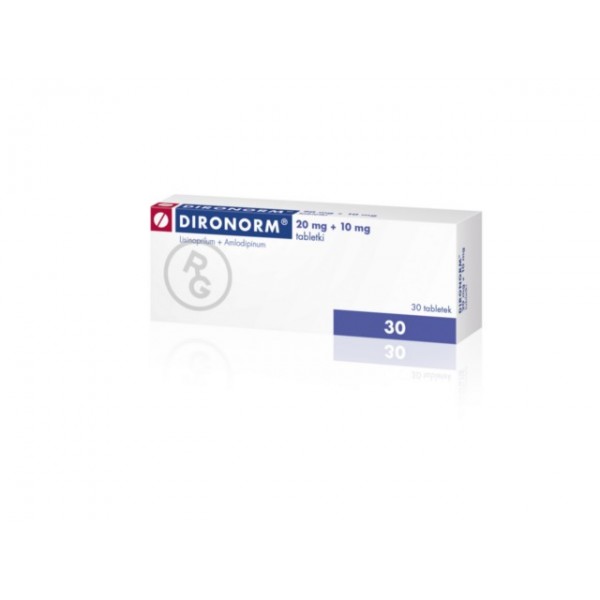
Product viewed: 3465


WHAT DIRONORM IS AND WHAT IT IS USED FOR
DIRONORM is a combined product of amlodipine, which belongs to a group of medicines called calcium channel blockers and lisinopril, which belongs to a group of medicines called angiotensin converting enzyme (ACE) inhibitors. Dynorrm is used to treat hypertension (high blood pressure). Your excessive blood pressure may not show any symptoms, but it may increase the risk of developing some complications (eg stroke or heart attack) if you do not take your antihypertensive medicine regularly.
2. BEFORE YOU TAKE DIRONORM
Do not take DIRONORM
You should not take this medicine:
- if you are allergic (hypersensitive) to the active substances or any of the other ingredients of DIRONORM
- if you are allergic to other ACE inhibitors (such as enalapril, captopril and ramipril) or other calcium channel blockers (such as nifedipine, felodipine or nimodipine).
- if you have had angioedema / symptoms such as itching, hives, swirling, swelling of the hands, throat, mouth or eyelids) whether or not associated with ACE inhibitor therapy.
- if your blood pressure is too low (severe hypotension).
- if the left ventricle bleeding, if you have severe narrowing of the aorta (aortic stenosis).
- if you have a circulatory disorder (including a heartbeat shock called "cardiogenic shock").
- if you have had heart failure (myocardial infarction) in the last 28 days.
- if you are pregnant after the third month (in early pregnancy, it is also better not to take Dynorormum - see section "Pregnancy").
Take special care with DIRONORM
Before treatment, you should consult your doctor if:
- you have heart problems
- you have kidney problems
- you have liver problems
- you are on dialysis
- You are going to have a treatment called LDL apheresis (to remove cholesterol)
- You are over 65 years old
- if you are on a low-salt diet and you are using potassium-containing salt substitutes or supplements
- you have diarrhea or vomiting
perform desensitization treatment to reduce allergy to bee or heel sting
- if you are black, as ACE inhibitors may be less effective, but you can also get angioedema
- you are taking any of the medicines listed below
You should tell your doctor if you think you are pregnant (or you may become pregnant). DIRONORM is not recommended in early pregnancy and should not be taken if you are pregnant after 3 months because it can seriously harm your baby if used during this period (see Pregnancy and Breastfeeding).
Taking other medicines
Please tell your doctor or pharmacist if you are taking or have recently taken any other medicines, including medicines obtained without a prescription.
Potassium-sparing diuretics (such as spironolactone, amiloride, triamterene used to reduce fluid retention) may be taken with DIRONORM only under close medical supervision.
Special care should be taken when DIRONORM is taken with the following medicines:
• diuretics (used to reduce fluid retention)
• other medicines used to lower blood pressure (antihypertensive agents)
• medicines used to treat heart disease
• non-steroidal anti-inflammatory drugs (NSAIDs) such as acetylsalicylic acid (used to treat arthritis, muscle pain, headache, inflammation, fever)
• lithium, antipsychotic agents (used to treat mental disorders)
• insulin and antidiabetic agents taken orally
• autonomic stimulants of the nervous system (sympathomimetics) such as ephedrine, phenylephrine, xylometazoline and salbutamol (used to treat nasal congestion, cough, cold and asthma)
• immunosuppressants (used to prevent transplant rejection)
• alupurinol (used to treat gout)
• Drugs, morphine and related medicines (used to treat severe pain)
• Cancer drugs
• Drugs (used in surgery or in some dental procedures). Tell your doctor or dentist that you are taking DIRONORM before taking a local or general anesthetic because of the risk of rapidly lowering blood pressure
• anticonvulsants (such as carbamazepine, phenobarbital and phenytoin) used to treat epilepsy
• medicines used to treat bacterial (rifampicin), HIV (ritonavir) or fungal infections (ketoconazole)
• gold salts, especially when administered intravenously (treatment of rheumatoid arthritis symptoms is used)
- herbal products containing St John's wort
TakeDIRONORM with food and drink
DIRONORM can be taken with or without food, but alcohol should be avoided during treatment. It is possible that grapefruit juice interacts with amlodipine by increasing its effect; overall, however, the increase is not significant.
Pregnancy and breastfeeding
Ask your doctor or pharmacist for advice before taking any medicine.
Pregnancy
You should tell your doctor if you think you are pregnant (or you may become pregnant). In general, your doctor will advise you to take another medicine instead of DIRONORM as DIRONORM is not recommended in early pregnancy and can seriously harm your baby if taken after the third month of pregnancy.
Breastfeeding
Tell your doctor if you are breast-feeding or about to start breast-feeding. DIRONORM is not recommended for breastfeeding and your doctor may choose another treatment for you if you wish to breast-feed, especially if your child is newborn or premature:
Driving and using machines
DIRONORM may affect your ability to drive and use machines safely.
3. HOW TO TAKE DIRONORM
Always take DIRONORM exactly as your doctor told you
If you are not sure, ask your doctor or pharmacist. The usual dose of Dynororm is 1 tablet daily. DIRONORM may be taken with or without food. For long-term treatment, try to take your tablet at the same time each day.
If you think the effect of Dynororm is too strong or too weak, talk to your doctor or pharmacist.
If you take more Dynorrm than you should
Contact your doctor immediately or go to the emergency room of the nearest hospital.
Overdose is likely to lead to a severe decrease in blood pressure, which should be immediately observed, and if you experience symptoms such as dizziness and headache, you should lie face up. Your doctor will take further steps.
POSSIBLE SIDE EFFECTS
You should stop taking DIRONORM and seek immediate medical attention if you develop any of the following symptoms of angioedema:
- difficulty in breathing with or without swelling of the face, lips, tongue and / or throat
- swelling of the face, lips, tongue and / or throat that may cause swallowing difficulties.
- severe itching on the skin
Other side effects reported with the use of amplodipine or lisinopril alone and which may also occur with the use of Dynororm:
Amlodipine:
Common - headache, edema, feeling tired, drowsiness, malaise, dizziness, abdominal pain, polyp, nausea, hot flushes.
Uncommon - rash, itching in the skin, indigestion, shortness of breath, muscle spasms, disturbed rhythm, pain in the muscles or joints, back pain, chest pain, mood swings, depression, insomnia, difficulty breathing, taste changes, tempo, increased need for urination, dry mouth, thirst, loss of feeling of pain, increased sweating, fainting, weakness, impotence, weight loss.
Rare - confusion
Very rare - allergic reactions, liver function abnormalities, liver inflammation, yellowing of the skin, decreased white blood cell count and platelets in the blood, heart attack, irregular heartbeat, cough, severe skin reactions, swelling of the lips, eyelids and genitals, gum disease, inflammation of the pancreas, inflammation of the lining of the stomach, formation of red areas of the skin, sensitivity to light.
Lisinopril:
Common - headache, dizziness or dizziness, especially in fast straightening, diarrhea, cough, vomiting, kidney problems, skin rash, itching.
Uncommon - Vulnerability, angioedema, change in color and / or stiffness or tingling of the toes or feet, taste changes, fatigue, sleepiness or difficulty falling asleep, unusual dreams, feeling dizzy, unusual sensations on the skin, stroke, nausea, stomach pain or indigestion, impotence, fatigue, muscle weakness, change in the results of some laboratory tests
Rare - confusion, acute kidney problems, dry mouth, hair loss, psoriasis, breast enlargement in men.
Worsening of the blood picture: reduction of red blood cells.
Very rare - low blood sugar, sinus pain, wheezing, irritation of the lungs, yellowing of the skin and / or eyes, inflammation of the liver or pancreas, severe skin conditions, sweating.
Not known - fainting, depression.
More information:
The active substances are lisinopril and amlodipine.
The other ingredients are cellulose microcrystalline, cellulose microcrystalline 12, sodium starch glycolate, magnesium stearate.
Write a review
Your Name:Your Review: Note: HTML is not translated!
Rating: Bad Good
Enter the code in the box below:
Related Products
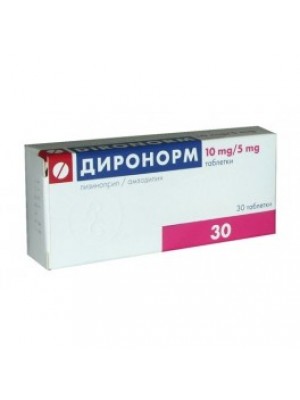
DIRONORM tabl.10 / 5 mg. 30 tablets What are active substanc..
20.00€
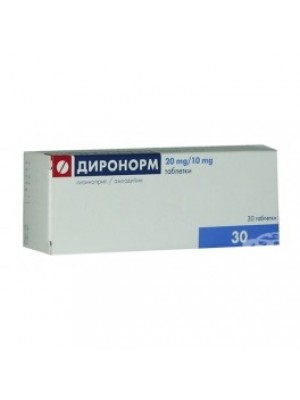
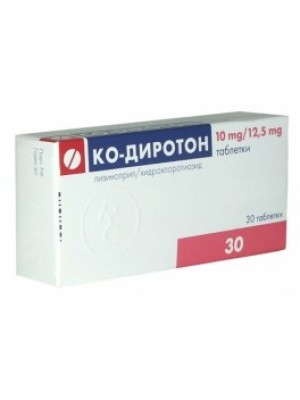
Co-DIROTON . 10 mg. / 12.5 mg tablets WHAT CO-DIROTON AND WH..
28.00€
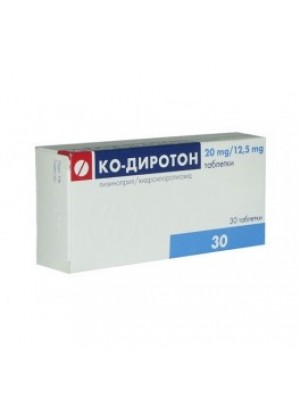
Co-DIROTON . 20 mg. / 12.5 mg. 30 tablets WHAT CO-DIROTON AN..
15.00€