Your shopping cart is empty!
Welcome visitor you can login or create an account.
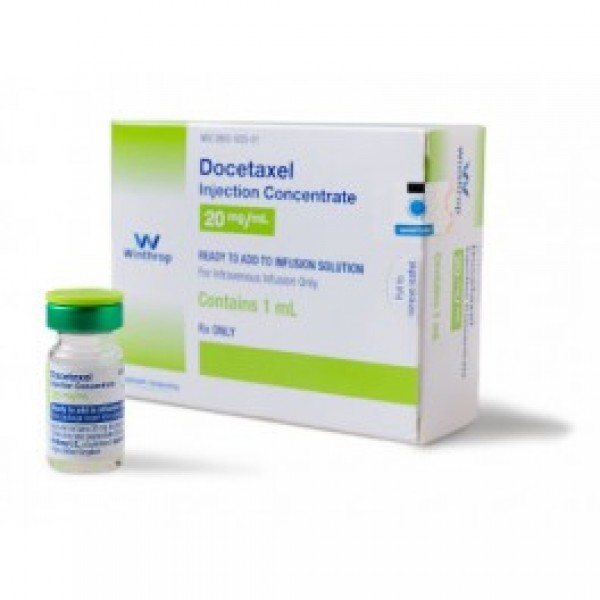
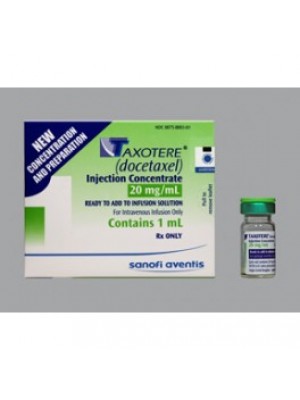
Docetaxel 20 mg. / 1 ml.
Product Code: Docetaxel 20 mg. / 1 ml.
Availability: In Stock
Product viewed: 1121


Docetaxel 20 mg. / 1 ml.
What is Docetaxel Accord and what it is used?
The name of this medicine is Docetaxel Accord. Common name is docetaxel. Docetaxel is a substance derived from the needles of yew trees.
Docetaxel belongs to the group of anti-cancer medicines called taxoids.
Docetaxel Accord been prescribed by your doctor for the treatment of breast cancer, special forms of lung cancer (non-small cell lung cancer), prostate cancer, gastric cancer or cancer of the head and neck:
- For the treatment of advanced breast cancer, Docetaxel can be administered alone or in combination with doxorubicin, or trastuzumab, or capecitabine.
- For the treatment of early breast cancer with or without lymph node involvement, Docetaxel can be administered in combination with doxorubicin and cyclophosphamide.
- For the treatment of lung cancer, Docetaxel can be administered alone or in combination with cisplatin.
- For the treatment of prostate cancer, docetaxel is administered in combination with prednisone or prednisolone.
- For the treatment of metastatic gastric cancer, docetaxel is administered in combination with cisplatin and 5-fluorouracil.
- For the treatment of cancer of the head and neck, docetaxel is administered in combination with cisplatin and 5-fluorouracil.
2. What you should know before using Docetaxel Accord?
Do not use Docetaxel Accord
• if you are allergic to docetaxel or any of the other ingredients of Docetaxel Accord.
• the number of white blood cells is too low.
• you have severe liver disease.
Warnings and Precautions
Before each treatment with Docetaxel Accord, will do a blood test to determine whether you have enough blood cells and sufficient liver function to receive Docetaxel Accord. If you have a disorder of white blood cells may experience associated fever or infections.
If you have symptoms of acute or worsening lung problems (fever, shortness of breath or cough), please tell your doctor, hospital pharmacist or nurse. Your doctor may stop your treatment immediately.
You will be asked to take premedication consisting of an oral corticosteroid, such as dexamethasone, one day prior to Docetaxel Accord and two days later, in order to reduce some side effects which may occur after the infusion of Docetaxel Accord, especially allergic reactions and fluid retention (swelling of the hands, feet, legs or weight gain).
During treatment, you may be given other medicines to maintain the number of blood cells.
Docetaxel Accord contains alcohol. Discuss with your doctor if you suffer from alcohol dependence or liver disorder. See also section "Docetaxel Accord contains ethanol (alcohol)" below.
Other medicines and Docetaxel Accord
Tell your doctor or hospital pharmacist if you are taking or have recently taken any other medicines, including medicines obtained without a prescription. This is because Docetaxel Accord or the other medicine may not work as expected and you may be more likely to experience adverse reactions.
Pregnancy, lactation and fertility
Ask your doctor before taking any medicine.
Docetaxel Accord should NOT be administered if you are pregnant, unless specifically directed by your doctor.
You must not become pregnant during treatment with this medicine and must use an effective method of contraception during treatment because docetaxel may harm your baby. If during treatment pregnancy occurs, you should inform your doctor immediately.
You should not breastfeed while being treated with Docetaxel.
If you are a man being treated with docetaxel are advised not to father a child during and up to 6 months after treatment and to seek advice on conservation of sperm prior to treatment because docetaxel may impair male fertility.
Driving and using machines
No studies on the effects on ability to drive and use machines.
The amount of alcohol in this medicine may impair your ability to drive or operate machinery.
Docetaxel Accord contains ethanol (alcohol)
This medicine contains
50% by volume of ethanol (alcohol), i.e., to 0,395 g (0,5 ml) and 4 ml of a wine bottle.
50% by volume of ethanol (alcohol), i.e., up to 1,58 g (2 ml), 17 ml of a wine bottle.
50% by volume of ethanol (alcohol), i.e., up to 3,16 g (4 ml) to 33 ml of a wine bottle. Harmful for those suffering from alcoholism. To take into account if you are pregnant or breast-feeding in children and high-risk groups such as patients with liver disease or epilepsy.
The amount of alcohol in this medicinal product may alter the effects of other drugs.
The amount of alcohol in this medicine may impair your ability to drive and use machines.
3. How to use Docetaxel Accord?
Docetaxel Accord will be administered by a healthcare professional.
Recommended dosage
The dose will depend on your weight and your general condition. Your doctor will calculate your body surface area in square meters (m2) and will determine the dose you should receive.
Route of administration and route of administration
Docetaxel Accord will be administered by infusion into one of your veins (intravenous). The infusion will last approximately one hour during which you will be in the hospital.
Frequency of administration
You should normally receive your infusion once every 3 weeks.
Your doctor may change the dose and frequency of dosing depending on your blood tests, your general condition and your response to Docetaxel Accord. Please tell your doctor, especially in the case of diarrhea, sores in the mouth, a feeling of numbness or tingling, fever and give all the results of your blood tests your doctor. Such information will allow your doctor to decide whether to require dose reduction. If you have any further questions on the use of this medicine, ask your doctor or hospital pharmacist.
4. Possible side effects
Like all medicines, this medicine can cause side effects, although not everybody gets them.
Your doctor will discuss this with you and will explain the potential risks and benefits of treatment.
The most commonly reported adverse reactions of docetaxel alone are: decrease the number of red blood cells or white blood cells, hair loss, nausea, vomiting, mouth sores, diarrhea and fatigue.
The severity of adverse events of docetaxel may be increased when docetaxel was given in combination with other chemotherapeutic agents.
During the infusion at the hospital may experience the following allergic reactions (may affect more than 1 in 10 people):
• flushing, skin reactions, pruritus
• chest tightness, difficulty in breathing
• fever or chills
• back pain
• low blood pressure.
May appear more severe reactions.
Your condition will be closely monitored by hospital staff during treatment. Tell them immediately if you experience any of these reactions.
Between infusions of Docetaxel can cause the following side effects and frequency may vary depending on the combinations of drugs that apply:
Very common (may affect more than 1 in 10 people): infection, reducing the number of red (anemia), or white blood cells (important in fighting infection) and platelets
- Fever: if this happens, immediately contact your doctor allergic reactions, as described above, loss of appetite (anorexia), insomnia
- A feeling of numbness, tingling or pain in the joints or muscles headache change in taste
- Inflammation of the eye or increased tearing of the eyes, swelling due to impaired lymphatic drainage difficulty breathing
- Nasal discharge; inflammation of throat and nose; cough nose bleeds sores in the mouth
- Stomach upsets including nausea, vomiting and diarrhea, constipation, abdominal pain, indigestion
- Hair loss (in most cases normal hair growth should return) redness and swelling of the hands or soles of the feet, which can cause your skin to peel (this may also occur on the arms, face, or body) color change nails, which may detach muscle pain; back pain or bone change or absence of menstrual period, swelling of the hands, feet, legs fatigue; or flu-like symptoms or increase weight loss.
Common (may affect up to 1 in 10 people):
• oral candidiasis
• dehydration
• dizziness
• Deaf
• decrease in blood pressure; irregular or rapid heartbeat
• heart failure
• oesophagitis
• dry mouth
• difficult or painful swallowing
• bleeding
• raised liver enzymes (hence the need for regular blood tests).
Uncommon (may affect up to 1 in 100 people):
• seizures
• at the injection site, skin reactions, phlebitis (inflammation of the vein) or swelling
• inflammation of the colon, small intestine; intestinal perforation
• blood clots
Not known
• interstitial lung disease (inflammation of the lungs, causing coughing and wheezing. Pneumonia can develop also when the treatment is administered with docetaxel in combination with radiation)
• pneumonia (lung infection)
• pulmonary fibrosis (scarring and thickening of the lungs with shortness of breath).
If you get any side effects, tell your doctor, hospital pharmacist or nurse. This includes any not listed in this leaflet.
5. How to store Docetaxel Accord?
Keep out of the reach and sight of children.
Do not use this medicine after the expiry date stated on the carton and on the vial label after "EXP" or "EXP". The expiry date refers to the last day of that month.
Do not store above 25 ° C.
Store in the original package to protect from light.
Use the vial immediately after opening. If not used immediately, the time and storage conditions during use are the responsibility of the user.
Microbiologically dilution should be done in controlled and aseptic conditions.
Use drug immediately after its addition to the infusion bag. If not used immediately, the time and storage conditions during use are the responsibility of the user and would normally not be longer than 6 hours below 25 ° C, including the infusion time of 1 hour.
Furthermore, the physical and chemical stability in use of the infusion solution prepared according to the guidance shown in the bags, which are not of PVC, is up to 48 hours when stored at 2 to 8 ° C.
Prepare the infusion solution, as recommended. Do not add to the infusion solution for infusion over 8 hours when stored at 25 ° C.
Docetaxel infusion solution is supersaturated, therefore may crystallize over time. If crystals appear, the solution should not be used and should be discarded.
Do not dispose of medications in the sewers. Ask your pharmacist how to dispose of medicines no longer required. These measures will help to protect the environment.
6. Contents of the pack and further information
What Docetaxel Accord?
- Active substance is docetaxel. Each ml concentrate for solution for infusion contains 20 mg docetaxel.
One vial of 1 ml of concentrate contains 20 mg docetaxel. One vial of 4 ml of concentrate contains 80 mg docetaxel. One vial of 8 ml concentrate contains 160 mg docetaxel.
- The other ingredients are polysorbate 80, anhydrous ethanol and anhydrous citric acid. Docetaxel Accord looks like and contents of the pack
Docetaxel Accord concentrate for solution for infusion is a clear, pale yellow to brownish solution.
The concentrate is supplied in 5 ml clear glass vial (type 1) flurotec plus (ethylene tetrafluoroethylene film) rubber stopper and aluminum cap and orange flip-off cap.
The concentrate is supplied in 5 ml clear glass vial (type 1) flurotec plus (ethylene tetrafluoroethylene film) rubber stopper and aluminum seal and red flip-off cap.
The concentrate is supplied in 10 ml clear glass vial (type 1) flurotec plus (ethylene tetrafluoroethylene film) rubber stopper and aluminum seal and red flip-off cap.
Pack sizes:
Each box contains one vial with 1 ml of concentrate. Each box contains one vial of 4 ml concentrate. Each box contains one vial of 8 ml concentrate.
Write a review
Your Name:Your Review: Note: HTML is not translated!
Rating: Bad Good
Enter the code in the box below:
Related Products
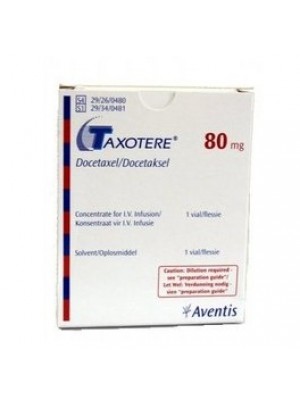
TAXOTERE. 80 mg. / 4 ml.1 vials What TAXOTERE and what it i..
349.00€
TAXOTERE. 20 mg. / 1 ml. 1 vial What TAXOTERE and what it i..
109.00€