Your shopping cart is empty!
Welcome visitor you can login or create an account.
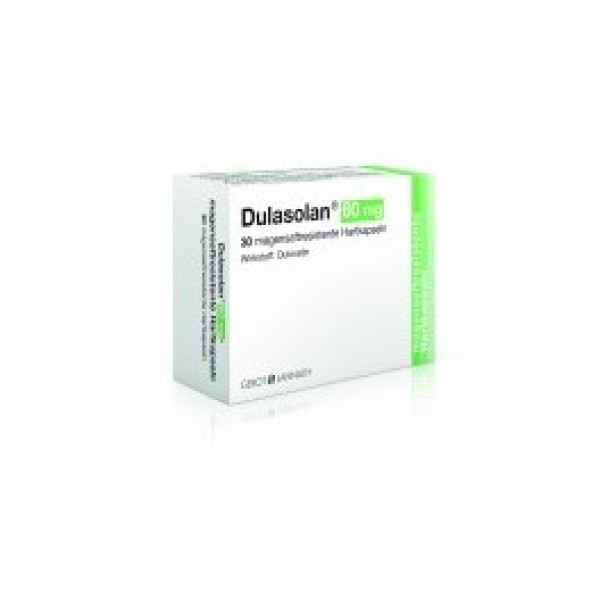
DULASOLAN 60 mg. 30 capsules
Product Code: DULASOLAN 60 mg. 30 capsules
Availability: In Stock
Product viewed: 1156


DULASOLAN 60 mg. 30 capsules
What is Dulasolan and what it is used
Dulasolan contains the active substance duloxetine. Dulasolan increases the levels of serotonin and norepinephrine in the nervous system.
Dulasolan is used in adults to treat:
depression;
generalized anxiety disorder (chronic feeling of anxiety or nervousness);
diabetic neuropathic pain (often described as burning, stabbing, stinging, shooting or aching or like an electric shock. There may be loss of feeling in the affected area, or sensations such as touch, heat, cold or pressure may cause pain).
For most people with depression or anxiety Dulasolan starts to work within two weeks of starting treatment, but it may take 2-4 weeks before you feel better. Tell your doctor if you start to feel better after this time. Your doctor may continue to give you appoint Dulasolan when you feel better, to prevent the return of your depression or anxiety.
In people with diabetic neuropathic pain treatment may take several weeks before you feel better. Tell your doctor if you feel better after two months.
2. What you need to know before taking Dulasolan
DO NOT take Dulasolan:
if you are allergic to duloxetine or any of the other ingredients of this medicine (listed in section 6);
if you have liver disease;
if you have severe kidney disease;
if you are taking or the last 14 days you are taking other medicines known as monoamine oxidase inhibitor (MAOI) (see "Other medicines and Dulasolan");
if you are taking fluvoxamine which is usually used to treat depression, ciprofloxacin or enoxacin which are used to treat certain infections;
if you are taking other medicines containing duloxetine (see "Other medicines and Dulasolan").
Consult your doctor if you have high blood pressure or heart disease. Your doctor will tell you whether you should take Dulasolan.
Warnings and Precautions
Below are reasons why Dulasolan may not be suitable for you.
Consult your doctor before taking Dulasolan:
if you are taking medicines to treat depression (see "Other medicines and Dulasolan");
if you are taking St. John's wort, a herbal treatment (Hypericum perforatum);
if you have kidney disease;
If you have had seizures (fits);
if you had an obsession;
If you suffer from bipolar disorder;
if you have eye problems such as certain kinds of glaucoma (increased eye pressure);
if you have a history of disorders related to bleeding (tendency to bruise);
if you are at risk of low sodium levels (for example if you are taking diuretics, especially if you are elderly);
if you are currently being treated with another medicine that can cause liver damage;
if you are taking other medicines containing duloxetine (see "Other medicines and Dulasolan").
Dulasolan can cause a sensation of restlessness or an inability to sit or stand still. You should tell your doctor if this happens to you.
Thoughts of suicide and worsening of your depression or anxiety disorder
If you are depressed and / or have anxiety disorders you can sometimes have thoughts of harming or killing themselves. These may be increased when first starting antidepressants, since these medicines all take time to AFFF - usually about two weeks but sometimes longer.
More likely to think like this:
if you have previously had thoughts of suicide or self-harm;
if you are a young adult. Information from clinical trials has shown an increased risk for behavior associated with suicide in adults under 25 with mental health conditions who were treated with an antidepressant.
If you have thoughts of harming or killing yourself at any time, contact your doctor or go immediately to the hospital.
You may find it helpful to tell a relative or close friend that you are depressed or have an anxiety disorder, and ask them to read this leaflet.
You might ask them to tell you if they think your depression or anxiety is getting worse, or if they are worried about changes in your behavior.
Children or adolescents under 18 years of age
Dulasolan normally should not be used in children or adolescents under 18 years of age. Also, you should know that patients under 18 have an increased risk of side effects such attempts and suicidal thoughts and hostility (predominantly aggression, oppositional behavior and anger) when they take this class of drugs. However, your doctor may prescribe Dulasolan for patients under 18 because he / she decides that this is in their best interest. If your doctor prescribes Dulasolan a patient under 18 and want to discuss this, please go back to your doctor. You should tell your doctor if any of the symptoms listed above develop or worsen when patients under 18 are taking Dulasolan. In addition, long-term safety effects concerning Dulasolan of growth, maturation, cognitive and behavioral development in this age group have not yet been established.
Other medicines and Dulasolan
Tell your doctor or pharmacist if you are taking, you have recently taken or might take any other medicines, including medicines obtained without a prescription. The main ingredient of Dulasolan, duloxetine, is used in other medicines for other conditions.
diabetic neuropathic pain, depression, anxiety and urinary incontinence.
The use of more than one of these drugs, at the same time, should be avoided.
Check with your doctor if you are already taking other medicines containing duloxetine.
Your doctor will decide whether you can take Dulasolan with other drugs. Do not start or stop taking any medicines, including medicines obtained without a prescription or herbal medications without talking to your doctor.
You should also tell your doctor if you are taking any of the following:
Monoamine oxidase inhibitors (MAOIs): You should not take Dulasolan if you are taking or have recently taken (within the last 14 days) another antidepressant medicine called a monoamine oxidase inhibitor (MAOI). Examples of MAO inhibitors are moclobemide (antidepressant) and linezolid (an antibiotic). Taking a MAOI together with many prescription medicines, including Dulasolan can cause serious or even life-threatening side effects. You must wait at least 14 days after you have stopped taking an MAO inhibitor before you can take Dulasolan. It is also necessary to wait at least 5 days after you stop taking Dulasolan before taking an MAO inhibitor;
Medicines that cause sleepiness: These include medicines prescribed by your doctor including benzodiazepines, strong painkillers, antipsychotics, phenobarbital and antihistamines;
Drugs that increase the level of serotonin: Triptans, tramadol, tryptophan, inhibitors of serotonin reuptake (SSRI) (such as paroxetine and inhibitors of reuptake of serotonin and noradrenaline (SNRI) (such as venlafaxine), tricyclic antidepressants (such as clomipramine, amitriptyline) , pethidine, St John's wort and MAO inhibitors (such as moclobemide and linezolid). these drugs increase the risk of side effects; if you experience any unusual symptoms when taking any of these medicines together with Dulasolan, you should consult with your doctor;
Oral anticoagulants or antiplatelet agents: Medicines which thin the blood or prevent the blood to clot. These drugs may increase the risk of bleeding.
Dulasolan with food, drinks and alcohol
Dulasolan can be taken with or without food. Caution should be exercised if you drink alcohol while on treatment with Dulasolan.
Pregnancy and lactation
If you are pregnant or breast-feeding, you think you may be pregnant or planning to become pregnant, ask your doctor or pharmacist before taking this medicine.
Tell your doctor if you become pregnant, or are planning to become pregnant while taking Dulasolan. Use Dulasolan only after discussing with your doctor the potential benefits and any potential risks to your unborn child.
Make sure your midwife and / or doctor knows you are taking Dulasolan. When such drugs (SSRI) taken during pregnancy may increase the risk of a serious condition in babies, called persistent pulmonary hypertension of the newborn (PBHN), making the baby breathe faster and appear bluish. These symptoms usually begin during the first 24 hours after the baby is born. If this happens to your baby, you should immediately contact your midwife and / or doctor.
If you take Dulasolan at the end of your pregnancy, your baby might have some symptoms when it is born. They usually begin at birth or within a few days after the birth of your baby. These symptoms may include floppy muscles, trembling, nervousness, poor nutrition, difficulty breathing and seizures. If your baby has any of these symptoms at birth, or worry about his health, contact your doctor or midwife who will be able to advise you.
Tell your doctor if you are breast-feeding. Dulasolan use is not recommended during breast-feeding. You should ask your doctor or pharmacist.
Driving and using machines
Dulasolan may make you feel sleepy or dizzy. Do not drive or use any tools or machinery until you know how you affect Dulasolan.
Dulasolan contains sucrose
Dulasolan contains sucrose. If your doctor told you that you have an intolerance to some sugars, contact your doctor before taking this product.
3. How to take Dulasolan
Always take this medicine exactly as you have been told by your doctor or pharmacist. If you're not sure, ask your doctor or pharmacist.
Dulasolan is for oral use. You should swallow the capsule whole with a glass of water.
For depression and diabetic neuropathic pain:
Dulasolan usual dose is 60 mg once a day, but your doctor will prescribe the dose that is right for you.
For generalized anxiety disorder:
The usual starting dose Dulasolan is 30 mg once daily, after which most patients will receive 60 mg once a day, but your doctor will prescribe the correct dose for you.
The dose may be adjusted up to 120 mg per day based on how you respond to Dulasolan.
To not forget about taking Dulasolan, it may find it easier to take the medicine at the same time each day. Talk to your doctor about how long you should take Dulasolan. Do not stop taking Dulasolan or alter your dose without talking to your doctor with your doctor. Proper treatment of your disease is important to feel better. If not treated, your condition may not go away and become more serious and more difficult to treat.
If you take more than the amount Dulasolan
Contact your doctor or pharmacist immediately if you take a large amount Dulasolan prescribed by your doctor. Symptoms of overdose include sleepiness, coma, serotonin syndrome (a rare reaction which may cause feelings of great happiness, drowsiness, clumsiness, restlessness, feeling of being drunk, fever, sweating, or muscle stiffness), seizures, vomiting and rapid heartbeat .
If you forget to take Dulasolan
If you miss a dose, take it as soon as you remember. If it's time for your next dose, skip the missed and take only a single dose as usual. Do not take a double dose to make up the missed dose. Do not take more than the daily amount Dulasolan appointed you one day.
If you stop taking Dulasolan
DO NOT stop taking your capsules without the advice of your doctor even if you feel better. If your doctor thinks that you do not need Dulasolan, he / she will ask you to reduce your dose over at least 2 weeks before stopping treatment altogether.
Some patients who stop taking Dulasolan suddenly have had symptoms such as:
dizziness, sensations of numbness or sensation like an electrical current passes (especially the head), sleep disturbances (vivid dreams, nightmares, insomnia), fatigue, sleepiness, feeling restless or agitated, feeling anxious, feeling sick ( nausea) or vomiting, shaking (tremor), headache, muscle pain, feeling irritable, diarrhea, excessive sweating or dizziness.
These symptoms are usually not serious and disappear within a few days, but if you have symptoms that worry you, ask your doctor for advice.
If you have any further questions on the use of this medicine, ask your doctor or pharmacist.
4. Possible side effects
Like all medicines, this medicine can cause side effects, although not everybody gets them. These reactions are usually mild to moderate and often disappear after a few weeks.
Very common side effects (may affect more than 1 in 10 people):
headache, sleepiness;
feeling sick (nausea), dry mouth.
Common side effects (may affect up to 1 in 10 people):
lack of appetite;
trouble sleeping, feeling agitated, less sex drive, anxiety, difficulty reaching orgasm or lack of, abnormal dreams;
dizziness, feeling of weakness, tremor, numbness, including numbness, pricking or tingling of the skin;
blurred vision;
tinnitus (hearing sound in the ears when no external sound);
feeling the heart pumping in the chest;
increased blood pressure, flushing;
more frequent yawning;
constipation, diarrhea, stomach pain, vomiting, heartburn or indigestion, flatulence;
increased sweating, (itchy) rash;
muscle pain, muscle spasm;
painful urination, frequent urination;
problems achieving an erection, changes in ejaculation;
fainting (mainly in the elderly), fatigue;
weight loss.
Children and adolescents under the age of 18 years with depression who were treated with this medicine have a small weight loss when you first start to accept it. The weight was raised to the appropriate weight for the other children and adolescents from age and gender after 6 months of treatment.
Uncommon side effects (may affect up to 1 in 100 people):
sore throat, causing hoarseness;
suicidal thoughts, sleep problems, teeth grinding or clenching of teeth, feeling disorientated, lack of motivation;
sudden involuntary jerks or twitches of the muscles, sensation of restlessness or inability to sit or stand still, feeling nervous, difficulty concentrating, changes in sense of taste, difficulty controlling movement, for example. lack of coordination or involuntary movements of the muscles, restless legs syndrome, poor sleep;
dilated pupils (the dark center of the eye), vision problems;
feeling drowsy or "spinning" (vertigo), ear pain;
rapid and / or irregular heartbeat;
fainting, dizziness, lightheadedness or fainting on standing up, cold fingers and / or feet;
tightness in the throat, nose bleeds;
vomiting blood, or black tarry stools (faeces), gastroenteritis, burping, difficulty swallowing;
inflammation of the liver that may cause abdominal pain and yellowing of the skin or of the whites of the eyes;
night sweats, hives, cold sweats, sensitivity to sunlight, increased tendency to bruise;
muscle tension, muscle twitching;
difficulty or inability to urinate, difficulty starting urination, the need to urinate at night, a need for more frequent urination than usual, weak urinary stream;
abnormal vaginal bleeding, abnormal periods, including heavy, painful, irregular or prolonged periods, unusually light or missed periods, pain in the testicles or scrotum;
chest pain, feeling cold, thirst, shivering, feeling hot, abnormal gait;
weight gain;
Dulasolan may cause effects that you may not feel as increased levels of liver enzymes or levels of potassium, creatinine phosphokinase, sugar or cholesterol in the blood.
Rare side effects (may affect up to 1 in 1000 people):
serious allergic reaction which causes difficulty in breathing or dizziness, swelling of the tongue or lips, allergic reactions;
underactive thyroid gland, which may cause fatigue or weight gain;
dehydration, low sodium levels in the blood (mainly in the elderly, symptoms may include feeling dizzy, weak, confused, sleepy or very tired, or feeling or being sick, more serious symptoms are fainting, fits or seizures)
Write a review
Your Name:Your Review: Note: HTML is not translated!
Rating: Bad Good
Enter the code in the box below:
Related Products