Your shopping cart is empty!
Welcome visitor you can login or create an account.
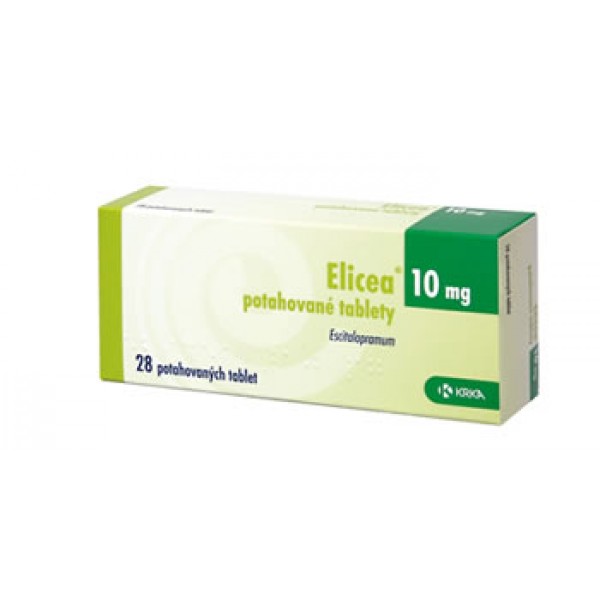
Elicea 10mg. 28 tablets
Product viewed: 5703


What Elicea is and what it is used for
Elicea contains escitalopram and is used to treat depression (major depressive episode) and anxiety disorders (such as panic disorder with or without agoraphobia, social anxiety disorder, generalized anxiety disorder, and obsessive-compulsive disorder).
Escitalopram belongs to the group of antidepressants called selective serotonin reuptake inhibitors (CIPD). These drugs act on the serotonin system in the brain by increasing serotonin levels. Serotonin disorders are considered an important factor in the development of depression and related diseases.
It can take two weeks before you feel better. Continue to take Elicea even if it takes some time before you feel an improvement in your condition.
You should consult a doctor if you do not feel better or if you feel worse.
2. What you need to know before you take Elicea
Do not take Elicea:
If you are allergic to escitalopram or to any of the other ingredients of this medicine (listed in section 6);
If you are taking other medicines that belong to the group called MAO inhibitors, including selegiline (used to treat Parkinson's disease), moclobemide (used to treat depression) and linezolid (antibiotic);
If you were born with or have had an episode of abnormal heart rhythm (seen in an ECG, a review that evaluates how the heart works);
If you are taking medicines for heart rhythm problems or that can affect your heart rate (see section 2 "Other medicines and Elicea").
Warnings and precautions
Tell your doctor or pharmacist before taking Elysees.
Please tell your doctor if you suffer from any other condition or illness as your doctor may consider it.
In particular, tell your doctor:
If you suffer from epilepsy. Your doctor will stop treatment with Elysea if seizures occur or an increase in seizure frequency is observed (see also section 4 "Possible side effects");
If you suffer from impaired hepatic or renal function. Your doctor may need to adjust your dose;
If you have diabetes. Elicea treatment can alter glycemic control (blood glucose control). A dose adjustment of insulin and / or oral hypoglycaemic agents may be necessary;
If you have a reduced level of sodium in the blood;
If you have a tendency to bleeding easily or getting bruises;
If you are undergoing electroconvulsive therapy (electroshock treatment);
If you have coronary heart disease;
If you suffer or have had heart problems or have recently had a heart attack;
If you have a slow heart rate at rest and / or you know you may have lower salt values as a result of prolonged severe diarrhea and vomiting or diuretic use (drainage tablets);
If you experience an accelerated or irregular heartbeat, fainting, collapse or vertigo on straightening, which may show abnormal heart rhythm functioning;
If you have or have had eye problems, such as certain types of glaucoma (increased eye pressure).
Please, have in mind
Some patients with manic depressive illness could enter the manic phase.
This is characterized by unusual and often changing ideas, an inadequate feeling of happiness and excessive physical activity. If you experience these sensations, contact your doctor.
Symptoms such as anxiety or difficulty sitting or sitting together may also occur during the first weeks of treatment. Tell your doctor immediately if you experience these symptoms.
Thoughts of suicide and worsening of your depression or anxiety disorder
If you are depressed and / or have an anxiety disorder, you may sometimes have thoughts of self-harm or suicide. These thoughts can be tightened when you first take antidepressants because these drugs take time to start acting, usually two weeks, but sometimes even more.
You may be more prone to think this way:
if you have previously had thoughts of suicide or self-harm;
if you are a young adult. Information from clinical trials shows an increased risk of suicidal behavior in young people aged under 25 with mental illness treated with antidepressants.
If at any time you have thoughts of self-harm or suicide, contact your doctor or go to hospital immediately.
You may find it helpful to tell a relative or close friend that you are depressed or have an anxiety disorder and ask them to read this leaflet. You can ask them to tell you if they think your depression or anxiety is getting worse or worrying about changes in your behavior.
Children and adolescents
Elicea usually should not be used
Tell your doctor if you are taking any of the following medicines:
"Nonselective Monoamine Oxidase Inhibitors (MAOIs)" (used to treat depression) containing phenelzine, ipraniazide, isocarboxyside, nyalamide and tranylcypromine as active substances. If you take any of these medicines, you will have to wait 14 days before taking Elysees. After stopping Elicase, you should wait 7 days before you start taking any of these medicines;
"Reversible selective MAO-A inhibitors" containing moclobemide (used to treat depression);
"Irreversible MAO-B Inhibitors" containing selegiline (used to treat Parkinson's disease). This increases the risk of side effects;
Antibiotic linezolid;
Lithium (used to treat manic-depressive illness) and tryptophan (used to treat depression);
Imipramine and desipramine (both used to treat depression);
Sumatriptan and similar medicines (used to treat migraine) and tramadol (used against severe pain). They increase the risk of side effects;
Cimetidine, lansoprazole and omeprazole (used to treat gastric ulcer), fluvoxamine (antidepressant) and ticlopidine (used to reduce the risk of stroke). They may cause an increase in blood levels of escitalopram;
St John's wort (Hypericum perforatum) - a plant product used in depression;
Acetylsalicylic acid and non-steroidal anti-inflammatory drugs (medicines used to relieve pain or dilute blood, so-called anticoagulants). They can increase the tendency to bleed;
Warfarin, dipyridamole and fenprocoumon (medicines used to dilute blood, so-called anticoagulants). Your doctor will probably check your blood coagulation time when initiating or discontinuing treatment with Elysea to see if the dose of anticoagulant you are taking is still adequate;
Mefloquine (used to treat malaria), bupropion (used to treat depression) and tramadol (used against severe pain) due to a possible risk of lowering of the seizure threshold;
Neuroleptics (medicines to treat schizophrenia, psychoses) and antidepressants (tricyclic antidepressants and SSRIs) due to a possible risk of lowering the seizure threshold;
Flecainide, propafenone and metoprolol (used to treat cardiovascular diseases), clopyramine and nortriptyline (antidepressant) and antidepressants and risperidone, thioridazine and haloperidol (antipsychotics). Elicase's dose may need to be adjusted;
Medicines that lower blood levels of potassium and magnesium as these conditions increase the risk of life-threatening heart rhythm disturbances.
Do not take Elysea if you are taking medicines for heart rhythm problems or medicines that can affect heart rhythm such as anti-arrhythmic drugs of Class IA and III, antipsychotics (eg phenothiazine derivatives, pimozide, haloperidol), tricyclic antidepressants, some antimicrobial agents (eg sparfloxacin, moxifloxacin, erythromycin IV, pentamidine, or you are on an antimalarial treatment), some antihistamines (astemizole, mizolastine). If you have any further questions about this, you should talk to your doctor.
Elicea with food and alcohol
Elicea can be taken with or without food (see section 3 "How to take Elysea").
As with many medicines, combining Elicase with alcohol is not recommended, although escitalopram is not expected to interact with alcohol.
Pregnancy, breastfeeding and fertility
If you are pregnant or breast-feeding, if you think you may be pregnant or are planning to have a baby, talk to your doctor or pharmacist before taking this medicine.
Do not take Elicase if you are pregnant unless you have discussed with your doctor the risks and benefits that arise from this.
If you take Elicea in the last 3 months of your pregnancy, you should be aware that the following side effects could be seen in your newborn: difficulty in breathing, bluish skin, seizures, changes in body temperature, eating difficulties, vomiting, low blood pressure sugar, stiff or relaxed muscles, live reflexes, tremor, nervousness, irritability, lethargy, constant crying, drowsiness and difficulty falling asleep. If your newborn baby has any of these symptoms, please contact your doctor immediately.
Make sure your midwife / doctor knows that you are taking Elysees. When taken during pregnancy, especially during the last 3 months of pregnancy, medicines such as Elicea may increase the risk of serious illness in infants called BHN, in which the baby breathes faster and brighter. These symptoms usually begin during the first 24 hours after the birth of the baby. If this happens to your baby, you should contact your midwife and / or doctor immediately.
If Elicea is used during pregnancy, it should never be discontinued suddenly.
Elicea is expected to be released into breast milk.
Do not take Elicea if you are breast-feeding unless you have discussed with your doctor the risks and benefits of this.
Citalopram, a medicine like escitalopram, has been shown to reduce sperm quality in animal studies. Theoretically, this may affect fertility, but the impact on human fertility has not yet been observed.
Driving and using machines
It is not recommended to drive or use machines before you find out how Elizabeth works.
Elicase contains lactose. If you have been told by your doctor that you have an intolerance to some sugars, contact your doctor before taking this medicinal product.
3. How to take Elicea
Always take this medicine exactly as your doctor or pharmacist has told you. If you are not sure, ask your doctor or pharmacist.
Adults
Depression
The usual recommended dose of Elicase is 10 mg taken once a day. The dose may be increased by your doctor to a maximum of 20 mg per day.
Panic disorder
The initial dose of Elicea is 5 mg once a day in the first week before the dose is increased to 10 mg daily. Your doctor may increase the maximum dose to 20 mg daily.
Social anxiety disorder
The usual recommended dose of Elysea is 10 mg taken as a single dose. Depending on how you respond to treatment with this medicine, your doctor may reduce your dose to 5 mg or increase it to a maximum of 20 mg daily.
Generalized anxiety disorder
The usual recommended dose of Elysea is 10 mg taken once a day. The dose may be increased by your doctor to a maximum of 20 mg per day.
Obsessive-compulsive disorder
The usual recommended dose of Elysea is 10 mg once a day. The dose may be increased by your doctor to a maximum of 20 mg per day.
Eldery (over 65 years of age)
The recommended starting dose of Elysea is 5 mg once a day. The dose may be increased by your doctor to 10 mg daily.
Use in children and adolescents
Usually, Elicea should not be given to children or adolescents. For additional information, please refer to section 2 "What you need to know before you take Elysees".
Method and method of administration
You may take Elysea with or without food. Swallow the tablets with some water. Do not chew them because they have a bitter taste.
10 mg and 20 mg tablets: The tablet can be divided into two equal doses.
Duration of treatment
It may take several weeks before you feel an improvement. Continue to take Elicea, even if it takes some time before you feel an improvement in your condition.
Never change the dose before talking to your doctor.
Continue to take Elysea for as long as your doctor has recommended. If you discontinue treatment too early, the symptoms may recur. It is recommended that your treatment lasts for at least 6 months after you feel well again.
If you take more Elicea than you should
If you take more than the prescribed dose of Elysea, contact your doctor or nearest emergency department immediately. Do this even if you have no signs of discomfort. Some signs of overdosage may be dizziness, tremor, agitation, convulsions and coma, nausea, vomiting, changes in heart rhythm, decreased blood pressure, and electrolyte-salt balance disruption. Take the pack of Elysea with you to show it to the doctor or the hospital.
If you forget to take Elicea
Do not take a double dose to make up for the missed dose. If you miss taking your dose and think about it before going to bed, take it immediately. The next day, continue to take your dose as usual. If you remember the missed dose overnight or the next day, do not take the dose, then continue as usual.
If you stop taking Elicea
Do not stop taking Elysea until your doctor tells you to do so. When completing the course of treatment, it is usually recommended to gradually reduce the dose of Elysea for several weeks.
When you stop taking Elysea, especially if it happens suddenly, you may experience withdrawal symptoms. They are common when stopping treatment with Elysea. The risk of this is greater when Elysea has been used for longer or higher doses or when the dose is reduced too quickly. Most people find these symptoms as mild and self-limiting within two weeks. However, in some patients, they may be severe in intensity or longer (2-3 months or more). If you experience severe withdrawal symptoms when you stop taking Elysea, please contact your doctor. He or she may ask you to start taking your tablets again and stop it slower.
Symptoms take away
If you have any further questions on the use of this product, ask your doctor or pharmacist.
4. Possible side effects
Like all medicines, this medicine can cause side effects, although not everyone gets them.
The side effects most often resolve after several weeks of treatment. Please keep in mind that some of the reactions may also be symptoms of your illness and therefore disappear when you begin to improve.
If you develop any of the following symptoms, you should contact your doctor or go to hospital immediately:
Uncommon (may affect up to 1 in 100 people):
Unusual bleeding, including from the gastrointestinal tract.
Rare (may affect up to 1 in 1,000 people):
Swelling of the skin, tongue, lips or face or having difficulty in breathing or swallowing (allergic reaction);
High temperature, kinetic restlessness (agitation), confusion, trembling and sudden muscle contractions may be signs of a rare condition called serotonin syndrome.
Not known (can not be estimated from the available data):
Urinary difficulties;
Seizures (seizures), see also section "Precautions and Warnings";
Yellowing of the skin and whites of the eyes are signs of hepatic function impairment / hepatitis;
Elevated, uneven heart rhythm, seizures that may be life-threatening symptoms, known as Torsades de Pointes;
Thoughts of self-harm or suicide, also see "Warnings and precautions".
In addition to the above, the following side effects have also been reported:
Very common (may affect more than 1 in 10 people):
Nausea (nausea);
Headache.
Common (may affect up to 1 in 10 people):
Clogged nose or nasal discharge (sinusitis);
Decreased or increased appetite;
Anxiety, anxiety, abnormal dreams, difficulty falling asleep, feeling sleepy, dizziness, yawning, tremor, bruising;
Diarrhea, constipation, vomiting, dry mouth;
Increased sweating
Pain in the muscles and joints (arthralgia and myalgia);
Sexual disturbances (delayed ejaculation, erection problems, decreased sexual desire, women may experience difficulty in reaching orgasm);
Fatigue, fever;
Increased weight.
Uncommon (may affect up to 1 in 100 people):
Hives (urticaria), rash, itching (pruritus);
Toothache, kinetic anxiety (excitement), nervousness, panic attack, confusion;
Sleep disturbances, taste abnormalities, seizures (syncope);
Enlarged pupils (mydriasis), visual disturbances, tinnitus (tinnitus);
Hair loss;
Excessive vaginal bleeding;
Irregular menstruation;
Reduced weight;
Accelerated heart rhythm;
Edema on the hands or feet;
Bleeding from the nose.
Rare (may affect up to 1 in 1,000 people):
Aggression, depersonalisation, hallucinations;
Slow heart beat.
Not known (frequency can not be estimated from the available data):
Decreased levels of sodium in the blood (symptoms are nausea and discomfort with muscle weakness or confusion);
Dizziness due to low blood pressure (orthostatic hypotension);
Abnormal liver function tests (elevated liver enzymes in the blood);
Motion disorders (unconscious movements of the muscles);
Painful erections (priapism);
Bleeding disorders including skin and mucous membranes, ecchymosis);
Sudden swelling of the skin and mucous membranes (angioedema);
Increased urinary excretion (inadequate secretion of antidiuretic hormone);
Leakage of breast milk from men and women who do not breastfeed;
Mania;
Change in heart rate (called "prolonged QT interval" observed in ECG, electrical activity of the heart).
In addition, a number of side effects known to occur with medicines acting in an escitalopram-like manner are known. They are:
Motor anxiety (unable to rest in motion without akathisia);
Loss of appetite (anorexia).
There is an increased risk of bone fractures in patients taking this type of medicine.
How to Store Elicea
Keep this medicine out of the reach and sight of children.
Do not use this medicine after the expiry date which is stated on the pack. The expiration date refers to the last day of the month.
This medicine does not require any special storage conditions.
Store in the original package in order to protect from moisture.
Do not dispose of any medication in the sewers or the household waste container. Ask your pharmacist how to dispose of your unnecessary medicines. These measures will help to protect the environment.
6. Package contents and other information
What Elicea contains
The active substance is escitalopram (escitalopram). Each film-coated tablet contains 5 mg, 10 mg or 20 mg escitalopram (as 6.39 mg, 12.78 mg or 25.56 mg escitalopram oxalate).
The other ingredients are lactose monohydrate, crospovidone, povidone, microcrystalline cellulose, pregelatinised maize starch and magnesium stearate in the tablet core and hypromellose, titanium dioxide (E171), lactose monohydrate, macrogol 3000 and triacetin in the film coating (see section 2).
What Elicea looks like and what the package contains
5 mg tablets: white, round, biconvex film-coated tablets with bevelled edges.
10 mg and 20 mg tablets: white, oval, biconvex film-coated tablets scored on one side. The tablet can be divided into two equal parts.
Elysea film-coated tablets are available in cartons of 10, 14, 28, 30, 50, 56, 60, 90, 98, 100 and 200 tablets in blisters and 250 tablets in a tablet container (HDPE).
Not all types of packaging can be placed on the market.
Write a review
Your Name:Your Review: Note: HTML is not translated!
Rating: Bad Good
Enter the code in the box below:
Related Products