
Your shopping cart is empty!
Welcome visitor you can login or create an account.
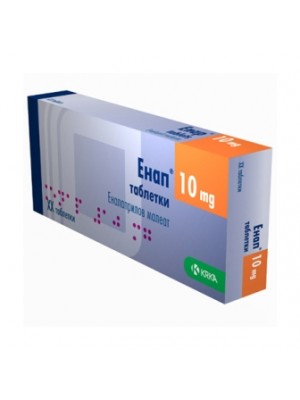
Enap 10 mg. 30 tablets
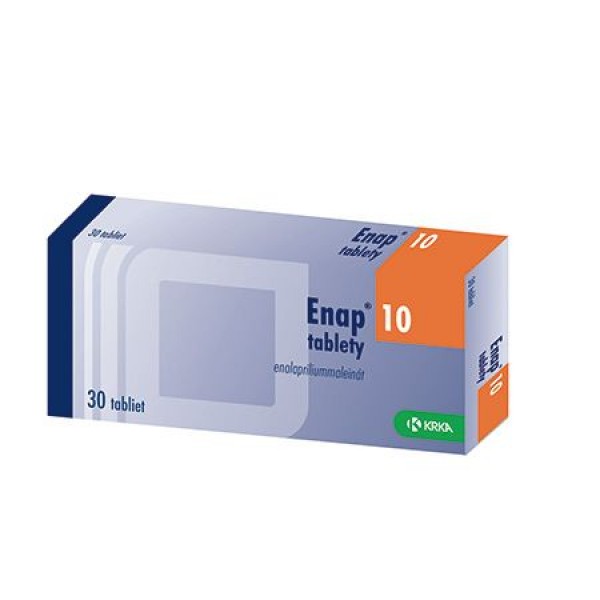
Product viewed: 2943


What is Enap and what is it used for?
Enap is a blood pressure lowering medicine (antihypertensive agent). It belongs to the group of angiotensin converting enzyme (ACE) inhibitors. This medicine suppresses ACE activity. During treatment with Enap, blood vessels are expanding, resulting in lower blood pressure and an increase in oxygen flow to the heart muscle and other organs.
This medicine is for the treatment of arterial hypertension, hypertension in kidney disease (also in renal failure and renal impairment due to diabetes), congestive heart failure and left ventricular dysfunction (also in patients without symptomatic disease).
2. What you need to know before taking Enap
Do not take Enap:
if you are allergic (hypersensitive) to enalapril or any of the other ingredients of this medicine (listed in section 6) if you have already had allergic reactions with sudden swelling of your lips and face, neck, possibly hands and feet or suffocation or hoarseness angioedema) after administration of ace inhibitors,
if you have hereditary angioedema or angioedema due to some other unknown causes,
if you are pregnant after 3 months, (it is better to avoid taking Enap tablets at the beginning of pregnancy - see section Pregnancy),
if you have diabetes or have impaired kidney function and are being treated with a medicine to lower blood pressure containing aliskiren.
Warnings and precautions
Talk to your doctor or pharmacist before taking Enap.
During treatment with Enap, you should regularly measure your blood pressure. Ask your doctor about the appropriate blood pressure level and when to visit it for the next checkup.
At the beginning of treatment and / or at the time of setting the most appropriate dose of Enap, more frequent medical examinations are mandatory. You should not miss them, even if you feel good. The doctor will determine the frequency of the check-ups.
if you are being treated for diabetes,
if you have heart problems;
if you have a blood vessel disease in the brain;
if you have problems with your blood, such as low or no white blood cells (neutropenia / agranulocytosis), low platelet counts (thrombocytopenia) or decreased red blood cell counts (anemia);
if you are taking tablets that increase the amount of urine output;
if you are on a diet, especially low in salt, you are taking potassium supplements, potassium-sparing medicines or potassium-containing salt substitutes;
if you have persistent severe diarrhea,
if you vomit or sweat abundantly;
if you have low blood pressure (if you are often pale or feeling dizzy, especially when getting up);
if you have liver problems; if you have kidney damage; if you are on hemodialysis;
if you have recently had a kidney transplant and are taking medicines to prevent kidney rejection;
if you have any other immune diseases or allergies. You should know that the black race is at increased risk of these types of reactions to ACE inhibitors. if you have ever had an allergic reaction with swelling of the face, lips, tongue and / or glottis and difficulty in swallowing or breathing; if you develop jaundice;
if a prolonged, persistent dry cough occurs; if you are taking lithium;
if you have a collagen vascular disease (eg lupus erythematosus, rheumatoid arthritis or scleroderma) if you are on a treatment that suppresses the immune system, you are taking the medicines allopurinol or procainamide or a combination of several of them; if you are over 70 years of age; when your doctor (or dentist) is planning a surgical procedure and anesthesia, hemodialysis or other blood clearance (apheresis) or hypersensitive (axillary) treatment with axial and bee venom, tell your doctor that you are taking enalapril;
You should tell your doctor if you think you are (or might be) pregnant. Enan tablets are not recommended in early pregnancy and should not be taken if you are more than 3 months pregnant, as it may cause serious harm to your baby if used at this stage (see Pregnancy); if you are taking any of the following medicines used to treat high blood pressure:
angiotensin II receptor blocker (ARB) (also known as sartans - for example valsartan, telmisartan, irbesartan), especially if you have kidney problems associated with diabetes, aliskiren.
Other Drugs and Enap
Tell your doctor or pharmacist if you are taking, have recently taken or might take any other medicines.
In particular, tell your doctor or pharmacist if you are taking any of the following medicines:
other blood pressure lowering drugs such as beta-blockers or drainage tablets (diuretics);
potassium supplements, potassium-containing salt substitutes or potassium-sparing
drainage tablets (eg spironolactone, amiodarone)
Your doctor may periodically check your kidney function, blood pressure and the amount of electrolytes (eg potassium) in your blood.
See also the information titled "Do not take Bnape".
Ennape with food, beverages and alcohol
You can take Enap before, during or after a meal. Alcoholic beverages are not recommended during Enap therapy because alcohol enhances Enap's blood pressure lowering effect.
Pregnancy and breastfeeding and fertility
If you are pregnant or breast-feeding, think you may be pregnant or plan to become pregnant, ask your doctor or pharmacist for advice before taking this medicine.
Pregnancy
You should tell your doctor if you think you are (or could become pregnant) Your doctor will usually advise you to stop taking Enat tablets before you become pregnant or as soon as you know you are pregnant and will You are advised to take another medicine instead of Enap tablets.Enap Tablets are not recommended in early pregnancy and should not be taken when you are more than 2 months pregnant, it can cause serious harm to your baby if used after the third month pregnancy.
Breastfeeding
Tell your doctor if you are breast-feeding or will start to breast-feed. While taking Enap Tablets it is not recommended to breast-feed newborn babies (during the first few weeks after birth) and especially preterm infants. In the case of older babies, your doctor should advise on the benefits and risks of taking Enap tablets while breast-feeding compared to other treatments.
Driving and using machines
In some patients, this medicine can cause dizziness or fatigue, especially at the beginning of treatment, thus indirectly and transiently reducing the ability to drive and use machines. Until you understand how you respond to treatment, do not drive or operate machinery.
Enap contains lactose
If you have been told by your doctor that you have an intolerance to some sugars, talk to your doctor before taking this medicine.
3. How to take Enap?
Always take this medicine exactly as your doctor or pharmacist has told you. If you are not sure, ask your doctor or pharmacist.
Dosage is always adjusted according to the condition of the patient, his needs and the possible use of other medicines. Therefore, it is always determined by the physician.
Treatment of hypertension: The recommended starting dose is 5 mg once a day. The usual maintenance dose is 10 mg once or twice daily, with an exception of 20 mg once or twice daily.
Treatment of Congestive Heart Failure: The recommended starting dose is 2.5 mg once a day. The usual maintenance dose ranges from 2.5 to 10 mg twice daily, the maximum maintenance dose is 20 mg twice daily.
Treatment of impaired left ventricular function: The recommended starting dose is 2.5 mg twice daily. The usual maintenance dose is 10 mg twice daily.
Treatment of secondary hypertension in kidney diseases: The dosage of Enap is determined by renal function and / or creatinine clearance. Therefore, it is always determined by the physician.
Hemodialysis patients: Take 2.5 mg of Enap on the day of hemodialysis; during all other days the doctor will adjust the dose according to your blood pressure.
Take the tablets whole with a little liquid. You can take them before, during or after a meal. You get to take the medicine regularly at the same time each day. Treatment with Enap is prolonged unless circumstances arise that require its discontinuation. As you should take the medicine regularly, make sure you always have enough tablets for long-term treatment.
Use in children
The efficacy and safety of the medicine in children have not yet been established and should not be given to children.
If you take more Enap than you should
The most common signs of overdose are nausea, rapid heartbeat, dizziness and fainting due to an excessive reduction in blood pressure (hypotension). In that case, lie down, keep your head low and call a doctor.
If the patient has taken more tablets and is conscious, try to induce vomiting and call a doctor immediately.
If you forget to take Enap
Do not take a double dose to make up for forgotten.
If you forget to take one tablet, take it as soon as possible. However, if it is almost time for the next dose, leave the forgotten tablet and take the next scheduled dose. Never duplicate the dose.
If you stop taking Enap
Upon cessation of treatment, arterial pressure may rise again as well as the risk of the consequences and / or complications of hypertension, especially on the part of the heart, brain and kidneys.
Patients with heart failure may experience an exacerbation of heart failure and need to be hospitalized. Patients with impaired left ventricular function and no symptoms of heart failure (such as difficulty in breathing, tiredness with little effort, eg after an unstable swelling, swelling of the ankles and feet) may develop heart failure. In patients with hypertension with kidney disease, renal function may be impaired.
If you have any further questions on the use of this medicine, ask your doctor or pharmacist.
4. Possible side effects
Like all medicines, this medicine can cause side effects, although not everyone gets them.
Adverse reactions are classified into the following groups in order of frequency:
Very common: It may affect more than 1 in 10 people
Common These may affect up to 1 in 10 people
Uncommon May affect up to 1 in 100 people
Rare Can affect up to 1 in 1,000 people
Very rare These may affect up to 1 in 10,000 people
Not known Frequency can not be predicted from available data
Very common:
blurred vision, dizziness, cough,
nausea (feeling sick), fatigue (asthenia),
Common:
depression,
headache, fainting (syncope), angina or chest pain, rhythm disturbances
rapid heart beat, low blood pressure (hypotension),
difficulty breathing (dyspnoea),
diarrhea, abdominal pain, taste change.
rash, allergic reactions with swollen face, lips, tongue or throat with difficulty in swallowing or breathing, fatigue,
increased levels of potassium in the blood, increased blood creatinine levels
Uncommon:
anemia,
excessive reduction in blood sugar levels, confusion, insomnia, sleep disturbances, nervousness,
increased sensation or numbness of the limbs such as tingling sensation in the hands or feet (paraesthesia), unpleasant heartbeat or palpitations, heart attack and stroke, possibly due to excessive blood pressure lowering in high-risk patients, excessive blood pressure (also in severe straightening), stroke probably due to excessive blood pressure lowering in high-risk patients, runny nose, sore throat, hoarseness, asthma,
nausea, vomiting, inflammation of the pancreas, dyspepsia, constipation, loss of appetite, upset stomach, dry mouth, stomach or duodenal ulcer, sweating, itching, rash, hair loss,
impaired renal function, renal failure, urinary protein degradation, inability to produce or maintain an erection,
muscle cramps, facial flushing, tinnitus, anxiety, fever,
low blood sugar or sodium, high blood urea.
Rare:
decrease in neutrophil counts (a type of white blood cell), decrease in hemoglobin (oxygen in the blood) levels, decrease in hematocrit, decreased platelet count, excessive reduction in white blood cell count (agranulocytosis), decreased production blood cell counts in the bone marrow, decreased number of all blood cells, autoimmune disease, sleeping problems, abnormal dreams,
swollen lymph nodes, autoimmune disease, low blood flow to the fingers and toes that causes redness and pain (raynaud phenomenon), mouth ulcers, inflammation of the tongue,
inflammation of the nasal mucosa, infiltration of the lungs, allergic pneumonia, liver failure, liver inflammation, jaundice, various rashes in the skin and / or mucous membranes, decreased urine output, breast enlargement in men,
higher levels of hepatic enzymes and bilirubin.
Very rare:
bowel swelling (intestinal angioedema).
Not known:
hyponatraemia (caused by SIADH).
The following symptom complex has been reported: fever, joint and / or muscle pain, various inflammations and laboratory findings confirming the presence of inflammation
5. How to store Enap
Keep out of the reach and sight of children.
Do not use Enap after the expiry date which is stated on the packaging. The expiry date refers to the last day of that month.
Store below 30 ° C. Store in the original package in order to protect from moisture.
Do not dispose of medicines in the sewer or in the household waste container. Ask your pharmacist how to discard the remedies you no longer use. These measures will help to protect the environment.
6. Package Contents and Additional Information
What contains Enap:
The active substance is enalapril maleate. Each tablet contains
2.5 mg, 5 mg, 10 mg or 20 mg of enalapril maleate, equivalent to 1,9 mg, 3,8 mg, 7,6 mg or 15,3 mg enalapril.
The other ingredients for the 2.5 mg and 5 mg tablets are lactose monohydrate, hydroxypropylcellulose (E463), corn starch, sodium hydrogen carbonate, talc (E553b) and magnesium stearate (E572).
The other ingredients of the 10 mg tablets are lactose monohydrate, maize starch, sodium hydrogen carbonate, talc (E553b), magnesium stearate (E572) and red iron oxide (E172).
The other ingredients of the 20 mg tablets are lactose monohydrate, maize starch, sodium hydrogen carbonate, talc (E553b), magnesium stearate (E572), red iron oxide (E172) and yellow iron oxide (E172).
What Enap looks like and what the package contains
2.5 mg tablets are white, round and flat.
5 mg tablets are white, round, flat and scored on one side. The score line is not meant to crush a tablet.
10 mg tablets are red-brown, round, flat and scored on one side.
The divider is not intended to crush a tablet. 20 mg tablets are light orange, round, flat and scored on one side. The divider is not intended to crush a tablet.
Enap Tablets of all strengths are available in the following pack sizes: Box of 20 and 60 tablets of 2.5 mg (in a blister pack of 10 tablets). Box of 20, 30, 60 and 90 tablets of 5 mg, 10 mg and 20 mg (in a 10-pack blister pack).
Write a review
Your Name:Your Review: Note: HTML is not translated!
Rating: Bad Good
Enter the code in the box below:
Related Products
Enap. 10 mg. / 25 mg. 90 tablets What Enap H 10 mg/25 mg an..
19.00€
What Enap-H 10 mg / 25 mg is and what it is used for
The En..
16.00€