Your shopping cart is empty!
Welcome visitor you can login or create an account.
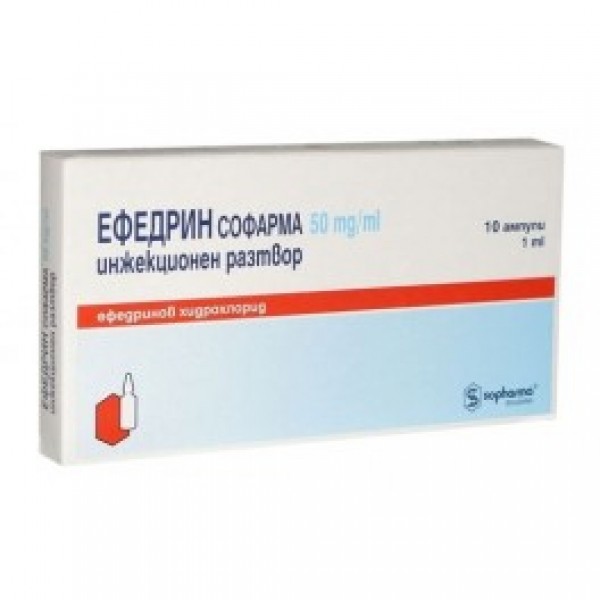
Ephedrine 10 amp. 1 ml of 5%.
Product Code: Ephedrine 10 amp. 1 ml of 5%.
Availability: In Stock
Product viewed: 992


Ephedrine 10amp. 1 ml of 5%.

Ephedrinum
Composition of one ampoule
Ephedrine hidrochloride 50mg
1. clinical data
indications:
It is used to control the hypotension accompanying spinal anesthesia as a pressor agent in hypotensive conditions after sympathectomy or an overdose ganglioblokerii antiadrenergic agents used in hypertension arteritis .
Route of administration and dosage:
The product may be administered subcutaneously , intramuscularly and intravenously. It is to be understood that even at the lowest therapeutic dose in normotensive patients and lead to increased blood pressure of 15 -20mm Hg.
In patients with severe hypotension ephedrine should be used with caution and to maximize the use of the highest recommended doses and for a short period of time during which it is necessary to take additional measures to correct the blood pressure , such as injection volume - replacement solutions .
As ephedrine pressor agent is generally administered subcutaneously or intramuscularly at a dose of 25-50 mg dose range 10-50 mg . If necessary, you can apply additional intramuscular doses of 50 mg or 25 mg intravenously. Intravenosnoto application always proceed slowly , even if it is recommended that it be implemented as a drip infusion over approximately 5010 min parenteral maximum daily dose for adults should not exceed 150mg .
In children, a daily dose 3mg/kg or 100mg/m2 skin surface either subcutaneously or intravenously , in 4-6 divided doses.
Contraindications :
Svrahchuvstvitelnnost to sympathomimetic amines , atherosclerosis , heavy organic heart diseases , hypertension, glaucoma , patients who had previously received anesthesia with halothane or cyclopropane ( enhances the sensitivity of the myocardium to the arrhythmogenic effect of sympathomimetics ) , thyrotoxicosis , diabetes .
Special precautions and warnings:
Be applied very cautiously in elderly patients. Be used with caution in patients with renal impairment because of the risk of real vasoconstriction and decrease in urine output.
Ephedrine may cause hypertension and subsequent intracranial haemorrhage. Ephedrine can cause angina pain in patients with coronary insufficiency and ischemic heart disease .
Repeated dose and high dose can be observed tahofilaksiya .
Injection under the skin can cause local ischemia of tissue necrosis .
Drug Interactions :
Antagonist is a ganglionic blocking and antiadrenergic drugs. Ephedrine reduces the antihypertensive effect of gvanetedin . Alpha adrenergic blockers reduce the vasopressor activity of ephedrine , causing vazodilatotsiya . In combination therapy with reserpine and methyldopa ephedrine can be reduced pressor effect of the latter. A similar effect may also be observed in the combination of a drug with diuretic agents .
When a combination of ephedrine with MAO inhibitors as possible sharp increase in blood pressure , and in combination with beta blockers reduces the bronchodilator effect. Ephedrine is an antagonist of non-narcotic analgesics and drugs that inhibit the central nervous system.
Ephedrine should be used with caution in combination with drugs that increase the sensitivity of myocardial sympathomimetics - e.g. patients anesthetized with halothane or cyclopropane or receiving digitalis glycosides . Ephedrine is not combined with other sympathomimetic agents , due to the danger of an additive effect and an increase in toxicity.
Pregnancy and lactation :
Classification according to the FDA belongs to category C. There are no data whether ephedrine can cause harm to the fetus and cause adverse effects on reproduction . It is known , however, that crosses the placenta and is excreted in breast milk. Can lead to a significant increase in heart rate of the fetus when administered to pregnant women. Use of the product during pregnancy and lactation should be done only in cases where the expected benefit to the mother outweighs the risk to the fetus and newborn.
Impact on alertness , the ability to drive and use machines :
Should not be used when driving or operating machinery.
Undesirable effects :
Acute toxic effects are usually a result of prolonged therapeutic effects of the medicinal product or, more often due to overdose.
The most serious adverse reaction induced by excessive doses of ephedrine with extreme hypertension, vasoconstriction associated with excitation of α- adrenoceptors . It may lead to cerebral hemorrhage . In other cases it can be observed vasodilation with hypotension.
At usual doses some patients respond to short pallor , shortness of breath , tremor, feeling of anxiety and restlessness , confusion and tension , fatigue , palpitations, dizziness , headache, sweating. Possible occurrence of nausea , vomiting, hallucinations.
For repeated injections may cause contraction of the sphincter of the bladder and an inability to urinate voluntarily .
The danger of dysuria must be considered , particularly in the case of adult males.
overdose :
Continuous introduction of ephedrine can cause much more serious hypotension compared with that before treatment . On the other hand, high doses of parenteral drug caused extreme increases in blood pressure, tachycardia and subsequent brain hemorrhage . Of CNS symptoms of overdose are nausea, vomiting, loss of appetite , hyperactivity , insomnia , mydriasis , vertigo . In severe cases - seizures and coma , respiratory arrest . Apply symptomatic therapy and forced diuresis .
2 . pharmacological
Pharmacodynamics :
Ephedrine is an alkaloid isolated from the stems of plants of the family Ephedraceae, and is more active than obtained synthetically efetonin .
Belongs to a group of sympathomimetic agents, but acts less and longer of adrenaline. Inhibits the activity of monoamine oxidase , the incentive alpha-and beta- adrenoceptors . Cause spasm of the peripheral vessels , increases the heart rate , increases blood pressure , expands bronchial inhibits intestinal peristalsis and widens . Increases metabolism , and in therapeutic doses slightly increased level of blood sugar. At therapeutic doses showed little stimulant effect on the CNS ( and mental restlessness , insomnia ) and increases excitability and respiratory center.
pharmacokinetics :
Ephedrine hydrochloride is absorbed rapidly and completely from the tissues after parenteral intramuscular or subcutaneous administration. Parenteral administration of the product ensures high systemic bioavailability and rapid onset of effect. The duration of action is short 30 - 60min . At half-life of 3-6 hours. Bronchodilation occurs on average 15-60 minutes after oral administration and lasts 2-4 hours. The duration of the pressor effects and cardiac response is an average of 1 hour after iv administration of a dose of the order of 10 25 mg . or after i.m. or s.c. administration of 25 - 50mg . and up to 4 hours after oral administration of the product at doses of 15, 50 mg .. Plasma concentrations associated with inducing bronchodilation show considerable variation - in the same study, the above concentration range of more than 20ng/mL 80ng/mL.
Small part slowly ephedrine is metabolized in the liver and the metabolites were identified as p-hydroxyephedrin, p-hydroxynorephedrine, norephedrine , and conjugates thereof . Eliminated from the body primarily by urinary excretion largely unchanged . Metabolites are also broadcast via the urine. The rate of excretion into urine is affected by its pH, such as at low speed of the process is increased. Crosses the placenta and is excreted in breast milk.
Preclinical safety data :
In experiments with rats, in vivo brain microdialysis l- ephedrine introduced at a high dose ( 40mg/kg , ip) caused a marked hyperthermia and 20 -fold increase in the level of extracellular dopamine released in brain microdialysis of Structure Caudill / putamen . 25mg/kg dose induced a lesser degree of hyperthermia and 10 - fold increase in the level of dopamine levels .
Controlled studies in animals for potential embryotoxic, teratogenic and carcinogenic effects of the product have not been conducted.
3 . pharmaceutical data
List of excipients and their amounts:
Composition of one ampoule 50mg/ml - 1ml:
Water for injections to 1ml.
Incompatibilities :
No known .
Shelf life :
Five years from the date of manufacture.
Storage conditions :
In original packaging in a dry and dark place at a temperature below 25 ° C. Do not freeze .
Packaging Data :
The product was filled into 1 ml ampoules . Ten vials were placed in a blister pack of rigid PVC foil .
Write a review
Your Name:Your Review: Note: HTML is not translated!
Rating: Bad Good
Enter the code in the box below:
Related Products
Ephedrin 1 ml of 5%. 10 ampules indications: It is used to ..
29.00€