Your shopping cart is empty!
Welcome visitor you can login or create an account.
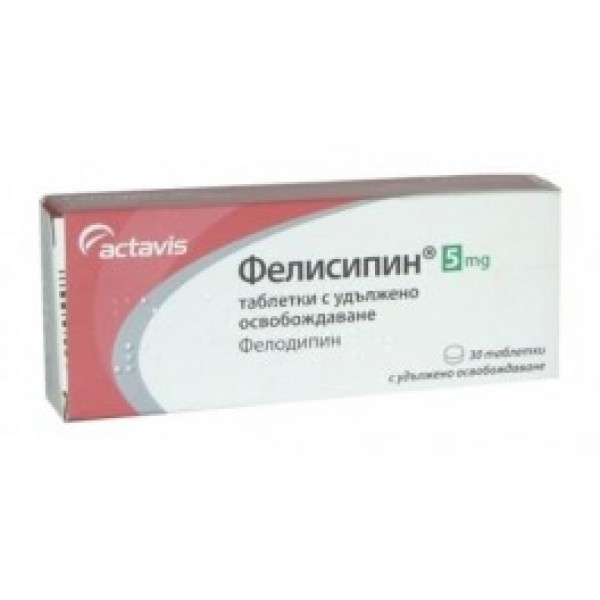
FELISIPIN 5 mg. 30 tablets
Product Code: FELISIPIN 5 mg. 30 tablets
Availability: In Stock
Product viewed: 756


FELISIPIN 5 mg. 30 tablets
Felisipin, film-coated prolonged release tablets 5 and 10 mg. FelodipineLekarstveno substance in one tablet extended release:
One tablet Felicipin 5 mg contains Felodipine 5 mg. Light pink, round, biconvex tablets coated tablet, 9 mm diameter and engraved "5" on one side. Excipients: lactose monohydrate, microcrystalline cellulose, hypromellose, povidone K-25, propyl gallate, anhydrous silica, magnesium stearate. composition of film-coating: hypromellose, red iron oxide (E172), yellow iron oxide (E 172), titanium dioxide (E 171), talc, propylene glycol.
Felisipin is available in packs of 20, 30 and 50 tablets of sustained release.
1. WHAT FELISIPIN AND WHAT IT IS USED
Felisipin is a medicinal product by a group called calcium channel blockers. It reduces peripheral resistance of blood vessels and leads to a decrease of elevated blood pressure. Felisipin reduces the heart muscle of oxygen, increases coronary blood flow, prevents spasms of the coronary vessels and thus reduces the frequency of angina attacks.
Felisipin used for treatment of:
• Hypertension (high blood pressure).
• Stable angina.
2. WHAT YOU NEED TO KNOW BEFORE FELISIPIN
Felisipin not apply to:
• Allergy to dihydropyridine calcium channel antagonist felodipine or any of the excipients;
• Acute myocardial infarction;
• Unstable angina;
• Cardiogenic shock;
• uncompensated heart failure;
• Pregnancy and lactation;
• Children.
In the application of this product, please note the following:
Angina and / or myocardial infarction
Like other drugs with vasodilatory activity, felodipine may, rarely, mainly in patients with significant narrowing of the coronary vessels can cause hypotension (low blood pressure) and tachycardia (increased heart rate), resulting in an increase in frequency the duration and / or severity of angina attacks and even a heart attack.
Heart failure
Like other calcium channel blockers felodipine should be used with caution in patients with severely impaired left ventricular function and heart failure (especially after myocardial infarction).
Impaired liver function
Due expressed his liver uptake, felodipine has prolonged radiation from the body in patients with significant hepatic dysfunction. In these patients, felodipine should be used with caution. A more frequent monitoring of blood pressure, especially at dose adjustment severe renal impairment (creatinine clearance <30 ml / min), violations in conducting cardiac impulse (atrioventricular block P-pa or III grade ).
If treatment with felodipine is discontinued abruptly, in some cases to monitor the development of hypertensive crisis.
Application of Felisipin and intake of foods and drinks:
Should not be taken grapefruit juice during treatment with felodipine.
pregnancy
Before intake of any medicine, consult your doctor your pharmacist.
Felodipine should not be used during pregnancy.
Before intake of any medicine, consult your doctor or farmatsevt.Felodipin is excreted in human milk. Therefore it is not recommended for use during breastfeeding. If the application is urgent need to stop breastfeeding.
Driving and using machines
Early treatment with felodipine in individual patients may be a temporary occurrence of fatigue and dizziness, which can affect the ability to drive and use machines.
Important information about some of the ingredients of Felisipin
This medicinal product contains lactose as an excipient, which makes it unsuitable for patients with lactose intolerance.
Taking other medicines:
Please tell your doctor or pharmacist if you are taking or have recently taken any other medicines, even if they have not been prescribed by your doctor. Felodipine can be combined with beta-blockers, ACE inhibitors and diuretics, they have mutually upside therapeutic effect. Co-administration of substances that affect the liver metabolism, may affect the plasma concentrations of felodipine. Enzyme inhibitors such as erythromycin, ketoconazole, itraconazole, telithromycin or HIV-protease inhibitors delay the elimination of felodipine, which is why it may be necessary to reduce its dosage. In contrast, enzyme inducers, such as phenytoin, carbamazepine, barbiturates, rifampicin may accelerate the elimination of felodipine, which is why it may be necessary increase in its doza.Ednovremenniyat intake of felodipine and cyclosporine increases n. concentrations of felodipine.
Felodipine may increase serum concentrations of tacrolimus. Concomitant administration of felodipine and cimetidine increases plasma concentrations of felodipin.Ne require dose adjustment of felodipine when co-administered with digoksin.Sashtestvuvat data that grapefruit juice inhibits the metabolism of felodipine, increasing plasma levels approximately 2-fold. Therefore, it is not desirable to be used during treatment with felodipine.
3. HOW TO TAKE FELISIPIN
Always Felisipin as instructed by your doctor. On prescription! It is orally with sufficient fluid on an empty stomach or after meals, low in fat and carbohydrates. The tablets should be swallowed whole, not crushed or chewed, once a day, preferably in the morning.
Hypertension
The dosage should be individualized according to the patient's needs and its tolerance. The usual starting dose is 5 mg once daily. If necessary, the dose may be increased or to add other antihypertensive agents. Change regimens should be performed at intervals of two weeks. The usual maintenance dose is 5-10 mg once daily. In some populations, such as the elderly or impaired liver function, a dose of 2.5 mg once a day is sufficient. Doses above 10 mg are not recommended because of the greater frequency of adverse events.
stable angina
The dose is determined individually. Treatment should be initiated with 5 mg once daily and if needed be increased to 10 mg once daily. Felisipin can be combined with beta-blockers. Patients with impaired renal function. Impaired renal function did not affect plasma concentrations of felodipine. No need dose adjustment. Felisipin should be used with caution in patients with severely impaired renal function.
children:
This product is not recommended for children. Their safety and efficacy have not dokazana.Ako have the impression that the effect of the application of Felisipin is strong or too weak, talk to your doctor or pharmacist.
If you have used more than the prescribed dose Felisipin:
When taking a higher dose than prescribed, immediately contact a doctor! In a significant overdose of felodipine may occur strong expansion peripheral vascular reflex increase in heart rate, pronounced drop in blood pressure and in rare cases bradycardia (slow heart rate) .Lechebnite events depend on the nature and severity of clinical symptoms and include measures to reduce absorption and accelerate elimination and to maintain vital functions. If it is found severe hypotension, the patient should be placed in the supine position and to flow gently saline control of cardiovascular function. In case of concomitant bradycardia should be administered intravenous atropine (0.5-1.0 mg). If necessary, it can be symptomatic treatment (vasoconstrictor drugs, calcium gluconate). Haemodialysis is less effective. If symptoms of overdose, immediately contact a doctor!
If you forget to use Felisipin
If you miss a dose, take it at the next regular intake without increasing the dose.
4. POSSIBLE SIDE EFFECTS
Like all medicines, Felisipin can cause side effects. As with other calcium channel blockers in the treatment of felodipine can most often be observed mild to moderate swelling of the ankles, flushing, headache or tinnitus, especially at the beginning of treatment when the dose is increased or when administering higher doses. Typically, these effects disappear during treatment. Frequently observed (> 1%, <10%) were flushing with warm feeling, swelling of the ankles, headaches. Not often (> 0.1%, <1%) observed dizziness, fatigue, low blood pressure, syncope, palpitations, rapid heartbeat, shortness of breath, anxiety, numbness in the limbs, tremors, joint pain, gastrointestinal complaints (nausea, vomiting , diarrhea, constipation), weight gain, sweating, excessive urine, skin reactions and hypersensitivity reactions such as pruritus, urticaria, rash, photosensitivity. Rare (> 0.01%, <0.1%) was observed vascular inflammation (leukocytoclastic vasculitis), high blood sugar. Very rare (<0.01%) have abnormalities in liver function (elevated liver enzymes), exfoliative dermatitis, angioedema, fever, impaired erection, gynecomastia (enlarged breasts in men), myocardial infarction, menorrhagia (copious monthly bleeding women), expansion of the lining of the gums and gingivitis. If you notice any side effects not listed in this leaflet, please tell your doctor or pharmacist.
5. Storage
Keep out of reach of children. At temperatures below 25 ° C. Do not use after the expiry date stated on the package! Shelf life: 4 (four) years from date of manufacture.
Write a review
Your Name:Your Review: Note: HTML is not translated!
Rating: Bad Good
Enter the code in the box below:
Related Products
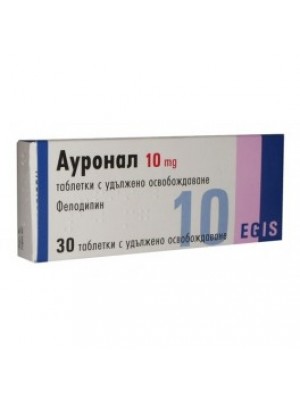
R AURONAL table. 10 mg. 30 tablets What Auronal and what it ..
19.00€