Your shopping cart is empty!
Welcome visitor you can login or create an account.
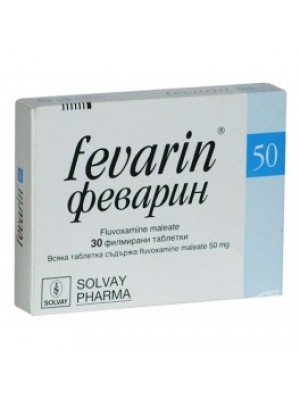
FEVARIN. 100 mg. 30 tablets
Product Code: FEVARIN. 100 mg. 30 tablets
Availability: In Stock

Product viewed: 4632


FEVARIN. 100 mg. 30 tablets

WHAT 100 MG FEVARIN AND WHAT IT IS USED
Pharmacotherapeutic group: antidepressants, selective inhibitor of serotonin reuptake. Fevarin is a medicine for the treatment of periods of depression and obsessive-compulsive disorder.
How does fevarin 50 mg / 100 mg Fevarin?
Fevarin acts selectively on serotonin - a brain chemical that regulates mood and activity. It belongs to the group of so-called SSRI (SSRI) drugs that selectively retain serotonin reuptake in brain neurons. With the increase in the concentration of serotonin, symptoms of depression and obsessive-compulsive disorder disappear.
The product can be administered with food.
Special populations
Fevarin pharmacokinetics were similar in healthy adults, the elderly and patients with renal insufficiency. Fevarin metabolism is impaired in patients with liver disease.
Steady-state plasma concentrations of fevarin are twice as high in children (6-11 years) compared to adolescents (12-17 years). Plasma concentrations in adolescents are similar to those in adults.
BEFORE YOU TAKE FEVARIN 50 MG / 100 MG FEVARIN
Do not take Fevarin 50 mg / 100 mg Fevarin if:
you are allergic (hypersensitive) to fluvoxamine maleate or any of the ingredients of Fevarin!
fevarin take tablets in combination with tizanidine and monoamine oxidase inhibitors (MAOIs)
Fevarin treatment can be initiated:
two weeks after discontinuation of an irreversible MAOI or the next day after discontinuation of a reversible MAOI (eg moclobemide).
We need to go at least one week between discontinuation of Fevarin and initiation of therapy with an MAOI.
Special precautions for use Fevarin 50 mg / 100 mg fevarin
Depression is associated with an increased risk of suicidal thoughts, suicide attempts and suicide. The risk exists to achieve significant remission occurs. Clinical experience has shown that the risk of suicidal behavior is highest early in the disease and may increase again in the early stages of recovery. Therefore patients should be monitored closely, especially at the beginning of antidepressant therapy or at any time during dose adjustments to the establishment of improvement.
Obsessive-compulsive disorder (OCD) may also be associated with an increased risk of suicide. Therefore, these patients should follow the same precautions.
Patients with a history of suicide-related events and those demonstrating a significant degree of suicidal ideation prior to commencement of treatment, may be at a higher risk of suicidal thoughts or suicide attempts. Patients (and caregivers) should be informed about the need to monitor in order to establish the occurrence of suicidal behavior and seek immediate medical advice in the event of such symptoms.
Fevarin should not be used to treat children and adolescents under the age of 18 years except for patients with obsessive-compulsive disorder (OCD). Suicide-related behaviors (suicide attempt and suicidal thoughts), and hostility (predominantly aggression, resistance and anger) were more frequently observed in clinical trials with children and adolescents treated with antidepressants compared to those treated with placebo. When deciding on treatment based on clinical need, the patient should be carefully monitored for the appearance of suicidal symptoms.
In addition, long-term safety data in children and adolescents concerning growth, maturation and development of cognitive behavior.
Severe liver or kidney failure patients should commence treatment with a low dose and be carefully monitored.
Fevarin therapy has rarely been associated with an increase in liver enzymes, generally accompanied by clinical symptoms. Treatment in such cases should be stopped. Glycaemic control may be impaired, especially in the early phases of treatment. You may need to adjust the dose of antidiabetic drugs.
Although Fevarin not demonstrated proconvulsive properties in animal studies, it is recommended that the drug be used with caution in patients with a history of convulsive disorders.
Fevarin should be avoided in patients with unstable epilepsy and patients with controlled epilepsy should be carefully monitored. Fevarin treatment should be discontinued at the onset or increased frequency of seizures.
Rare cases of developing serotonin syndrome or events similar to neuroleptic malignant syndrome in relation to treatment Fevarin, especially when administered in combination with other serotonergic and / or neuroleptic drugs. As these syndromes may result in potentially life-threatening conditions, treatment with fevarin should be discontinued if such events (characterized by clusters of symptoms such as hyperthermia, rigidity, myoclonus, autonomic instability and possible rapid fluctuations of vital signs, mental status changes including confusion, irritability, extreme agitation progressing to delirium and coma), which should be supportive symptomatic treatment. As with other selective inhibitors of serotonin reuptake (SSRIs), following discontinuation of treatment with Fevarin rarely been observed hyponatremia. Some cases were possibly due to the syndrome of inappropriate secretion of antidiuretic hormone. Most reports were associated with older patients.
There is literary evidence of cutaneous bleeding abnormalities such as ecchymoses and redness due to capillary bleeding skin and internal gastrointestinal bleeding with SSRIs. It is recommended that patients taking SSRIs should be monitored closely, especially elderly and patients concomitantly used drugs known to affect platelet function [as atypical antipsychotics and phenothiazines, most tricyclic antidepressants (TA), aspirin, nonsteroidal anti-inflammatory drugs (NSAIDs)] or medications that increase the risk of bleeding, and patients with a history of bleeding and those with predisposing conditions (eg thrombocytopenia).
In combination with Fevarin plasma concentrations of terfenadine, astemizole, or cisapride may increase, leading to an increased risk of QT interval prolongation of Torsade de Pointes.
Therefore Fevarin should not be administered concomitantly with these drugs.
Data in elderly patients showed no clinically relevant differences in normal daily doses compared to younger subjects. However, adjusting the dose is increased in elderly patients should be done more slowly and doses should always be undertaken with caution fevarin may cause slight delays in heart rate (2-6 beats per minute).
Due to lack of clinical experience, the use of Fevarin for the treatment of depression in children can not be recommended.
Taking other medicines
Fevarin should not be used in combination with an MAOI (see section 2).
Reported to increase in previously stable plasma levels of these tricyclic antidepressants (eg clomipramine, imipramine, amitriptyline) and neuroleptics (eg, clozapine, olanzapine), which are metabolized primarily by the cytochrome P450 1A2 coadministration of Fevarin. When initiating treatment with Fevarin should be given to reducing the dose of these products.
Patients receiving both drugs as Fevarin and tacrine, theophylline, methadone, mexiletine, should be carefully monitored and, if necessary, dose adjustment of these drugs.
For use with Fevarin, warfarin plasma concentrations increased significantly and prothrombin time increases.
Isolated cases of cardiac toxicity when combining fevarin with thioridazine.
As plasma concentrations of propranolol are increased in combination with Fevarin may be necessary to reduce the dose of propranolol.
Likely plasma caffeine levels to be increased when co-administered fevarin. Therefore, patients who consume large amounts of caffeine-containing beverages should limit their intake with concomitant fevarin because there are side effects from caffeine (such as tremor, palpitations, nausea, anxiety, insomnia).
Since plasma ropinirol may be increased in combination with Fevarin, thus increasing the risk of overdose may need monitoring and dose reduction ropinirol during treatment Fevarin and after treatment.
Patients receiving concomitant fevarin and phenytoin should be carefully monitored and, if necessary, dose adjustment of these drugs.
Terfenadine, astemizole, cisapride: See also Special precautions for use.
Patients receiving concomitant fevarin and carbamazepine, ciclosporin, should be carefully monitored and, if necessary, dose adjustment of these
drugs.
It is likely that the plasma levels of oxidatively metabolised benzodiazepines (eg triazolam, midazolam, alprazolam, and diazepam) be increased by concomitant Fevarin.
The dosage of these benzodiazepines should be reduced by concomitant administration of Fevarin.
Fevarin not affect plasma concentrations of digoxin.
Renal excretion
Fevarin not affect plasma concentrations of atenolol.
Pharmacodynamic interactions
Fevarin serotonergic effects may be enhanced when used in combination with other serotonergic agents (including triptans, (tramadol, SSRIs and St. John's Wort preparations (see Special Precautions for Use).
Fevarin was used in combination with lithium for the treatment of severely ill and drug-resistant patients. However, lithium (and possibly tryptophan) enhances serotonergic effect Fevarin. The combination should be used with caution in patients with severe drug-resistant depression. Upon receiving oral anticoagulants and Fevarin patients, the risk of bleeding may be increased and therefore these patients should be monitored carefully.
As with other psychotropic medications, patients should be advised to avoid alcohol while taking Fevarin.
Please tell your doctor or pharmacist if you are taking or have recently taken any other medicines, including medicines obtained without a prescription.
Adopt fevarin 50 mg / 100 mg Fevarin food and drink
As with other psychotropic medications, patients should be advised to avoid alcohol while taking Fevarin.
Pregnancy
Data from a limited number of exposed pregnancies indicate no drug adverse effects on pregnancy Fevarin. There are currently no other drug-related epidemiological data.
Reproductive studies in animals at high doses revealed no evidence of impaired fertility, fertility or teratogenic effects in the offspring. At doses of fluvoxamine, which significantly (about 4 times) exceed the maximum recommended human dose, they found impaired fertility, increased incidence of embryo-fetal death, decreased fetal weight and increased incidences of fetal eye abnormalities (stumbling retina). The potential risk for humans is unknown. Care must be taken when prescribing medication to pregnant women.
Isolated cases of symptoms of dependence in the newborn have been described after the use of Fevarin in late pregnancy. Some newborns experience feeding difficulties and / or breathing difficulties, seizures, unstable temperature, hypoglycemia, tremor, abnormal muscle tone, shivering and crying after continuous exposure to SSRIs during the third trimester of pregnancy, so you may need prolonged hospitalization.
Breastfeeding
Fevarin is excreted in small amounts in breast milk. Therefore, the drug should not be used by women who are breastfeeding.
Driving and operating machinery
Fevarin to 150 mg no or negligible influence on the ability to drive and use machines. The drug showed no effect on psychomotor skills related to driving and operating machinery in healthy volunteers. But it was reported sleepiness during treatment fevarin. Therefore, caution is advised in the establishment of individual response to the drug.
Important information about some of the ingredients fevarin 50 mg / 100 mg Fevarin
Mannitol (E421) can have a mild laxative effect.
HOW TO TAKE FEVARIN 50 MG / 100 MG FEVARIN
Depression
The recommended starting dose is 50 or 100 mg once at night. Recommended gradually increasing the dose until an effective dose. The usual effective dose is 100 mg a day and it should be adjusted according to the individual patient. Doses up to 300 mg daily. Dosage above 150 mg daily should be given in divided doses.
In accordance with the unanimous request of the WHO antidepressants should be taken for at least six months after recovery from a depressive episode.
Fevarin in a fixed daily dose of 100 mg is the recommended dose for the prevention of new depressive episode.
Obsessive-compulsive disorder (OCD)
The recommended starting dose is 50 mg daily for 3-4 days. The effective dose usually ranges between 100 mg and 300 mg. The dose should be increased gradually until an effective dose and maximum dose is 300 mg per day for adults and 200 mg a day for children aged 8 years / adolescents.
Doses up to 150 mg can be given as a single dose, preferably in the evening. Recommended total daily dose greater than 150 mg should be given in 2 or 3 divided doses. If there has been a good response, treatment can be continued at a dose adjusted according to individual response. If no improvement is seen within 10 weeks, treatment with Fevarin should be reviewed. Although no systematic studies that answer the question of how long to continue treatment fevarin, OCD is a chronic condition and it is reasonable to account for continued treatment after 10 weeks in responding patients. Dose adjustments should be done carefully according to individual response of the patient to carry out maintenance therapy with the lowest effective dose.
The need for treatment should be reassessed periodically. Some clinicians advocate concomitant behavioral psychotherapy for patients who have not responded well to drug therapy.
Treatment suffering from hepatic or renal insufficiency should start with a low dose and patients should be carefully monitored.
Fevarin tablets should be swallowed with water without chewing.
If you take more than the dose fevarin 50 mg / 100 mg Fevarin):
Symptoms
Symptoms include gastrointestinal complaints (nausea, vomiting and diarrhea), somnolence and dizziness. Have also been reported cardiac events (tachycardia, bradycardia, hypotension), abnormal liver function, seizures and coma. Fevarin has a wide margin of safety in overdose. Since its introduction on the market, reports of deaths attributed to overdose with fevarin were extremely rare. The highest documented dose Fevarin absorbed by the patient is 12 grams. This patient recovered completely.
Were sometimes observed more serious complications in cases of intentional overdose fevarin in combination with other medicines.
Treatment
There is no specific antidote for fevarin. In case of overdose, gastric lavage as soon as possible after ingestion of tablets and provide symptomatic treatment. Recommended and reusable medical charcoal, if necessary, by an osmotic laxative.
Forced diuresis or dialysis is unlikely to be helpful.
If you forget to take fevarin 50 mg / 100 mg fevarin
Do not take a double dose to make up for the missed dose and continue with the next prescribed dose.
If you have stopped taking Fevarin 50 mg / 100 mg fevarin
Reactions are possible depending upon discontinuation of therapy Fevarin, although the available preclinical and clinical data do not suggest that this treatment causes dependence. The following symptoms have been reported in connection with the discontinuation of the product: dizziness, paresthesia, headache, nausea and anxiety. Most reactions are mild dependency and self-limiting. When treatment can be given to gradually reducing the dose.
If you have any further questions on the use of this product, ask your doctor or pharmacist.
POSSIBLE SIDE EFFECTS TO FEVARIN 50 MG / 100 MG FEVARIN
Like all medicines, Fevarin may cause side effects, although not all of them receive.
Nausea, sometimes accompanied by vomiting, is the most commonly observed symptom associated with treatment Fevarin. This side effect usually weakened in the first two weeks of treatment. Other adverse reactions observed in clinical trials with the following frequencies are often associated with the illness itself, and not necessarily treatment.
Common (1-10% frequency):
Metabolism and nutrition disorders: anorexia
Nervous system: agitation, anxiety, dizziness, headache, insomnia, nervousness, somnolence, tremor
Cardiac disorders: palpitations (tachycardia)
Gastrointestinal disorders: abdominal pain, constipation, diarrhea, dry mouth, dyspepsia
Disorders of the skin and subcutaneous tissue disorders: sweating
General disorders and administration site conditions: asthenia, malaise
Uncommon (<1%):
Psychiatric disorders: confusion, hallucinations
Nervous system disorders: ataxia, extrapyramidal symptoms
Vascular disorders (postural) hypotension
Disorders of the skin and subcutaneous tissue disorders: allergic skin reactions (including rash, pruritus, angioedema)
Musculoskeletal disorders and connective tissue disorders: arthralgia, myalgia
Disorders of the reproductive system and breast: abnormal (delayed) ejaculation
Rare (incidence <0.1%):
Psychiatric disorders: obsession
Nervous System: Convulsions
Hepatobiliary disorders: abnormal liver function
Disorders of the skin and subcutaneous tissue sensitivity to light
Disorders of the reproductive system and breast disorders: galactorrhea
Other side effects reported during the marketing of the product
Been reported gain or weight loss.
Have been reported rarely serotonin syndrome, neuroleptic malignant-like syndrome events, hyponatremia and syndrome of inappropriate antidiuretic hormone secretion (SIADH) (see also Special precautions for use).
Please see section 3 for possible effects upon discontinuation of therapy.
Been reported as exhibiting signs of bleeding such as ecchymoses, capillary bleeding, gastrointestinal bleeding (see also special care).
Very rarely been reported paraesthesia, anorgasmia and taste.
Within each frequency grouping, adverse reactions are listed by decreasing severity.
If any of the side effects gets serious, or if you notice any side effects not listed in this leaflet, please tell your doctor or pharmacist.
STORAGE FEVARIN 50 MG / 100 MG FEVARIN
The expiration date three years to ensure the company provided The product is stored in the original, undamaged packaging at temperatures below 25 ° C.
Fevarin tablets should be kept dry and protected from direct sunlight.
Keep this medicine out of the reach of children.
Fevarin Do not use after the expiry date stated on the carton after EXP.
ADDITIONAL INFORMATION
What fevarin 50 mg / 100 mg Fevarin
The active ingredient is fluvoxamine maleate
The other ingredients (excipients) are mannitol (E421), maize starch, pregelatinized starch, sodium stearyl fumarate, colloidal anhydrous silica, hypromellose, polyethylene glycol 6000, talc, titanium dioxide (E171).
Write a review
Your Name:Your Review: Note: HTML is not translated!
Rating: Bad Good
Enter the code in the box below:
Related Products