Your shopping cart is empty!
Welcome visitor you can login or create an account.
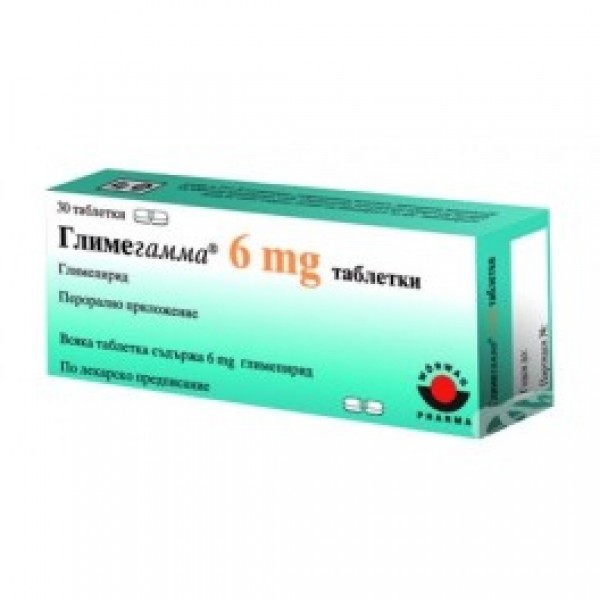
GLIMEGAMMA 6 mg. 30 tablets
Product Code: GLIMEGAMMA 6 mg. 30 tablets
Availability: In Stock
Product viewed: 1031


GLIMEGAMMA 6 mg. 30 tablets
WHAT GLIMEGAMMA AND WHAT IT IS USED
Glimegamma is a medicine for lowering blood sugar levels (antidiabetic drug for oral administration). This medicine belongs to a group of products that lower blood sugar and are called sulphonylureas. Glimegamma works by increasing the amount of insulin released from your pancreas. The insulin then lowers your blood sugar levels.
Glimegamma be used in type 2 diabetes when diet alone, exercise and lowering body weight have insufficient effect.
2. BEFORE YOU TAKE GLIMEGAMMA
Do not use Glimegamma:
if you are allergic (hypersensitive) to glimepiride or other medicinal products of the same group (sulfonamides and sulphonylurea), or any of the other ingredients of Glimegamma;
if you have severe renal impairment;
if you have serious liver dysfunction;
if you have insulin-dependent diabetes (type 1 diabetes);
if you have diabetic ketoacidosis (a complication of diabetes, leading to increased levels of acidity in your body. Symptoms include fatigue, nausea, frequent urination, and muscle stiffness.);
if you are in a diabetic coma (drowsiness or loss of consciousness due to an increased level of blood sugar).
Take special care with Glimegamma
Consult your doctor or pharmacist before taking your medicine if:
are recovering from trauma, surgery, infection with temperature, or after other forms of stress. Please tell your doctor, as you may need a temporary change in treatment;
have severely impaired renal or hepatic function.
If you are unsure if this applies to you, talk to your doctor or pharmacist before you start taking Glimegamma.
In patients with a lack of the enzyme glucose-6-phosphate dehydrogenase may occur a decrease in hemoglobin levels and reduction in red blood cells (hemolytic anemia).
Information on the application of Glimegamma in people under 18 years of age is limited. Therefore not recommended its use in this age group.
Important information about hypoglycaemia (low blood sugar)
During the first few weeks of treatment is a possible increase in the risk of a decrease in the levels of blood sugar (hypoglycemia) and it is therefore extremely important to be under the close supervision of your doctor. Please see below for additional information hypoglycemia, its symptoms and treatment.
The following factors may increase the risk of hypoglycaemia:
skipping meals, if you miss meals;
fasting;
acceptance of low quality or insufficient quantity of food;
change your diet;
increase your physical activity and carbohydrate intake, not corresponding to this increase;
consumption of alcohol, especially in combination with skipped meals;
if at the same time taking other medicines or natural remedies (see below section Taking other medicines);
high doses of glimepiride;
if you suffer from particular hormone disorders (functional disorders of the thyroid, pituitary or adrenal gland);
decreased renal function;
severely impaired liver function.
If you have low blood sugar (hypoglycemia), you may have the following symptoms:
headache, feeling of hunger, fatigue, nausea, vomiting, sluggishness, sleepiness, sleep disturbances, restlessness, aggressiveness, impaired alertness, reduced alertness and reaction time, depression, confusion, speech and visual disorders, aphasia, tremor, paresis , sensory disturbances, dizziness, and helplessness.
It is possible to show the following signs: sweating, clammy skin. anxiety, increased heart rate, increased blood pressure, palpitations, sudden severe pain in the chest which may spread to neighboring areas (chest pain) and heart arrhythmias.
If blood sugar levels continue to decline may fall into a state of serious confusion (delirium), appear seizures, loss of self-control, your breathing may be shallow and your heart rate to slow down, may become unconscious. The clinical picture of a severely reduced blood sugar may resemble the clinical picture of stroke (stroke).
Treatment of hypoglycemia
In most cases the signs of low blood sugar vanish very quickly when you receive some form of sugar, eg. grape sugar, sugar cubes, sweet juice, sweetened tea. Therefore, you should always carry with you some form of sugar (eg sugar cubes). You must remember that sweeteners are not effective. Please contact your doctor or go to hospital if taking sugar does not help or if the symptoms recur.
laboratory tests
The level of sugar in blood or urine should be checked regularly. Also, your doctor may do blood tests to monitor the levels of blood cells and liver function.
Signals of low blood sugar may be absent, be less pronounced or develop very slowly. You do not understand time when your blood sugar has fallen. This can occur in elderly patients who take certain drugs (eg. Those that act on the central nervous system, or beta-blockers). It can happen when you suffer from certain diseases of the endocrine system (eg. Certain abnormal thyroid function and inadequate function of the anterior pituitary or adrenal gland). Impaired liver function may affect reverse regulation.
In stressful situations (eg. Accident, emergency operations, infections with fever, etc.). May be appointed a temporary switch to insulin treatment.
Signs of increasing blood sugar levels (hyperglycemia - it can occur when glimepiride has not dropped enough blood sugar when you are not complied with the treatment plan prescribed by your doctor or in certain stressful situations) can be: thirst , frequent urination, dry mouth and dry, itchy skin, or fungal skin infections and reduced performance. In this case, you should contact your doctor.
Taking other medicines
Please tell your doctor or pharmacist if you are taking or have recently taken any other medicines, including medicines obtained without a prescription.
Your doctor may want to change the dose of Glimegamma if you take other medicines that can weaken or strengthen the effect of Glimegamma on your blood sugar.
Following medicinal products may potentiate the effect of Glimegamma, which will lead to very low blood sugar when you (can cause hypoglycemia):
other medications for the treatment of diabetes (e.g., insulin, metformin);
drugs for the treatment of bacterial and fungal infections (tetracyclines, chloramphenicol, fluconazole, miconazole, quinolones, clarithromycin);
drugs for the treatment of pain and inflammation (e. phenylbutazone, azapropazone, oxyphenbutazone and the like aspirin drugs);
drugs for treating tuberculosis (p-amino-salicylic acid);
drugs for the treatment of urinary tract infections (such as certain long acting sulphonamides);
Medicinal products supporting muscle building (anabolic steroids);
medicines that slow down blood clotting (coumarin derivatives such as warfarin);
medicinal products for hormone replacement therapy in men (eg testosterone);
medicinal products, lowering high blood pressure (ACE inhibitors);
medicines called antiarrhythmics used to control abnormal heart rhythm (disopyramide);
medicines called sympatholytics, used to treat high blood pressure, heart failure or problems with the prostate gland;
drugs for the treatment of depression (fluoxetine, MAO inhibitors);
medicines for weight reduction (fenfluramine);
Medicinal products lowering high cholesterol level (fibrates);
drugs for the treatment of cancer (cycloalkyl, tri- and ifosfamide);
medicinal product for the treatment of allergies such as hay fever (tritoqualine);
medicines to improve blood flow (pentoxifylline);
medicinal products for the treatment of gout (probenecid, allopurinol, sulfinpyrazone).
The effect of lowering blood sugar Glimegamma may be weakened and blood sugar levels may increase when taking any of these medicines:
Medicinal products containing female sex hormones (oestrogens and progestogens);
Medicinal products supporting urine output (saluretitsi, thiazide diuretics);
medicines for the stimulation of the thyroid gland (such as levothyroxine);
medicines to treat allergies and inflammation (glucocorticoids);
drugs to treat severe mental disorders (derivatives of phenothiazine and chlorpromazine);
drugs for the treatment of epilepsy (phenytoin);
medicines to treat high blood pressure or low blood sugar (diazoxide);
medicinal products for the treatment of infections and tuberculosis (rifampicin);
medicinal products for the treatment of very low blood sugar (glucagon);
medicinal products to treat nervousness and sleep problems (barbiturates);
medicinal products for the treatment of elevated intraocular pressure (acetazolamide);
drugs used for the increase in heart rate, for the treatment of asthma, nasal congestion, cough and cold, for weight reduction or used in life-threatening emergencies (adrenaline and sympathomimetics);
drugs for the treatment of high cholesterol (nicotinic acid);
medicinal products for the treatment of constipation (laxatives), especially after prolonged use.
The following medicines can increase or reduce the ability of Glimegamma lowering blood sugar:
drugs for the treatment of ulcers of the stomach or duodenum (H2 receptor antagonists);
medicines to treat high blood pressure or heart failure (beta-blockers, clonidine, guanethidine and reserpine). They may also mask the signs of hypoglycaemia, so it is necessary to apply with caution.
Glimegamma can strengthen or weaken the effects of medicines that inhibit blood clotting (coumarin derivatives such as warfarin).
Taking Glimegamma with food and drink
Glimegamma should be taken as a single dose just before or during breakfast or the first main meal of the day, the tablet should be swallowed whole with water (at least half a cup).
Alcohol may increase or decrease in an unpredictable way Glimegamma ability to lower blood sugar.
Pregnancy and lactation
Glimegamma should not be taken during pregnancy. Tell your doctor if you are pregnant, if you think you may be pregnant or are planning pregnancy.
It is possible Glimegamma pass into breast milk. Glimegamma should not be taken during lactation.
Ask your doctor or pharmacist before taking any medicine.
Driving and using machines
Your ability to concentrate or react may be reduced if your blood sugar is lowered (hypoglycaemia) or high (hyperglycaemia) or if you develop visual problems as a result of these conditions. Keep in mind that you endanger yourself or others (eg. When driving or operating machinery).
Please ask your doctor whether you can drive if:
have frequent episodes of hypoglycemia;
have fewer or no warning signals of hypoglycaemia.
Important information about some of the ingredients of Glimegamma
This medicinal product contains lactose. If your doctor has told you that you have an intolerance to some sugars, contact your doctor before you start taking this medicine.
Glimegamma 6 mg tablets contain sunset yellow (E110) which may cause allergic reactions.
3. HOW TO USE GLIMEGAMMA
Always take Glimegamma exactly as prescribed by your doctor. Ask your doctor or pharmacist if you are something you are not sure.
Method of administration
Glimegamma should be taken by mouth (orally) immediately before or during the first meal of the day (usually breakfast). If you do not eat breakfast, you should take Glimegamma schedules, which are prescribed by your doctor. It is important not to miss a meal when you are treated with Glimegamma.
Glimegamma tablets should be swallowed with at least half a glass of water. Do not chew or crush the tablets.
How many tablets to take
The starting dose depends on the needs and condition of your body and the results of tests for sugar in the blood and urine. The dose is determined by your doctor. Do not take more tablets than prescribed by your doctor.
The usual starting dose for adults is 1 mg glimepiride daily. If this is achieved better control your blood sugar, you can stay on this dose. If 1 mg not well controlled your blood sugar, your doctor may increase the dose after 1-2 weeks of treatment to 2, 3 or 4 mg glimepiride daily.
If you achieve good blood sugar control, the dose will be used for maintenance treatment.
The maximum recommended dose is 6 mg glimepiride daily.
Can be initiated combination treatment with glimepiride and metformin or glimepiride and insulin. In this case, your doctor will decide the right dose for you personally glimepiride, metformin or insulin. You should tell your doctor if you change your weight, if you change your lifestyle, or are in a stressful situation (eg after an accident), as it may be necessary to change your dose.
If you feel that the effect of the medicine was too weak or too strong do not change the dose yourself, but ask your doctor.
If you take more dose Glimegamma
If you take more than the amount of glimepiride or an additional dose there is a danger of reaching low blood sugar (see. Section 2 for signs of hypoglycaemia) and therefore should immediately take enough sugar (eg. A few cubes grape sugar cubes sugar, sweet juice, sweetened tea) and inform a doctor. In the treatment of hypoglycaemia, as a result of accidental consumption by children, the amount of glucose given must be carefully controlled to avoid inducing dangerous hyperglycaemia. Of unconscious people not be given food or drinks.
Since the condition of low blood sugar may continue for some time, of great importance that the patient be carefully monitored until the danger has passed. It may be necessary hospitalization and as a security measure. Show the doctor the package or remaining tablets, for he know what medications you take.
Severe cases of low blood sugar, accompanied by loss of consciousness and severe neurological disorders are cases of medical urgency and require immediate medical treatment and hospitalization. There must always be pre-informed person that can call a doctor in an emergency.
If you forget to take Glimegamma
Do not take a double dose to make up the missed dose. Take the next / s your tablet / and as usual and continue treatment.
If you stop using Glimegamma
If you interrupt or stop the treatment, you should know that the desired effect of lowering blood sugar is not achieved or that the disease will deteriorate again. If you need some change, it is essential first to come in contact with your doctor.
If you have any further questions on the use of this medicine, ask your doctor or pharmacist.
4. POSSIBLE SIDE EFFECTS
As with all drugs, Glimegamma can cause side effects, although not every patient exhibits them.
Most adverse reactions are dose dependent and Glimegamma resolved after dose reduction or after discontinuation of the product.
Side effects occur most frequently at the beginning of treatment.
In general, side effects are mild and temporary.
Incidence of adverse events:
Very common: affects more than 1 in 10 patients;
Common: affects 1 to 10 of 100 patients;
Uncommon: affects 1 to 10 of 1000 patients;
Rare: affects 1 to 10 of 10,000 patients;
Very rare: affects less than 1 in 10,000 patients;
With uncertain: frequency of occurrence can not be calculated on the basis of available data.
Tell your doctor if you is a person any of the following symptoms:
Allergic reactions (including inflammation of blood vessels, often with skin rash) which may develop into serious reactions with difficulty in breathing, lower blood pressure and sometimes progressing to shock;
Abnormal liver function including yellowing of the skin and eyes (jaundice), problems with the drainage of bile from the bile (cholestasis), inflammation of the liver (hepatitis) or liver failure;
Write a review
Your Name:Your Review: Note: HTML is not translated!
Rating: Bad Good
Enter the code in the box below:
Related Products
Gliclazide GAMMA. 30 mg. 60 tabletsWHAT GAMMA 30 gliclazide ..
15.00€