Your shopping cart is empty!
Welcome visitor you can login or create an account.
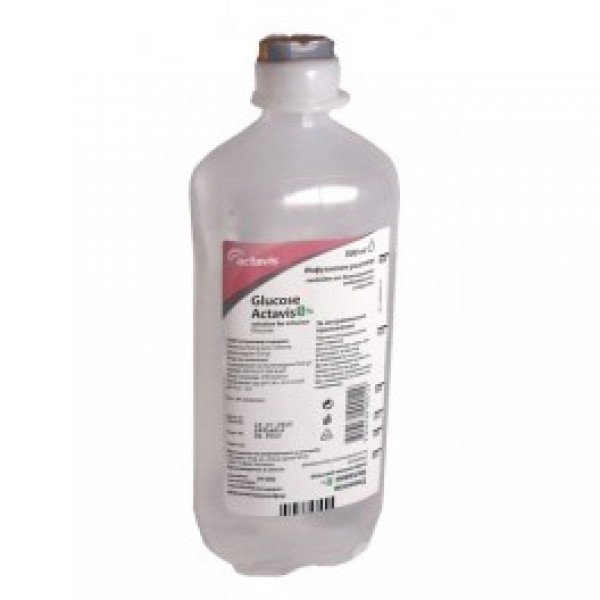
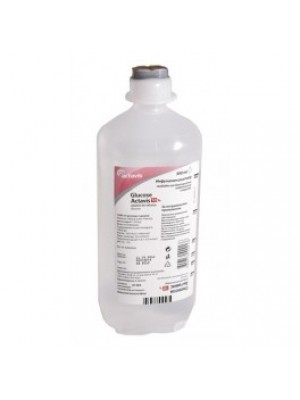
GLUCOSE 5% 500 ml.
Product Code: GLUCOSE 5% 500 ml.
Availability: In Stock
Product viewed: 1734


GLUCOSE 5% 500 ml.
QUALITATIVE AND QUANTITATIVE COMPOSITION
1000 ml of solution contains:
Active substance:
Glucose anhydrous 50,0 g (as Glucose monohydrate 55,0 g)
Excipients: Water for injection Contents of carbohydrates: 50,0 g / l calorific value: 835 kJ / l = 200 kcal / l
Theoretical osmolarity: 278 mOsm / l
Titration acidity (to pH 7.4): <0,5 mmol / l pH: 3.5 to 5.5
PHARMACEUTICAL FORM AND CONTENTS
infusion
Polyethylene bottle, content:500 ml
INDICATIONS
Carrier solution for physico-chemically compatible electrolyte concentrates and drugs.
CONTRAINDICATIONS
• Increased levels of blood sugar (hyperglycemia)
• Decreased concentration of potassium in the blood (hypokalemia)
• High concentrations of acidic substances in the blood (acidosis).
• If necessary to implement larger volumes may occur contraindications congestion glucose and / or liquids:
• hyperhydration,
• Simultaneous deficiency of sodium and water (hypotonic dehydration).
PRECAUTIONS FOR USE
Monitoring of patients should include regular checks of blood sugar levels, water balance, concentration of serum electrolytes - especially in serum potassium - and acid-base balance. Glucose infusion should not be done using the same infusion equipment simultaneously with, before, or after the transfusion of blood, due to the potential pseudo.
DRUG INTERACTIONS
Since the glucose solution infusion was 5% with an acidic pH, incompatibilities may arise when mixed with other drugs. Erythrocyte concentrates should not be diluted with glucose solution for injection / infusion of 5%, as this can lead to pseudo.
DOSAGE
Select volume to give the desired concentration of the drug to which a 5% glucose is used as carrier solution taking into account the maximum dose indicated below.
Recommended daily dose
To 40 ml per kg of body weight / day, corresponding to 2 g of glucose. The maximum daily dose is in accordance with standard restrictions on imports of fluids daily.
infusion rate
To 5 ml / kg body weight / hour, corresponding to 0,25 g glucose / kg body weight / hour. The maximum speed of the drop was 1.7 drops / kg body weight / minute.
Method of administration
Intravenous infusion. The solution can be administered through a peripheral vein; peripheral administration, however, may be limited by the nature or concentration of dissolved drug.
OVERDOSE
symptoms
Overdose may lead to fluid overload, electrolyte disturbances, hyperglycemia, glycosuria and hyperosmolarity of blood (to the extent of hyperglycemic hyperosmolar coma).
Emergency treatment, antidotes
Depending on the type and severity of the violations:
Stop infusion administration of electrolytes, diuretics or insulin.
SIDE EFFECTS
If the solution is applied as directed, do not expect any.
Note:
Patients should be advised to inform their physician or pharmacist if you note any adverse reactions associated with the administration of this product.
SHELF LIFE AND INSTRUCTIONS FOR STORAGE
3 years
No special storage conditions!
The product should not be used after the expiry date stated on the label.
Single-dose container. Unused portions should be discarded.
Only be used if the solution is clear and if the bottle cap and have no visible signs of damage.
Write a review
Your Name:Your Review: Note: HTML is not translated!
Rating: Bad Good
Enter the code in the box below:
Related Products
AMINOSTERIL N - HEPA 8% 500 ml. FRESENIUS 1000 ml (1 liter..
35.00€

NANIPRUS ampoules 30 mg. 10 ml.Naniprus is a medicine for ra..
12.00€