
Your shopping cart is empty!
Welcome visitor you can login or create an account.
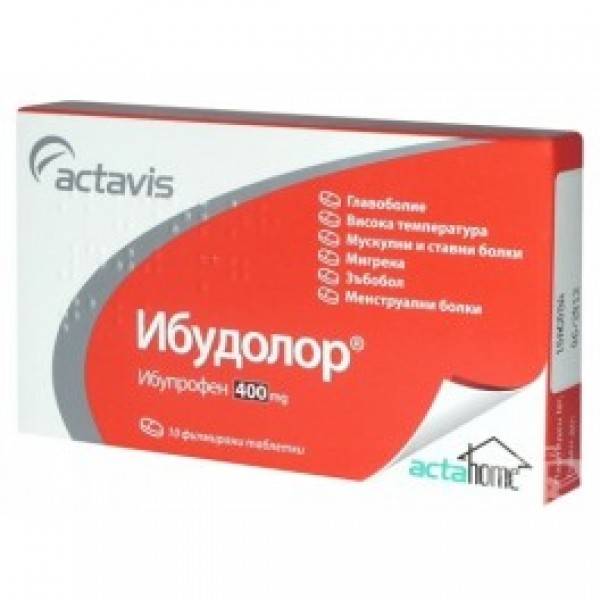
IBUDOLOR table. 400 mg
Product Code: IBUDOLOR table. 400 mg
Availability: In Stock
Product viewed: 1213


IBUDOLOR table. 400 mg

IBUDOLOR WHAT IS AND WHAT IT IS USED FOR?
Ibudolor belongs to a group of medicines called NSAIDs (nonsteroidal anti-inflammatory drugs), which work by reducing pain, inflammation and fever.
Ibudolor is used to relieve mild to moderate pain such as headache, toothache, menstrual cramps, and fever.
BEFORE YOU TAKE IBUDOLOR
Do not take Ibudolor
If you are allergic to ibuprofen or any of the other ingredients of Ibudolor
If you have had allergic reactions such as asthma, rhinitis, skin rash with itching or swelling of the lips, face, tongue or throat after taking medicines containing acetylsalicylic acid (eg aspirin) or other pain relievers and anti-inflammatory drugs (NSAIDs).
If you have an ulcer or bleeding from the stomach or duodenum, due to previous use of protivobolkovi and anti-inflammatory drugs (NSAIDs).
If you have an ulcer or bleeding from the stomach or duodenum, or have had two or more such episodes in the past
If you have severe liver disease, kidney or heart (including coronary heart disease)
If you have significant dehydration (caused by vomiting, diarrhea, or inadequate fluid intake).
If you have any active bleeding (including the brain)
If you have unexplained disturbances in hematopoiesis
Ibudolor not give to children under 6 years of age.
Take special care with Ibudolor
If you have systemic lupus erythematosus or other autoimmune disease
If you have hereditary problems in the red blood pigment - hemoglobin (porphyria)
If you suffer from chronic inflammatory bowel diseases such as inflammation of the colon ulcers (ulcerative colitis), inflammation of the digestive tract (Crohn's disease) or other gastrointestinal diseases
If you have interference in hematopoietic
If you have a blood clotting mechanism
If you suffer from allergies, hay fever, asthma, chronic swelling of nasal mucosa, sinuses, adenoids and chronic obstructive airway disease, as there is a greater risk of narrowing of the airways and difficulty breathing (bronchospasm)
If you have poor circulation in the arteries of the arms and legs
If you have a liver, kidney, heart or high blood pressure
If you have recently had major surgery
If you are in the first six months of pregnancy
If you are breastfeeding
Elderly
If you are elderly, you are more prone to adverse reactions, especially bleeding and perforation of the digestive tract, which may have fetal effects.
Ulceration, perforation and gastrointestinal bleeding
If you have had an ulcer in the stomach or intestines, especially if complicated by perforation or accompanied by bleeding, you should watch out for any unusual abdominal symptoms and inform your doctor about these, especially if they occur at the beginning of treatment. The reason is that the risk of bleeding or ulceration of the digestive tract is higher in this case, especially in the elderly. If there is bleeding or ulceration of the digestive tract, treatment should be discontinued.
Bleeding, ulceration or perforation of the gastrointestinal tract can occur without warning symptoms, even in patients who had never had such problems. The consequences can be fatal.
The risk of ulcers, perforation or bleeding from the gastrointestinal tract generally increase with higher doses of ibuprofen. Risk increases with concomitant ibuprofen with other drugs.
Skin reactions
Ibudolor intake should be discontinued at the first sign of skin rash, mucosal lesions or other signs of allergy, as this may be indicative of serious skin reactions, sometimes with fatal consequences. The highest risk of these reactions is the first month of treatment.
Effects on heart and brain
Drugs such as Ibudolor associated with low risk of heart attack (myocardial infarction) or stroke. The risk increases with high doses and prolonged treatment. Do not exceed the recommended dose or duration of lechenieto/7-dneven course /. If you have heart disease, previous stroke or think that you are at risk for these diseases should discuss your treatment with your doctor or pharmacist.
Effects on the kidney
Ibuprofen can cause impaired renal function even in patients who have had kidney problems. This can lead to swelling of the feet and even to heart failure or high blood pressure in susceptible individuals. Ibuprofen can cause kidney damage, especially in patients who already have kidney, heart or liver disease or who are taking diuretics or ACE inhibitors, as well as in elderly patients. Discontinuation of ibuprofen usually leads to recovery of the patient.
Other precautions
Prolonged use of high doses of painkillers can occur headache that should be treated with high doses of this medicine. The normal use of painkillers can cause permanent damage to the kidneys and the risk of renal failure.
Ibuprofen may mask the symptoms or signs of infection and temporarily prolong bleeding time.
Ibudolor can reduce your chances of becoming pregnant. You should tell your doctor if you are pregnant or if you have problems getting pregnant.
Pregnancy and lactation:
Ibuprofen should not be taken during the last three months of pregnancy because it may cause serious heart, lung and kidney damage in the unborn child. If taken late in pregnancy may cause a predisposition to bleeding in the mother and child and reduce the contractions of the uterus, which will delay delivery. Treatment during the first 6 months of pregnancy can only be prescribed by a doctor for clear indications.
This product belongs to a group of medicines that can hinder conception. This effect is reversible upon discontinuation of treatment. Ibuprofen is excreted in breast milk in very small amounts and usually do not have to stop breast-feeding during short-term treatment. If you are prescribed long-term treatment should be considered for early weaning of infants.
HOW TO TAKE IBUDOLOR?
Side effects can be minimized by using the lowest effective dose for the shortest duration necessary to control symptoms. Ibuprofen dose depends on the age and weight of the patient. The usual dose is:
Mild to moderate pain and fever
Adults and adolescents over 12 years:
1/2 - 1 tablet as a single dose or 3-4 tablets per day at an interval of 4 to 6 hours. Dosage for migraine headaches should be: 1 tablet as a single dose, if necessary 1 tablet at intervals of 4 to 6 hours. The maximum daily dose should not exceed 3 tablets.
Menstrual cramps
Adults and adolescents over 12 years:
1/1 - 1 tablet 1-3 times a day at intervals of 4-6 hours as needed. The maximum daily dose should not exceed 3 tablets.
The tablet should be taken with a glass of water during or after meals. To facilitate the acquisition or dosage adjustment, the tablet can be divided into two equal halves.
If your condition does not improve within 7 days or worsens, you should consult a doctor.
Elderly
If you are elderly, you are prone to more side effects, especially bleeding and perforation of the digestive tract, which can be fatal. Consult with your doctor.
Reduced renal or hepatic function
If you have impaired kidney or liver function, consult your doctor.
If you take more than the dose Ibudolor
Consult a physician, emergency medical attention or contact a pharmacist.
Symptoms of overdose may include: nausea, vomiting, stomach pain or diarrhea. can also occur tinnitus headache, dizziness, vertigo, and gastrointestinal bleeding. In more serious cases of overdose can occur drowsiness, agitation, disorientation, coma, convulsions, blurred vision and eye disorders, liver damage, low blood pressure, difficulty breathing, bluish lips, tongue and fingers. In asthma may experience worsening asthma.
If you forget to take Ibudolor
If you forget to take Ibudolor
Take it as soon as possible, unless there are less than four hours to the next dose.
Do not take a double dose to make up for a missed dose.
POSSIBLE SIDE EFFECTS
The following side effects are important and require immediate action in the event that you observe them to stop taking Ibudolor and consult your doctor immediately if you notice the following symptoms:
Common:
Katranenocherni stools or vomiting of blood stains
Very rare:
Swelling of the face, tongue or throat which may cause difficulty breathing greatly, increased heart rate, drastically lowering blood pressure, or life-threatening shock
Sudden allergic reaction with shortness of breath, wheezing and reduced blood pressure
Serious rash associated with blistering, especially on the legs, upper and lower arms, feet, and can cover the face and lips. The rash can become more serious bubbles - bigger and spread.
Very common:
Heartburn, abdominal pain, indigestion.
Uncommon:
Blurred vision or other eye disorders
Hypersensitivity reactions like skin rash, itching, asthma attacks
Rare:
Loss of vision
Very rare:
A sudden filling of the lungs with water, making it difficult to breath, high blood pressure, fluid retention and weight gain.
Other side effects:
Very common:
Disturbances in the digestive tract: diarrhea, nausea, vomiting, flatulence, constipation
Common:
Ulcers in the digestive tract with or without perforation
Inflammation of the intestines and aggravated inflammation of the colon and digestive tract complications of colon diverticuli
Ulcers and sores in mouth
Headache, drowsiness, dizziness, fatigue, anxiety, insomnia and irritability.
Uncommon:
Inflammation of the stomach lining
Renal disturbances including development of edema, inflammation of the kidneys and renal failure
Runny nose
Difficulty in breathing
Rare:
Depression, confusion, hallucinations
Syndrome of systemic lupus erythematosus
Increased level of blood urea nitrogen and other liver enzymes, decreased hemoglobin and hematocrit, reduced platelet aggregation and prolonged bleeding time, reduced serum calcium and elevated serum uric acid.
Very rare:
Uncomfortable feeling of palpitations, heart failure, heart attack or high blood pressure
Abnormal hematopoiesis
Ringing or buzzing
Inflammation of the esophagus or pancreas
Narrowing of the intestine
Acute inflammation of the liver
Evrezhdane renal tissue
Hair Loss
ADDITIONAL INFORMATION
What Ibudolor
The active substance is ibuprofen. Each tablet contains 400 mg of ibuprofen
Other ingredients are:
Tablet core: microcrystalline cellulose, colloidal silica anhydrous, hydroxypropyl cellulose, sodium lauryl sulfate, croscarmellose sodium, talc.
Tablet coating :: hypromellose, macrogol 400, titanium dioxide
Write a review
Your Name:Your Review: Note: HTML is not translated!
Rating: Bad Good
Enter the code in the box below:
Related Products
IBALGIN fast table. 400 mg. 12 table WHAT IBALGIN Fast AND ..
9.00€


Brufen forte 40mg. / ml. 100 ml. What Brufen Forte 40 mg / m..
18.00€