Your shopping cart is empty!
Welcome visitor you can login or create an account.
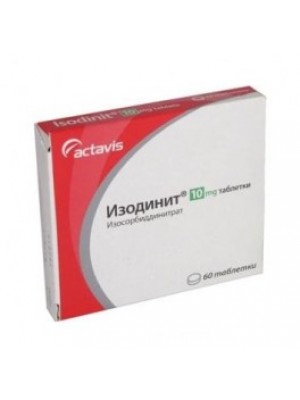
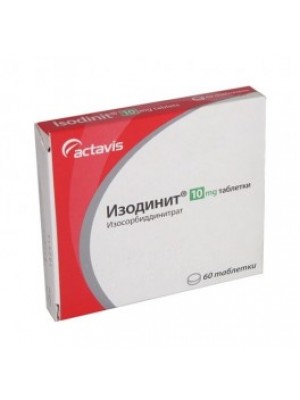
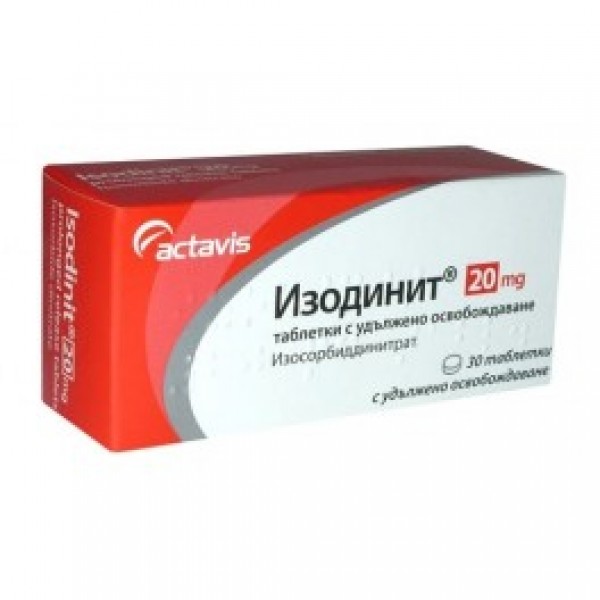
IZODINIT 20 mg. 30 tablets
Product Code: IZODINIT 20 mg. 30 tablets
Availability: In Stock
Product viewed: 913


IZODINIT 20 mg. 30 tablets
WHAT IZODINIT AND WHAT IT IS USED?
Izodinit is a medicinal product of the nitrates. It causes dilation of the veins mainly by lowering their tone of smooth muscle, lowers the pressure in the venous system, decreases venous return to the heart and ventricular filling. Affects arterialnite- vessels, leading to a reduction in systemic vascular resistance (after loading). So it improves heart function, relieves work and reduces its need for oxygen. Thus preventing the occurrence of angina heart pain origin and improves cardiac function in chronic congestive heart failure.
Izodinit apply to:
• Prevention and treatment of angina pectoris.
• Concomitant treatment of congestive heart failure.
2. WHAT YOU NEED TO KNOW BEFORE YOU START IZODINIT
Izodinit not apply to:
• Hypersensitivity to the active substance or to any of the excipients.
• Acute circulatory failure, severe hypotension or hypovolemia (low blood pressure or decreased volume of circulating blood), states collapse, shock.
• Acute myocardial infarction with low ventricular filling pressure.
• Strong anemia.
• Recent brain injury and cerebral haemorrhage.
In the application of this product, please note the following:
Caution should be exercised and medical supervision during treatment with Izodinit in the following cases:
This product should be administered with caution in patients with hypothyroidism (underactive thyroid gland), hypothermia (cooling), malnutrition, severe hepatic and renal function.
It is possible to observe signs of circulatory collapse after the first dose, especially in patients with labile circulation. Some patients may develop orthostatic hypotension (a sharp decrease Na-
blood pressure when standing up) and syncope (fainting due to a drop in blood pressure).
Careful use of this product in diseases accompanied by difficult ventricular filling (pericardial tamponade, constrictive pericarditis, aortic or mitral valve stenosis, hypertrophic obstructive cardiomyopathy), as it can enhance angina (painful) symptoms.
It is necessary to refine the application in conditions with increased intracranial pressure or glaucoma (increased eye pressure).
When large doses may develop methemoglobinemia (a medical condition with elevated levels of reduced hemoglobin).
Taking Izodinit can change the results of some tests (colorimetric determination of cholesterol).
After prolonged treatment with high doses, discontinuation should be gradual in order to prevent the development of a new angina pectoris.
In case of failure, the recommended dosing interval may develop tolerance nitrate (reducing the power of therapeutic action).
Application Izodinit and intake of foods and drinks:
No evidence of the need for special diets or restrictions on certain types of foods and beverages during treatment with this product.
Pregnancy
Before taking any medicine, consult your doctor or pharmacist.
This product is not used during pregnancy unless clearly necessary and after careful consideration of the benefit / risk ratio.
Breastfeeding
Before taking any medicine, consult your doctor or pharmacist.
Due to the possible risk of harm to the infant should be decided or discontinue breast-feeding or discontinuation of Izodinit.
Driving and using machines
Because of the potential for dizziness and drowsiness, the use of this product may impair the ability to drive and use machines.
Important information about some of the ingredients of Izodinit:
This medicinal product contains lactose as an excipient, which makes it unsuitable for patients with lactase intolerance.
Taking other medicines:
Please tell your doctor or pharmacist if you are taking or have recently taken any other medicines, even if they have not been prescribed by your doctor.
Concomitant use with phosphodiesterase inhibitors (eg. Medicines used to treat erectile dysfunction) is contraindicated due to increased hypotensive effect of nitrates. A similar effect is observed with concomitant administration of nitrates with neuroleptics and tricyclic antidepressants.
Concomitant use of alcohol and drugs that lower blood pressure, such as beta-blockers, calcium channel blockers, vasodilators and others. may increase the hypotensive (especially postural) effect.
Effects of norepinephrine, acetylcholine, histamine and the like. can be attenuated by concomitant use of nitrates.
Sympathomimetics may reduce the antianginal effect of nitrates.
Nitrates may increase plasma levels of dihydroergotamine and strengthen its hypertensive effect.
3. HOW TO TAKE IZODINIT?
Always Izodinit according to the instructions of the physician. According to the complaints, the doctor will determine the appropriate treatment for your disease dose.
Izodinit tablets taken before meals, orally unchewed with sufficient liquid.
Recommended dose for adults:
For prevention and treatment of angina, the usual starting dose is 20 mg - 2 times daily. The dose can vary from 40 to 120 mg (Table 2-6.) Per day, divided into 2 to 3 doses according to the patient's medical and "judgment. In the individual cases can be administered up to 240 mg (12 table.) Per day without this being associated with serious side effects. In order to achieve a maximal therapeutic effect recommended individual dose of medicament according to the needs of the patient, his response and tolerability. At each dose regimen, in order to prevent the development of nitrate tolerance is necessary to ■ provide 10-12 hour beznitraten interval (usually at night, when the patient died).
As concomitant treatment of congestive heart failure - 40-160 mg (2-8 table.) Daily, divided into four intakes, or according to individual needs. In these patients is essential, careful monitoring of cardiovascular function in determining individual dosage.
Children - This product is not recommended for children. Their efficiency and safety has not been proven.
If you have the impression that the effect of the application of Izodinit is strong or too weak, talk to your doctor or pharmacist.
If you used more than the prescribed dose Izodinit:
When taking a higher dose than prescribed, immediately contact a doctor for help.
Symptoms of overdose include lowering blood pressure <90 mmHg, pallor, sweating, weak pulse, palpitations, dizziness upon standing, headache, fatigue, nausea and vomiting. Of high therapeutic doses may occur paradoxical effect - deterioration of blood flow in the vessels of the heart and provoke angina pain crises.
High doses cause: redness of the lips, nails, palms of the hands; feelings of restlessness, tension; shortness of breath, fatigue, weakness; vomiting; double vision; palpitations, low blood pressure, syncope, convulsions; rarely cyanosis, methemoglobinemia, difficulty breathing and weak pulse, fever. At very high doses may increase intracranial pressure onset of cerebral symptoms. In cases of severe poisoning with tablets should be gastric lavage. In methemoglobinemia apply slow intravenous methylene blue, vitamin C, if necessary hemodialysis. Normal blood flow may be maintained by placing the patient in a horizontal position, oxygen, infusion of plasma or suitable electrolyte solutions. When data for cessation of breathing or heart activity began immediate resuscitation events.
If symptoms of overdose, immediately contact a doctor /
If you forget to Izodinit:
If you miss a dose, take it at the next regular intake without increasing the dose.
4. POSSIBLE SIDE EFFECTS
Like any other medicine, Izodinit can cause side effects.
The most common side effect when taking Izodinit (with a frequency> 10%) is headache. Headaches, in most cases, gradually decrease after a few days, but can be severe and persistent. It can often be controlled by lowering the dose. At the beginning of the treatment, as well as increasing the dose occur relatively frequently (1-10%), hypotension (low blood pressure), and / or dizziness. These symptoms, they can be accompanied by dizziness, drowsiness, palpitations and fatigue.
Rare (with a frequency below 1%) Nausea, vomiting, flushing of the face, skin allergic reactions. In isolated cases may develop more severe forms of skin reactions (exfoliative dermatitis, Stevens-Johnson or angioedema).
Reflex tachycardia may occur as a result of compensatory reaction resulting reduction in systemic blood pressure. In very rare cases can develop collapse state with rhythm disorders and bradycardia (slow heartbeat). In some cases - paradoxical reaction - amplified pain of angina attacks. Very rarely - nausea and vomiting.
With continued use, and more often in high doses, can develop tolerance to the drug substance (weakening of the therapeutic effect with a loss of the antianginal and anti-ischemic activity in some patients).
A slight increase in intraocular pressure was observed in the patients with glaucoma zatvorenoaglova.
If you notice any side effects not listed in this leaflet, please tell your doctor or pharmacist.
5. Storage
Keep out of reach of children! At temperatures below 25 ° C.
Do not use after the expiry date stated on the packaging! Shelf life: 3 (three) years from date of manufacture.
Write a review
Your Name:Your Review: Note: HTML is not translated!
Rating: Bad Good
Enter the code in the box below:
Related Products