Your shopping cart is empty!
Welcome visitor you can login or create an account.
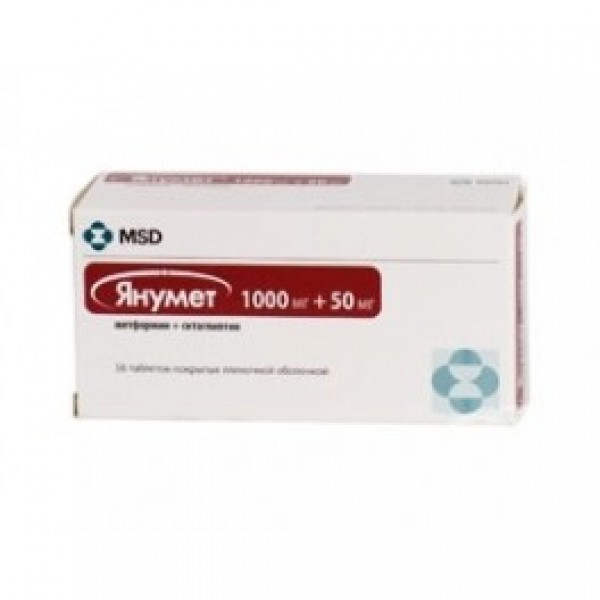
JANUMET tablets. 50 mg. / 1000 mg
Product Code: JANUMET tablets. 50 mg. / 1000 mg
Availability: In Stock
Product viewed: 1660


JANUMET tablets. 50 mg. / 1000 mg
NAME OF THE MEDICINAL PRODUCT
Janumet 50 mg / 1,000 mg film-coated tablets
QUALITATIVE AND QUANTITATIVE COMPOSITION
Each tablet contains 50 mg sitagliptin (as phosphate monohydrate) and 1,000 mg metformin
hydrochloride.
For a full list of excipients, see section 6.1.
PHARMACEUTICAL FORM
Tablet (tablet).
Red tablet, capsule-shaped, engraved with "577" on one side.
CLINICAL DATA
Indications
In patients with type 2 diabetes mellitus:
Janumet is indicated as an adjunct to diet and exercise to improve glycemic control in patients inadequately controlled on their maximal tolerated dose of metformin alone or those already being treated with the combination of sitagliptin and metformin.
Janumet is indicated in combination with a sulphonylurea (ie, triple combination therapy) as an adjunct to diet and exercise in patients inadequately controlled on their maximal tolerated dose of metformin and a sulfonylurea.
Janumet e indicated as triple combination therapy with peroxisome proliferator activated receptor gamma (PPARγ) agonist (ie a thiazolidinedione) as an adjunct to diet and exercise in patients inadequately controlled on their maximal tolerated dose of metformin and a PPARγ agonist.
Janumet is also indicated as add-on to insulin (ie, triple combination therapy) as an adjunct to diet and exercise to improve glycemic control in patients when stable dosage of insulin and metformin alone do not provide adequate glycemic control.
Dosage and method of administration
Dosage
The dose of antihyperglycaemic therapy with Janumet should be individualized based on the patient's current regimen, effectiveness, and tolerability while not exceeding the maximum recommended daily dose of 100 mg sitagliptin.
For patients who are not satisfactorily controlled on metformin monotherapy.
For patients who are not satisfactorily controlled on metformin alone, the usual starting dose of Janumet should provide sitagliptin dosed as 50 mg twice
daily (100 mg total daily dose) plus the dose of metformin already being taken.
For patients switching from co-administration of sitagliptin and metformin.
For patients switching from co-administration of sitagliptin and metformin
Janumet should be initiated with a dose of sitagliptin and metformin already being taken.
For patients who are not satisfactorily controlled on dual combination therapy with metformin and a sulphonylurea.
Dose of Janumet should provide sitagliptin dosed as 50 mg twice daily (100 mg total daily dose) and a dose of metformin similar to the dose already being taken. When Janumet is used in combination with a sulphonylurea may be necessary to use a lower dose of sulfonylurea to reduce the risk of hypoglycemia.
For patients who are not satisfactorily controlled on dual combination therapy with the maximal tolerated dose of metformin and a PPARγ agonist.
Dose of Janumet should provide sitagliptin dosed as 50 mg twice daily (100 mg total daily dose) and a dose of metformin similar to the dose already being taken.
For patients who are not satisfactorily controlled on dual combination therapy
with insulin and metformin.
Dose of Janumet should provide sitagliptin dosed as 50 mg twice daily (100 mg total daily dose) and a dose of metformin similar to the dose already being taken. When Janumet is used in combination with insulin, a lower dose of insulin may be necessary to reduce the risk of hypoglycemia.
All patients should continue their diet with adequate distribution of carbohydrate intake during the day. Overweight patients should continue their diet with a low calorie intake.
Special Populations
Renal impairment
Janumet should not be used in patients with moderate or severe renal impairment (creatinine clearance <60 ml / min).
Hepatic Impairment
Janumet should not be used in patients with hepatic impairment.
Elderly
Because sitagliptin and metformin are substantially excreted by the kidney, Janumet should be used with caution as age increases. It is necessary to monitor renal function to aid in prevention of metformin-associated lactic acidosis, particularly in the elderly (see sections 4.3 and 4.4). There are limited data in patients> 75 years of age and should be approached with caution.
Paediatric population
Janumet is not recommended for use in children below 18 years due to lack of data
Safety and efficacy in this population.
Route of administration
Janumet should be taken twice daily with meals to reduce side effects from the gastrointestinal tract associated with metformin.
Contraindications
Janumet is contraindicated in patients with:
Hypersensitivity to the active substance or to any of the excipients
Diabetic ketoacidosis, diabetic pre-coma;
Moderate and severe renal impairment (creatinine clearance <60 ml / min);
Acute conditions with the potential to alter renal function such as:
Dehydration
Severe infections
Shock
Intravascular administration of iodinated contrast agents (see section 4.4);
Acute or chronic disease which may cause tissue hypoxia such as:
Cardiac or respiratory failure,
Recent myocardial infarction,
Shock;
Hepatic impairment;
Acute alcohol intoxication, alcoholism;
Breastfeeding.
Special warnings and precautions for use
General
Janumet should not be used in patients with type 1 diabetes and must not be used for the treatment of diabetic ketoacidosis.
Pancreatitis
During postmarketing experience there have been spontaneously reported adverse reactions of acute pancreatitis. Patients should be informed of the characteristic symptom of acute pancreatitis: persistent, severe abdominal pain. After discontinuation of sitagliptin was observed resolution of pancreatitis (with or without maintenance) but in very rare cases of necrotizing or hemorrhagic pancreatitis and / or death. If pancreatitis is suspected, you should stop taking Janumet and other potentially
suspected drugs.
Lactic acidosis
Lactic acidosis is a rare but serious (high mortality in the absence of prompt treatment), metabolic complication that can occur due to metformin accumulation.
Reported cases of lactic acidosis in patients on metformin have occurred primarily in diabetic patients with significant renal failure. The incidence of lactic acidosis can and should be reduced by also assessing other associated risk factors such as poorly controlled diabetes, ketosis, prolonged fasting, excessive alcohol intake, hepatic insufficiency and other conditions associated with hypoxia.
Diagnosis
Lactic acidosis is characterized by acidotic dyspnoea, abdominal pain and hypothermia followed by coma. Diagnostic laboratory findings are decreased blood pH, plasma lactate levels above 5 mmol / l, and an increased anion gap and lactate / pyruvate ratio. If metabolic acidosis is suspected, treatment with the drug should be discontinued and the patient should be hospitalized immediately.
Renal function
It is known that Metformin and sitagliptin are excreted by the kidneys. Lactic acidosis increases with the degree of impairment of renal function, therefore, serum creatinine concentrations should be determined regularly:
At least annually in patients with normal renal function
At least two to four times a year in patients with serum creatinine
or above the upper limit of normal and in elderly patients.
Decreased renal function in elderly patients is frequent and asymptomatic.
Should be given special attention in situations where renal function may become impaired, for example when initiating antihypertensive or diuretic therapy or when starting treatment with non-steroidal anti-inflammatory drugs (NSAIDs).
Hypoglycemia
Patients receiving Janumet in combination with a sulphonylurea or insulin may be
risk of hypoglycemia. Therefore, it may be necessary to reduce the dose
the sulphonylurea or insulin.
Hypersensitivity
There have been postmarketing reports of serious hypersensitivity reactions in patients
treated with sitagliptin. These reactions include anaphylaxis, angioedema, and exfoliative
skin conditions, including Syndrome Stevens-Johnson. Onset of these reactions
occurs within the first three months of treatment with sitagliptin, with some
reports occurring after the first dose. If suspected hypersensitivity reaction
discontinue Janumet, assess for other potential causes of the event, and institute
alternative treatment for diabetes (see section 4.8).
Operation
As Janumet contains metformin hydrochloride, the treatment should be discontinued 48 hours
before elective surgery with general, spinal or epidural anesthesia. Treatment with Janumet
should not usually be resumed earlier than 48 hours afterwards, and only when
renal function has been re-evaluated and found to be normal.
Administration of iodinated contrast agents
The intravascular administration of iodinated contrast agents in radiological studies
can lead to kidney failure, which is associated with lactic acidosis in patients
receiving metformin. Therefore, Janumet should be discontinued prior to or
during the test and not reinstituted until 48 hours afterwards, and only after renal
function is re-evaluated and found to be normal.
Change in clinical status of patients with previously controlled type 2 diabetes
Patients with type 2 diabetes previously well controlled on Janumet, who develops laboratory
abnormalities or clinical illness (especially vague and poorly defined
illness) should be evaluated promptly for evidence of ketoacidosis or lactic acidosis.
Evaluation should include serum electrolytes and ketones, blood glucose and, if indicated pH
blood levels of lactate, pyruvate, and metformin. If acidosis in any form,
Janumet should be discontinued immediately and to take appropriate corrective
measures.
Interaction with other medicinal products and other forms of interaction
Simultaneous multiple doses of sitagliptin (50 mg twice daily) and metformin
(1000 mg twice daily) did not alter the pharmacokinetics of
sitagliptin and metformin in patients with type 2 diabetes.
Not been performed for pharmacokinetic drug interactions with Janumet;
However, such studies have been conducted with the individual active substances of Janumet, sitagliptin
and metformin.
There is an increased risk of lactic acidosis in acute alcohol intoxication (particularly in the case of fasting, malnutrition or hepatic insufficiency) due to the active substance of Janumet metformin. Consumption of alcohol and medicinal products containing alcohol should be avoided.
Cationic agents that are eliminated by renal tubular secretion (eg, cimetidine)
can interact with metformin by competing for common transport systems in the renal tubules. A study conducted in seven healthy volunteers showed that cimetidine, administered as 400 mg twice daily, increased metformin systemic exposure (AUC) by 50% and Cmax by 81%. Therefore, it should be close monitoring of glycemic control, dose adjustment within the recommended posology and changes in diabetic treatment when cationic agents that are eliminated by renal tubular secretion.
The intravascular administration of iodinated contrast agents in radiological studies can lead to renal failure, resulting in metformin accumulation and a risk of lactic acidosis. Therefore, Janumet should be discontinued prior to or during the test and not reinstituted until 48 hours afterwards and only after renal function has been re-evaluated and found to be normal.
Combinations requiring precautions for use
Glucocorticoids (given by systemic and local routes) beta-2-agonists, and diuretics have intrinsic hyperglycaemic activity. Patients should be informed and more frequent blood glucose monitoring, especially at the beginning of treatment with these medications.
If necessary, the dose of anti-hyperglycaemic medicinal product should be adjusted during therapy with the other medicinal product and on its discontinuation.
ACE-inhibitors may decrease blood sugar levels. If necessary, the dosage of the antihyperglycaemic medicinal product should be adjusted during therapy with the other medicinal product and on its discontinuation.
Effects of other medicinal products on sitagliptin
Clinical data described below suggest that the risk of clinically meaningful interactions by co-administered with other medicinal products is low.
Cyclosporine: A study was conducted to assess the effect of cyclosporine, a potent inhibitor of p-glycoprotein, on the pharmacokinetics of sitagliptin. Concomitant administration of a single 100 mg oral dose of sitagliptin and a single 600 mg oral dose of cyclosporine increased the AUC and Cmax of sitagliptin by approximately 29% and 68%, respectively. These changes in sitagliptin armakokinetikata not considered clinically significant. The renal clearance of sitagliptin was not meaningfully altered. Therefore, do not expect significant interactions with other inhibitors of p-glycoprotein.
In vitro studies indicated that the primary enzyme responsible for the limited metabolism of sitagliptin was CYP3A4, with contribution from CYP2C8. In patients with normal renal function, metabolism, including via CYP3A4, plays only a small role in the clearance of sitagliptin. Metabolism may play a more important role in the elimination of sitagliptin in the setting of severe renal impairment or end-stage renal disease (ESRD). It is therefore possible that potent inhibitors of CYP3A4 (eg, ketoconazole, itraconazole, ritonavir, clarithromycin) could alter the pharmacokinetics of sitagliptin in patients with severe renal impairment or ESRD. The effects of potent CYP3A4 inhibitors in the setting of renal impairment have not been evaluated in clinical trials.
In vitro transport studies showed that sitagliptin is a substrate of p-glycoprotein and organic anion transporter-3 (OAT3). OAT3 mediated transport of sitagliptin was inhibited in vitro by probenecid, although the risk of clinically meaningful interactions is considered to be low. Concomitant administration of OAT3 inhibitors has not been evaluated in vivo.
Effects of sitagliptin on other medicinal products
In vitro data suggest that sitagliptin does not inhibit nor induce CYP450 isoenzymes. In clinical studies, sitagliptin did not meaningfully alter the pharmacokinetics of metformin, glyburide, simvastatin, rosiglitazone, warfarin, or oral contraceptives, providing in vivo evidence of a low propensity for causing interactions with substrates of CYP3A4, CYP2C8, CYP2C9, and organic cationic transporter (OCT). Sitagliptin had a small effect on plasma digoxin concentrations and possibly a mild inhibitor of p-glycoprotein in vivo.
Digoxin: Sitagliptin had a small effect on plasma digoxin concentrations. Following administration of 0,25 mg digoxin concomitantly with 100 mg of sitagliptin daily for 10 days, the plasma AUC of digoxin was increased on average by 11%, and the plasma Cmax by an average of 18%. Not recommended dosage adjustment of digoxin. Meanwhile, patients at risk of digoxin toxicity should be monitored for this when sitagliptin and digoxin are administered concomitantly.
Pregnancy and lactation
There are no adequate data from the use of sitagliptin in pregnant women. Studies in animals have shown reproductive toxicity at high doses of sitagliptin (see section 5.3).
Limited data suggest that use of metformin in pregnant women is associated with an increased risk of congenital malformations. Studies with metformin do not indicate harmful effects with respect to pregnancy, embryonic and fetal development, parturition or postnatal development.
Janumet should not be used during pregnancy. If a patient wishes to become pregnant
pregnancy occurs, Janumet should be discontinued and switched to insulin treatment as soon as possible.
No studies in lactating animals with combined active substances of Janumet. In studies performed with the individual active substances, both sitagliptin and metformin is excreted into the milk of lactating rats. Metformin is excreted into breast milk in small amounts. It is not known whether sitagliptin is excreted in human milk. Therefore, Janumet should not be used in women who are breastfeeding.
Effects on ability to drive and use machines
Janumet is not known to affect ability to drive and use machines. However, when driving or operating machines, it should be noted that with sitagliptin were dizziness and somnolence.
In addition, patients should be warned of the risk of hypoglycaemia when Janumet is used in combination with sulphonylurea agents or with insulin.
Adverse reactions
No therapeutic clinical trials conducted with Janumet tablets however bioequivalence of Janumet is demonstrated in co-administration of sitagliptin and metformin (see section 5.2).
Sitagliptin and Metformin
Adverse reactions considered as drug-related reported at frequencies higher than
(> 0.2% and difference> 1 patient) of placebo in patients receiving sitagliptin with metformin in double-blind studies are listed below as MedDRA preferred term by system organ class and absolute frequency (Table 1). Frequencies are defined as very common (≥ 1/10), common (≥ 1/100 to <1/10), uncommon (≥ 1/1, 000 to <1/100), rare (≥ 1/10, 000 to <1/1, 000) and very rare (<1/10, 000).
Pharmacodynamic properties
Pharmacotherapeutic group: Drugs, combinations of oral medications
reduce blood sugar, ATC code: A10BD07 Janumet combines two antihyperglycaemic agents with complementary mechanisms of action to improve glycemic control in patients with type 2 diabetes: sitagliptin phosphate peptidase 4 (DPP-4) inhibitor, and metformin hydrochloride, a representative of biguanide class.
Pharmacokinetics
Janumet
A bioequivalence study in healthy subjects demonstrated that the Janumet (sitagliptin / metformin hydrochloride) combination tablets are bioequivalent to co-administration of sitagliptin phosphate and metformin hydrochloride as individual tablets.
Packaging Data
Opaque blisters (PVC / PE / PVDC and aluminum). Packs of 14, 28, 56, 112, 168, 196 tablets, multi-packs containing 196 (2 packs of 98) tablets.
Pack of 50 x 1 film-coated tablets in perforated unit dose blisters.
Not all pack sizes may be marketed.
Write a review
Your Name:Your Review: Note: HTML is not translated!
Rating: Bad Good
Enter the code in the box below:
Related Products
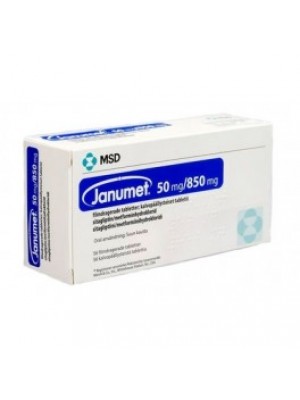
JANUMET . 50 mg. / 850 mg. 28 tablets TRADE NAMES OF THE MED..
49.00€