Your shopping cart is empty!
Welcome visitor you can login or create an account.
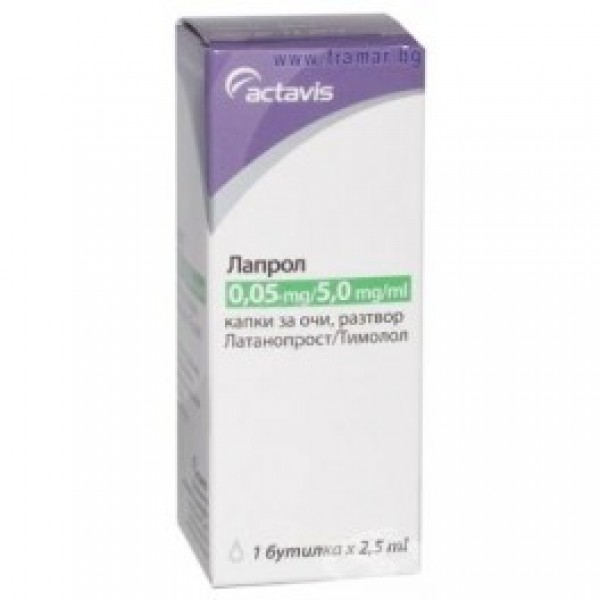
LAPROL drops 0.05 mg. / 5 mg. / 2.5 ml.
Product Code: LAPROL drops 0.05 mg. / 5 mg. / 2.5 ml.
Availability: In Stock
Product viewed: 876


LAPROL drops 0.05 mg. / 5 mg. / 2.5 ml.
What is Laprol and what it is used
Laprol contains two medicines: latanoprost and timolol. Latanoprost belongs to a group of medicines known as prostaglandin analogues. Timolol belongs to a group of medicines called "beta-blockers". Latanoprost works by increasing the natural outflow of fluid from the eye into the bloodstream. Timolol works by slowing down the formation of fluid in the eye.
Laprol used to lower the pressure in your eye if you have a condition known as open-angle glaucoma or high intraocular pressure. Both conditions are associated with increased pressure in your eye, affecting your vision. Your doctor will usually prescribe you Laprol when other medicines have not worked satisfactorily.
2. What you should know before using Laprol
Laprol can be used in adult men and women (including the elderly), but not recommended for use if you are under 18 years of age.
Do not use Laprol:
if you are allergic to latanoprost, timolol, beta-blockers or any of the other ingredients of this medicine (listed in section 6);
if you have or have had in the past respiratory problems such as asthma or severe chronic obstructive bronchitis (severe lung disease which can cause shortness of breath, difficulty in breathing and / or prolonged cough);
if you have a slow heartbeat, heart failure or abnormal heart rhythm (irregular heart rhythm).
Warnings and Precautions
Talk to your doctor or pharmacist before using Laprol. Tell your doctor or pharmacist if you have or have had:
Coronary heart disease (symptoms may include pain or chest tightness, breathlessness or choking), heart failure, low blood pressure;
heart rhythm disorders such as slow heartbeat;
breathing problems, asthma or chronic obstructive pulmonary disease;
impaired blood circulation (such as Raynaud's disease or Raynaud's syndrome);
diabetes as timolol may mask signs and symptoms of low blood sugar;
overactivity of the thyroid gland, as timolol may mask the signs and symptoms;
You have had in the past or will some types of eye surgery (including cataract surgery);
suffer from eye problems (such eye pain, eye irritation, eye inflammation or blurred vision);
you have dry eyes;
wear contact lenses. Yet you could use Laprol, but following the instructions for people wearing contact lenses in 3;
you know you have angina (especially the type known as angina Prinzmetal);
You know that you are suffering from severe allergic reactions that usually require hospitalization;
suffered or are suffering from a viral eye infection caused by herpes simplex virus (HSV).
Tell your doctor before surgery that use Laprol as timolol may change effects of some medicines used during anesthesia.
Other medicines and Laprol
Laprol may influence or be influenced by the effects of other medications you use, including other eye drops for treating glaucoma. Tell your doctor if you are taking or plan to use other medicines to lower blood pressure, heart medicine or medicines to treat diabetes. Please tell your doctor or pharmacist if you are taking or have recently taken any other medicines, including medicines obtained without a prescription.
In particular, ask your doctor or pharmacist if you are taking any of the following medications:
Prostaglandins, prostaglandin analogues or prostaglandin derivatives;
Beta-blockers;
epinephrine;
Drugs used to treat high blood pressure, such as oral calcium channel blockers, guanethidine, antiarrhythmics, digitalis glycosides or parasympathomimetics;
Quinidine (used for the treatment of heart conditions and certain types of malaria);
Antidepressants known as fluoxetine and paroxetine.
Laprol with food and drink
Normal eating foods or drinks have no effect on time and or method of placing Laprol.
Pregnancy and lactation
If you are pregnant or breast-feeding, you think you may be pregnant or planning to have a baby, ask your doctor before taking this medicine.
Do not take Laprol during pregnancy unless your doctor deems it necessary.
Do not use Laprol if you are breastfeeding. Laprol can pass into breast milk.
Driving and using machines
When using Laprol, your vision may be blurred for some time. If this happens, do not drive or use any tools or machines until your vision is restored.
Laprol eye drops, solution contains benzalkonium chloride
This medicinal product contains benzalkonium chloride which can cause eye irritation. Avoid contact with soft contact lenses. Remove contact lenses prior to application and wait at least 15 minutes before putting them back. It is known that benzalkonium chloride discolour soft contact lenses.
3. How to use Laprol
Always use this medicine exactly as your doctor has told you. If you're not sure, ask your doctor or pharmacist.
General information
The usual dose for adults (incl. And the elderly) is one drop once a day in the affected eye (s).
Do not use Laprol more than once a day, because the effectiveness of treatment can be reduced by too frequent use.
Use Laprol exactly as your doctor prescribes it until he tells you to stop.
Your doctor may decide to further examine your heart and circulation if you use Laprol.
People wearing contact lenses
If you wear contact lenses, you should remove them before using Laprol. After using Laprol have to wait 15 minutes before reinserting your contact lenses.
Instructions for use
1. Wash your hands and sit or stand comfortably.
2. Unscrew transparent protective cap with "wings".
3. Unscrew the cap.
4. Use your finger to gently pull down the lower eyelid of the affected eye.
5. Place the tip of the bottle close to the eye, but without touching it.
6. Squeeze the bottle gently so that only one drop fall into the eye, then release the lower eyelid.
7. After using Laprol, you press a finger to the corner of your eye to the nose for 2 minutes. This helps to stop latanoprost / timolol to infiltrate the rest of your body.
8. Repeat in your other eye if your doctor has told you.
9. Put the protective inner cap back on the bottle.
children
There is limited experience with Laprol in children and adolescents.
If you use Laprol c other eye drops
Wait at least five minutes between putting in Laprol and use other eye drops.
If you use more Laprol than you should
If you put too many drops in your eye, you may get a slight eye irritation, watery and red. This should pass, but if you are concerned, contact your doctor for advice.
If swallowed Laprol
If swallowed Laprol accident, you should consult your doctor. If you swallow a lot of Laprol may experience nausea, stomach pain to get to feel fatigue, flushing and dizziness and start to sweat.
If you forget to use Laprol
Continue with your usual dose at the usual time. Do not take a double dose to make up the missed dose. If you are not sure, talk to your doctor or pharmacist.
4. Possible side effects
Like all medicines, this medicine can cause side effects, although not everybody gets them.
You can usually continue using the drops, unless the adverse reactions become serious. If you have concerns, talk to your doctor or pharmacist. Do not stop taking Laprol without consulting your doctor.
The following side effects are known adverse reactions to the use of Laprol. The most significant side effect is the possibility of gradual, irreversible change in the color of your eye. Also, it is possible Laprol cause serious changes in your heartbeat. If you notice changes in your heart rate or cardiac function, you should talk with your doctor and tell him that you are using Laprol.
The following side effects are known adverse reactions to the use of Laprol:
Very common (may affect more than 1 in 10 patients):
Smooth change in the color of the eye by increasing the amount of brown pigment in the colored part of the eye called the iris. If you have a mixed-color eyes (blue-brown, gray-brown, yellow-brown or green-brown) you are more likely to observe such changes than if your eyes are the same color (blue, gray, green or brown) . The occurrence of any change in the color of your eyes can take years. The change in eye color can be irreversible and may be more noticeable if you use Laprol only in one eye. Not observed problems associated with the change in eye color. The change in eye color does not continue after stopping treatment with Laprol.
Common (may affect up to 1 in 10 patients):
Eye irritation (burning sensation, grit in the eye, itching, stinging or a foreign body sensation in the eye);
Eye pain.
Uncommon (may affect up to 1 in 100 patients):
Headache;
Bloodshot eyes; eye infection (conjunctivitis), blurred vision, watery eyes, inflammation of the eyelids, irritation or disruption of the surface of the eye;
Skin rashes or itching.
Other side effects
Although not observed during treatment with Laprol, the following additional adverse reactions have been reported with drugs contained in Laprol (latanoprost / timolol) and therefore can be observed in implementing Laprol.
The following adverse reactions have been observed during treatment with latanoprost:
Development of virus infections of the eye caused by herpes simplex virus (HSV);
dizziness;
Changes in eyelashes and fine hairs around the eye (increased number, length, thickness and darkening), changes in the direction of eyelash growth, swelling around the eye, swelling of the colored part of the eye (iritis / uveitis), swelling of the back of the eye ( macular edema), inflammation / irritation of the surface of the eye (keratitis), dry eyes filled with fluid cysts in the colored part of the eye (iris cyst);
Worsening of angina, feeling the heart beat (palpitations);
Asthma, worsening of asthma, shortness of breath;
Darkening of the skin around the eyes;
Joint pain, muscle pain;
Chest pain.
Like other medicines applied into the eyes, Laprol are absorbed into the blood. Timolol, which is present in this combination may cause side effects similar to those observed in the "intravenous" and / or "oral" beta-blockers. The incidence of adverse reactions after topical ophthalmic administration is lower than when the drug is taken by mouth or injected.
Listed side effects include reactions seen in the class of beta-blockers when used with medical conditions of the eye:
Generalized allergic reactions including swelling beneath the skin observed in the face and extremities, which may affect the airways and cause difficulty in swallowing or breathing, hives or itchy rash, localized and generalized rash, itchiness, severe sudden life-threatening alergic reaction;
Low levels of blood glucose;
Difficulty sleeping (insomnia), depression, nightmares, memory loss;
Fainting, stroke, reduced blood supply to the brain, increasing signs of and symptoms of myasthenia gravis (muscle disorder), dizziness, abnormal sensations such as tingling and headaches;
Signs and symptoms of ocular irritation (eg. Burning, stinging, itching, tearing, redness), inflammation of the eyelid, inflammation of the cornea, blurred vision and detachment of the layer under the retina containing blood vessels following filtration surgical procedure that may cause visual disorders, decreased sensitivity of the cornea, dry eye, corneal erosion (damage to the front layer of the eyeball), deflection of the upper eyelid (causing the lid closure half), double vision;
Noise / ringing in the ears;
Slow heartbeat, chest pain, palpitations, edema (fluid retention), changes in the rhythm or heart rate, congestive heart failure (heart disease with shortness of breath and swelling of the feet and legs due to the formation of liquid) type of violation of heartbeat, heart attack, heart failure;
Low blood pressure, Raynaud's phenomenon, cold hands and feet;
Contraction of airways in the lungs (predominantly in patients with pre-existing disease), difficulty breathing, coughing;
Taste disturbance, nausea, indigestion, diarrhea, dry mouth, abdominal pain, vomiting;
Hair loss, skin rash with White Silver color (psoriasiform rash) or worsening of psoriasis, skin rash;
Muscle pain, not obtained as a result of exercise;
Sexual dysfunction, decreased libido;
Muscle weakness / tiredness.
If you get any side effects, contact your doctor or pharmacist. This includes any possible effects not listed in this leaflet.
5. How to store Laprol
Keep medicines out of reach of children.
Before broaching Laprol need to store and transport refrigerated (2 ° C - 8 ° C).
After opening the bottle, Laprol can be stored at room temperature (25 ° C) for up to 28 days. Keep the bottle in the outer carton to protect from light.
Keep the bottle in the outer carton to protect from light.
Do not use this medicine after the expiry date stated on the carton and on the dropper after "EXP". The expiry date refers to the last day of that month.
Write a review
Your Name:Your Review: Note: HTML is not translated!
Rating: Bad Good
Enter the code in the box below:
Related Products
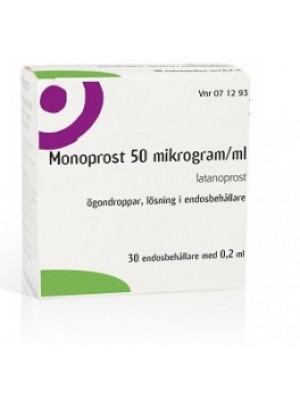
MONOPROST eye drops 0.2 ml. 30 doses What MONOPROST and wh..
29.00€