
Your shopping cart is empty!
Welcome visitor you can login or create an account.
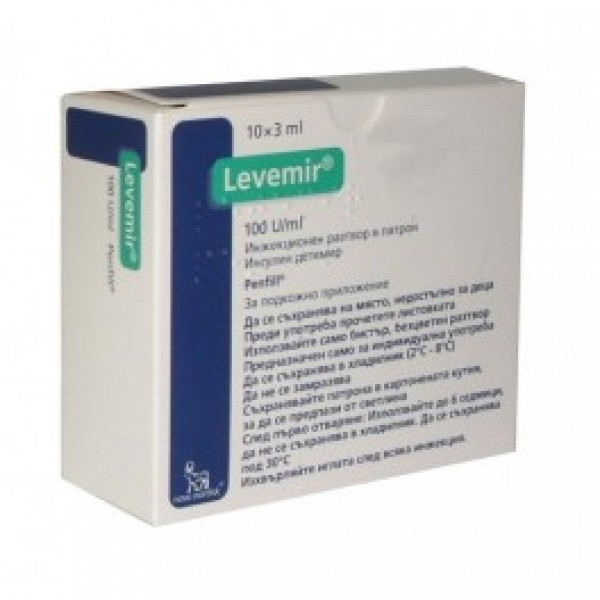
Levemir 300 IU. 10 Pen
Product Code: Levemir 300 IU. 10 Pen
Availability: In Stock
Product viewed: 838


Levemir 300 IU. 10 Pen
What Levemir is and what it is used
Levemir is a modern insulin (insulin analogue) with a long-acting effect. Modern insulins are improved versions of human insulin.
Levemir is used for the treatment of diabetes mellitus in adults, adolescents and children and older b years. Diabetes mellitus is a disease in which the body does not produce enough insulin to control your blood sugar. Levemir can be used in combination with oral antidiabetic agents or with meal-related rapid acting insulin medicines.
Levemir has a long and steady blood sugar reducing effect starting within a few hours (3-4).
Levemir provides 24 hours of basal insulin coverage after injection.
2. Before you use
Do not use Levemir
If you are allergic (hypersensitive) to insulin detemir or any of the other ingredients in Levemir (see 6 Further information).
If you suspect hypoglycaemia (low blood sugar) (see section 3 How to use Levemir).
In insulin infusion pumps.
If the cartridge or the device containing the cartridge is dropped, damaged or crushed.
If not stored correctly or been frozen (see 5 How to store Levemir).
If insulin does not appear water clear and colorless.
If any of these circumstances apply to you, do not use Levemir. Ask your doctor, nurse or pharmacist.
Before using Levemir
Check the label to make sure it is the right type of insulin.
Always check the cartridge, including the rubber plunger (stopper). Do not use it if any damage is seen or if there is a gap between the rubber plunger and the white label band. Return it to your dealer. See instructions for use of the injection device for further instructions.
Always use a new needle for each injection to prevent contamination.
Needles and Levemir Penfill must not be shared with others.
Take special care with Levemir
Some conditions and activities can affect your need for insulin. These include:
If you have problems with your kidneys or liver, or with your adrenal, pituitary or thyroid glands.
In more than usual or if you want to change your usual diet, as this may affect blood sugar levels.
If you're sick / on, carry on taking your insulin and consult your doctor.
When traveling abroad: traveling over time zones may affect your insulin needs and the timing of the injection. Consult your doctor if you are planning a similar trip.
If you have low levels of albumin, should closely monitor your blood sugar. Discuss this with your doctor.
Using other medicines
Some medicines affect the way glucose works in your body and may affect your insulin dose. Below are listed the drugs most frequently may affect your insulin treatment. Tell your doctor, nurse or pharmacist if you are taking or have recently taken any other medicines, including medicines obtained without a prescription. In particular, you should tell your doctor if you are using any medicine that affects your blood sugar levels, as described below.
Your blood sugar level may fall (hypoglycaemia) if you take:
Other medicines to treat diabetes;
Monoamine oxidase (MAO) inhibitors (used to treat depression);
Beta-blockers (used to treat high blood pressure);
Angiotensin converting enzyme (ACE) inhibitors (used to treat some heart disease or high blood pressure);
Salicylates (used to relieve pain and lower temperature);
Anabolic steroids (such as testosterone);
Sulphonamides (used to treat infections).
Your blood sugar level may rise (hyperglycaemia) if you take:
Oral contraceptives (birth control pills);
Thiazides (used to treat high blood pressure or excessive fluid retention);
Glucocorticoids (such as "cortisone" used to treat inflammation);
Thyroid hormones (used to treat thyroid gland disorders);
Sympathomimetics (such as epinephrine (adrenaline) or salbutamol, terbutaline used to treat asthma);
Growth hormone (medicine for stimulation of bone growth and body and pronounced influence on metabolic processes in the body);
Danazol (medicine acting on ovulation).
Octreotide and lanreotide (used for the treatment of acromegaly, a rare hormonal disorder that usually occurs in middle-aged adults, caused by the overproduction of growth hormone by the pituitary gland) can increase or decrease the level of blood sugar.
Beta-blockers (used to treat high blood pressure) may weaken or suppress entirely the first warning symptoms which help you to recognize hypoglycaemia.
Pioglitazone (oral antidiabetic medicine used to treat type 2 diabetes mellitus)
Some patients with long-standing type 2 diabetes mellitus and heart disease or stroke treated with pioglitazone and insulin develop heart failure. Tell your doctor as soon as possible if you experience signs of heart failure such as unusual shortness of breath or rapid increase in weight or localized swelling (edema).
If you have taken any of the medicines listed here, tell your doctor, nurse or pharmacist.
Drinking alcohol and taking Levemir
If you drink alcohol, your need for insulin may change as your blood sugar may rise or fall. Careful monitoring.
Pregnancy and lactation
If you are pregnant, planning a pregnancy or breast-feeding please contact your doctor for advice. You may need to change your insulin dosage during pregnancy and after birth. Careful control of your diabetes, and prevention of hypoglycaemia, is important for the health of your baby.
Ask your doctor or pharmacist before taking any medicine while pregnant or breast-feeding.
Driving and using machines
Ask your doctor whether you can drive or operate machinery:
If you have frequent hypoglycemia;
If hard to recognize hypoglycaemia.
If your blood sugar is low or high, your concentration and ability to react might be affected and therefore also your ability to drive or operate machinery. Note that you may put yourself and others at risk.
Important information about some of the ingredients in Levemir 1
Levemir contains less than 1 mmol sodium (23 mg) per dose, i.e. Levemir is essentially sodium free.
3. How to use Levemir
How much and when using your insulin
Always use your insulin as prescribed by your doctor and follow his advice carefully.
Levemir may be used in combination with tablets for diabetes or as adjunctive therapy to liraglutide (Victoza), which is used for treating type 2 diabetes in adults. Levemir can also be used with a diet-related drugs acting insulin.
If your doctor changes the type or brand of insulin you use, you may need to change your dose. Do not change your insulin unless your doctor tells you to do so.
Use in children
Levemir can be used in adolescents and children aged 2 years and older. There is no experience of the use of Levemir in children below 2 years.
Use in special patient groups
If you have reduced kidney or liver function, or if you are older than 65 years should more regularly to check your blood sugar and discuss changes in your insulin dose with your doctor.
How often to inject
When Levemir is used in combination with tablets for diabetes or as adjunctive therapy to liraglutide, Levemir should be administered once daily. When Levemir is used as part of a basal-bolus insulin regimen, Levemir should be administered once or twice daily, depending on the needs of the patient. The dose of Levemir should be adjusted individually. It can be injected at any time of the day, but at the same time each day. In patients who are to optimize control of blood glucose levels require two injections, the evening dose can be administered in the evening or at bedtime.
How and where to inject
Levemir is for injection under the skin (subcutaneously). Never inject your insulin directly into a vein (intravenously) or muscle (intramuscular). At each injection vary the injection at the designated area of the skin you are using. This can reduce the risk of forming lumps or depressions of the skin (see section 4. Possible side effects). The best places for injection are: the front of your thighs, the front of your waist (abdomen), or upper arm. You should always measure your blood glucose regularly.
Do not refill the cartridge.
Levemir Penfill cartridges are for use with insulin delivery systems of Novo Nordisk (Novo Nordisk) and NovoFine needles or NovoTwist.
If you are treated with Levemir Penfill and another insulin cartridge Penfill, you should use two insulin delivery systems, one for each type of insulin.
As a precautionary measure, always carry a spare Penfill cartridge in case your Penfill cartridge is lost or damaged.
How to inject Levemir
Inject the insulin under the skin. Use the injection method, which is recommended by your doctor or nurse and described in the instructions for use to your pen.
Keep the needle under the skin for at least 6 seconds. Keep the button pressed while removing the needle from the skin. This will ensure proper injection and limit possible rush of blood in the needle or insulin reservoir.
After each injection, make sure you remove and discard the needle and store Levemir without the needle attached. Otherwise, the liquid may leak out, which may result in inaccurate dosing.
If you use more insulin
If you take too much insulin your blood sugar gets too low, this is called hypoglycaemia. See Other effects from diabetes in section 4.
If you forget to take your insulin
If you forget to take your insulin, your blood sugar may get too high this is called hyperglycaemia. See Other effects from diabetes in section 4.
If you stop using insulin
Do not stop taking your insulin without speaking to a doctor, who will tell you what needs to be done. This can lead to very high blood sugar (severe hyperglycaemia) and ketoacidosis. See Other effects from diabetes in section 4.
If you have any further questions on the use of this medicine, ask your doctor or pharmacist.
4. Possible side effects
Like all medicines, Levemir can cause side effects, although not everybody gets them.
Very common side effects - affects more than 1 in 10 people:
Low blood sugar (hypoglycaemia): See details in Other effects from diabetes in section 4.
Common side effects - affects less than 1 in 10 people:
Reactions at the injection site (pain, redness, hives, inflammation, bruising, swelling and itching): These usually disappear after a few weeks of taking your insulin. If they do not disappear, consult your doctor. If you have serious or continuing reactions, you may need to stop using Levemir and use another insulin.
Uncommon side effects - affects less than 1 in 100 people:
Signs of allergy: can occur hives and rash. Seek medical advice immediately:
If the above signs of allergy or
If you suddenly feel unwell and you start sweating; begin to vomit; have difficulty in breathing; have a rapid heart beat; you feel dizzy.
If you notice any of these occur, immediately seek medical advice.
Visual disturbances: When you first start your treatment, it may disturb your vision, but they are usually temporary.
Changes at the injection site (lipodystrophy): The fatty tissue under the skin at the injection site may shrink (lipoatrophy) or thicken (lipohypertrophy). Changing the site with each injection may help reduce the risk of developing such skin changes. If you notice your skin pitting or thickening at the injection site, tell your doctor or nurse. These reactions can become more severe, or they may change the absorption of your insulin if you inject in such a place.
Swelling of the joints: When you start taking insulin, water retention may Bring swelling around your ankles and other joints. Normally this soon disappears.
Diabetic retinopathy (diabetes-related eye disease, which can lead to loss of vision): If you have diabetic retinopathy and your blood sugar to normal mnogobarzo, the retinopathy may get worse. Talk to your doctor about this.
Rare side effects - affects less than 1 in 1000 people:
Painful neuropathy (pain due to nerve damage): If your blood sugar to normal very quickly, you may get nerve related bolka - this is called acute painful neuropathy and is usually transient.
Very rare side effects - affects less than 1 in 10,000 people:
Serious allergic reaction to Levemir or one of its ingredients (called a systemic allergic reaction). See also warning in 2 Before using Levemir.
If any of the side effects gets serious, or if you notice other effects not listed in this leaflet, please tell your doctor, nurse or pharmacist.
Other effects of diabetes
Low blood sugar (hypoglycemia)
Low blood sugar can have if:
Too much insulin.
Eat too little or miss a meal.
Doing more physical activity than usual.
Drinking alcohol (See Drinking alcohol and taking Levemir in section 2).
Warning signs of low blood sugar:
The warning signs may come on suddenly and can include: cold sweat; cool pale skin; headache; rapid heart beat; nausea; feeling very hungry; temporary changes in vision; drowsiness; unusual tiredness and weakness; nervousness or shakiness; anxiety; confusion; difficulty in concentrating.
What to do if you have low blood sugar:
If you have low blood sugar, eat glucose tablets or another snack high in sugar (sweets, biscuits, fruit juice). Measure your blood sugar if possible and rest. In any case, always carry glucose tablets, sweets, biscuits or fruit juice.
When symptoms of low blood sugar have disappeared or when blood sugar levels are stabilized continue insulin treatment as usual.
Tell people around you that you have diabetes and what may be the consequences, including the risk to pass out (become unconscious) due to low blood sugar. Tell them that if you pass out, they must turn you on your side and immediately seek medical attention. You should not give anything to eat or drink due to risk of suffocation.
You may come to mind quickly after injection of the hormone glucagon by someone who knows how to use it. If you are given glucagon soon as you awake, you will need glucose or a sugary snack. If treatment with glucagon you do not work, should be treated in hospital.
If prolonged severe low blood sugar is not treated, it can cause brain damage (temporary or permanent) and even death.
If you have low blood sugar so that you lose consciousness if you had to inject glucagon, or if you have had many cases of low blood sugar, consult a doctor. You may need to adjust the amount of insulin or hours of injection, food or exercise.
High blood sugar (hyperglycemia)
High blood sugar can you if:
You have not injected enough insulin.
Forget to take your insulin or stop taking insulin.
Repeatedly taking less insulin than needed.
Have an infection and / or fever.
Eat more than usual.
Doing less exercise than usual.
Warning signs of high blood sugar:
The warning signs appear gradually. They include: frequent urination; thirst; loss of appetite; nausea or vomiting; feeling drowsy or tired; flushed dry skin; dry mouth and breath smell a fruity (acetone).
What to do if you have high blood sugar:
If you have any of these signs: test your blood sugar, test your urine for ketones if you can, then seek medical assistance immediately.
These may be signs of a very serious condition called diabetic ketoacidosis (build-up of acid in the blood because the body is breaking down fat instead of sugar). If left untreated, it can lead to diabetic coma and eventually death.
5. How to store Levemir
Keep out of the reach and sight of children.
Do not use Levemir after the expiry date stated on the label and carton of the cartridge after "EXP". The expiry date refers to the last day of that month.
Before opening: Levemir Penfill, which is not used must be stored in a refrigerator at 2 ° C to 8 ° C, away from the cooling element. Do not freeze.
Write a review
Your Name:Your Review: Note: HTML is not translated!
Rating: Bad Good
Enter the code in the box below:
Related Products
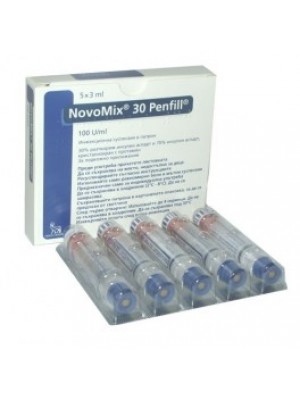
NovoMix PEN 30 100 IU / ml. 3 ml. 5 What NovoMix 30 and wha..
89.00€

NovoMix 30 100 IU / ml. 3 ml. 10 penWhat NovoMix 30 is and w..
149.00€