
Your shopping cart is empty!
Welcome visitor you can login or create an account.
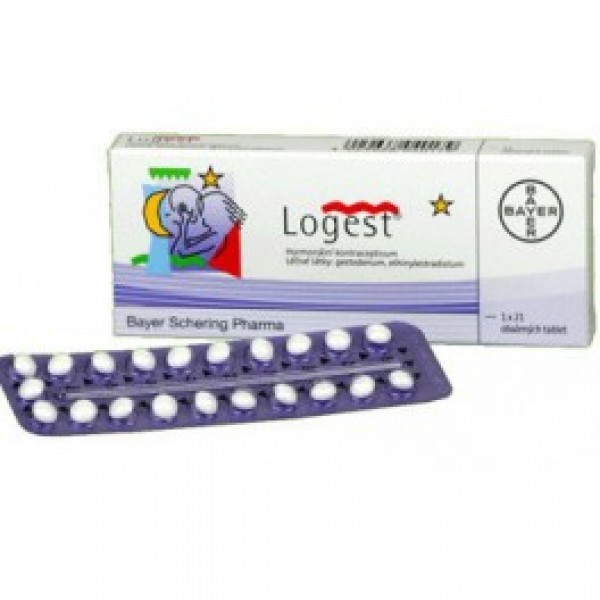
Logest. 21 tablets
Product Code: Logest. 21 tablets
Availability: In Stock
Product viewed: 1343


Logest. 21 tablets
WHAT Logest AND WHAT IT IS USED
Logest is a pill and is used to prevent pregnancy.
Each of the 21 minutes coated tablets contain small amounts of female hormones ethinylestradiol and gestodene.
Birth control pills that contain two hormones are called "combined pills" or "combined oral contraceptives" (COC).
2. BEFORE YOU TAKE Logest
General comments
Before you can start taking Logest, your doctor will ask you some questions about your personal history and that of your family. The doctor will measure your blood pressure and, depending on your condition can do some research.
In this leaflet, several situations are described where you should stop taking Logest, or where the reliability of the Logest can be reduced. In such situations, or you should not have sexual intercourse or you should take extra non-hormonal measures of birth control, such as using a condom or other barrier method. Do not use rhythm or temperature methods. These methods can be unreliable because Logest alters the monthly changes of body temperature and cervical secretions.
Logest, like other hormonal contraceptives, does not protect against HIV infection (AIDS) or other sexually transmitted diseases.
Do not take Logest
Do not use combined pills if you suffer from conditions listed below. If any of these apply to you, tell your doctor before use of Logest. Your doctor may advise you to use another type of pill or another different method of birth control (non-hormonal).
If you have (or have ever had) a blood clot in the blood vessels of the leg (thrombosis), lungs (pulmonary embolism), or other parts of the body;
If you have (or have ever had) a heart attack or stroke (caused by a blood clot or rupture of a blood vessel in the brain);
If you have (or have ever had) a disease that can be an indication of a possible heart attack (such as angina, which causes chest pain, which may spread to the left arm) or stroke (such as a slight stroke with no residual effects or so called transient ischemic attack);
If you have multiple risk factors for blood clots (see section "pill and blood clots" and consult your doctor who will decide whether you can take this medicine);
If you have (or have ever had) a certain form of migraine (accompanied by so-called focal neurological symptoms such as visual symptoms, speech disorders or weakness or paralysis of the parts of your body;
If you suffer from diabetes mellitus with blood vessel damage;
If you have (or have ever had) inflammation of the pancreas (pancreatitis) accompanied by high levels of blood lipids;
If you have (or have ever had) liver disease (symptoms of which may be yellowing of the skin or itching) and your liver is not yet working normally;
If you have (or have ever had) cancer that can grow under the influence of sex hormones (eg breast or genitals);
If you have or have had severe renal insufficiency or acute renal failure;
If you have (or have ever had) a benign or malignant tumor in the liver;
If you get vaginal bleeding of unknown origin;
If you are pregnant or think you might be pregnant;
If you are allergic (hypersensitive) to ethinylestradiol or gestodene, or any of the other ingredients of Logest. This can cause, such as itching, rash and swelling.
If any of these conditions appear for the first time while using the Pill, stop immediately accepted and consult your doctor. Meanwhile, use a non-hormonal contraceptive methods. See also "General remarks".
Additional information on special populations
Use in children
Logest is not intended for use in girls whose cycle has not yet begun.
Use in the elderly
Logest is not intended for use in postmenopausal women.
Women with hepatic impairment
Logest not take if you suffer from liver disease. See also "Do not take Logest" and "Take special care with Logest".
Women with renal impairment
Consult with your doctor. The available data do not suggest a need for change in the intake of Logest.
Take special care with Logest
In some situations you should pay special attention when using Logest or other combined hormonal contraceptive, and it may be necessary and can be accessed regularly by your doctor. If any of these conditions apply to you, you should consult with your doctor before you start using Logest. In addition, if any of these conditions occur or worsen in the use of Logest, you should inform your doctor:
if you smoke;
if you suffer from diabetes;
if you are overweight;
if you have high blood pressure;
if you have a defect in the heart valve or heart rhythm problems;
If you suffer from inflammation of the veins (superficial phlebitis);
if you have varicose veins;
if someone in your immediate family has had blood clots (thrombosis in the leg, lung "pulmonary embolism" or elsewhere), heart attack or stroke at a young age;
if you suffer from migraine;
if you suffer from epilepsy (see "Taking other medicines");
if you or someone in your family have or have had high levels of cholesterol or triglycerides (fatty substances) in the blood;
if someone in your family is suffering from breast cancer;
if you have liver disease or gallbladder disease;
if suffering from Crohn's disease or ulcerative colitis (chronic inflammatory bowel disease);
if you suffer from systemic lupus erythematosus (SLE, a disease affecting the skin all over the body);
you have haemolytic uraemic syndrome (HUS: bleeding disorder resulting in acute renal failure);
if you have sickle cell anemia;
if you have a condition that occurred for the first time or worsened during pregnancy or previous use of sex hormones (eg hearing loss, metabolic disease called porphyria, skin disease called herpes gestationis, a neurological disease called Sydenham's chorea);
if you have (or have ever had) golden brown pigment spots on the skin, so called "pregnancy patches", especially on the face (chloasma). In such cases, avoid excessive exposure to sun or ultraviolet light;
if you have hereditary angioedema: Consult your doctor immediately if you experience any of the symptoms of angioedema such as swollen face, tongue or throat and / or difficulty swallowing or hives together with difficulty breathing. Products containing estrogen may cause or worsen symptoms of angioedema.
If any of the above conditions appear for the first time, recur or worsen while using the Pill, you should contact your doctor.
Pill and blood clots
Thrombosis is the formation of a blood clot which may block a blood vessel.
Sometimes gets thrombosis in the deep veins of the legs (deep venous thrombosis). Venous thromboembolism (VTE) may occur regardless of whether or not taking pill. VTE can occur in pregnancy. If the blood clot breaks away from the veins where it is formed, it may reach and block the arteries and cause so-called "pulmonary embolism". Very rarely can get clots in the blood vessels of the heart (causing a heart attack). Blood clots or rupture of a blood vessel in the brain can cause a stroke. Long-term studies indicate that there may be a link between the use of the pill (also called "combined oral contraceptive" or "combined pill" because it combines two different female hormones, so-called estrogens and progestogens) and an increased risk of developing venous and arterial blood clots, emboli, heart attack or stroke. The occurrence of such events is rare.
This increased risk is present after initially starting the combined pill or redosing (after 4 weeks or more free reception interval) the same or different combination pills. Data from a large study suggest that this increased risk mainly present during the first 3 months.
The overall risk of venous thromboembolism (VTE) in receiving low esgrogenna dose (<50 μg ethinylestradiol) COCs is two to three times higher than in women not using COCs who are not pregnant and remains lower than the risk associated with pregnancy and childbirth.
Very rarely, venous or arterial thromboembolic events can cause serious permanent disabilities or may even be fatal.
Venous thromboembolism, manifesting as deep venous thrombosis and / or pulmonary embolism, may occur during the use of all combined pills.
Extremely rarely blood clots can occur in other parts of the body including the liver, intestine, kidney, brain or eye.
Stop taking the Pill and consult your doctor immediately if you notice signs of:
deep vein thrombosis, unilateral leg swelling or pain along the vein of the leg; pain or weakness in the legs, which can be felt only when standing or walking, fever in the affected leg; redness or discoloration of the skin on the leg;
pulmonary embolism, such as sudden onset of shortness of breath or unexplained shortness of breath, sudden coughing that may result in separation of blood; sharp chest pain, which may be increased by deep breathing; anxiety; severe dizziness or fainting; fast or irregular heart beat. Some of these symptoms (for example, "choking", "coughing") are non-specific and can be interpreted as a more frequent or less severe events (such as respiratory tract infections);
Arterial thromboembolic events (arterial blood vessels are blocked by blood clots and those blood clots, which are detached);
stroke, such as sudden weakness or numbness in the face, arms or legs, especially on one side of the body; sudden confusion, trouble speaking or understanding; sudden vision problems in one or both eyes; sudden problem with walking, dizziness, loss of balance or coordination; sudden, severe or prolonged headache with no known cause; loss of consciousness or seizures with or without seizures;
blood clots that block the other arterial vessels, such as: acute pain, swelling and bruising of the limbs slightly; "acute abdomen;
heart attack, such as: pain, discomfort, tightness, heaviness, feeling of tightness or heaviness in the chest, arm or below the breastbone; discomfort radiate to the back, jaw, throat, arm, stomach; a feeling of fullness, indigestion or choking; sweating, nausea, vomiting and dizziness; extreme weakness, anxiety or shortness of breath; fast or irregular heart beat.
The risk of venous or arterial blood clots (such as DVT, pulmonary embolism, heart attack) or stroke increases:
age;
if you are overweight;
if someone in your immediate family has had blood clots (thrombosis in the leg, lung "pulmonary embolism" or elsewhere), heart attack or stroke at a young age, or if any of your relatives know or suspected hereditary predisposition to the formation of blood clots, increased risk of blood clots in you. In these cases, you should contact a professional before you decide to use COCs. Some factors of blood, which may suggest that you have a tendency to develop venous or arterial thrombosis include resistance to activated protein C (APC), hyperhomocysteinemia, antithrombin deficiency III, protein C deficiency, protein deficiency S, antiphospholipid antibodies (anticardiolipin antibodies, lupus anticoagulant);
with prolonged immobilization (such as when casting or splinting of one or both legs), major surgery in the lower extremities or major injuries. In these cases it is advisable to discontinue COC use (in elective surgery at least 4 weeks before the date) and start again two weeks after the umbilical recovery of movement;
smoking (the use of more cigarettes and age increased the risk increases, especially in women over 35 d). When taking the Pill you should stop smoking, especially if you are aged over 35 years;
if you or someone in your family has or has ever had high levels of cholesterol or triglycerides (fatty substances) in the blood;
if you have high blood pressure. If you develop high blood pressure while taking the Pill, you may be advised to stop using it;
if you suffer from migraine;
if you have heart valve disorders or certain heart rhythm disorder.
Immediately after birth, women are at increased risk of blood clots, therefore you should consult with your doctor how soon after delivery you can start taking a combined pill.
Pill and cancer
Breast cancer has been diagnosed slightly more often in women who use the Pill, but it is not known whether this is due to the treatment. Perhaps the reason is that women who use combined pills are found more often tumors, since they are measured more frequently. The risk of developing breast cancer decreased gradually after discontinuation of combined hormonal contraceptives. It is important to view your breasts regularly and you should immediately contact your doctor if you feel any lump.
Rare cases of benign liver tumors and even more rarely - malignant liver tumors in women taking the pills. In isolated cases, these tumors may lead to life-threatening internal bleeding. Immediately contact your doctor if you experience unusually severe abdominal pain.
The most important risk factor for developing cancer of the cervix is repeated infection with human papilloma virus (HPV). In some studies reported an increased risk of cervical cancer in long-term use of pills. However, it is unclear how sexual behavior or other factors, such as human papilloma virus (HPV) increases this risk.
Bleeding between menstrual cycles
In all Pills, for the first few months, you can get irregular vaginal bleeding (spotting or breakthrough bleeding) between menstrual cycles. You may need to use sanitary protection, but continue to take the tablets as usual. This irregular bleeding stops when your body adapts to the pills (usually after about 3 cycles the pill). If this continues to worsen or starts again, tell your doctor.
What to do if bleeding occurs
If you've taken all the tablets correctly, have not had vomiting or severe diarrhea and you have not taken any other medicines, it is very unlikely that you are pregnant. Continue to take Logest as usual.
If you have not taken the tablets correctly or if you have taken the tablets correctly, but the expected bleeding does not appear twice in a row, you may be pregnant. Immediately consult your doctor. Do not start the next strip until you are sure you are not pregnant. Meanwhile, use a non-hormonal contraceptive measures. See also "General remarks".
Taking other medicines
Always tell your doctor what drugs or herbs you already use. In addition, tell your doctor or dentist prescribes another medicine (or the pharmacist in pharmacy from whom you buy the drug) that use Logest. They can inform you whether you need to take additional precautions for birth control (eg, condoms) and if so, how long to do this.
Some medicines may reduce the efficacy of Logest in the prevention of pregnancy or cause unexpected bleeding. These include:
drugs used for treatment of:
epilepsy (e.g., primidone, phenytoin, barbiturates, carbamazepine, okszkarbazepin, topiramate, felbamate);
tuberculosis (eg rifampicin);
HIV infections (eg ritonavir, nevirapine) or other infections (antibiotics such as penicillins, tetracyclines, griseofulvin);
the herb St. John's Wort.
Logest may influence the effect of other drugs, for example:
lamotrigine;
cyclosporine.
Consult your doctor or pharmacist before taking any medicine.
Your doctor or pharmacist can advise you to take additional contraceptive measures while taking another medicine simultaneously with Logest.
Please tell your doctor or pharmacist if you are taking or have recently taken any other medicines, including medicines obtained without a prescription.
laboratory tests
Write a review
Your Name:Your Review: Note: HTML is not translated!
Rating: Bad Good
Enter the code in the box below:
Related Products
MEDIANA 3 mg. / 0.3 mg. 21 tabletsWhat is Mediana 28 and wha..
19.00€
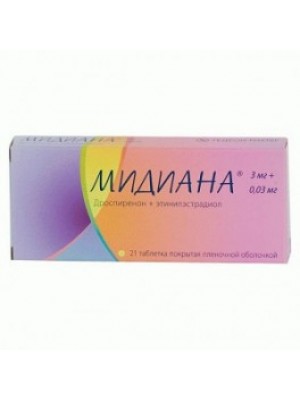
Midiana 3 mg. / 0.3 mg. 21 tabletsWhat is Midiana 28 clams a..
28.00€