Your shopping cart is empty!
Welcome visitor you can login or create an account.
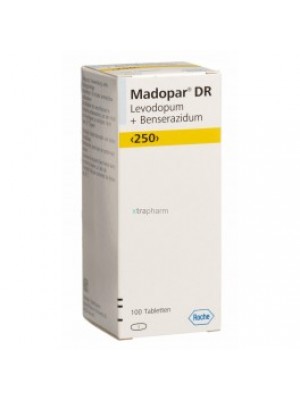
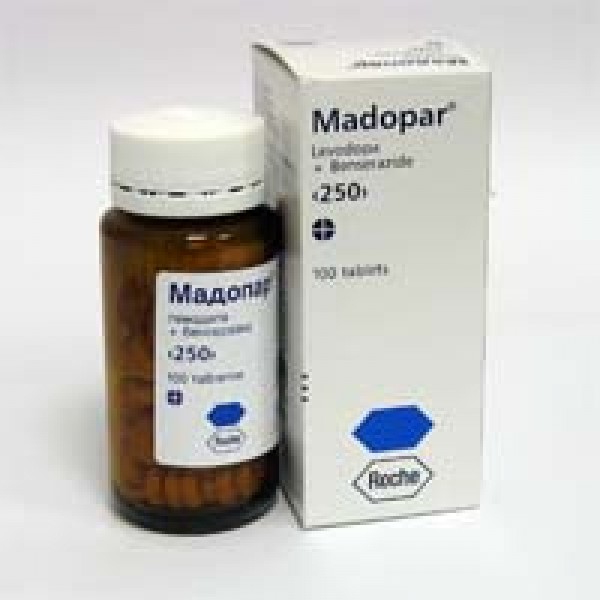
Madopar 0.250 mg. 100 capsules
Product viewed: 3927


WHAT Madopar HBS AND WHAT IT IS USED?
Madopar HBS 100 mg / 25 mg hard prolonged-release capsules are used to treat Parkinson's disease.
Madopar HBS 100 mg / 25 mg hard prolonged-release capsules contain the active ingredient levodopa, which is anti-Parkinsonian drug, and benserazide (as hydrochloride), which is a decarboxylase inhibitor and assists the action of levodopa. The two active ingredients act together to treat Parkinson's disease.
It is known that in certain parts of the brain in humans with this disease is contained in an insufficient amount of a substance called dopamine. Signs of the disease are slow movements, stiff muscles and trembling, as they may be expressed very differently in individual patients. In the brain, levodopa is converted to dopamine, thereby increasing its amount in the brain to-thermal levels. The very benserazide does not penetrate into the brain, but it serves to prevent the conversion of levodopa into dopamine outside the brain. This helps to reduce side effects in other parts of the body.
Madopar HBS 100 mg / 25 mg are hard capsules prolonged release. This means that they remain in the stomach for several hours, and the active ingredients are released into the blood.
Taking this drug, the symptoms of patients suffering from Parkinson's disease can be reduced. Madopar HBS 100 mg / 25 mg hard prolonged-release capsules, however, does not cure the disease, since the cause of the shortage of dopamine in the brain is not removed.
2. BEFORE YOU TAKE Madopar HBS
Do not take Madopar:
- If you are allergic (hypersensitive) to levodopa or benserazide, or any of the other ingredients of Madopar;
- If you suffer from hormonal disorder for example. increased activity of the thyroid gland
- If you have kidney, liver or heart disease;
- If you suffer from any nervous or mental illness;
- If you have narrow-angle glaucoma (high pressure in the eye);
- If you have or have had skin cancer (malignant melanoma);
- If you are taking or the last 14 days you are taking medicines known as monoamine oxidase inhibitors (antidepressants);
- If you are pregnant or breastfeeding;
- If you are under 25 years of age (as treatment may affect bone growth). Take special care with Madopar
Be sure to tell your doctor:
- If you are surgery because under general anesthesia with halothane administration of Madopar should be discontinued 12-48 hours before surgery because they may experience fluctuations in blood pressure and / or arrhythmias. Madopar therapy may be resumed after surgery by following your doctor's recommendations; if you have lung disease; if you have a stomach ulcer; if you have soft bones;
- If you suffer from bronchial asthma as drugs that can take for this disease (sympathomimetic drugs) may interact with your medicine; if you are taking medicines for high blood pressure;
- If you are taking any of the following medications: monoamine oxidase inhibitors (used to treat depressive moods); reserpine (used to treat hypertension); ferrous sulphate (used to treat iron deficiency); metoclopramide (used to treat nausea and vomiting); phenothiazines, thioxanthenes, butyrophenones (all are used for the treatment of some mental disorders, including severe anxiety (agitation), nausea, vomiting and hiccups, amphetamines (drugs which stimulate the nervous system) drugs (eg. morphine) - used to relieve pain; all other drugs to treat Parkinson's disease (eg., anticholinergic drugs, amantadine, dopamine agonists, COMT inhibitor) or any medications that affect the nervous system, including ones that are not prescribed by your doctor. This is extremely important as the use of more than one drug at the same time can strengthen or weaken the effect of making drugs. Patients being treated with this medicine should not use antacids (medicines that neutralize acids in the stomach). Please tell your doctor or pharmacist if you are taking or have recently taken any other medicines, including medicines obtained without a prescription.
Tell your doctor if you or someone in your family / person who takes care of you notice the urge or craving to do unusual things for you or you can not resist the impulse, the urge or temptation to do something that would harm you or others around you. These behaviors are called violation of impulse control and may include gambling addiction, binge acceptance of excessive amounts of food or indiscriminate spending, unusually strong libido or enhance sexual thoughts or feelings. You may need your doctor to review your treatment. No association was found between the use of Madopar, which is not a dopamine agonist, and these events, but it is recommended to monitor events such symptoms as Madopar is a dopaminergic drug.
Your doctor may want to do some research periodically, such as blood and urine, check the heart rate and blood pressure.
Madopar may affect the results of testing the level of sugar and other substances in the blood. If you are diabetic, you may need to be monitored more frequently blood sugar levels.
If your condition has improved during treatment, you can restore your normal activities gradually. If you exert too much too fast, you risk injury
Pregnancy and lactation
Do not take Madopar during pregnancy. You should tell your doctor if you are pregnant, if you think you are pregnant or intend to become pregnant. Mothers who are breastfeeding their children should not take Madopar, because it can not rule out the possibility of the occurrence of skeletal injuries (malformations) in children.
Ask your doctor or pharmacist before taking any medicine.
Driving and using machines
IMPORTANT
Treatment with levodopa is associated with somnolence, many rarely seen excessive daytime somnolence and episodes of sudden sleep onset. If you get these symptoms, you should tell your doctor and to resolution of such recurrent episodes and somnolence must refrain from driving or engaging in activities where impaired alertness may put yourself or others at risk of serious injury (eg. operating machinery).
3. HOW TO TAKE Madopar HBS?
Always take Madopar exactly as you have been told by your doctor. If you're not sure, ask your doctor or pharmacist. The doctor will prescribe the correct dose for you. Dose prescribed by your doctor will depend on your individual symptoms and your response to the drug.
Treatment usually starts with a low dose. It gradually increases to find a dose that adequately control your symptoms. During this initial period, your condition may get worse as you find the right dose for you.
The usual starting dose is one capsule three times daily for patients who have not previously received levodopa. Patients who have previously been treated with levodopa, usually begin treatment and replace every 100 mg of levodopa with a sustained release capsule with Madopar HBS 100 mg / 25 mg. Then your doctor will adjust the dose every 2 to 3 days to find the right dose.
Madopar HBS 100 mg / 25 mg hard prolonged-release capsules are taken orally (by mouth). Madopar should be taken, if possible, 30 minutes before or one hour after a meal. Adverse effects from the gastrointestinal tract, which may occur mainly in the initial stages of treatment, can be controlled to a large extent when Madopar taken with a snack (e. Biscuits) or liquids, or when the dose is gradually increased .
If you forget to take Madopar
If you forget to take a dose, you do not have to make up the missed dose as double next. You just have to continue with the next dose at the time, although in the meantime may again get some of the symptoms of Parkinson's disease.
is change the prescribed dose yourself. If you think the effect of the drug is too weak or too strong, talk to your doctor.
If you take more than the amount Madopar
When taking too many capsules signs and symptoms are similar to side effects seen with usual intake of Madopar, but may also be more pronounced. There have cardiac arrhythmia, confusion and insomnia, nausea and vomiting, and abnormal involuntary movements. If overdose Madopar HBS, which is a controlled release, onset of the symptoms and signs may be delayed due to delayed absorption of the active ingredients in the stomach.
If you take too many capsules or someone else accidentally takes your medicine, immediately contact your doctor, pharmacist or nearest hospital.
If you stop taking Madopar
Your doctor will advise you when to stop taking the drug. Typically Madopar 100 mg / 25 mg hard prolonged-release capsules taken for a long period since it replaces the substance dopamine, which is not produced in sufficient quantities in patients with Parkinson's disease.
You should tell your doctor if you want to stop the drug. Although this rarely occurs, abrupt discontinuation can cause serious side effects, for example. reported for neuroleptic malignant-like syndrome (hyperpyrexia and muscular rigidity, the likelihood of change in psychological state and an increase in serum creatinine phosphokinase) which can be life-threatening after abrupt discontinuation of treatment with drugs containing levodopa. To avoid this, your doctor will advise you to discontinue treatment.
If you have any further questions on the use of this product, ask your doctor or pharmacist.
4. POSSIBLE SIDE EFFECTS
Like all medicines, Madopar can cause side effects, although not everybody gets them.
Blood and lymphatic system disorders: Rare reports of hemolytic anemia, transient leukopenia and thrombocytopenia. Therefore, as with any long-term treatment with drugs containing levodopa Your doctor will monitor blood counts and liver and your kidney function.
Metabolism and nutrition disorders: anorexia reported.
Psychiatric Disorders: Depression is common in patients with Parkinson's disease, including those who are being treated with levodopa. Can be seen: agitation, anxiety, insomnia, hallucinations, seeing imaginary people or objects temporary disorientation, especially in elderly patients and patients with a history of such disorders.
Nervous System:
Cardiac disorders may occur changes in heart rhythm.
Vascular disorders: There have been isolated reports of blood pressure changes.
Gastrointestinal disorders During treatment with Madopar reported nausea, vomiting and diarrhea. Adverse gastrointestinal effects, which may occur mainly in the early stages of treatment, can be controlled to a considerable extent, as Madopar is taken with food or liquid, or by a slow increase of the dose.
Skin and subcutaneous tissue disorders: In rare cases may occur allergic skin reactions such as itching and rash.
Research: There may be a transient increase in liver transaminases and alkaline phosphatase. Have been reported cases of increase in the gamma-glutaminyl transferase. During treatment with Madopar is observed increase in blood urea nitrogen. The color of urine may change, usually yields a red hue that darkens when urine stays. These changes are the result of the action of the drug and are not cause for concern.
You can get the following side effects:
Inability to resist the impulse urge or temptation to do something you or others around you, this could include:
- Strong desire to bet excessive gambling regardless of the consequences for yourself as an individual or for your family.
- Altered or increased sexual interest and behavior that can significantly in disrupting you or other people, which includes increased sexual desire.
- Uncontrolled and wasteful shopping or spending money.
- Overeating (tendency to accepting excessive amounts of food in a short time) or compulsive eating (eating more food than normal and more than is needed to satisfy hunger).
Tell your doctor if you develop any of these behaviors. He / she will discuss with you how to treat or how to reduce symptoms.
If any of the side effects gets serious, or you notice other effects not listed in this leaflet, please tell your doctor or pharmacist.
5. HOW TO STORE Madopar HBS?
- Keep out of reach of children. Do not store above 25 ° C.
- Keep in the original packaging to protect from moisture.
- Keep the bottle tightly closed.
- Do not use Madopar HBS after the expiry date (EXP) stated on the carton. The expiry date refers to the last day of that month.
- Return the remaining medicine to the pharmacy. Only keep it if your doctor has told you.
6. FURTHER INFORMATION
What Madopar HBS?
The active substances are levodopa and benserazide.
The other ingredients are: calcium phosphate dibasic anhydrous; methylhydroxypropylcellulose; hydrogenated vegetable oil; mannitol; talc; povidone; magnesium stearate.
Each capsule contains 100 mg of levodopa and 25 mg benserazide as the hydrochloride.
Madopar HBS looks like and contents of the pack?
Madopar HBS 100 mg / 25 mg hard prolonged-release capsules are a gray-blue opaque body and dark green opaque cap, imprinted with ROCHE,
The capsules are sold in an amber glass bottle with a plastic screw cap, including a desiccant. The bottles containing 100 capsules.
Write a review
Your Name:Your Review: Note: HTML is not translated!
Rating: Bad Good
Enter the code in the box below:
Related Products