Your shopping cart is empty!
Welcome visitor you can login or create an account.
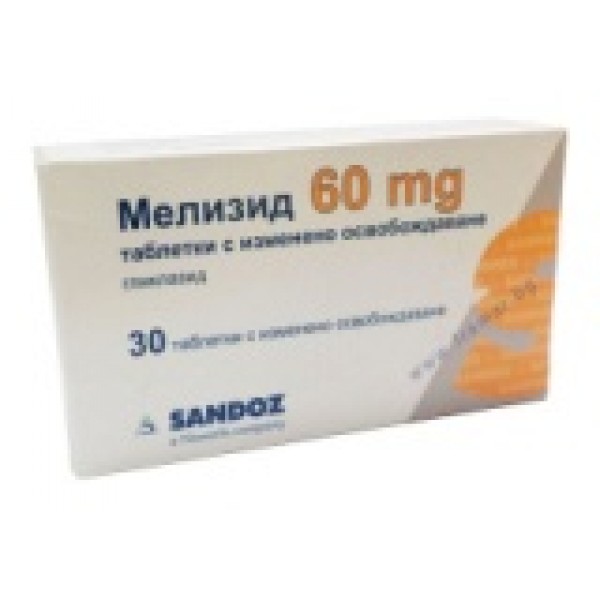
Melizid 60 mg. 30 tablets
Product Code: Melizid 60 mg. 30 tablets
Availability: In Stock
Product viewed: 2226


What is Melizid and what it is used for
Melizid is a medicine that lowers blood glucose (an oral antidiabetic medicine belonging to the group of sulfonylureas).
Melizid is used in adults to treat certain types of diabetes (type 2 diabetes mellitus) when only dietary measures, exercise and weight reduction are not enough to maintain normal blood glucose levels.
2. What you need to know before you take Melizid
Do not take Melissid:
if you are allergic to gliclazide or any of the other ingredients of this medicine (listed in section 6) or to other medicines in the same group (sulphonylurea) or to other similar medicines (hypoglycaemic sulphonamides);
if you suffer from insulin-dependent diabetes (type 1);
if you have ketone bodies and sugar in your urine (this may mean you have diabetic ketoacidosis), diabetic overcombe or coma;
if you suffer from severe kidney or liver disease;
if you are taking medicines to treat fungal infections (miconazole, see "Other medicines and Melizid");
if you are breast-feeding (see section "Pregnancy, breast-feeding and fertility").
Warnings and precautions
Talk to your doctor or pharmacist before taking Melissid.
You must follow the healing plan prescribed by your doctor to achieve normal blood sugar levels. This means that in addition to taking regular tablets, you must follow a dietary regimen, exercise, and, if necessary, lower your body weight.
During glycemic treatment, regular blood glucose (and possibly sugar in the urine), as well as glycated hemoglobin (HbA1c), is required.
During the first weeks of treatment, the risk of lowering blood sugar (hypoglycaemia) is increased. Therefore, more frequent medical control is required.
Low blood sugar (hypoglycaemia) may occur:
if you eat irregularly or miss major meals;
if you are hungry;
if you are malnourished;
if you change your diet;
if you increase your physical activity and the amount of carbs you take does not match this increase;
if you consume alcohol, especially in combination with omitting main meals;
if you are taking other medicines or natural medicines at the same time;
if you take too much gliclazide;
if you suffer from specific hormone-dependent diseases (impaired thyroid, pituitary gland or adrenal cortex);
if your kidney or liver function is severely reduced.
If you have low blood sugar, you may experience the following symptoms: headache, severe hunger, nausea, vomiting, fatigue, sleep disturbance, nervousness, aggression, decreased concentration, reduced alertness and delayed reactions, depression, confusion, visual disturbance or speech , trembling, sensory disturbances, vertigo and feeling of helplessness.
The following signs and symptoms may also appear: sweating, cold and damp skin, anxiety, rapid or irregular heartbeat, high blood pressure, sudden severe chest pain that may spread to adjacent areas (angina).
If blood sugar continues to fall, you may experience a state of intense confusion (delirium), develop convulsions, lose control, your breathing may become superficial and your heartbeat slow down, you may become unconscious.
In most cases, low blood sugar symptoms pass very quickly when consuming sugar in some form, glucose tablets, sugar lumps, sweet juice, sweetened tea. For this reason, you should always carry some type of sugar with you (glucose tablets, lumps of sugar). Remember that artificial sweeteners are not effective. Please contact your doctor or nearest hospital if the intake of sugar does not help or the symptoms reappear.
Symptoms of low blood sugar may be absent, less pronounced or you may not feel in time that your blood sugar has fallen. This can happen if you are elderly and you are taking certain medicines (eg those acting on the central nervous system or beta-blockers). If you are in a state of stress (eg, accidents, surgery, temperature, etc.), your doctor may temporarily change this medicine to insulin.
Symptoms of high blood sugar (hyperglycaemia) may be present when gliclazide has not sufficiently lowered your blood sugar when you have not followed the treatment plan prescribed by your doctor or in specific stressful situations. These may include thirst, frequent urination, dry mouth, dry and itchy skin, skin infections and decreased ability to work.
If you experience such symptoms, you should contact your doctor or pharmacist.
If your family has or you know you have an inherited condition deficiency of glucose-6-phosphate dex
Driving and using machines
Your ability to concentrate or react may be impaired if your blood sugar is too low (hypoglycaemia) or too high (hyperglycaemia) or if visual disturbances occur as a result of these conditions. Keep in mind that you could endanger yourself or others (eg when driving or using machines). Please ask your doctor whether you can drive if:
you have frequent episodes of low blood sugar (hypoglycaemia);
low blood glucose (hypoglycaemia) signals are weak or lacking.
3. How to take Melizid
Dosage
Always take this medicine exactly as your doctor or pharmacist has told you. If you are not sure, ask your doctor or pharmacist.
Only adults may take this medicine.
The dose is determined by your doctor depending on your blood sugar and possibly urine sugar. Changes in external factors (eg, weight loss, lifestyle changes, stress) or improvement in blood glucose control may require dose changes of gliclazide.
The usual daily dose is half to two tablets (up to 120 mg) taken at breakfast. It depends on the response to the treatment.
If a combination treatment with Melisside and metformin, an alpha-glucosidase inhibitor, a thiazolidinedione, a dipeptidyl peptidase-4 inhibitor, a GLP-1 receptor agonist or insulin is initiated, your doctor will individually determine the appropriate dose of each individual drug.
If you notice that your blood sugar levels are high despite taking the medicine as prescribed, talk to your doctor or pharmacist.
Application method
Oral use.
Swallow half or all of the tablet (s) at once. Do not chew or break it. Take the tablet (s) with a glass of water at breakfast (and preferably at the same time each day).
You should always eat after taking your tablet (s). The tablet can be divided into equal doses.
If you take more Melisside than you should
If you take more than the required number of tablets, contact your doctor or emergency department immediately with the nearest hospital.
Overdose manifestations are those in hypoglycaemia described in section 2. They can be controlled by immediate intake of sugar (4 to 6 lump) or liquids containing sugar followed by a hearty breakfast or main meal. If the patient is unconscious, immediately inform a doctor and call "Emergency". The same should be done if someone, for example, child, accidentally swallowed this product. Unconscious patients should not be given food or drink.
Always provide a sufficiently informed person who can call a doctor in case of emergency.
If you forget to take Melizid
It is important to take your medicine every day, as regular treatment has a better effect. If you miss a dose of Melissid, take the next dose at the usual time. Do not take a double dose to make up for the missed dose.
If you stop taking Melizid
Since diabetes usually lasts for a long time, you should consult your doctor before stopping taking this medicine. Stopping it may result in increased blood sugar (hyperglycaemia), which increases the risk of developing complications of diabetes.
If you have any further questions on the use of this product, ask your doctor or pharmacist.
4. Possible side effects
Like all medicines and this medicine can cause side effects, although not everyone gets them.
The most commonly observed adverse drug reaction is low blood sugar (hypoglycaemia). For symptoms and signs, see the "Warnings and precautions" section in section 2 "What you need to know before you take Melizide".
If not treated, these symptoms could progress to drowsiness, loss of consciousness or even coma. If the blood glucose lowering episode is severe or prolonged, even if you have temporarily controlled it by taking sugar, you should seek immediate medical attention.
Other side effects that can be observed while taking this medicine are:
Rare: may affect up to 1 in 1,000 people:
Reducing the number of cells in the blood (eg platelets, red and white blood cells), which may cause paleness, prolonged bleeding, bruising, throat inflammation and fever have been reported.
These symptoms usually disappear with discontinuation of treatment.
Not known: can not be estimated from the available data:
Impaired hepatic function, which may cause yellowing of the skin and eyes. If this happens to you, talk to your doctor immediately. These symptoms usually disappear after stopping the medicine. Your doctor will decide whether to stop treatment
Packaging content and additional information
What Melizid contains
The active substance is gliclazide. Each modified-release tablet contains 60 mg of gliclazide.
The other ingredients are: calcium hydrogen phosphate dihydrate, povidone K30, hypromellose K100, hypromellose K4M and magnesium stearate.
What Melizid looks like and what the package contains
White to off-white, oblong non-coated tablets, 13.5 mm long, 6.5 mm wide and 4.2 mm thick, scored on both sides and carved "60" on one side of the score line on one side of the tablet.
Transparent PVC-aluminum blister.
Transparent PVC / Aclar-aluminum blister.
Pack sizes of 10, 30, 60, 90, 100 and 180 modified-release tablets.
Not all pack sizes may be marketed.
Write a review
Your Name:Your Review: Note: HTML is not translated!
Rating: Bad Good
Enter the code in the box below:
Related Products