Your shopping cart is empty!
Welcome visitor you can login or create an account.
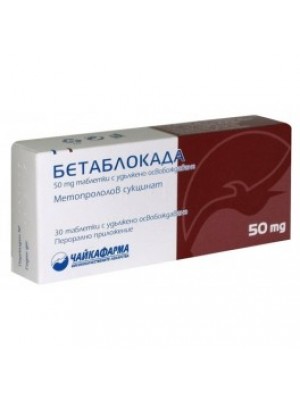
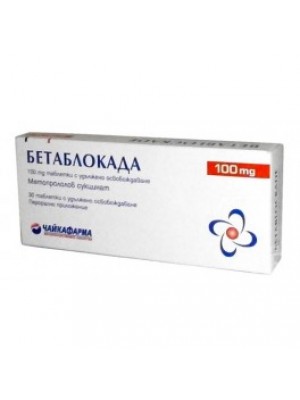
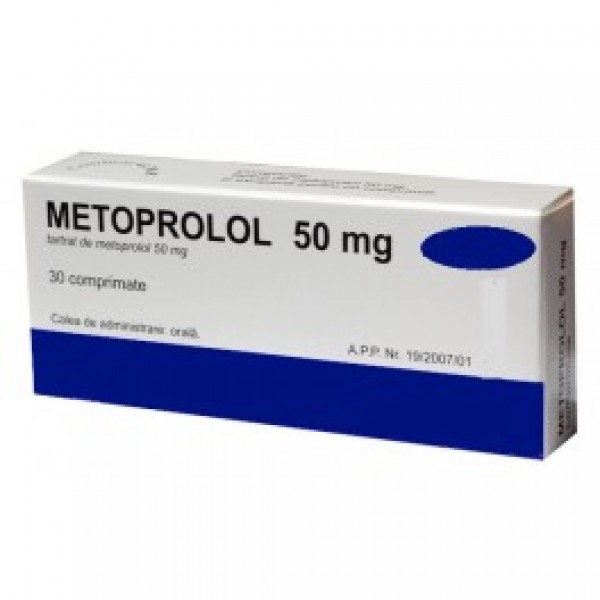
Metoprolol 50 mg. 28 tablets
Product Code: Metoprolol 50 mg. 28 tablets
Availability: In Stock
Product viewed: 1705


Metoprolol 50 mg. 28 tablets
WHAT metoprolol POLFARMA AND WHAT IT IS USED
Metoprolol succinate belongs to a group of medicines called beta-blockers. Used for the treatment of:
high blood pressure;
firming chest pain caused by lack of oxygen to the heart (angina pectoris);
abnormal heart rhythm (arrhythmia);
stable heart failure with symptoms such as shortness of breath or swelling of the ankles, when taken together with other medicines to treat heart failure;
palpitations (feeling palpitations) due to heart disease.
The drug is administered for the prophylaxis of:
reinfarction or heart damage after a heart attack;
migraine.
2. BEFORE YOU TAKE Metoprolol POLFARMA:
Do not take Metoprolol Polfarma and tell your doctor if:
If you are allergic (hypersensitive) to metoprolol, other beta-blockers or any of the excipients (see section. 6);
have impaired conduction of the heart (AV / AV / block II-III degree), or abnormal heart rhythm (syndrome sick sinus);
suffer from uncompensated heart failure, receiving treatment to strengthen heart contractions or are in shock due to heart disease;
suffer from severe circulatory disorders (severe peripheral arterial disease);
you have a slow heart rate (less than 50 beats / min.);
have low blood pressure;
suffer from increased acidity of the blood (metabolic acidosis);
you have severe asthma or COPD (chronic obstructive pulmonary disease);
suffer from untreated phaeochromocytoma (high blood pressure caused by a rare tumor na adrenal gland);
have heart failure and blood pressure continually falls below 100 mmHg.
If you take any of the following: (see also "Taking other medicines"):
inhibitors of monoamine oxidase (MAO) inhibitor (for treating depression);
verapamil and diltiazem (to lower blood pressure);
antiarrhythmic eg. disopyramide.
Be careful when taking Metoprolol Polfarma and tell your doctor if:
have asthma;
suffer from Prinzmetal angina (firming chest pain, usually in the evening);
you have diabetes mellitus (this medicine may mask low blood sugar levels);
suffer from pheochromocytoma (high blood pressure caused by a rare tumor of the adrenal gland);
receiving treatment to reduce allergic reactions. Polfarma metoprolol may increase your hypersensitivity to substances to which you are allergic, and thus enhance the severity of allergic reactions;
have an overactive thyroid gland (this medicine may mask symptoms as increased heart rate, sweating, tremor, anxiety, increased appetite or weight reduction);
have or have suffered from psoriasis (severe skin rash);
suffer from poor circulation, which can lead to numbness, pale or bluish fingers and toes;
suffer from impaired cardiac conduction (heart block);
have heart failure and:
unstable heart failure (NYHA IV);
heart attack or angina pectoris in the last 28 days;
reduced renal or hepatic function;
your age is under 40 or over 80 years;
diseases of the heart valves;
enlarged heart muscle;
heart surgery in the past four months.
If you need to put your anesthetic, tell your doctor or dentist that you are taking metoprolol tablets.
Taking other medicines:
Do not take Metoprolol Polfarma, if you already take:
inhibitors of monoamine oxidase (MAO) inhibitors for the treatment of depression (the drug may increase the effect of lowering the blood pressure);
other medicines to lower blood pressure, such as verapamil and diltiazem (can cause slow heartbeat or increased blood pressure);
antiarrhythmics such as disopyramide (may increase the risk of irregular or slow heart rate and reduce heart function).
Before taking metoprolol Polfarma, tell your doctor if you are taking or have recently taken any of the following medicines or taking medicines without a prescription:
The following medicines may enhance the effect of lowering blood pressure:
Cimetidine (anti-ulcer);
Hydralazine and clonidine (medicines to lower blood pressure);
Terbinafine (for fungal infections);
Paroxetine, fluoxetine and sertraline (for treating depression);
Hydroxychloroquine (for malaria);
Chlorpromazine, triflupromazine, chlorprothixene (antipsychotics);
Amidaron, quinidine, propafenone (for abnormal heart rhythm);
Diphenhydramine (antihistamine);
Celecoxib (for pain).
The following medicines may reduce the effect of lowering blood pressure:
Indometacin (for pain);
Rifampicin (antibiotic).
Other drugs that may affect or be affected by metoprolol:
Other beta-blockers, such as eye drops;
Adrenaline / epinephrine / norepinephrine (norepinephrine) or other sympathomimetics;
Medicines to treat diabetes - symptoms of low blood sugar can be masked;
Lidocaine;
Reserpine, alpha-methyldopa, guanfacine, cardiac glycosides.
Taking Metoprolol Polfarma with food and drink:
Alcohol may increase the effects of the tablets Metoprolol Polfarma to lower blood pressure.
Pregnancy and lactation
Not recommended intake of metoprolol Polfarma during pregnancy or lactation. Consult your doctor or pharmacist before taking any medicine.
Driving and using machines
Polfarma metoprolol can cause fatigue and dizziness. If you experience dizziness or fatigue while taking these tablets, you should avoid driving or operating machinery, particularly after changing the drug or the concomitant consumption of alcohol.
3. HOW TO TAKE Metoprolol Polfarma
Follow your doctor's instructions when taking Metoprolol Polfarma. If you are unsure, consult your doctor or pharmacist. The tablets are taken once a day, in the morning with a glass of water. The tablet is swallowed whole or half. Should not be chewed or crushed before intake.
Usual dose:
High blood pressure:
47,5 mg metoprolol succinate once daily. The dose may be increased if necessary up to 95-190 mg once a day.
Firming chest pain (angina pectoris):
95-190 mg metoprolol succinate once daily.
Abnormal heart rhythm (arrhythmia):
95-190 mg metoprolol succinate once daily.
Prophylactic treatment after heart attack:
190 mg metoprolol succinate once daily.
Palpitations due to heart disease:
95 mg metoprolol succinate once daily. If necessary, the dose may be increased to 190 mg QD.
Prophylaxis of migraine:
95-190 mg metoprolol succinate once daily.
Patients with stable heart failure:
Always follow your doctor's instructions.
Patients with impaired hepatic function:
If you have severe impairment of liver function, your doctor may adjust your dose. Always follow your doctor's instructions.
Children and adolescents:
Always follow your doctor's instructions when Metoprolol Polfarma be used in children and adolescents.
If you take more dose metoprolol Polfarma
If you have accidentally taken more than the prescribed dose, call the nearest emergency clinic or contact your doctor or pharmacist. Symptoms of overdose include: low blood pressure (fatigue and dizziness), slow heart rate, abnormal heart rhythm, cardiac arrest, shortness of breath, fainting, nausea, vomiting, and bluish skin.
If you forget to take Metoprolol Polfarma
If you forget to take a dose, take it as soon as you remember, then continue with the usual dose. Do not take a double dose to make up.
If you stop taking Metoprolol Polfarma
Do not stop suddenly taking Metoprolol Polfarma as may occur worsening heart failure and increase the risk of heart attack. Consult your doctor about the change in dose or discontinuation of therapy. If you have any further questions on the use of this product, ask your doctor or pharmacist.
4. POSSIBLE SIDE EFFECTS
Like all medicines, Metoprolol Polfarma can cause side effects, although not everybody gets them.
Discontinue therapy and immediately contact your doctor if you develop allergic reactions such as skin rash with itching, redness, swelling of the face, lips, tongue or throat, difficulty breathing or swallowing. This is very serious, but rare effect. You may need urgent medical attention or hospitalization.
Tell your doctor if you notice any of the following side effects or notice any side effects not listed here:
Very common (more than 1 in 10 patients):
Dizziness when standing due to low blood pressure;
Fatigue.
Common (less than 1 in 10 but more than 1 in 100 patients):
Slow heartbeat;
Trouble keeping your balance / very rarely with loss of consciousness /;
Cooling of the hands and feet;
Palpitations;
Dizziness, headache;
Nausea, diarrhea, constipation, abdominal pain;
Shortness of breath during exercise.
Uncommon (less than 1 in 100 but more than 1 in 1000 patients):
Temporary worsening of symptoms of heart failure;
Hold water (swelling);
Chest pain;
Feeling of "pins and needles";
Muscle cramps;
Vomiting (nausea);
Weight gain;
Depression;
Decreased concentration;
Difficulty sleeping (insomnia);
Drowsiness;
Nightmares;
Shortness of breath;
Skin rash;
Increased sweating.
Rare (less than 1 in 1000, but more than 1 in 10 000 patients):
Worsening of diabetes;
Nervousness, anxiety;
Visual disturbances;
Dryness or irritation of the eyes;
Conjunctivitis (eye infection);
Impotence (the inability to erection);
Peyronie's disease (a disease in which the penis is curved when erect);
Irregular heartbeat;
Impaired cardiac conduction;
Dry mouth;
Fever;
Hair loss;
Changes in liver function.
Very rare (less than 1 in 10,000 patients):
Changes in blood count (thrombocytopenia, leukopenia);
Forgetfulness;
Confusion;
Hallucinations;
Mood changes;
Tinnitus;
Hearing disorders;
Altered taste;
Inflammation of the liver (hepatitis);
Sensitivity to light;
Deterioration of the new disease of psoriasis (a skin disease type);
Muscle weakness;
Joint pain;
Tissue death in patients with impaired circulation.
If any of the side effects gets serious, or if you notice other effects not listed in this leaflet, please tell your doctor or pharmacist.
5. HOW TO STORE Metoprolol POLFARMA
Keep out of the reach of children.
Do not use the tablets after the expiry date stated on the packaging. The expiry date is also marked on the reverse side of the blister after "EXP". The expiry date refers to the last day of the month.
Be stored below 30 ° C.
Medicines should not be disposed of via wastewater or household waste. Ask your pharmacist how to dispose of medicines no longer required. These measures will help to protect the environment.
6. FURTHER INFORMATION
What Metoprolol Polfarma:
The active drug substance (the ingredient, through which the tablets work) is metoprolol succinate. Each tablet contains:
23,75 mg metoprolol succinate eq. 25 mg metoprolol tartrate;
47,5 mg metoprolol succinate eq. 50 mg metoprolol tartrate;
95 mg metoprolol sushtinat eq. 100 mg metoprolol tartrate;
190 mg of metoprolol succinate eq. 200 mg metoprolol tartrate.
The other ingredients are:
Ingredients: Microcrystalline cellulose, methyl cellulose, corn starch, glycerol, ethylcellulose, and magnesium stearate.
Composition coat: microcrystalline cellulose, hypromellose, macrogol stearate and titanium dioxide / E 171 /.
Write a review
Your Name:Your Review: Note: HTML is not translated!
Rating: Bad Good
Enter the code in the box below:
Related Products