Your shopping cart is empty!
Welcome visitor you can login or create an account.
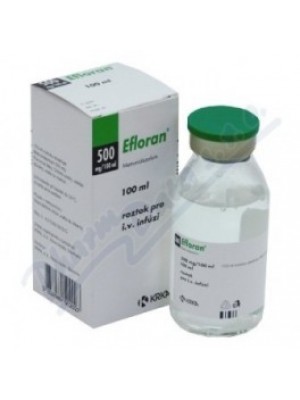
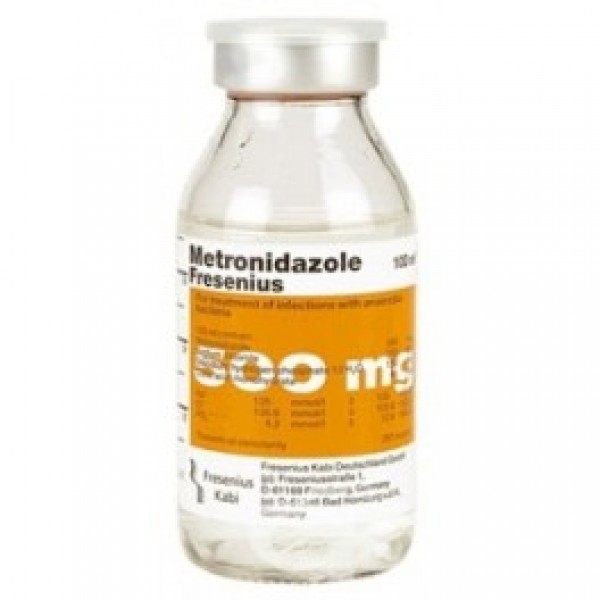
Metronidazole 500 mg. 100 ml.
Product Code: Metronidazole 500 mg. 100 ml.
Availability: In Stock
Product viewed: 2496


Metronidazole 500 mg. 100 ml.
In 100 ml of solution contain:
active ingredient: Metronidazole 500 mg;
excipients: sodium chloride, disodium hydrogen phosphate 12 H 2 O, citric acid monohydrate, water for injections.
Pharmaceutical form
Solution for intravenous infusion.
Pharmacotherapeutic group
Antiinfective agent.
Evidence
For the treatment and prophylaxis of infections which are caused or may be caused, of anaerobic bacteria.
The treatment is effective in cases of:
infections of the CNS (e.g., brain abscess, meningitis);
infection in the field of ENT (angina Plaut-Vincent);
infections of the lung and pleura (e.g., necrotizing pneumonia, aspiration pneumonia, lung abscess);
infections of the digestive system and in the abdomen, for example. peritonitis, liver abscesses, postoperative infections following surgery of the colon and rectum, purulent diseases in the abdominal and pelvic cavities;
gynecological infections (such as endometritis after hysterectomy or cesarean, milk fever, septic abortion);
gas gangrene;
infections of the bones and joints (e.g., osteomyelitis);
septicemia with thrombophlebitis.
Prophylactic administration has always shown before operations with a high risk of anaerobic infections (gynecological and abdominal).
Contraindications
In case of hypersensitivity to metronidazole or other nitroimidazolovi derivatives (which cases are very rare, however), Metronidazole infusion i.v. Brown is appointed only in life-threatening infections and when treatment with other antibiotics has been ineffective.
Precautions for use
In patients with significant liver damage, impaired hematopoiesis (for example granulocytopenia) or with diseases of the central and peripheral nervous system, intravenous infusion of Metronidazole i.v. Brown be appointed only if the expected benefits outweigh the potential risks.
Metronidazole affect the spectrophotometric determination of SG0T, which results in lower values.
Pregnancy and lactation
Although there is no clear evidence of embryo and fetal toxicity, Metronidazole i.v. Brown is appointed only in life-threatening infections during pregnancy and lactation.
Metronidazole is excreted in human milk, therefore breast-feeding during treatment is terminated. After stopping treatment with metronidazole, breastfeeding can be resumed only after 2-3 days due to the long half-life of Metronidazole.
Interactions
Metronidazole / alcohol
Consumption of alcoholic beverages during treatment with metronidazole should be avoided because of the likelihood of inducing side effects - dizziness and vomiting (disulfiram-like effect). Concomitant use with disulfiram can cause mental confusion.
Metronidazole / anticoagulants
Metronidazole may affect the serum concentrations of anticoagulants. In patients taking such drugs if necessary regimen should be adjusted as Metronidazole has a synergistic effect on anticoagulants.
Metronidazole / lithium
When treated with Metronidazole, increases in serum concentrations of lithium, which requires caution in patients taking lithium salts.
Metronidazole / anticonvulsants
Concomitant use of barbiturates and phenytoin weakens the effectiveness of metronidazole.
Metronidazole / cimetidine
In individual cases, cimetidine, attached in parallel, may impede the elimination of Metronidazole, which causes an increase of the concentration of metronidazole in serum.
Especially warning
Effects on ability to drive and use machines:
Even used prescription Metronidazole can disrupt reactions when driving or operating machinery. This is true to a greater extent at the beginning of treatment or when combined with alcohol.
Dosage
Unless otherwise specified, Metronidazole be appointed as follows:
For adults and children over 12 years:
The first day of treatment at 500 mg metronidazole (which is equivalent to 100 ml of infusion solution Metronidazole) of 6-8 hours to a maximum of 2 g per day.
The second and subsequent days are appointed Metronidazole 500 mg every 12 hours, ie 1 g Metronidazole daily. Only exceptionally, this maintenance dose may be increased to 1,5 g per day.
As a rule, the duration of treatment is 5-7 days. (See. Also referred to as "duration of treatment").
For preoperative prophylaxis single dose is 0,5 - 1,0 g (maximum 2,0 g) before the start of the operation.
Children under 12 years:
Every 8 hours 7-10 mg infusion Metronidazole per kilogram of body weight, which corresponds to a daily dose of 20-30 mg metronidazole per kilogram of body weight.
Duration of treatment:
The course of treatment with metronidazole or other drugs nitroimidazolovi should not exceed 10 days. Only in individual cases if it is definitely, the treatment period may be extended.
Retreatment should be minimize to only selected cases separately. This limit must be strictly observed, therefore, that the possibility to develop Metronidazole mutagenic activity can not be ruled out with certainty and that in animal experiments was observed increase the incidence of certain tumors.
Method of administration
Intravenous infusion
The contents of one bank infused slowly intravenously, ie 100 ml for not less than 20 minutes, usually for more than 1 hour. Metronidazole i.v. Brown can be diluted in a carrier solution for infusion such as 0.9% sodium chloride or 5% glucose. Prescribed for concomitant antibiotics should be administered separately.
Overdose
There is no specific treatment for excessive dosing of metronidazole. If necessary, Metronidazole successfully eliminated by dialysis.
Adverse reactions
Effects on the gastrointestinal tract:
Rarely feeling of metallic taste, glossitis, stomatitis, epigastric weight, regurgitation of bitter taste, nausea, vomiting, loss of appetite, and diarrhea.
In very rare cases of severe persistent diarrhea during or after treatment should be informed of your doctor as it may be caused by pseudomembranous colitis requiring immediate treatment. In such case, infusion of Metronidazole i.v. Brown suspended and appoint appropriate therapy (eg oral vancomycin 350 mg four times daily). Drugs that inhibit peristalsis are contraindicated.
Effects on liver and pancreas:
Rarely may occur disturbances in liver function (eg, elevated serum transaminases and bilirubin) and sporadically - pancreatitis.
Symptoms of hypersensitivity:
Rarely can be observed skin reactions (eg, pruritus, urticaria), and drug fever.
Severe acute hypersensitivity reactions are possible (eg anaphylactic reactions and anaphylactic shock), but in very rare cases. They need immediate therapeutic intervention.
Effects on central and peripheral nervous system:
Sometimes there is headache vertizhen disorders, somnolence or sleepiness, mental confusion, irritability, depression and ataxia.
Also sometimes during the application of Metronidazole i.v. Brown observed interference in the peripheral nervous system (neuropathy) and seizures. The former are manifested as paresthesia, pricking of the skin and numbness of the limbs. In such events should be immediately called the doctor.
Effects on blood and blood-forming organs:
During treatment with Metronidazole i.v. Brown sometimes reported a reduced number of leukocytes and platelets (leukocytopenia, granulocytopenia, in individual cases even up to agranulocytosis and thrombocytopenia). Therefore prolonged drug intake regular monitoring of blood counts is required.
Effects on the kidneys and bladder:
Dysuria, cystitis and incontinence are very rare events.
Others:
Sometimes it can be seen darkening of the urine (due to Metronidazole metabolite); Rare side effects are genital superinfection with Candida, fatigue and visual disturbances.
Local reactions:
After intravenous administration are possible inflammation of the vein (thrombophlebitis sometimes).
Fitness
Do not use product after the expiry date stated on the label.
Storage
Protect from light!
Do not store above 25 ° C.
Package
Glass bottles of 100 ml.
Write a review
Your Name:Your Review: Note: HTML is not translated!
Rating: Bad Good
Enter the code in the box below:
Related Products