Your shopping cart is empty!
Welcome visitor you can login or create an account.
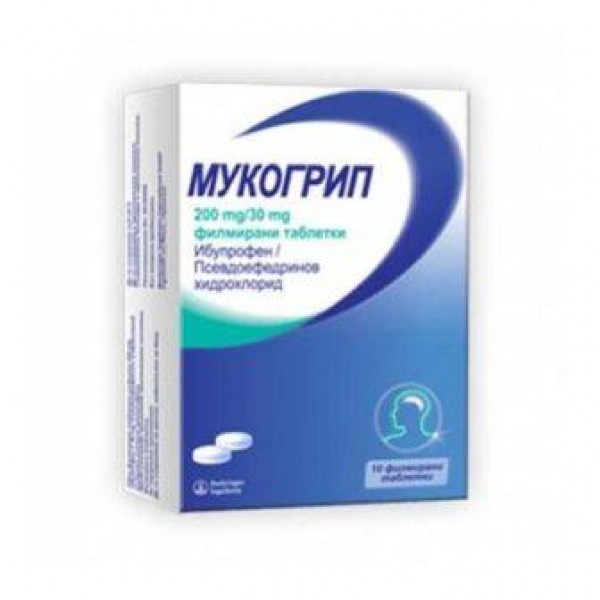
Mucogrip 200 mg. / 30 mg. 10 tablets
Product viewed: 4542


What Mucogrip is for what it is used for
Mucogrip film-coated tablets contain two active ingredients: ibuprofen and pseudoephedrine.
Ibuprofen belongs to a group of medicines known as non-steroidal anti-inflammatory drugs (NSAIDs). NSAIDs work by reducing pain and lowering high temperature. Pseudoephedrine belongs to a group of drugs with a vasodilating effect and acts on the blood vessels in the nose, relieving the symptoms of a stuffy nose.
Mucopigil film-coated tablets are used for the symptomatic treatment of a nasal congestion in colds accompanied by headache and / or fever in adults and adolescents aged 15 and over.
This combined medicine should only be used if you have a blocked nose accompanied by a headache or fever. If you experience only one of these symptoms, you should consult your pharmacist or doctor about the use of ibuprofen or pseudoephedrine alone.
You should consult a doctor if you do not feel better or get worse after 5 days.
2. What you need to know before you take Mucogrip
Do not take Mucogrip
if you are allergic to ibuprofen, pseudoephedrine hydrochloride or any of the other ingredients of this medicine (listed in section 6);
if you are under 15;
if you are pregnant or breast-feeding;
if you have had allergic reactions or asthma, skin rash, pruritus or swelling of the face, previous intake of this medicine, ibuprofen, acetylsalicylic acid or other similar medicines;
if you have had a stomach or duodenal ulcer, or have had gastrointestinal bleeding when you previously had NSAIDs;
if you have severe liver or kidney disease;
if you have heart problems (such as coronary insufficiency);
if you have had a heart attack (myocardial infarction);
if you have uncontrolled high blood pressure;
if you have had a stroke or have been told you are at risk for a stroke;
if you have had seizures;
if you have had unexplained disorders in the formation of blood components;
if you have raised eye pressure (close-angle glaucoma);
if you have difficulty urinating with problems with the prostate;
if you are diagnosed with systemic lupus erythematosus, a disease that affects the immune system by causing joint pain, skin changes and other problems;
if you are taking:
other nasal emptying agents (oral) or nasal (phenylpropanolamine, phenylephrine, ephedrine, xylometazoline or oxymetazoline) or methylphenidate;
medicines for treating depression, such as non-selective inhibitors of monoamine oxidase (known as MAO inhibitors, eg ipraniazide), or have been taking these during the last 14 days.
Warnings and precautions
Antiinflammatory / painkillers such as ibuprofen may be associated with a slight increase in the risk of heart attack or stroke, especially when used in high doses. Do not exceed the recommended dosage or duration of treatment.
You should discuss your treatment with your doctor or pharmacist before taking Mucillus if:
have heart problems, including heart failure and angina pectoris (chest pain) or have suffered a heart attack, bypass surgery, peripheral arterial disease (worsened circulation in the legs or feet due to narrowed or blocked arteries) or any type of stroke including a microinvestigation or a transient ischemic attack);
have high blood pressure, diabetes, high cholesterol, a family history of heart disease or stroke, or if you are a smoker;
if you have hyperthyroidism (overactive thyroid);
if you are taking medicines that can interact with Mucillus. the list below;
if you have asthma; the use of this medicinal product may cause an asthma attack;
if you have a gastrointestinal disease (such as hiatal hernia, gastrointestinal bleeding, peptic or duodenal ulcer).
Blood tests disturbances
It is possible that pseudoephedrine may affect some diagnostic blood tests. You should tell your doctor that you are taking this medicine if you are going to have blood samples.
Children and adolescents
Mucopigil should not be taken by children under the age of 15 years.
Adolescents with dehydration are at risk of renal impairment.
Other Drugs and Mucogrip
Tell your doctor or pharmacist if you are taking, have recently taken or might take any other medicines.
Mucogrip may affect or be affected by some other medicines. For example:
medicines that lower high blood pressure (ACE inhibitors such as captopril, beta-blockers such as atenolol, angiotensin II receptor antagonists such as losartan).
Some other medicines can also affect or be affected by Mucogrip therapy. Therefore always consult your doctor or pharmacist before using Mucogrip with other medicines.
Tell your doctor or pharmacist if you are taking:
antiplatelet drugs or oral anticoagulants (blood thinners / anti-clotting agents, eg acetyl salicylic acid, waferine, ticlodipine);
other NSAIDs, including high doses of acetylsalicylic acid;
cardiac glycosides;
corticosteroids;
injection heparin;
medicines used for depression (eg lithium, selective serotonin reuptake inhibitors (SSRIs), monoamine oxidase A (MAO) inhibitors, methotrexate at high doses (over 20 mg per week);
quinoline antibiotics;
ciclosporin, tacrolimus and trimethoprim;
medicines for the treatment of hypertension (high blood pressure);
all anti-migraine medicines (including drugs derived from the alkaloids of the leafy horn);
zidovudine (a medicine used to treat HIV / AIDS);
products that contain Ginkgo biloba.
Mucopur should not be taken in combination with:
other vasoconstrictors used for nasal discharge, whether orally administered or nasally (e.g., phenylpropanolamine, phenylephrine and ephedrine) or methylphenidate;
non-selective monoamine oxidase (MAO) inhibitors (such as ipronazide) that are prescribed for the treatment of certain depressive illnesses.
Administration of pseudoephedrine may cause acute hypertensive crisis during a perioperative period. Therefore, treatment with Mucillig should be discontinued a few days before surgery and anesthetist should be informed.
Mucopig with food, beverages and alcohol
Tablets should not be taken with alcohol-containing beverages.
Pregnancy, breastfeeding and fertility
If you are pregnant or are breast-feeding, think you may be pregnant or plan to become pregnant, ask your doctor or pharmacist for advice before taking this medicine.
Mucopur is contraindicated during pregnancy and lactation.
Athletes
Pseudoephedrine hydrochloride may produce a positive result in a doping sample.
Driving and using machines
Mucopig may cause dizziness and / or blurred vision, thus temporarily affecting the ability to drive and use machines.
Mucopig contains lactose
If you have been told by your doctor that you have an intolerance to some sugars, consult with your doctor before taking this product.
3. How to take Mucogrip
Always take this medicine exactly as described in this leaflet or as your doctor or pharmacist has told you. If you are not sure, ask your doctor or pharmacist.
This medicine is for short-term treatment only. You should take the lowest possible dose for the shortest time to relieve your symptoms. Do not take the medicine for more than 5 days without a doctor's recommendation.
The recommended dose is:
Adults and adolescents aged 15 and over: 1 tablet every 6 hours, if necessary. For more severe symptoms, 2 tablets every 6 hours, if necessary.
Do not exceed the maximum daily dose of 6 tablets (equivalent to 1200 mg of ibuprofen and 180 mg of pseudoephedrine hydrochloride).
The tablets should be taken with a glass of water without being chewed, preferably during a meal.
Use in children and adolescents
Mucopigil should not be taken by children under the age of 15 years.
If the use of this medicinal product in adolescents is required for more than 3 days, or if the symptoms worsen, consult a doctor.
If you take more Mucogrip than you should
Stop treatment and consult your doctor even if you feel good.
4. Possible side effects
Like all medicines, Mucopig may cause side effects, although not everybody gets them.
Stop taking Mucogrip immediately and consult a doctor if you have:
Signs of gastrointestinal bleeding such as: bright red faeces (faeces), black tar stools, vomiting of blood or dark particles that look like coffee beans;
Signs of a serious allergic reaction such as: severe skin rashes, peeling, peeling or blistering of the skin, swelling of the face, unexplained wheezing, shortness of breath, bruising.
If you get any of the following side effects, any reaction gets serious or if you notice any other undesirable effects, please tell your doctor.
Common (affects 1 to 10 users in 100):
Impaired digestion, abdominal pain, nausea, vomiting, gas, diarrhea, constipation /
Uncommon (affects 1 to 10 users in 1,000):
Headache, dizziness, fatigue, sleeping problems, agitation, irritability or fatigue;
Visual disturbances;
Gastric or intestinal ulcers, sometimes with bleeding and perforation, worsening of colitis and Crohn's disease;
Skin rashes.
Rare (affects 1 to 10 users in 10,000):
Tinnitus (tinnitus);
How to store Mucogrip
Keep out of the reach and sight of children.
Do not use Mucogrip after the expiry date which is stated on the label after EXP. The expiry date refers to the last day of that month.
Store below 25 ° C.
Store in the original package. Store the blister in the carton.
Do not dispose of medicines in the sewage system or in the household waste container. Ask your pharmacist how to dispose of medicines you no longer use. These measures will help to protect the environment.
6. Package Contents and Additional Information
What Mucopigil contains
The active substances are:
ibuprofen - 200 mg;
pseudoephedrine hydrochloride - 30 mg.
The other ingredients are:
Tablet Core:
lactose monohydrate;
cellulose, microcrystalline;
sodium starch glycolate (type A);
colloidal anhydrous silica;
magnesium stearate.
Sheath:
polyvinyl alcohol;
titanium dioxide (E171);
macrogol type 3350;
talc.
What Mucogrip looks like and contents of the pack
Mucillig are round, white, film-coated tablets.
One pack contains 10 or 20 film-coated tablets.
Not all types of packaging can be placed on the market.
Write a review
Your Name:Your Review: Note: HTML is not translated!
Rating: Bad Good
Enter the code in the box below:
Related Products
What is Septanazole for children and what it is used for
Ch..
14.00€