Your shopping cart is empty!
Welcome visitor you can login or create an account.
NEBILET 5 mg. 28 tablets
Product Code: NEBILET 5 mg. 28 tablets
Availability: In Stock

Product viewed: 3446


NEBILET 5 mg. 28 tablets
What is Nebilet and what is it used?
Nebilet contains nebivolol (nebivoiol), a cardiovascular drug belonging to the group of selective beta-blocking agents (ie with a selective action on the cardiovascular system).
Nebilet prevents increased heart rate and controls the volume of the pumping function of the heart. Also dilates blood vessels and thus helps to reduce blood pressure.
It is used in treatment of high blood pressure (hypertension).
Nebilet be used in the treatment of mild to moderate chronic heart failure in patients aged 70 or more, in addition to other concomitant therapy.
2. Before you take Nebilet
Do not take Nebilet
• if you are allergic (hypersensitive) to nebivolol or any of the other ingredients of Nebilet;
• If you have one or more of the following offenses:
- Low blood pressure;
- Serious problems with blood circulation in the hands and feet;
- Very low heart rate (less than 60 beats per minute);
- Certain other serious heart rhythm problems (eg. Second or third degree atrioventricular block, cardiac conduction disorders);
- Heart failure, which appeared now or worsening of already diagnosed, or if you apply intravenous therapy to support the work of the heart for treatment of circulatory shock in acute heart failure;
- Asthma or wheezing (now or before);
- Untreated pheochromocytoma - a tumor located above the kidneys (in the adrenal glands);
- Impaired liver function;
- Metabolic disorder (metabolic acidosis), for example. diabetic ketoacidosis.
Take special care with Nebilet
Tell your doctor if you have or develops any of the following problems:
- Severely slow heartbeat;
- Defined chest pain due to spontaneously occurring heart cramp called Prinzmetal angina;
- Untreated chronic heart failure;
- First degree heart block (light conduction abnormalities of the heart that lead to arrhythmias)
- Impaired blood supply to the arms or legs, for example. disease or Raynaud's syndrome, cramps and pains when walking;
- Prolonged breathing problems;
- Diabetes, this medicine does not affect blood sugar levels, but may mask the symptoms of low blood sugar (napr.sartsebiene, fast heartbeat)
- Overactive thyroid gland: This medicine may mask the symptoms of fast heart rate due to this condition;
- Allergy: This medicine may intensify the reaction to pollen or other substances you are allergic to;
- Psoriasis (a skin disease with scaly pink patches) or have had psoriasis;
- If you have surgery, always inform your anesthetist before the application of anesthesia that taking Nebilet.
If you have severe kidney problems, do not take Nebilet® heart failure and tell your doctor.
At the beginning of the treatment of chronic heart failure need regular monitoring of your condition by an experienced physician (see. Ie. 3).
Treatment should not be stopped abruptly unless otherwise expressly indicated or as determined by your doctor (see. Ie. 3).
Nebilet use in children and adolescents
Since no data on the use of Nebilet in children and adolescents is not recommended use of this medicine in them.
Taking other medicines
Please tell your doctor or pharmacist if you are taking or have recently taken any other medicines, including medicines obtained without a prescription. Certain medicines can not be administered simultaneously, while others require specific changes (eg. In dose)
Always tell your doctor if you are using or taking any of these medicines together with Nebilet:
- Drugs to control blood pressure or drugs to heart problems (such as amiodarone, amlodipine, tsibenzolin, clonidine, digoxin, diltiazem, disopyramide, felodipine, flecainide, guanfacine, hydroquinidine, lacidipine, lidocaine, methyldopa, mexiletine, Moxonidine, nicardipine, nifedipine , nimodipine, nitrendipine, propafenone, quinidine, rilmenidine, verapamil);
- Sedatives or treatment of psychosis (mental illness) eg. barbiturates (used for epilepsy), phenothiazines (used for nausea and vomiting) and thioridazine;
- Medicines for depression, for example. amitriptyline, paroxetine, fluoxetine;
- Medicines used for anesthesia during surgery;
- Medicines to treat asthma, blocked nose or certain eye disorders such as glaucoma (increased eye pressure) or dilation (expansion) of the pupil.
All these medicines, including nebivolol may influence blood pressure and / or heart function.
Tell your doctor if you are taking medicines to treat profuse secretion of stomach acid or ulcers (antacid), eg. cimetidine. You should take Nebilet during the meal and the antacid between meals.
Taking Nebilet with food and drink
Nebilet can be taken before or after meals, preferably with a glass of water.
Pregnancy and lactation
Nebilet should not be used during pregnancy unless clearly necessary.
Not recommended for use during breastfeeding.
Ask your doctor or pharmacist before taking any medicine.
Driving and using machines
This medicine may cause dizziness or fatigue. In this case, do not drive or operate machinery.
Important information about some of the ingredients of Nebilet
This product contains lactose. If you are informed by your doctor that you have an intolerance to some sugars, contact your doctor before taking this medicine.
3. How to take Nebilet?
Always take Nebilet exactly as your doctor tells you. If you're not sure, ask your doctor or pharmacist.
Nebilet can be taken before, during or after eating, and independent of food intake. The tablet can be taken with water.
Treatment of high blood pressure (hypertension)
- The usual dose is one tablet daily. Recommended dose should be taken at the same time of day.
- Elderly patients with renal disorders usually start treatment with 1/2 (half) tablet daily.
- The therapeutic effect on blood pressure occurs after 1- 2 weeks of treatment. In some cases, the optimal effect is reached only after 4 weeks of treatment.
Treatment of chronic heart failure
- Your treatment will be initiated and monitored by an experienced physician.
- Your doctor will start with a 1/4 (quarter) tablet daily. The dose may be increased after 1-2 weeks to 1/2 (half) tablet per day, then to 1 tablet per day, followed by 2 tablets per day until the correct dose for you. Your doctor will prescribe the right dose for each treatment step and you should closely follow his / her instructions.
- The maximum recommended dose is two tablets (10 mg) per day.
- At the start of treatment and every escalation doctor will monitor your condition for 2 hours.
- If necessary, your doctor may reduce your dose.
- You should not stop treatment abruptly as this can worsen heart failure.
- Patients with severe kidney problems should not take this medicine.
- Take your medicine once daily, preferably at the same time of day.
If your doctor has prescribed to take fourth (quarter) or 1/2 (half) tablet daily, please read the instructions below on how you can break the tablet Nebilet® two score lines cross.
• Put the tablet on a flat, hard surface (eg. A table or desktop), the country scored on a cross from the left upper side.
• Break the tablet by pushing it with both hands pointer located along a breakline
• quarter tablets are prepared by half a tablet break in the same way
- Your doctor may decide to combine Nebilet® tablets with other medicines to treat your condition.
- Do not use in children and adolescents.
If you take more dose Nebilet
If you take more tablets than prescribed, immediately consult a doctor. The most frequent symptoms and signs of overdose Nebilet® very low heart rate (bradycardia), low blood pressure with possible fainting (hypotension), difficulty in breathing, such as asthma (bronchospasm), and acute heart failure.
You can take activated charcoal (which can be found in the nearest pharmacy) while waiting for the doctor to come.
If you forget to take Nebilet
If you forget to take Nebilet, but remember shortly thereafter, take the usual daily dose. However, if it is a long time (eg. All day) so that the next dose is near, skip the missed dose and take the next dose at the normal time. Do not take a double dose. Repeated missed dose should be avoided.
If you stop taking Nebilet
Always consult your doctor before stopping treatment with Nebilet, whether you are taking it for high blood pressure or chronic heart failure.
You should not abruptly stop taking Nebilet® as temporary may aggravate chronic heart failure.
If you have any further questions on the use of this product, ask your doctor or pharmacist.
4 Possible side effects
Like all medicines, Nebilet can cause side effects, although not everybody gets them.
In applying Nebilet to treat high blood pressure are possible following side effects:
Common side effects (more than one in every 100 treated but fewer than 1 person in every 10 patients treated):
- Headache;
- Dizziness;
- Tiredness;
- Indigenous, itching or numbness;
- Diarrhea;
- Constipation;
- Nausea;
- Shortness of breath;
- Swelling of the hands and feet.
Uncommon side effects (more than 1 in 1,000, but less than 1 in every 100 patients treated):
- Slow heartbeat or other heart complaints
- Low blood pressure;
- Cramps and pain when walking;
- Visually impaired;
- Impotence;
- Feelings of depression;
- Indigestion (dyspepsia), accumulation of gas in the stomach and intestines, vomiting;
- Skin rash, itching;
- Difficulty breathing (asthma) due to spasms of the muscles of the airways (bronchospasm);
- Nightmares.
Very rare side effects (in less than 1 in every 10,000 patients treated):
- Fainting;
- Worsening of psoriasis (a skin disease with scaly pink patches).
The following adverse reactions were observed only in isolated cases under treatment with Nebilet:
- Allergic reaction involving the whole body with generalized rash (hypersensitivity reaction);
- Rapid onset of swelling, especially in the lips, eyes or tongue with possible sudden difficulty breathing (angioedema).
In a clinical study for chronic heart failure the following adverse reactions:
Very common side effects (more than 1 in every 10 patients treated):
- Slow heartbeat;
- Vertigo.
Common side effects (more than 1 in every 100 treated but fewer than 1 in every 10 patients treated)
- Worsening of heart failure;
- Low blood pressure (dizziness upon standing);
- Inability of tolerance to the drug;
- Light conduction abnormalities of the heart that can cause arrhythmias (first degree AV- block);
- Swelling of the lower limbs (such as swollen ankles).
If any of the side effects gets serious, or you notice other effects not listed in this leaflet, please tell your doctor or pharmacist.
5. Storing Nebilet
Keep out of reach of children.
This medicinal product does not require any special storage conditions.
Do not use Nebilet after the expiry date stated on the carton and on the blister.
Nebilet should not be disposed of in wastewater or household waste.
Ask your pharmacist how to dispose of medicines no longer required. These measures will help to protect the environment.
6. Further information
What Nebilet?
The active substance is nebivolol 5 mg (as nebivolol hydrochloride): 2,5 mg d-nebivolol and 2,5 mg 1-nebivolol.
The other ingredients are lactose monohydrate, polysorbate 80 (E433), hypromellose (E464), corn starch, croscarmellose sodium (E468), microcrystalline cellulose (E460), colloidal anhydrous silica (E551), magnesium stearate (E572).
Nebilet looks like and contents of the pack?
Nebilet form of white, round tablet with two score lines cross in packs of 7, 14, 28. The tablets are packaged in blister packs (PVC / aluminum blister). Not all packages available on the market.
Write a review
Your Name:Your Review: Note: HTML is not translated!
Rating: Bad Good
Enter the code in the box below:
Related Products
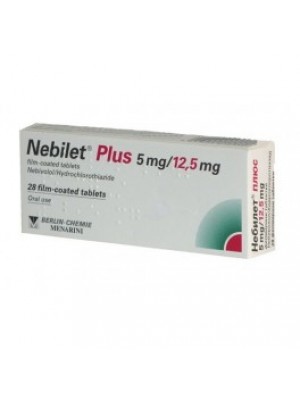
Nebilet table. 5 mg. / 12.5 mg. 28 tablets WHAT IS AND WHAT ..
17.00€
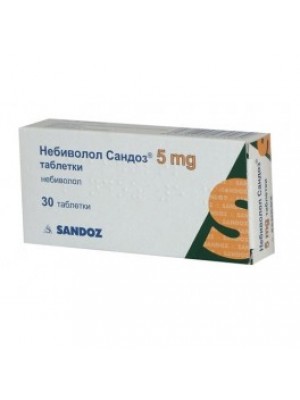
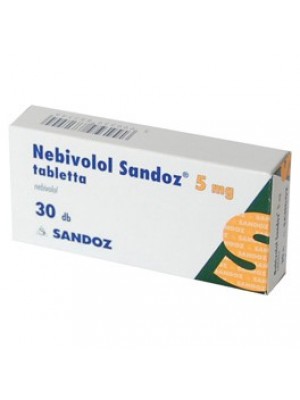
Nebivolol table. 5 mg. 30 tablets Nebivolol Sandoz WHAT IS A..
15.00€