Your shopping cart is empty!
Welcome visitor you can login or create an account.
Neocef 400 mg. 5 tablets
Product Code: Neocef 400 mg. 5 tablets
Availability: In Stock
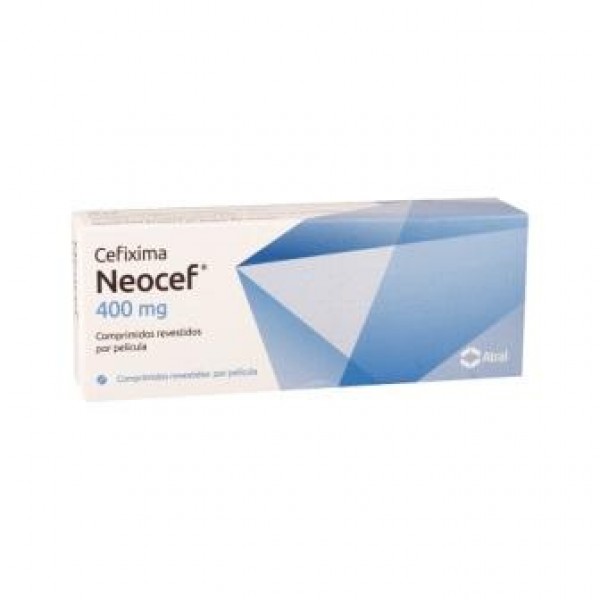
Product viewed: 4039


What Neocef is and what it is used for
Neocef belongs to a group of medicines called cephalosporins, which are used to treat infections.
Neocef can be used to treat:
middle ear infection;
sinus infection;
throat infection;
an infection that causes a sudden worsening of chronic bronchitis;
community-acquired lung infections (pneumonia);
urinary tract infections.
2. What you need to know before you take Neocef
Do not take Neocef if:
you are allergic to cefixime or any of the other ingredients of this medicine (listed in section 6.). The allergic reaction may include a rash, itching, difficulty breathing or swelling of the face, lips, throat or tongue;
you are allergic - to another type of cephalosporin antibiotic;
you have ever had a severe allergic reaction to penicillin antibiotics or another beta-lactam antibiotic.
Warnings and precautions
Talk to your doctor or pharmacist before taking Neocef if:
you are allergic to penicillin antibiotics or other beta-lactam antibiotics. Not all people who are allergic to penicillin are allergic to cephalosporins. However, you should pay special attention if you have ever had an allergic reaction to a penicillin antibiotic, as you may also be allergic to this medicine.
if you have ever been told that your kidneys are not functioning very well, and also if you are undergoing another type of treatment (such as dialysis) for kidney failure. In this case, you can take Neocep, but at a lower dose.
Other warnings
If you have severe and persistent diarrhea, which may be bloody and may be associated with stomach pain or cramps: these symptoms may occur during or shortly after treatment and are generally rare but potentially life-threatening side effects. . Stop taking Neocef and contact your doctor immediately. Medicines that may slow or stop intestinal peristalsis should not be taken.
Neocephalus may increase the risk of developing microbes against which it has no activity. Such infections are, for example, thrush (caused by the genus Candida).
Influence on laboratory tests
If you are going to have a blood or urine test, tell your doctor that you are taking Neocep, as cefixime may affect the results of some of these tests.
Neocef may change the results of some urine glucose tests (such as the Benedict or Fehling samples). If you have diabetes and test your urine regularly, tell your doctor. This is because other tests should be used to control your diabetes while you are taking this medicine.
Neocephaly may change the results of blood tests for antibodies, called a Coombs test.
Other medicines and Neocep
Tell your doctor or pharmacist if you are taking, have recently taken or might take any other medicines, including medicines obtained without a prescription.
In particular, tell your doctor if you are taking any of the following medicines:
They are known to increase the risk of kidney damage such as: aminoglycoside antibiotics (streptomycin, gentamicin), colistin, polymyxin or viomycin.
Which increase the amount of urine excreted (diuretics), such as furosemide and ethacrynic acid.
Nifedipine used to treat high blood pressure and heart problems or anticoagulants (to thin the blood), such as warfarin. Cefixime may prolong prothrombin time.
Oral contraceptives.
Intake of Neocef with food, drink and alcohol
Neocephalus can be taken with or without food and drink. You should swallow the tablets whole with a glass of water.
Pregnancy and lactation
If you are pregnant or breast-feeding, think you may be pregnant or are planning to have a baby, ask your doctor or pharmacist for advice before taking this medicine.
Driving and using machines
Neocef usually does not affect your ability to drive or use machines. However, if you feel dizzy or light-headed, do not drive or use machines.
3. How to take Neocephalus
Always take Neocef exactly as your doctor or pharmacist has told you. If you are not sure, ask your doctor or pharmacist.
Your doctor will assess the exact dose of Neocef and tell you how long it takes to take your medicine. The number of Neocef tablets you need to take depends on your condition. Follow your doctor's instructions exactly and never change your dose yourself. Ask your doctor or pharmacist if you are not sure how much to take or when to take it.
Adults
The recommended dose is one Neocef tablet a day. The medicine should always be taken at the same time each day. The tablets should be taken with a sufficient amount of water, regardless of food intake.
Patients with kidney problems
In adult patients with kidney problems, dose
In children older than 6 months to 11 years of age
Neocep tablets are not suitable for children, ask your doctor for more information.
Neocef is not recommended for use in children under 6 months of age.
If you take more Neocef than you should
If you or your child accidentally takes more tablets than you should, tell your doctor or seek medical help immediately.
If you forget to take Neocef
If you forget to take a dose, take it as soon as you remember. Do not take a double dose to make up for a forgotten dose. However, if the next dose is taken after less than 6 hours, skip the missed dose and follow your regular dosing schedule.
If you stop taking Neocef
Do not stop taking Neocef just because you feel better. It is important that you complete the course of tablets that your doctor has prescribed for you. If you stop taking the tablets too soon, the infection may come back, your condition may get worse or the bacteria may become resistant to the medicine.
If you have any further questions on the use of this product, ask your doctor or pharmacist.
4. Possible side effects
Like all medicines, this medicine can cause side effects, although not everybody gets them.
Stop taking Neocef and see a doctor or hospital immediately if you notice the following side effect. You may need urgent treatment:
Rare side effects (may affect up to 1 in 1,000 people) include:
swelling of the lips, face, throat or tongue, difficulty swallowing or breathing
Stop taking Neocef and see a doctor immediately if you notice any of the following serious side effects.
Very rare (may affect up to 1 in 10,000 people):
watery diarrhea, which may contain blood;
sudden allergic reaction with difficulty breathing, rash, wheezing and a sharp drop in blood pressure;
severe, extensive blistering rash.
The following side effects have also been reported:
Common side effects (may affect up to 1 in 10 people):
diarrhea.
Uncommon side effects (may affect up to 1 in 100 people):
headache;
nausea;
vomiting;
abdominal pain;
change in laboratory tests, indicators of liver function;
each rash.
Rare side effects (may affect up to 1 in 1,000 people):
infections caused by microbes that are not affected by cefixime. For example, thrush;
loss of appetite;
flatulence (gases);
change in laboratory tests, indicators of renal function;
fever;
alergic reaction;
dizziness;
itchy skin;
inflammation of the lining of the mouth and / or other internal surfaces.
Very rare side effects (may affect up to 1 in 10,000 people):
decrease in the number of different blood cells (symptoms may include fatigue, new infections and bruising or bleeding after a minor injury);
agitation and increased activity;
liver problems, including jaundice (yellowing of the skin or whites of the eyes);
inflammation of the kidneys.
If any of the side effects gets serious, or if you notice any side effects not listed in this leaflet, please tell your doctor or pharmacist.
How to store Neocef
Store below 25 ° C.
Keep out of reach of children.
Do not use this medicine after the expiry date which is stated on the carton and blister. The expiry date refers to the last day of that month.
Do not throw away any medicines via wastewater or household waste. Ask your pharmacist how to dispose of medicines no longer required. These measures will help to protect the environment.
6. Contents of the package and additional information
What Neocef tablets contain
Each film-coated tablet contains 400 mg of cefixime as the active substance, equivalent to 447.68 mg of cefixime trihydrate.
The other ingredients are:
Tablet core:
Granule composition: Calcium hydrogen phosphate, anhydrous, Pregelatinized starch, Hydroxypropyl cellulose, Purified water.
Composition outside the granule: Cellulose, Microcrystalline (pH-112), Calcium hydrogen phosphate, anhydrous, Pregelatinized starch, Magnesium stearate.
Film coating: Ready-to-use film coating (White color) Polyvinyl alcohol, Titanium dioxide, Talc, Lecithin, Xanthan gum.
What Neocef looks like and contents of the pack
Neocef 400 mg tablets are packed in blisters (PVC / Aluminum) foil.
One blister contains 5 or 10 film-coated tablets.
Pack sizes: 5, 10 tablets.
Not all pack sizes may be marketed.
Write a review
Your Name:Your Review: Note: HTML is not translated!
Rating: Bad Good
Enter the code in the box below:
Related Products