Your shopping cart is empty!
Welcome visitor you can login or create an account.
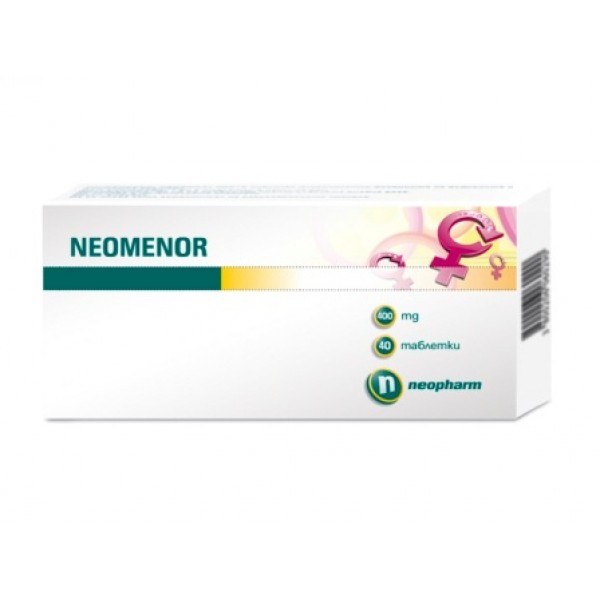
Neomenor 400 mg. 40 tablets
Product Code: Neomenor 400 mg. 40 tablets
Availability: In Stock
Product viewed: 2496


Every month the lining of the uterus increases in pregnancy preparation. After ovulation, if the egg is not fertilized, the mucous membrane of the uterus is no longer needed - it plucks and dies. When it breaks down, prostaglandins are released, causing contractions of the uterus during menstruation, thus ensuring the removal of menstrual tissues and blood outside the body. However, if their level is too high, they can lead to recurrent frequent spasms that cause pain.
Painful menstruation, characterized by blunt and / or pulsating lower abdominal pain before and during menstrual bleeding, is called dysmenorrhoea. In more severe cases, pain can be accompanied by vomiting, headache, sweating, general fatigue, etc.
Dismenoral complaints appear on the eve of menstruation or during the first day and last for several hours to 1-2 days. Sometimes they start days before the bleeding appears and do not disappear during the entire menstruation.
Types of dysmenorrhea
Dysmenorrhea is divided into two main types: primary and secondary.
- The first dysmenorrhea is present during the first menstruation in the girl's life. It is not associated with a disease of the genitals. It is often more tolerable with the approach of the thirties, and usually resolves after the first birth. "Secondary dysmenorrhoea is more characteristic of the age of 25 years and is, as a rule, a manifestation of a disease of the genitals.
Biologically active substances in the NEOMENOR formulation affect the causes of painful menstruation:
- reduce the secretion of substances causing the pain;
- regulate hormonal balance;
- suppress the smooth muscle abrasion in the uterus (also called contraction), which causes irritation of the nerve endings in this part of the body and pain.
NEOMENOR is efficacious in the complex therapy of both primary and secondary dysmenorrhea. Primary dysmenorrhoea is used alone or together with painkillers. In secondary dysmenorrhoea NEOMENOR is co-administered with treatment of the underlying disease.
WHAT IS NEOMENOR?
NEOMENOR is a preparation that helps to normalize the painful menstrual cycle. Each Neomenor tablet contains 400 mg of standardized extracts of stalks of:
- Astragalus glycypyhillos (honeysuckle) - 260 mg; - Erodium cicutarium (clock) - 70 mg;
- Geranium sanguineum (blood geranium) - 70 mg.
The other ingredients of the tablet are microcrystalline cellulose, copovidone, povidone and magnesium stearate.
The main biologically active substances in NEOMENOR are:
- polysaccharides and monosaccharides;
- triterpenoid glycosides;
- triterpenoids, saponins and sterols;
- hydroxyphenolic acids and ketones;
- flavonoids.
NEOMENOR is the first agent specifically designed for long-term response to the symptoms of painful menstruation. NEOMENOR supplies the body with substances that play a key role in the metabolic processes that ensure the normal course of the menstrual cycle. In some women, these substances are unbalanced, resulting in painful menstruation, menstrual cramps and even migraine.
How does NEOMENOR work?
Pain during menstruation is due to strong contractions of uterine muscles that are caused by hormone-like substances called prostaglandins. Biologically active substances in the NEOMENOR formulation inhibit the formation of prostaglandins and their release into the uterus, which reduces the strong abrasions of her muscles and leads to the disappearance of pain during menstruation.
Some of the active ingredients of NEOMENOR have actions similar to the hormone progesterone. Thus NEOMENOR restores and regulates the hormonal balance and relieves nervous tension before and during the menstrual cycle.
What distinguishes Neomenor from other dysmenorrhoea agents
Why NEOMENOR?
To date, dysmenorrhea has mainly used analgesic and spasmolytic agents. They affect pain and contractions, but not the causes of dysmenorrhea, and have a very short-term effect.
NEOMENOR is specially designed for dysmenorrhea and eliminates the causes of its occurrence. NEOMENOR is not painkiller, so you may need to take painkillers during your menstrual cycle before completing the full course of treatment. NEOMENOR does not interact with these agents and can be taken with them. After regular NEOMENOR administration, the pain intensity decreases until the next menstrual period completely disappears, thus eliminating the need for additional painkillers.
WHO SHOULD NOT RECEIVE NEOMENOR?
Do not take NEOMENOR if you have ever had an allergic reaction to any of the ingredients in the tablet.
WHAT ARE THE NEOMENOR SIDE EFFECTS?
So far there are no known side effects of the preparation and contraindications for its intake. Its tolerance is very good, allowing safe reception for a long time.
HOW MUCH NEOMENOR IS TAKEN?
NEOMENOR is taken twice as 1 tablet per day for 20 days. The preparation starts 10 days before the beginning of the menstrual cycle. If menstrual cycle is irregular and can not be accurately determined, NEOMENOR is started on the 10th day after the onset of menstruation. Scheme is repeated for at least three consecutive menstrual cycles.
Write a review
Your Name:Your Review: Note: HTML is not translated!
Rating: Bad Good
Enter the code in the box below:
Related Products