Your shopping cart is empty!
Welcome visitor you can login or create an account.
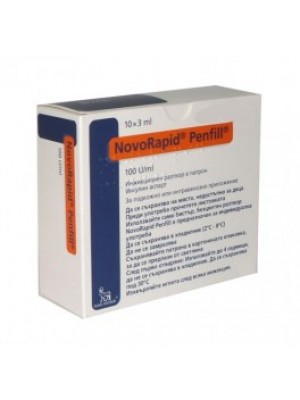
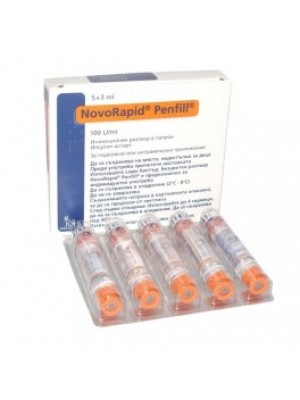
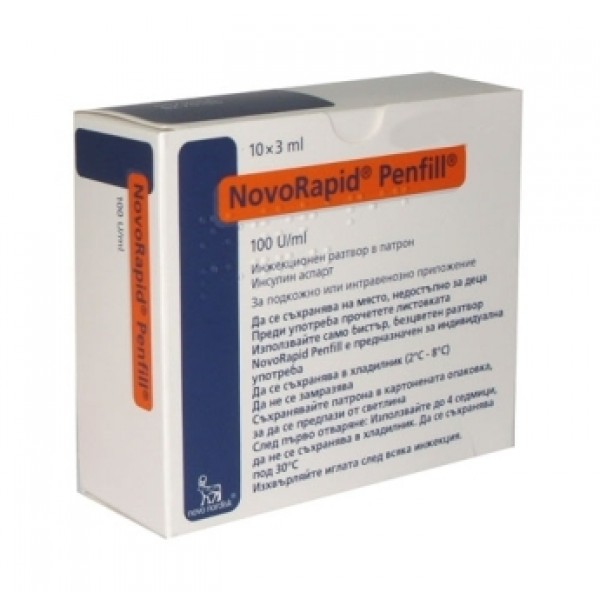
NovoRapid 300 IU 3 ml. 10 ampules
Product viewed: 2764


What NovoRapid is and what it is used for
NovoRapid is a modern insulin (insulin analogue) with a fast-acting effect. Modern insulins are improved versions of human insulin. NovoRapid is used to treat diabetes in adults, children and adolescents aged 2 to 17 years. NovoRapid will begin to reduce your blood sugar 10-20 minutes after the injection, has a maximum effect between 1 and 3 hours and will last for up to 3-5 hours. Due to its short duration of action, NovoRapid should be used in combination with intermediate or long-acting insulin products.
2. Before using NovoRapid
Do not use NovoRapid
If you are allergic (hypersensitive) to insulin aspart or any of the other ingredients of Do not use NovoRapid (see section 6. Further information).
If you suspect hypoglycaemia (low blood sugar) (see section 4. Possible side effects).
If the cartridge or device containing the cartridge is dropped, damaged or crushed
If it is stored improperly or has been frozen (see section 5. How to store Do not use NovoRapid)
If insulin does not appear clear as water and colorless.
Before using NovoRapid
Check the label to make sure it is the right type of insulin
Always check the cartridge, including the rubber plunger (stopper). Do not use if there is any visible damage or if there is a gap between the rubber piston and the white label strip. Return it to your provider. Refer to the instructions for using the injection device for further instructions
Disinfect the rubber membrane with a medicinal swab, disinfected with a disinfectant
Always use a new needle for each injection to prevent contamination.
Take special care with NovoRapid
If you have kidney or liver problems or with the adrenal, pituitary or thyroid gland
For larger than usual physical exertions or if you want to change your usual diet as this may affect your blood sugar level.
If you are sick: continue to take your insulin and consult your doctor
When traveling overseas: time zones may affect your insulin requirements and injection time. Consult your doctor if you are planning such a trip.
NovoRapid can be used in dementia instead of soluble human insulin when rapid onset of action may be beneficial. For example, when it is difficult to adjust the dose to the child's diet. There is no clinical experience with NovoRapid in children under the age of 2 years. Therefore, use NovoRapid in children under this age only if your doctor has specifically told you. As with all insulin products, in advanced and elderly patients and in patients with renal or hepatic impairment, glucose monitoring should be intensified and insulin aspart dosing should be adjusted individually.
Using other medicines
Some medicines affect the way glucose works in your body and can affect your insulin dose. The most common medicines that can affect your insulin treatment are listed below. Tell your doctor, nurse or pharmacist if you are taking or have recently taken any other medicines, including medicines obtained without a prescription. In particular, you should tell your doctor if you are using any medicine that affects your blood sugar level as described below.
If you are taking any of the other medicines, your blood sugar level may fall (hypoglycaemia):
• Other medicines to treat diabetes
• Monoamine oxidase inhibitors (MAOIs) (used to treat depression)
• Beta-blockers (used to treat high blood pressure)
• Angiotensin converting enzyme (ACE) inhibitors (used to treat some heart conditions or high blood pressure)
• Salicylates (used for analgesia and temperature reduction)
• Anabolic steroids (such as testosterone)
• Sulfonamides (used to treat infections).
If you are taking any of the other medicines, your blood sugar level may rise (hyperglycaemia):
• Oral contraceptives (birth control pills)
• Thiazides (used to treat high blood pressure or excessive fluid retention)
• Glucocorticoids (such as "cortisone" used to treat inflammation)
• Thyroid hormones (used to treat thyroid abnormalities)
• Sympathomimetics (such as epinephrine [adrenaline] or salbutamol, terbutaline used to treat asthma)
• Growth hormone (a medicine to stimulate bone and body growth and with a pronounced influence on the body's metabolic processes)
• Danazol (a medicine acting on ovulation).
Octreotide and lanreotide (used to treat acromegaly) may increase or decrease blood sugar levels.
Driving and using machines
If your blood sugar is low or high, your concentration and your ability to react may be affected and therefore also your ability to drive or operate machinery. Keep in mind that you can expose yourself and others to danger. Discuss with your doctor whether you can drive at all:
If you get frequent hypoglycaemia
If you have difficulty recognizing hypoglycemia
NovoRapid has a rapid onset of action and if you experience hypoglycaemia after injection, you may feel it earlier than soluble human insulin.
3. How to use NovoRapid
Dosage
Talk to your doctor and nurse about your dose of insulin. Make sure you use NovoRapid Penfill that your doctor and nurse have told you and follow their recommendations carefully. This leaflet contains general guidelines.
If your doctor has changed the type or brand of insulin you are using, you may need to adjust your dose. Do not change your insulin unless your doctor advises you to do so.
Within 10 minutes of the injection, eat or take a snack containing carbohydrates to avoid hypoglycaemia. When necessary, NovoRapid may be injected immediately after a meal rather than before a meal.
Application method
NovoRapid is injected under the skin (subcutaneously) or by continuous infusion into a pump system. NovoRapid can also be given directly into a vein (intravenously) by medical staff under strict medical supervision. Never inject your insulin directly into a vein or muscle (intramuscularly).
Always change the injection site within an area to avoid lumps (see section 4. Possible side effects). The most suitable injection sites are: the front of the waist (abdomen); arms or forefoot. You should regularly measure your blood sugar.
• Inject the insulin subcutaneously. Use the injection technique recommended by your doctor or nurse and described in the instructions for your injection device
• Hold the needle under the skin for at least 6 seconds to make sure the entire dose is injected
• After each injection, make sure to remove and discard the needle and store NovoRapid without
attached needle. Otherwise, the fluid may leak, which may lead to inaccurate dosing.
Do not refill the cartridge. NovoRapid Penfill cartridges are designed for use with Novoo Nordisk Insulin Injection Devices (Novo Nordisk) and NovoFine or NovoTwist needles.
If you are being treated with NovoRapid Penfill and another insulin in a Penfil cartridge, you should use two injection devices, one for each type of insulin.
When using an infusion pump system
NovoRapid should never be mixed with other insulin when used in a pump. Follow the instructions and recommendations of your doctor about the use of NovoRapid in a pump. Before using the NovoRapid pump system, you should get detailed instructions on how to use it and information on what to do when you have a disease, too high or too low blood sugar, or a pump system failure.
• Before inserting the needle, wash your hands and the injection site with soap and water to avoid infections at the infusion site
• When filling a new tank, make sure there are no large air bubbles in either the syringe or the catheter
• The infusion set (catheter and needle) must be changed according to the instructions
instructions in the product information enclosed with the infusion set.
To have a positive effect on insulin infusion and to find insulin pump faults on time, it is advisable to regularly measure your blood sugar.
What to do in the event of a pump system malfunction
Always carry spare insulin for injecting under the skin in case of a pump system malfunction.
If you inject more insulin than you should
If you inject too much insulin, your blood sugar gets too low (this is called hypoglycaemia). This can also happen:
• If you eat too little or miss a meal
• For greater than usual physical load.
The warning signs of hypoglycaemia may occur suddenly and include: cold sweat; cool pale skin; headache; accelerated heart beating; feeling sick; strong hunger; temporary visual disturbances; drowsiness; unusual fatigue and weakness; nervousness or trembling; a sense of anxiety; confusion; difficult concentration. If you feel you have hypoglycaemia: Take a sugar-rich breakfast and then measure your blood sugar.
If your blood sugar is too low: Take glucose tablets or a sugar-rich breakfast (sweets, biscuits, fruit juice) and take a rest. In any case, always bring with you glucose tablets, sweets, biscuits or fruit juice. When the symptoms
If prolonged, severe hypoglycaemia is not treated can cause brain damage (temporary or permanent) and even death
• If you have unconscious hypoglycaemia or recurrent hypoglycaemia, talk to your doctor. The amount or timing for injection of insulin, food, or physical exercise may need to be corrected.
If you forget to inject insulators
If you forget to inject insulin, your blood sugar may become too high (this is called hyperglycaemia). This can also happen:
• If you repeatedly take a lower dose of insulin than you need
• If you get an infection or fever
• If you eat more than usual
• Less than the usual physical load.
Warning signs appear gradually. These include: frequent urination; thirst; loss of appetite; nausea or vomiting; drowsiness or tiredness; reddened with> skin; dry mouth and smell of fruit (acetone). If you experience any of these signs: check your blood sugar level, check your urine for ketones, if you can, then immediately seek medical advice. These may be signs of a very serious condition called diabetic ketoacidosis. If it is not treated, it will lead to a diabetic coma and finally to death.
If you stop taking your insulin
This can lead to severe hyperglycaemia (very high blood sugar) and ketoacidosis (accumulation of fatty acid in the blood as the body breaks down fat in the sugar). Do not stop taking your insulin without talking to a doctor who will advise you on what to do.
If you have any further questions on the use of this product, ask your doctor or pharmacist.
4. Possible side effects
Like all medicines, NovoRapid can cause side effects, although not everybody gets them. Adverse reactions may occur at a certain frequency, which is defined as follows:
• Very common: affects more than 1 in 10 patients
• Common: affects 1 to 10 patients in 100
• Uncommon: affects 1 to 10 patients in 1,000
• Rare: affects 1 to 10 patients in 10,000
• Very rare: affects less than 1 in 10,000 patients
• Frequency not known: frequency can not be calculated from available data.
Uncommon side effects
Signs of allergy. Reactions (pain, redness, urticaria, inflammation, swelling and itching) may occur at the injection site (local allergic reactions). They usually disappear after several weeks of insulin use. In case they do not disappear, consult yours
doctor.
Seek immediate medical attention:
If the signs of allergy cover other parts of your body, either
If you suddenly feel bad and: start sweating; feel that you are nauseous (vomiting); have difficulty in breathing; you have an accelerated heartbeat; you feel dizzy.
Visual disturbances. When you first start insulin treatment, you may get visual disturbances, but the disorder is usually temporary. Injection site changes (lipodystrophy). With too frequent injection at the same site, fatty tissue under the skin at this site may thin (lipoatrophy) or thicken (lipohypertrophy). Changing the site at each injection can help to prevent such skin changes. If you notice your skin getting swallowed or thickened at the injection site, tell your doctor or nurse because these reactions may become heavier or may change the absorption of your insulin if you inject into such a site. Swelling of the joints. When initiating the use of insulin, water retention may cause swelling around the ankles and other joints. Normally this soon disappears. Diabetic retinopathy. If you have diabetic retinopathy and your blood sugar level improves very quickly, retinopathy may get worse. Consult your doctor about this.
Common side effects
Low blood sugar (hypoglycaemia).
Rare side effects
Painful neuropathy. If your blood sugar levels improve very quickly, you may experience nerve-related pain - this is called acute painful neuropathy and is usually transient.
Very rare side effects
Severe allergic reaction to NovoRapid or any of its ingredients (called systemic allergic reaction). See also the warnings in section 2. Before using NovoRapid
If any of the side effects gets serious, or if you notice any side effects not listed in this leaflet, side effects, please tell your doctor, nurse or pharmacist.
How to store NovoRapid
Keep out of the reach of children.
Do not use NovoRapid after the expiry date which is stated on the label and carton of the cartridge after EXP. The expiry date refers to the last day of that month.
NovoRapid Penfill, which is not in use, should be stored in the refrigerator at 2 ° C - 8 ° C away from the refrigerant. Do not freeze.
NovoRapid Penfill, currently used or carried as a spare, should not be stored in a refrigerator. You can carry it or store it at room temperature (below 30 ° C) for up to 4 weeks.
Always store the cartridge in the outer carton when not in use to protect it from light.
NovoRapid should be protected from excessive heat and light.
Medicines should not be disposed of via wastewater in the household waste container. Ask your pharmacist how to dispose of your unnecessary medicines. These measures will help to protect the environment.
6. Additional information
What NovoRapid contains
- The active substance is insulin aspart. Each ml contains 100 U of insulin aspart. Each cartridge contains 300 U of insulin aspart in 3 ml of solution for injection
- The other ingredients are: glycerol, phenol, metacresol, zinc chloride, disodium phosphate dihydrate, sodium chloride, hydrochloric acid, sodium hydroxide and water for injections.
What NovoRapid looks like and contents of the pack
NovoRapid is a clear, colorless, aqueous solution. Pack sizes of 5 and 10 cartridges of 3 ml. Not all pack sizes may be marketed.
Write a review
Your Name:Your Review: Note: HTML is not translated!
Rating: Bad Good
Enter the code in the box below:
Related Products