Your shopping cart is empty!
Welcome visitor you can login or create an account.
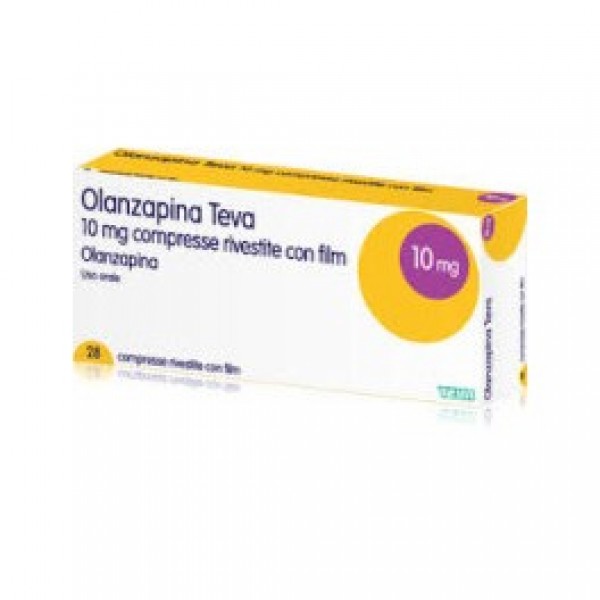
Olanzapine Teva 10 mg. 28 tablets
Product Code: Olanzapine Teva 10 mg. 28 tablets
Availability: In Stock
Product viewed: 2567


Olanzapine Teva 10 mg. 28 tablets
What is Olanzapine Teva is and what it is used
Olanzapine Teva belongs to the group of medicines called antipsychotics and is used to treat the following conditions:
Schizophrenia, a disease in which there are symptoms such as hearing, seeing or sensing things, mistaken beliefs, unusual suspiciousness, becoming withdrawn. People with this disease may also feel depressed, anxious or tense;
Moderate to severe manic episodes, a condition with symptoms of excitement or euphoria.
It was found that Olanzapine Teva prevents the recurrence of the symptoms in patients with bipolar disorder whose manic episode has responded to olanzapine treatment.
2. What you need to know before taking Olanzapine Teva
Do not take Olanzapine Teva:
if you are allergic (hypersensitive) to olanzapine or any of the other ingredients of this medicine (listed in section 6). An allergic reaction may be recognized as a rash, itching, swollen face, swollen lips or shortness of breath. If this happens to you, ask your doctor;
if it has ever been diagnosed with eye problems such as certain kinds of glaucoma (increased pressure in the eye).
Warnings and Precautions
Talk to your doctor or pharmacist before taking Olanzapine Teva:
The use of Olanzapine Teva in elderly patients with dementia is not recommended as it can have serious side effects.
Drugs of this type may cause unusual movements mainly of the face and tongue. If this happens after you take Olanzapine Teva, tell your doctor.
Very rarely, drugs of this type can cause a combination of fever, faster breathing, sweating, muscle stiffness and drowsiness or insomnia. If this happens, contact your doctor immediately.
In patients taking Olanzapine Teva has been observed weight increase. You and your doctor should regularly control your weight.
In patients taking Olanzapine Teva observed high levels of blood sugar and fats (triglycerides and cholesterol). Your doctor should carry out blood tests to monitor blood sugar levels and fat before you start taking Olanzapine Teva, and regularly during treatment.
Tell your doctor if you or someone in your family has a history of blood clots, as medicines like these are the reason for the formation of blood clots.
If you suffer from any of the following illnesses tell your doctor as soon as possible:
Stroke or "mini" stroke (temporary symptoms of stroke);
Parkinson's disease;
Prostate problems;
Bowel obstruction (paralytic ileus);
Liver or kidney disease;
Blood disorders;
Heart disease;
Diabetes;
Seizures.
If you suffer from dementia, you or the person who cares for you / your relative should tell your doctor if you have ever had a stroke or "mini" stroke.
As a routine precaution, if you are over 65, your blood pressure should be monitored by your doctor.
Children and adolescents
Olanzapine Teva is not intended for use in patients under 18 years of age.
Other medicines and Olanzapine Teva
Take other medicines during treatment with Olanzapine Teva if your doctor has told you that this is possible. You might feel drowsy if Olanzapine Teva in combination with antidepressants or medications to treat anxiety or help you sleep (tranquillizers).
Tell your doctor if you are taking or have recently taken or might take any other medicines.
Make sure to tell your doctor if you take:
drugs for the treatment of Parkinson's disease;
carbamazepine (antiepileptic and mood stabilizer), fluvoxamine (an antidepressant) or ciprofloxacin (an antibiotic) - it may be necessary to change the dose of Olanzapine Teva.
Olanzapine Teva with alcohol
Do not drink alcohol during treatment with Olanzapine Teva, as together with alcohol can cause drowsiness.
Pregnancy and lactation
If you are pregnant or breast-feeding, you think you may be pregnant or planning to become pregnant, talk to your doctor before taking this medicine. You should not take this medicine if you are breast feeding, as small amounts of Olanzapine Teva can pass into breast milk.
The following symptoms may occur in infants whose mothers have used Olanzapine Teva in the last trimester (last three months of pregnancy): shaking, numbness and / or weakness, sleepiness, agitation, breathing problems, and difficulty in feeding. If your baby develops any of these symptoms, it may need to contact your doctor.
Driving and using machines
There is a risk of feeling drowsy while taking Olanzapine Teva. If this happens, do not drive or operate any tools or machinery. Tell your doctor.
Olanzapine Teva contains lactose
If your doctor has told you that you have an intolerance to some sugars, contact your doctor before taking this medicine.
3. How to take Olanzapine Teva
Always take this medicine exactly as you have been told by your doctor. If you're not sure, ask your doctor or pharmacist.
Your doctor will tell you how many Olanzapine Teva tablets to take and how long to take them. The daily dose of Olanzapine Teva is between 5 and 20 mg. Consult your doctor if your symptoms return but do not stop taking Olanzapine Teva, until your doctor tells you to do.
You should take your Olanzapine Teva once a day following the advice of your doctor. Try to take your tablets at the same time each day. The tablets independent of food intake. You should swallow the Olanzapine Teva tablets whole with water.
If you take more Olanzapine Teva dose
In patients take more than the required amount Olanzapine Teva experienced the following symptoms: fast heart rate, agitation / aggressiveness, problems with speech, unusual movements (especially of the face or tongue) and reduced level of consciousness. Other symptoms may be: acute confusion, seizures (epilepsy), coma, a combination of fever, faster breathing, sweating, muscle stiffness and drowsiness or sleepiness, slow heart rate, aspiration, high or low blood pressure, irregular heart rhythm. Contact your doctor or go straight to the nearest hospital if you get any of the above symptoms. Show your doctor your pack of tablets.
If you forget to take Olanzapine Teva
Take your tablets as soon as you remember. Do not take two doses in one day.
If you stop taking Olanzapine Teva
Do not stop taking your tablets just because you feel better. It is important to continue taking Olanzapine Teva for as long as you recommend your doctor.
If you suddenly stop taking Olanzapine Teva, you may experience symptoms such as sweating, unable to sleep, tremor, anxiety or nausea and vomiting. Your doctor may suggest that you reduce the dose gradually before stopping treatment.
If you have any further questions on the use of this medicine, ask your doctor or pharmacist.
4. Possible side effects
Like all medicines, this medicine can cause adverse effects, although not everybody gets them.
Immediately call your doctor if you have:
unusual movement (a common side effect that may affect up to 1 in 10 people) mainly of the face or tongue;
clots in the veins (an uncommon side effect which may affect up to 1 in 1,000 people), especially in the legs (symptoms include swelling, pain and redness in the leg), which may travel in the blood vessels to the lungs, causing pain in the chest and difficulty breathing. If you notice any of these symptoms, seek medical advice immediately;
a combination of fever, faster breathing, sweating, stiff muscles and drowsiness (evaluate the incidence of this side effect can not be made from the available data).
Very common side effects (may affect more than 1 in 10 people) include weight gain, insomnia and elevated levels of prolactin in the blood. In the early stages of treatment, some people may feel dizzy or faint (with a slow heart rate), especially when you get up from a lying or sitting position. This usually goes away by itself, but if it continues, tell your doctor.
Common side effects (may affect up to 1 in 10 people) include: changes in the levels of some blood cells, fat in the bloodstream and early treatment temporary increase in liver enzymes; increases in the levels of sugar in the blood and urine; elevated levels of uric acid and blood creatine phosphokinase; increased hunger, dizziness, restlessness, tremors; unusual movements (dyskinesia); constipation, dry mouth, rash, loss of power, excessive fatigue, water retention, leading to swelling of the hands, ankles or feet; temperature; joint pain; Sexual disorders such as reduced sexual desire in men and women or erectile dysfunction in men.
Uncommon side effects (may affect up to 1 in 100 people) include: hypersensitivity reactions (eg swelling of the mouth and tongue, burning, rash); diabetes or poor condition in diabetes temporarily associated with ketoacidosis (epilepsy); muscle stiffness or spasm (including eye movements); problems with speech; slow heartbeat; sensitivity to sunlight; nosebleeds; Gastric distension; memory loss or forgetfulness; urinary incontinence; inability to urinate; hair loss; absence or reduction of the menstruation; changes in breasts in men and women as abnormal production of milk or abnormal growth.
Rare side effects (may affect up to 1 in 1000 people) include: a lowering of normal body temperature; combination of fever, faster breathing, sweating, muscle stiffness and drowsiness or sleepiness; heart rhythm disorders; sudden unexplained death; inflammation of the pancreas causing severe stomach pain, fever and sickness; liver disease appearing as yellowing of the skin and whites of the eyes; muscle disease presenting as unexplained aches and pains; prolonged and / or painful erection.
While taking olanzapine, elderly patients with dementia may suffer from stroke, pneumonia, urinary incontinence, falls, extreme tiredness, visual hallucinations, a rise in body temperature, redness of the skin and have trouble walking. In this particular group of patients has been reported several cases fatal.
In patients with Parkinson's disease, Olanzapine Teva may worsen the symptoms.
Adverse event reporting
If you get any side effects, contact your doctor, hospital pharmacist or nurse. This includes all listed in this leaflet. You can also report adverse events directly through the national reporting system. When reporting side effects, you can do your bit to obtain more information on the safety of this medicine.
5. How to store Olanzapine Teva
Keep out of reach of children.
Do not use this medicine after the expiry date stated on the carton.
Do not store above 25 ° C. Store in the original container to protect from light.
Do not dispose of medications in wastewater or household waste. Ask your pharmacist how to dispose of medicines you no longer use. These measures will help to protect the environment.
6. Contents of the pack and further information
What Olanzapine Teva
The active substance is olanzapine.
Each Olanzapine Teva 2,5 mg film-coated tablet contains 2,5 mg of active substance.
Each Olanzapine Teva 5 mg film-coated tablet contains 5 mg of active substance.
Each Olanzapine Teva 7,5 mg film-coated tablet contains 7,5 mg of active substance.
Each Olanzapine Teva 10 mg film-coated tablet contains 10 mg of active substance.
Each Olanzapine Teva 15 mg film-coated tablet contains 15 mg of active substance.
Each Olanzapine Teva 20 mg film-coated tablet contains 20 mg of active substance.
Other ingredients are: (tablet core) lactose monohydrate, hydroxypropylcellulose, crospovidone (type A), silica, colloidal anhydrous, microcrystalline cellulose, magnesium stearate, (tablet coating) hypromellose, polydextrose, glycerol diacetate, macrogol 8000, titanium dioxide ( E171).
In addition, tablets with an amount of the active substance containing 15 mg indigo carmine (E132), and those with an amount of the active substance containing 20 mg of red iron oxide (E172).
Olanzapine Teva looks like and contents of the pack
Olanzapine Teva 2,5 mg film-coated tablet is white, biconvex, round tablet with the inscription "OL 2.5" on one side.
Olanzapine Teva 5 mg film-is-white round tablet with the inscription "OL 5" on one side.
Olanzapine Teva 7,5 mg film-coated tablet is-white round tablet with the inscription "OL 7.5" on one side.
Olanzapine Teva 10 mg film-coated tablet is white, biconvex, round tablet with the inscription "OL 10" on one side.
Write a review
Your Name:Your Review: Note: HTML is not translated!
Rating: Bad Good
Enter the code in the box below:
Related Products
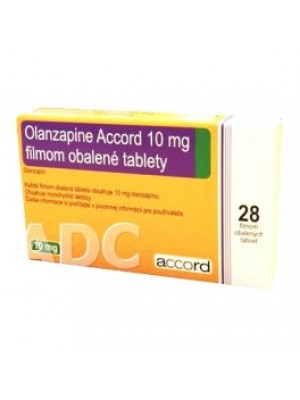
Olanzapine ACCORD 10 mg. 28 tablets
What is Olanzapine ..
23.00€