Your shopping cart is empty!
Welcome visitor you can login or create an account.
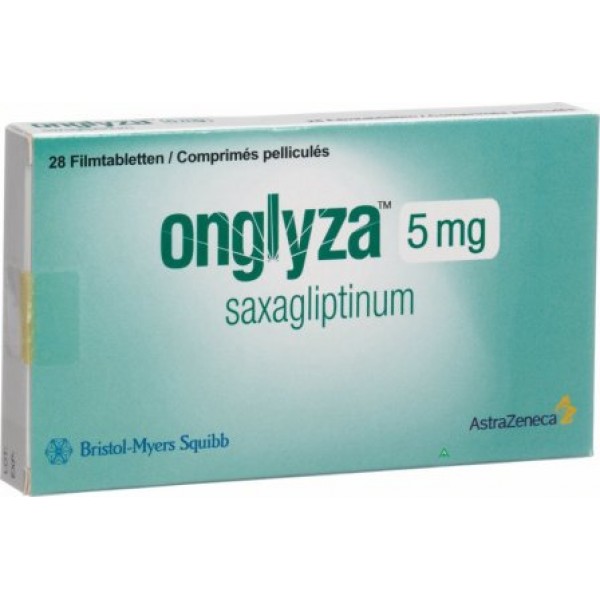
Onglyza 5mg. 28 tablets
Product viewed: 3689


What Onglyza is and what it is used for Onglyza contains the active ingredient saxagliptin belonging to a group of medicines called "oral antidiabetic agents". They act by helping to control blood sugar levels. Onglyza is used in adults over 18 years of age to treat "type 2 diabetes mellitus" if the disease can not be adequately controlled by an oral antidiabetic medicine, diet and exercise. Onglyza is used alone or together with insulin or other oral antidiabetic agents. It is important to continue to follow the diet and exercise advice given by your doctor or nurse. 2. What you need to know before taking Onglyza Do not take Onglyza if you are allergic to saxagliptin or any of the other ingredients of this medicine (listed in section 6). if you have had a serious allergic reaction to some other similar medicines you are taking to control your blood sugar. See section 4. Warnings and precautions Before you start taking Onglyza talk to your doctor or pharmacist: If you are taking insulin. Onglyza should not be used instead of insulin. have type 1 diabetes (your body does not produce insulin) or diabetic ketoacidosis (a complication of diabetes characterized by high blood sugar, rapid weight loss, nausea or vomiting). Onglyza should not be used to treat these conditions. if you have or have had a pancreatic disease; if you are taking insulin or the antidiabetic medicine known as the "sulfonylurea". Your doctor may wish to reduce the dose of insulin or the sulphonylurea when taking any of these with Onglyza to avoid low blood sugar. if you have had allergic reactions to another medicine you have taken to control your blood sugar; if you have a condition that reduces your protection against infections, such as a disease, such as AIDS, or medicines you can take after organ transplantation; if you suffer from heart failure or have other risk factors for developing heart failure, such as kidney problems. Your doctor will describe the signs and symptoms of heart failure. If you get any of these symptoms, you should call your doctor, pharmacist or nurse immediately. Symptoms may include, but are not limited to, shortness of breath, rapid weight gain, and leg swelling (foot swelling). if you have moderate to severe kidney problems, you will need to take a lower dose of Onglyza; if you are on hemodialysis, then Onglyza is not recommended for you; if you have moderate to severe or severe liver problems. If you have severe liver problems, it is not recommended to take Onglyza. Diabetic skin wounds are common complications of diabetes. The use of Onglyza and certain antidiabetic medicines of the Onglyza class has been reported as a rash (see section 4). It is recommended that you follow the skin and foot care recommendations given to you by your doctor or nurse. Children and adolescents Onglyza is not recommended for children and adolescents under the age of 18 years. It is not known whether this medicine is safe and effective in children and adolescents under the age of 18 years. Other medicines and Onglyza Please tell your doctor or pharmacist if you are taking, have recently taken or can take any other medicines. In particular, you should tell your doctor if you are using medicines containing any of the following active ingredients: carbamazepine, phenobarbital or phenytoin. They can be used to control convulsions (seizures) or chronic pain. Dexamethasone - a corticosteroid preparation. It can be used to treat inflammation in various areas or organs of the body. Rifampicin. This is an antibiotic used to treat infections such as tuberculosis. Ketoconazole. It can be used to treat infections caused by fungi. Diltiazem. This is a medicine to lower your blood pressure. Pregnancy and breast-feeding If you are pregnant or intend to become pregnant, ask your doctor for advice before taking Onglyza. If you are pregnant, you should not use Onglyza. If you want to breast-feed while taking this medicine, ask your doctor. It is not known whether Onglyza passes into human breast milk. You should not take this medicine if you are breast-feeding or planning to breast-feed. Driving and using machines If you feel dizzy while taking Onglyza, do not drive or operate machinery. Hypoglycaemia may affect your ability to drive and use machines as well as your stable posture while working with this medicine together with other medicines that are known to cause hypoglycaemia such as insulin and sulphonylureas derivatives, one can develop one. Onglyza contains lactose Tablets contain lactose (lactose)
How to take Onglyza Always take this medicine exactly as your doctor has told you. If you are not sure, ask your doctor or pharmacist. The recommended dose of Onglyza is one 5 mg tablet once a day. If you have kidney problems, your doctor may prescribe a lower dose. This is one 2.5 mg tablet once a day. For this dose, there is a separate tablet with this concentration. Your doctor may prescribe Onglyza alone or together with insulin or other oral antidiabetic medicines. If applicable, be sure to take the other medicines exactly as prescribed by your doctor to get the best results for your health. How to take Onglyza Tablets should not be cut or cut. Swab the tablet whole with some water. You can take it with or without water. The tablet can be taken at any time of the day, but still try to take it at the same time each day. This will help you to remember to take it. If you take more Onglyza than you should If you take more tablets, talk to your doctor straight away. If you forget to take Onglyza If you forget to take Onglyza, take the dose as soon as you remember. However, if your next dose is approaching, skip the missed dose. Do not take a double dose to make up for the missed dose. Never take two doses on the same day. If you stop taking Onglyza Keep taking Onglyza until your doctor tells you to stop. This will help keep your blood sugar under control. If you have any further questions on the use of this medicine, please ask your doctor or pharmacist. 4. Possible side effects Like all medicines, this medicine can cause side effects, although not everybody gets them. Some symptoms require immediate medical attention: You must stop taking Onglyza and immediately go to your doctor if you develop any of the following symptoms of low blood sugar: trembling, sweating, anxiety, blurred vision, tingling, paleness , mood swings, dizziness or confusion (hypoglycaemia): seen very commonly (may affect more than 1 in every 10 patients). Symptoms of a serious allergic reaction (seen rarely, may affect up to 1 in every 1,000 patients) may include: o rash; o raised red areas on your skin (urticaria); puffing of the face, lips, tongue and throat, which can make breathing or swallowing difficult. If you have these symptoms, stop taking Onglyza and call your doctor or nurse immediately. Your doctor may prescribe a medicine to treat the allergic reaction and a different medicine for your diabetes. You should stop taking Onglyza and tell your doctor immediately if you notice any of the following serious side effects: severe and persistent abdominal pain that may reach the back as well as nausea and vomiting because it may are symptoms of an inflamed pancreas (pancreatitis). You should call your doctor if you experience the following side effects: severe joint pain. When taking Onglyza and metformin, some patients developed the following side effects: Common (may occur in 1 to 10 out of 100 patients): Upper chest or lung infections, urinary tract infections, stomach or intestinal inflammation, (gastroenteritis), sinus infection with a feeling of pain and weight behind the cheeks and eyes (sinusitis), inflammation of the nose or throat (nasopharyngitis), (scars may include colds or sore throat), headache, pain in the muscles (myalgia), vomiting, itching Output of the stomach (gastritis), gastric pain and indigestion (dyspepsia). Uncommon (may occur in between 1 and 10 in every 1,000 patients): Joint pain (arthralgia), difficulty in receiving or retaining an erection (erectile dysfunction). When taking Onglyza and a sulphonylurea, some patients developed the following side effects:
Common: Upper chest or lung infections, urinary tract infections, inflammation of the stomach or intestine, usually due to infection (gastroenteritis), sinus infection with a feeling of pain and weight behind cheeks and eyes (sinusitis), headache, stomach pain and vomiting. Uncommon: fatigue, abnormal lipid (fatty acids) - dyslipidemia, hypertriglyceridemia. When taking Onglyza and thiazolidinedione, some patients developed the following side effects: Common: Upper chest or lung infections, urinary tract infections, stomach or intestinal inflammation, usually due to infection (gastroenteritis), sinus infection a feeling of pain and weight behind the cheeks and eyes (sinusitis), headache, vomiting, stomach pain and swelling of the hands, ankles and feet (peripheral edema). When taking Onglyza, a metformin and a sulphonylurea, some patients developed the following side effects: Common: dizziness, fatigue, stomach pain and increased gas formation. In addition, some patients taking Onglyza alone have experienced the following side effects: Common: dizziness, diarrhea and stomach pain. Some patients have experienced constipation as an undesirable effect (frequency can not be estimated from the available data) when Onglyza is taken alone or in combination. Some patients developed a slight decrease in the number of one type of white blood cell (lymphocyte) found in a blood test when Onglyza was taken alone or in combination. Tell your doctor If you get any side effects, talk to your doctor, pharmacist or nurse. This includes all possible side effects not listed in this leaflet. You can also report side effects directly through the national reporting system listed in Annex V. As you report side effects, you can contribute to getting more information about the safety of this medicine. 5. How to store Onglyza Keep out of the reach and sight of children. Do not use this medicine after the expiry date which is stated on the blister and carton after "EXP" and "EXP". The expiry date refers to the last day of that month. This medicine does not require any special storage conditions. Do not use this medicine if you notice that the packaging is damaged or tampered with. Do not dispose of medicines in the sewage system or in the household waste container. Ask your pharmacist how to dispose of medicines you no longer use. These measures will help to protect the environment. 6. Contents of the pack and other information What Onglyza contains - The active substance is saxagliptin. Each Onglyza 2.5 mg film-coated tablet contains 2.5 mg of saxagliptin (as hydrochloride). - The other ingredients are: Tablet core: lactose monohydrate; microcrystalline cellulose (E460i); croscarmellose sodium (E468); magnesium stearate. Film coating: polyvinyl alcohol; macrogol 3350; titanium dioxide (E171); talc (E553b) and yellow iron oxide (E172). Ink: Shellac; indigo-carmine aluminum lacquer (E132). What Onglyza looks like and contents of the pack The 2.5 mg film-coated tablets are pale yellow to light yellow, biconvex, and round. On one side they have the inscription "2,5" and on the other - "4214", printed in blue ink. The tablets are available in aluminum blisters. The 2.5 mg tablets are supplied in packs of 14, 28 or 98 film-coated tablets in unperforated calendar blisters or 30 x 1 or 90 x 1 film-coated tablets in perforated unit dose blisters. Not all packs may be marketed in your country.
Write a review
Your Name:Your Review: Note: HTML is not translated!
Rating: Bad Good
Enter the code in the box below:
Related Products
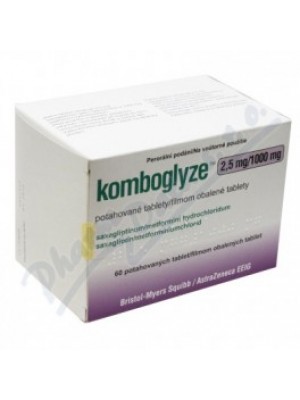
KOMBOGLYZE. 2.5 mg. / 1,000 mg. 60 tablets What Komboglyze ..
89.00€
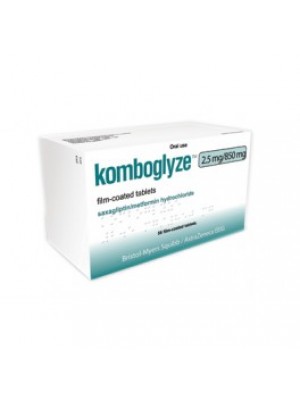
KOMBOGLYZE. 2.5 mg. / 850 mg. 60 tablets What Komboglyze a..
79.00€