
Your shopping cart is empty!
Welcome visitor you can login or create an account.
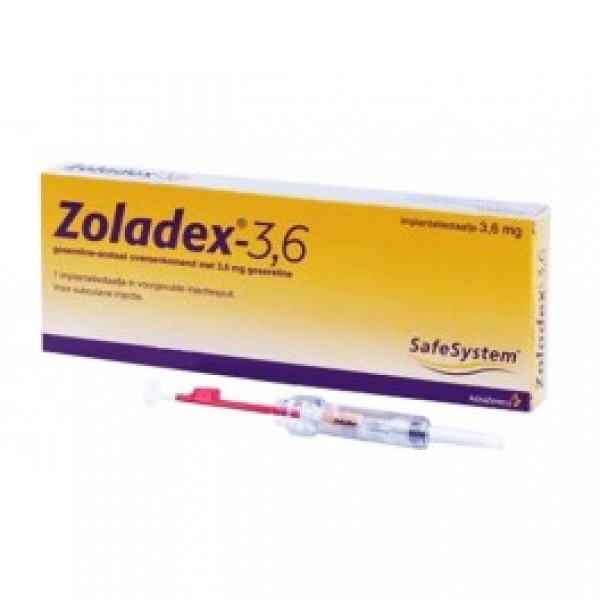
Zoladex depot amp. 3.6 mg.
Product Code: Zoladex depot amp. 3.6 mg.
Availability: In Stock
Product viewed: 3528


Zoladex depot amp. 3.6 mg.

Composition and dosage form :
Zoladex constitutes a sterile , white to cream-colored cylindrical depot , in which goserelin acetate (equivalent to 3.6 mg goserelin ) is dispersed in a matrix of a biodegradable lactide- glycolide copolymer. It is sold in a syringe with a single dose applicator .
indications:
Prostate cancer : Zoladex is indicated for the treatment of prostate cancer suitable for hormonal therapy .
Breast cancer : Zoladex is indicated for the treatment of breast cancer suitable for hormonal therapy in premenopausal and perimenopausal .
Endometriosis in the treatment of endometriosis , Zoladex relieves symptoms , including pain and reduces the size and number of endometriotic lesions. Thinning of the endometrium : Zoladex is indicated for pre- thinning of the uterine endometrium before endometrial resection or ablatsio .
Uterine fibroids in the treatment of fibroids , Zoladex shrink lesions improves haematological of patients and reduces the symptoms , including pain. It is used as adjunctive treatment operations to facilitate surgical techniques and reduce operating blood loss.
Assisted Reproduction : Inhibition of the hypothalamic -pituitary axis in preparation for ovulation induction .
Dosage and method of administration
adults
A depot of Zoladex 3.6 mg injected subcutaneously into the anterior abdominal wall every 28 days.
Artificial insemination : Zoladex ® 3.6 mg were administered for inhibition of the pituitary gland , as determined by serum estradiol, similar to those observed in the early follicular phase ( approximately 150 pmol / 1 ) . This usually takes between 7 and 21 days.
When you achieve suppression begins superovulation ( controlled ovarian stimulation ) with gonadotropin . Inhibition reached agonist depot is less stable , suggesting that in some cases there may be an increased need for the gonadotropin . At the appropriate stage of follicular development is stopped and the gonadotropin administered to human chorionic gonadotrophin ( hCG ) for ovulation induction . Treatment follow-up , obtaining oocytes and fertilization techniques are performed according to usual practices in the clinic.
There is no need for dosage adjustment in patients with renal impairment.
There is no need for dosage adjustment in patients with hepatic impairment.
There is no need for dosage adjustment in elderly patients .
Endometriosis should be treated for a period of six months , as there are no clinical data for longer periods of treatment. No need to make repeated courses because of the risk of loss of bone minerals. It has been shown that in patients receiving Zoladex for the treatment of endometriosis , the addition of a hormone replacement therapy (estrogen and progesterone daily ) reduces the loss of bone mineral substance and vasomotor symptoms .
When used for endometrial thinning : to be applied two landfills in four weeks , the operation is scheduled between zero and the second week after the second depot.
children
Zoladex is not indicated for use in children .
Contraindications :
Zoladex should not be used in patients with known hypersensitivity to Zoladex or other analogs of LHRH.
Zoladex should not be used during pregnancy or breastfeeding.
Precautions:
Zoladex is not indicated for use in children as safety and efficacy have not been established in this group of patients.
men
The use of Zoladex in men at particular risk of developing ureteric obstruction or spinal cord compression should be considered carefully and patients should be monitored closely during the first month of treatment. In the presence or development of spinal cord compression or renal impairment due to obstruction of the ureter , have to be specific standard treatment of these complications.
Ladies
The use of LHRH agonists in women can cause loss of bone minerals. Available so far for Zoladex data show an average loss of 4.6% of bone mineral substance in the spinal cord after a six month course of progressive recovery to an average loss of 2.6 % compared to baseline six months after cessation of treatment. It has been shown that in patients receiving Zoladex for the treatment of endometriosis , the addition of a hormone replacement therapy (estrogen and progesterone daily ) reduces the loss of bone mineral substance and vasomotor symptoms .
Zoladex should be used with caution in women with known metabolic bone disease .
Zoladex can cause an increase in the resistance of the cervix , which may lead to difficulties in the dilatation of the cervix .
There are currently no clinical data on the effect of treatment of benign gynecological conditions with Zoladex for periods exceeding six months.
Artificial insemination :
Zoladex 3.6 mg should be used only as part of the scheme for artificial insemination under the supervision of a physician experienced in this field.
As with other agonists of LHRH, have been reported in ovarian hyperstimulation syndrome ( OHSS), associated with the use of Zoladex 3.6 mg in combination with a gonadotropin . It is assumed that the inhibition reached with the agonist depot , can in some cases lead to an increased need for HCG . Should be carefully monitored stimulation cycle to identify patients at risk of developing OHSS , as the severity and frequency may vary depending on the dosing regimen of gonadotropin . You can not apply human chorionic gonadotrophin ( hCG ) , if it is deemed necessary.
Recommended Zoladex 3.6 mg be given with caution to artificial insemination in patients with polycystic ovarian syndrome as follicle recruitment may be increased .
Interactions with other medicinal products and other forms of interaction :
None known.
Pregnancy and lactation :
Although reproductive toxicology studies in animals have revealed no evidence of teratological potential Zoladex should not be used during pregnancy , since there is a theoretical risk of abortion or fetal malformation , LHRH agonists if used during pregnancy . Potentially fertile women should be carefully examined before treatment to exclude pregnancy . Non-hormonal methods of contraception must be used during the treatment and in the case of endometriosis to restore menstruation .
Should exclude pregnancy before Zoladex 3.6 mg be used for artificial insemination. Clinical data on the use of these conditions are limited but available evidence it may be presumed that there is no causal link between Zoladex and any subsequent developmental abnormalities of the oocyte or pregnancy and the outcome of it.
The use of Zoladex during lactation is not recommended.
Effects on ability to drive and use machines :
There is no evidence that Zoladex leads to violation of these activities.
Undesirable effects:
General
Rare cases of hypersensitivity reactions , which may include some manifestations of anaphylaxis.
There are reports of arthralgia . Reported skin rashes are usually mild and often reduce , without interrupting the treatment.
In patients using Zoladex , were sometimes observed changes in blood pressure, manifest as hypotension or hypertension. The changes are usually transient, resolving with continued therapy or after cessation of therapy with Zoladex . Rarely, such changes were so pronounced as to require medical intervention including withdrawal of treatment with Zoladex .
Individual local effects include pronounced bruising at the site of subcutaneous injection.
men
Pharmacological effects in men include hot flashes and a decrease in libido , which rarely require discontinuation of therapy. Not often is marked swelling and tenderness of the breasts . Early patients with prostate cancer may experience a temporary increase in bone pain which can be treated symptomatically. Isolated cases of ureteric obstruction and spinal cord compression .
The use of LHRH agonists in men can cause loss of bone minerals.
Ladies
Pharmacological effects in women include hot flushes , sweating and reduced libido , which rarely require discontinuation of therapy. Not often is marked headache , mood changes , including depression, vaginal dryness and changes in breast size . In patients with early breast cancer may experience a temporary increase in signs and symptoms that can be treated symptomatically. In women with fibroids may cause degeneration of fibroids . Rarely , patients with breast cancer with bone metastases develop hypercalcemia at the start of treatment.
In vitro fertilization : As with other agonists of LHRH, there are reports of ovarian hyperstimulation syndrome (OHSS ) associated with the use of Zoladex 3.6 mg in combination with HCG . It is assumed that the inhibition reached with the agonist depot , can in some cases lead to an increased need for HCG . Should be carefully monitored stimulation cycle to identify patients at risk of developing OHSS , as the severity and frequency may vary depending on the dosing regimen of gonadotropin . You can not apply human chorionic gonadotrophin ( hCG ) , if it is deemed necessary.
overdose
There is no experience with overdose in humans. From animal experiments it can be assumed that at higher doses of Zoladex can not effect other than the intended therapeutic effect of concentrations of sex hormones and the reproductive tract. In case of overdose , it should be treated symptomatically.
Pharmacological Properties
Pharmacodynamic properties
Mechanism of action: Zoladex (D-Ser (But) 6 Azgly10 LHRH) is a synthetic analogue of the natural LHRH. As a result of chronic administration of Zoladex inhibit pituitary secretion of luteinising hormone , which leads to a decrease in the serum concentration of testosterone in men , and in the serum concentration of estradiol in women. This effect is reversible upon discontinuation of treatment . Beginning Zoladex , and other agonists of LHRH, can transiently increase serum concentrations of testosterone in men , and the serum concentration of estradiol in women. During the early stages of treatment with Zoladex some women may experience vaginal bleeding of variable duration and intensity . Such bleeding probably represents bleeding from estrogen withdrawal and is expected to stop spontaneously.
In men, about 21 days after the first depot injection , testosterone concentrations dropped to kastratni values and remain suppressed under treatment every 28 days. This inhibition leads to tumor regression and symptomatic improvement in the majority of patients.
In women, serum concentrations of estradiol inhibit about 21 days after the first depot injection and continued treatment every 28 days remain suppressed at levels comparable to those observed in postmenopausal women . This inhibition is related to the response of hormone -dependent breast cancer , endometriosis , uterine fibroids , and suppression of follicular development in the uterus. It will cause thinning of the endometrium and lead to amenorrhea in most patients.
It has been shown that in combination with Zoladex iron induces amenorrhea and enhances the concentration of hemoglobin and related hematologic parameters in women with fibroids which are anemic . The combination produced a mean hemoglobin concentration of 1 g / dl higher than that achieved with treatment with iron .
Rarely , some women may enter menopause during treatment with LHRH analogues and may not recover menses after cessation of therapy .
pharmacokinetics
Bioavailability of Zoladex is almost complete . The application of the depot every four weeks to ensure the maintenance of effective concentrations without accumulation in tissues. Zoladex is poorly protein bound and has a half-life of serum from two to four hours in subjects with normal renal function. The half-life is prolonged in patients with impaired renal function. In this compound , which is introduced in the form of a depot every month, this change will have negligible effect. Therefore, no adjustment of dosage for such patients . No significant change in pharmacokinetics in patients with hepatic insufficiency .
Preclinical safety data
An increased incidence of benign pituitary tumors in male rats after long-term repeated administration of Zoladex . Although this finding is similar to results previously observed in this species following surgical castration is not detected any difference for people.
In mice, long-term repeated doses being multiples of human exposure, produced histological changes in some regions of the digestive system , manifested by hyperplasia of the islet cells in the pancreas and benign proliferative conditions in the pyloric region of the stomach and also reported spontaneous lesions as such .
Write a review
Your Name:Your Review: Note: HTML is not translated!
Rating: Bad Good
Enter the code in the box below:
Related Products
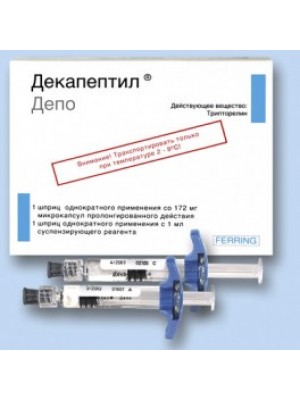
DECAPEPTYL depot amp. 3.75 mg. INGREDIENTS:One pre-filled s..
169.00€
