Your shopping cart is empty!
Welcome visitor you can login or create an account.
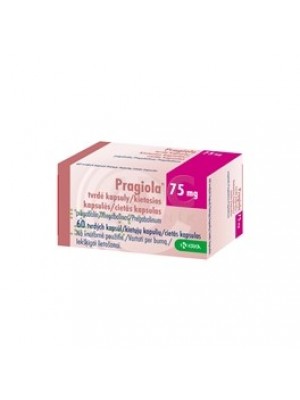
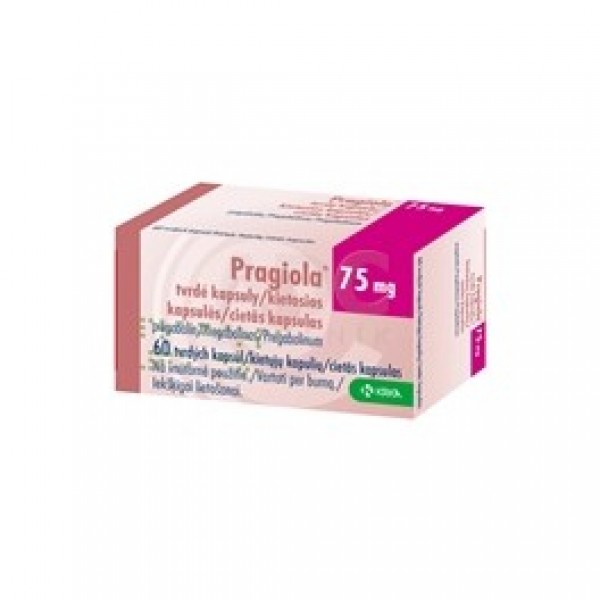
PRAGIOLA 75 mg. 60 capsules
Product Code: PRAGIOLA 75 mg. 60 capsules
Availability: In Stock
Product viewed: 2119


PRAGIOLA 75 mg. 60 capsules
What is Pragiola and what it is used
Pragiola belongs to a group of medicines used to treat epilepsy, neuropathic pain and generalized anxiety disorder (GAD) in adults.
Peripheral and central neuropathic pain: Pragiola used to treat persistent pain caused by nerve damage. Different diseases can cause peripheral neuropathic pain, such as diabetes or shingles. Pain sensations may be described as hot, burning, throbbing, shooting, stabbing, sharp, cramping, aching, tingling, numbness, pins and needles.
Peripheral and central neuropathic pain may also be associated with mood changes, sleep disturbances, fatigue (tiredness), and can affect the physical and social functioning and quality of life in general.
Epilepsy: Pragiola used to treat some forms of epilepsy (partial onset seizures with or without secondary generalization) in adults. Your doctor will prescribe Pragiola to help you treat your epilepsy when your current treatment is not controlling your condition. You should take Pragiola addition to your current treatment. Pragiola is not intended for private use and should always be used in combination with other antiepileptic treatment.
Generalised Anxiety Disorder: Pragiola used to treat generalized anxiety disorder (GAD). Symptoms of GAD are prolonged excessive anxiety and worry that are difficult to control. GAD can also cause restlessness or feeling agitated or restless, easily weary, having difficulty concentrating or mind going blank, feeling irritable, having muscle tension or sleep problems. This is different from the stress and strains of everyday life.
2. What you need to know before taking Pragiola
Do not take Pragiola:
if you are allergic to pregabalin or any of the other ingredients of this medicine (listed in section 6).
Warnings and Precautions
Consult your doctor or pharmacist before taking Pragiola.
Some patients taking Pragiola have reported symptoms suggesting an allergic reaction. These symptoms include swelling of the face, lips, tongue and throat, as well as extensive skin rash. If you experience any of these reactions, you should immediately contact your doctor;
Use of pregabalin was associated with dizziness and somnolence, which could increase the occurrence of accidental injury (fall) in elderly patients. Therefore, you should be careful until you get used to any effect the medicine;
Pragiola may cause blurring or loss of vision or other vision changes, many of which are temporary. You should immediately contact your doctor if you experience changes in your vision;
Some patients with diabetes who gain weight while using Pragiola may need an alteration in their diabetic medicines;
Certain side effects, such as drowsiness may be more frequent, because patients with spinal cord injury may be taking other medications to treat, for example, pain or spasticity, that have similar Pragiola side effects and severity of these effects may increase when co-administered;
There are reports of heart failure in some patients receiving pregabalin; these patients were mostly elderly with cardiovascular disease.
Before taking this medication, tell your doctor if you have a history of heart disease.
There have been reports of kidney failure in some patients receiving pregabalin. If you notice decreased urination while taking Pragiola should tell your doctor as stopping the medicine may improve this situation;
A small number of people being treated with antiepileptic medications such as pregabalin, have had thoughts of harming or killing themselves. If you have these thoughts, immediately contact your doctor;
Pragiola when taken with other drugs that can cause constipation (such as some types of pain relievers), there may occur some gastrointestinal problems (eg. Constipation, blockage or paralysis of the bowel). Tell your doctor if you experience constipation, especially if you are prone to this problem;
Before taking this medicine you should tell your doctor if you suffer from alcoholism or any drug abuse or dependence. Do not take more medicine than prescribed;
There have been reports of convulsions during intake Pragiola or shortly after discontinuation of Pragiola. If you get convulsion, tell your doctor immediately;
Cases of impairment of brain function (encephalopathy) in some patients receiving pregabalin and suffering from other diseases. Tell your doctor if you have a history of any serious diseases, including liver or kidney disease.
Children and adolescents
Safety and efficacy in children and adolescents (under 18 years) have not been established and therefore Pragiola should not be used in this age group.
Other medicines and Pragiola
Tell your doctor or pharmacist if you are taking, you have recently taken or might take any other medicines.
Pragiola and certain other medicines can affect each other (interaction). When taken with certain other medicines Pragiola may intensify the side effects seen with these medicines, including respiratory failure and coma. The degree of dizziness, sleepiness and decreased concentration may be increased if Pragiola be taken with medicines containing:
Oxycodone - (used as a tool against pain);
Lorazepam - (used for the treatment of anxiety);
Alcohol.
Pragiola can be taken with oral contraceptives.
Pragiola with food, drinks and alcohol
Pragiola capsules can be taken with or without food. It is recommended not to drink alcohol while taking Pragiola.
Pregnancy, lactation and fertility
If you are pregnant or breast-feeding, you think you may be pregnant or planning to become pregnant, ask your doctor or pharmacist before taking this medicine.
Pragiola should not be taken during pregnancy or breast-feeding, unless your doctor tells you otherwise. Women of childbearing potential should use effective contraception.
Driving and using machines
Pragiola can cause dizziness, sleepiness and decreased concentration. You should not drive, operate complex machinery or engage in other potentially hazardous activities until you know whether this medication affects your ability to perform these activities.
3. How to take Pragiola
Always take this medicine exactly as your doctor has told you. If you're not sure, ask your doctor or pharmacist.
Your doctor will determine what dose is appropriate for you. Pragiola is intended for oral administration.
Peripheral and central neuropathic pain, epilepsy and generalized anxiety disorder:
Take the number of capsules as instructed by your doctor.
The dose for you and your condition, will generally be between 150 mg and 600 mg each day.
Your doctor will tell you to take Pragiola or twice or three times daily. The twice a day take Pragiola daily morning and evening at about the same time. In tid take Pragiola daily morning, afternoon and evening at about the same time.
If you feel that the effect of Pragiola is too strong or too weak, talk to your doctor or pharmacist.
If you are an elderly patient (over 65 years) should take Pragiola normally except if you have kidney problems. Your doctor may prescribe a different dosing schedule and / or dose if you have kidney problems.
Swallow the capsules whole with water.
Continue taking Pragiola until your doctor tells you to stop.
If you take more than the amount Pragiola
Immediately call your doctor or the nearest hospital emergency room. Take the box with capsules Pragiola you. You may feel sleepy, confused, agitated or restless as a result of taking more than the amount Pragiola.
If you forget to take Pragiola
It is important to take your Pragiola capsules regularly at the same time each day. If you forget to take a dose, take it as soon as you remember unless it is time for your next dose. In this case, just carry on with the next dose as usual. Do not take a double dose to make up the missed dose.
If you stop taking Pragiola
Do not stop taking Pragiola unless your doctor has told you to do this. Discontinuation of treatment should be done gradually for at least 1 week.
You should know that after stopping long and short-term treatment with Pragiola may experience certain side effects. These include sleep problems, headaches, nausea, anxiety, diarrhea, flu-like symptoms, convulsions, nervousness, depression, pain, sweating and dizziness. These symptoms may occur more frequently or severely if you have taken Pragiola for a longer period of time.
If you have any further questions on the use of this medicine, ask your doctor or pharmacist.
4. Possible side effects
Like all medicines, this medicine can cause side effects, although not everybody gets them.
Very common: may affect more than 1 in 10 people:
Dizziness, drowsiness, headache.
Common: may affect less than 1 in 10 people:
Increased appetite;
High mood, confusion, disorientation, decreased sexual interest, irritability;
Disturbance in attention, clumsiness, memory impairment, memory loss, tremors, difficulty speaking, tingling, numbness, sedation, lethargy, insomnia, fatigue, abnormal sensation;
Blurred vision, double vision;
Dizziness, problems with balance, fall;
Dry mouth, constipation, vomiting, flatulence, diarrhea, nausea, bloating;
Erection difficulties;
Swelling of the body, including the extremities;
Inebriation, impaired gait;
Accumulation of body weight;
Muscle cramps, joint pain, back pain, pain in extremity;
Sore throat.
Uncommon: may affect less than 1 in 100 people:
Loss of appetite, weight loss, low blood sugar, high blood sugar;
Changing the perception of self, restlessness, depression, agitation, mood swings, difficulty finding words, hallucinations, abnormal dreams, panic attacks, apathy, aggression, elevated mood, mental disorder, difficulty thinking, increased sexual interest, problems with sexual function, including the inability to reach orgasm, delayed ejaculation;
Changes in vision, abnormal eye movements, changes in vision including tunnel vision, flashes of light, convulsive movements, depressed reflexes, increased activity, dizziness on standing, increased skin sensitivity, loss of taste, burning, shaking motion, depressed level of consciousness, loss of consciousness,
Fainting, increased sensitivity to noise, malaise;
Dry eyes, eye swelling, eye pain, weak eyes, watery, eye irritation;
Abnormal heart rhythm, increased heart rate, low blood pressure, high blood pressure, changes in heart rhythm, heart failure;
Flushing, hot flush;
Difficulty breathing, dry nose, nasal congestion;
Increased production of saliva, burning in the heart area, numbness of the lips, fever;
Sweating, rash, chills;
Muscle twitching, joint swelling, muscle stiffness, pain, including muscle pain, neck pain;
Chest pain;
Difficult or painful urination, urinary incontinence;
Weakness, thirst, chest tightness;
Changes in the results of blood and liver tests (increased creatinine phosphokinase, increased alanine aminotransferase, increased aspartate aminotransferase, decreased platelet count, neutropenia, increased blood creatinine, decreased potassium levels in the blood) Hypersensitivity, facial swelling, pruritus , hives, runny nose, nosebleeds, coughing, snoring;
Painful menstruation;
Cold hands and feet.
Rare: may affect less than 1 in 1000 people:
Altered sense of smell, unstable vision, altered depth perception, visual brightness, loss of vision;
Dilated pupils, strabismus;
Cold sweat, throat tightness, swelling of the tongue;
Inflammation of the pancreas;
Difficulty swallowing;
Delayed or limited movement of the body;
Difficulty in writing;
Increased amount of fluid in the abdomen;
Fluid in the lungs;
seizures;
Changes in recording the electrical activity of the heart (ECG), corresponding to heart rhythm disturbances;
Muscle damage;
Breast discharge, abnormal breast enlargement, breast enlargement in men;
Disruption of the menstrual cycle;
Renal failure, decreased amount of urine, urinary retention;
A decrease in white blood cells;
Irrational behavior;
Allergic reactions (which may include shortness of breath, inflammation of the eye (keratitis), and serious skin reaction, characterized by rash, blisters, skin peeling and pain).
Certain side effects, such as drowsiness may be more frequent, because patients with spinal cord injury may be taking other medications to treat, for example, pain or spasticity, that have similar Pragiola side effects and severity of these effects may increase when co-administered.
By reporting side effects, you can do your bit for getting more information on the safety of this medicine.
5. How to store Pragiola
Keep out of reach of children.
Do not use this medicine after the expiry date stated on the carton. The expiry date refers to the last day of that month.
Do not store above 30 ° C.
Do not dispose of medications in wastewater or household waste. Ask your pharmacist how to dispose of medicines no longer use. These measures will help to protect the environment.
6. Contents of the pack and other information
What Pragiola
The active substance is pregabalin (pregabalin). Each capsule contains 25 mg, 50 mg, 75 mg, 100 mg, 150 mg, 200 mg, 225 mg or 300 mg of pregabalin (pregabalin).
The other ingredients are pregelatinised maize starch, talc (E553b) in the core of the capsule.
The other ingredients of 25 mg hard capsules are: titanium dioxide (E171), gelatin (E441), black printing ink (shellac (E904)), black iron oxide (E172), propylene glycol (E1520)) in the capsule shell.
The other ingredients in 50 mg and 75 mg hard capsules are: titanium dioxide (E171), gelatin (E441), yellow iron oxide (E172), black printing ink (shellac (E904), black iron oxide (E172), propylene glycol (E1520 )) in the capsule shell.
Write a review
Your Name:Your Review: Note: HTML is not translated!
Rating: Bad Good
Enter the code in the box below:
Related Products