Your shopping cart is empty!
Welcome visitor you can login or create an account.
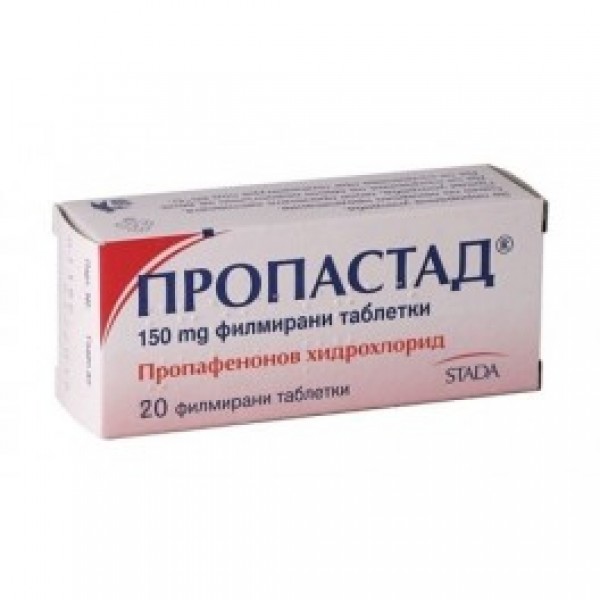
PROPASTAD 150 mg. 20 tablets
Product Code: PROPASTAD 150 mg. 20 tablets
Availability: In Stock
Product viewed: 948


PROPASTAD 150 mg. 20 tablets
Symptomatic and requiring treatment supraventricular cardiac arrhythmias (abnormal heart rhythm with increased heart rate, which is derived from the parts of the heart chambers located above), ie .:
- AV conduction tachyarrhythmias (rapid heart rate due pro-water violations between sinoatrial node, atrial and ventricular)
- Supraventricular tachycardia with WPW syndrome (paroxysmal occurring fast heartbeat consequence enhance the conductivity of impulses from the atria to the cameras)
- Paroxysmal atrial fibrillation (paroxysmal occurring abnormal heart rhythms due to abnormal high-mad excitability).
Excipients:
Symptomatic paroxysmal tachyarrhythmias (rapid heart rhythm of the ventricles).
Contraindications
When should not be taken Propastad® 150?
- Patients with overt cardiac failure
- Patients with cardiogenic shock, unless it is due to an abnormal heart rhythm-ing
- Patients with severe symptomatic bradycardia (slow heartbeat)
- During the first three months after myocardial infarction or in patients with reduced heart (left ventricular ejection volume of less than 35%) than in patients with life-threatening ventricular arrhythmias
- Patients with existing sinoatrial conduction abnormalities, atrioventricular conduction disorders or vatrekamerni
- Patients with sick sinus syndrome node that can be expressed in sinus bradycardia (heart rate <60 bpm), bradycardia-tachycardia syndrome, sinoatrial block or sinus arrest
- Patients with marked hypotension
- Patients with a strong electrolyte imbalance (ie diseases associated with potassium metabolism) - Patients with severe obstructive pulmonary zabolyavane- Patients with abnormal muscle weakness or tiredness, resulting immunological diseases of skeletal muscle (I-asthenia gravis
- Patients with hypersensitivity to the active substance the effective, propafenone or any of the excipients.
What must be considered during pregnancy and lactation?
There is insufficient clinical data on the use of non-propafe during pregnancy and lactation. When using therapeutic doses, there were no adverse effects on newborns in experiments on animals. It should be borne in mind that propafenone crosses the placenta and is secreted in milk. The application of propafenone during pregnancy and lactation should be done only under medical supervision explicit.
What should be considered in young children and adults?
Propastad® 150 safety in children has not ustanovena.Doziraneto in elderly patients and patients with severe heart muscle, it must be particularly precise and gradually according to medical appointments during the phase of stabilization.
Special warnings
What you should consider?
During therapy with propafenone hydrochloride frequency and sensitivity of cardiac pacemakers may be changed. The function of the pacemaker should be checked and if necessary to preprogramira.Tryabva be borne in mind that there is a prolongation of the survival rate of any drug by Class I antiarrhythmic drugs.
In the treatment of paroxysmal atrial fibrillation, during the phase when atrial fibrillation passes in fluter 2: 1 or 1: 1 pulses to the ventricles, it is possible to develop a very fast heart rate (ie> 180 bpm) .
What you should consider when driving or operating machinery?
Propafenone reduces the possibility of rapid response that is needed while driving or operating machinery, even in exact compliance with the dosing regimen. This is particularly pronounced at the beginning of therapy, when increasing the dose and when taken with alcohol.
Interactions with other drugs
Which drugs can affect the effects of Propastad® how Propastad® 150 or 150 may influence the effects of other medications?
Concomitant use of drugs with local anesthetic properties (i.e., during the implantation of a pacemaker, surgical or dental procedures), as well as drugs having suppressive effect on heart rate and / or contractility (i.e., beta-blockers, tricyclic antidepre- Santi) may increase the effects of Propastad® 150.
In addition, increased plasma concentrations or blood levels of propranolol, metoprolol, desipramine, cyclosporine and digoxin were observed during treatment with Propastad® 150. This may lead to an increase in the effects of these drugs.
1 is described the case of a double increase in the plasma concentrations of theophylline in the simultaneous use of propafenone. If symptoms of overdose of those drugs must be moni-Fertilization plasma concentrations and if necessary dose to namali.Ednovremennoto-use of cimetidine or quinidine may Propastad 150 (consequence increase plasma concentrations Na- propafenone) enhance the effects Propastad® of 150.Ednovremennoto using Propastad® 150 and phenobarbital or re-fampitsin can (resulting decrease plasma concentrations of propafenone) reduce the effects of antiarrhythmic Propastad® 150.Pri patients taking medicines that reduce blood clotting (oral anticoagulants such as Phenprocoumon) should be regularly monitored coagulation, as concomitant administration of Propastad® 150 may increase the efficacy of these lekarstva.Tryabva keep in mind that these warnings may also apply for the medications taken recently.
Dosage and duration of therapy
Dosing instructions given below only when a physician otherwise prescribed dosage regimen Propastad® 150. Follow exact doctor's instructions for safe and effective therapy Propastad® 150.
How much and how often you should take Propastad® 150?
Stabilization of patients with ventricular arrhythmia with this drug should only be done under medical supervision expressly doctor cardiologist and can only be done with the facilities for emergency cardiac care and continuous ECG recording. During treatment, patients should regularly visit the doctor (which includes the first monthly standard ECG and continuous recording of ECG and if necessary 3 months can be done after exercise ECG). In case of deterioration of the individual parameters, ie widening of the QRS complex or QT prolongation by more than 25%, or prolongation of PQ interval by more than 50%, or QT prolongation by more than 500 ms, or increase the incidence or severity of the abnormal heart rhythm treatment regimen should be reviziran.Individualnata maintenance dose is determined after repeated ECG recording and blood pressure measurements (stabilized phase) .In the phase of stabilization and maintenance therapy - a daily dose of 450-600 mg (1 tablet Propastad® 150 mg 3 times a day to 2 Propastad® 150 tablets 2 times a day) is usually sufficient for a patient weighing 70 kg.
In some cases it may be necessary to increase the daily dose up to 900 mg (2 tablets Propastad® 150 3 times daily). In patients with low body weight, respectively, the dose should be reduced. The dose should be increased before passing an interval of 3-4 dni.Pri elderly patients and patients with significantly reduced left ventricular-function (LVEF <35%) or organic myocardial disease stabilization should start with caution (gradually) . The same goes for the supporting terapiya.Pri need to increase the dose it should be done at intervals of 5-8 dni.Pri patients with reduced renal and / or hepatic function, the therapeutic dose may cause accumulation. ECG monitoring and determination of plasma concentrations, these patients may also be stabilized by Propastad® 150.
Note:
It should be borne in mind that it is prolongation of survival with any drug of Class I antiarrhythmic drugs.
How and when should you take Propastad® 150?
The tablets should not be sucked or chewed and should be swallowed whole after a meal with a glass of water.
How long should be taken Propastad® 150?
The duration of therapy is determined by the doctor.
Overdose
What should be done in overdose (accidental or deliberate) of Propastad® 150?
If an overdose is suspected of Propastad® 150, you should immediately contact your doctor. He / she will decide what action to take depending on the symptoms. Poisoning and / or severe symptoms require immediate therapy.
Symptoms of overdose:
Symptoms of heart:
Toxic Effects of propafenone on the heart are expressed in generating impulses and conduction abnormalities, including prolongation of the PQ interval, widening of the QRS complex, suppression of sinus node automaticity, AV block, ventricular tachycardia, ventricular fibrillation and fluter. In addition, the reduction of contractility (negative inotropic effect) may result in hypotension and cardiogenic shock.
Other symptoms:
Headache, dizziness, impaired vision, paraesthesia, tremor (shakiness), nausea, constipation and dry mouth are common symptoms of intoksi-katsiya.Tezhkata intoxication (poisoning) can cause tonic-clonic seizures, paresthesia, drowsiness, coma and stop breathing
Therapeutic measures:
The therapeutic measures depend on the nature and severity of the symptoms. Treatment is symptomatic, the main vital functions should be monitored and adjusted in intensive care.
What should you do if you take more than the prescribed dose Propastad® 150 or you miss a dose?
Next time, do not take a double dose and continue dosing regimen as prescribed by the physician.
Side effects
What side effects may occur when taking Propastad® 150?
Isolated cases of gastrointestinal disorders observed in initial high doses (ie, loss of appetite, nausea, vomiting, bloating, constipation), dry mouth, bitter taste, feeling stiff mouth, and paresthesias, impaired vision, dizziness and increased temperatura.Pri adult patients with reduced myocardial function may be observed circulatory disorders tends to reduce blood pressure when standing or prolonged standing (orthostatic hypotension).
Patients may feel proarrhythmic (strengthening arrhythmia's) effects, such as changes in / or degradation of abnormal heart rhythm, which can lead to significantly influence the heart function and the potential to stop sartseto.Tezi proarrhythmic effects can be expressed in slow heart rate (bradycardia), conductance disturbances (sinoatrial, atrioventricular or intraventricular block) or increase in heart rate (new ventricular tachycardia). There are rare reports of ventricular fibrillation or fluter (fibrillation or atrial flutter). Heart failure may worsen.
Rarely reported tiredness, headache, mental disorders such as anxiety and confusion, anxiety, nightmares and sleep disturbances, and very rare reports of convulsions following overdose. Rare reports of extrapyramidal symptoms (violation of involuntary muscle movements), allergic skin reactions (ie flushing, pruritus, rash, urticaria) and dyspnea in patients prone to spasm of the bronchi (bronchospasm) .Ryadko reported cholestasis (retention bile) as an expression of chi-perergichna / allergic reaction and / or suppressed hepatic function.
High doses of propafenone, in isolated cases, were associated with reduced potency and reduced sperm count. These changes are reversible upon discontinuation. Propafenone therapy is life-saving and should not be suspended because of this side effect, unless specifically prescription.
There are single cases of elevated antinuclear (directed against cell nuclei) antigens, lupus-like syndrome and leukopenia and granulocytopenia or thrombocytopenia (low levels of granulocytes / platelets in the blood), which are reversible upon discontinuation of propafenone. There are rare reports of agranulocytosis (suppression of blood formation) .It should tell your doctor or pharmacist if you experience side effects, especially those listed in the package leaflet.
Expiry date
The shelf life of this product is printed on the packaging and blister.
Do not use after the expiry date!
Store at a temperature up to + 25 ° C.
Keep all medicines out of reach of children!
Write a review
Your Name:Your Review: Note: HTML is not translated!
Rating: Bad Good
Enter the code in the box below:
Related Products
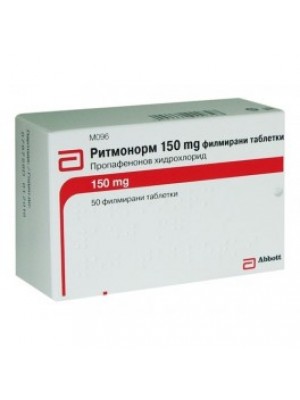
RITMONORM table. 150 mg. 50 tablets StaffActive substance: 1..
20.00€
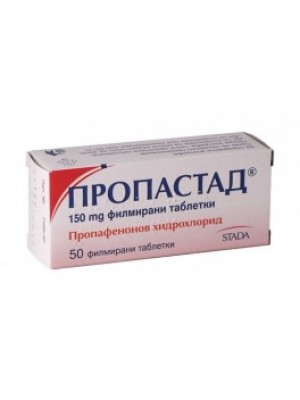
PROPASTAD table. 150 mg. 50 tablets WitnessSymptomatic and r..
16.00€