
Your shopping cart is empty!
Welcome visitor you can login or create an account.
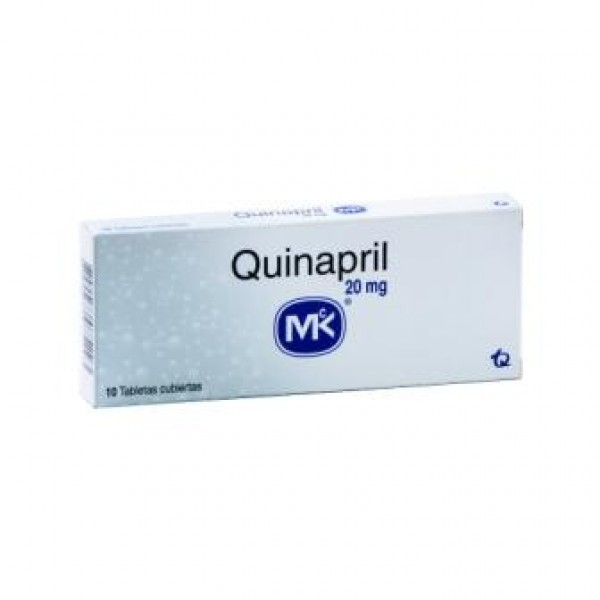
Quinapril 20 mg. / 12.5 mg. 10 tablets
Product Code: Quinapril 20 mg. / 12.5 mg. 10 tablets
Availability: In Stock
Product viewed: 3398


WHAT Quinapril / Hydrochlorothiazide Aurobindo AND WHAT IT IS USED
Quinapril / hydrochlorothiazide Aurobindo contain drugs called (i) quinapril and (ii) and hydrochlorothiazide. Both drugs lower blood pressure.
(I) Quinapril belongs to a class of drugs known as "ACE inhibitors". Quinapril helps blood vessels to relax and thereby reducing blood pressure.
(Ii) Hydrochlorothiazide belongs to a group of medicines called thiazide diuretics (also known as "water tablets"). Hydrochlorothiazide inhibits the ability of the kidneys to retain fluids, leading to lowering of blood pressure.
Quinapril / hydrochlorothiazide Aurobindo is used to treat high blood pressure in patients who are already taking (i) quinapril and (ii) hydrochlorothiazide in the form of separate tablets, and which will be facilitated by the adoption of a tablet containing the two substances.
2. BEFORE YOU TAKE Quinapril / Hydrochlorothiazide Aurobindo
Do not take Quinapril / hydrochlorothiazide Aurobindo if:
you are allergic (hypersensitive) to:
quinapril hydrochloride;
other ACE inhibitors;
hydrochlorothiazide;
medicines containing sulfonamides;
any of the other ingredients of Quinapril / hydrochlorothiazide Aurobindo;
you received severe allergic reactions in previous treatment with an ACE inhibitor. These reactions lead to swelling of the face, arms or legs, lips, tongue or throat which causes difficulty in breathing or swallowing (angioedema);
if you suffer from hereditary or occurred due to unexplained swelling of the skin (angioedema);
if you have severe liver or kidney problems;
if you have aortic stenosis (narrowing of the main blood vessel leaving the heart);
If you are more than 3 months pregnant. (It is also better to avoid Quinapril / hydrochlorothiazide Aurobindo in early pregnancy - see "Pregnancy").
Take special care with Quinapril / hydrochlorothiazide Aurobindo
Before taking Quinapril / hydrochlorothiazide Aurobindo, tell your doctor if:
you have heart problems, liver or kidney;
you have lost a large amount of body fluids or salts (for diarrhea, sweating more than usual, dietary restriction of salt intake of diuretics (water tablets) for a long period of time or held before dialysis;
you have allergies or asthma;
You are treatment to reduce allergy to stings from bees or wasps (desensitization);
It is known to have obstruction (clogging) of the output of the heart;
you have collagen vascular disease such as scleroderma or systemic lupus erythematosus;
You are treatment called LDL apheresis for removal of cholesterol;
have diabetes or gout;
you are a woman of childbearing potential, talk to your doctor about effective contraception;
breast-feeding or about to start breast-feeding.
You should tell your doctor if you think you are (or might become) pregnant. Quinapril / hydrochlorothiazide Aurobindo is not recommended in early pregnancy and must not be taken if you are more than 3 months pregnant, as it may cause serious harm to your baby if used at that stage (see. Section "Pregnancy" ).
At the beginning of treatment may require more frequent examinations by a doctor. Your doctor will decide how often you will be reviewed. Do not miss these visits even if you feel well.
If your blood pressure is too low, you need to lie down. You may need medical attention.
Taking other medicines
Please tell your doctor or pharmacist if you are taking or have recently taken any other medicines, including medicines obtained without a prescription.
The effect of Quinapril / hydrochlorothiazide Aurobindo may be affected by or affect the following medicines:
Other medicines that lower blood pressure;
Diuretics (drugs drainage);
Drugs, which lead to an increased level of potassium in the blood:
blood-thinning medications (eg. heparin);
potassium supplements or salt substitutes containing potassium;
Lithium used for mental disorders;
Drugs that have a calming effect, including alcohol and hypnotics;
Anti-inflammatory medications such as hydrocortisone, prednisone, ADTH;
Nonsteroidal antiinflammatory drugs (e.g., aspirin or ibuprofen);
Insulin or tablets taken in diabetes, controlling blood sugar;
Antacids (medicines used for indigestion);
Drugs used during operations, relaxing muscles (eg. Tubocurarine);
Procainamide and digoxin, used to treat heart problems;
Allopurinol, used for the treatment of gout;
Cyclosporine and other drugs used for suppressing the immune response;
Drugs used in the treatment of cancer;
Tetracycline - antibiotic.
operation:
Be sure to tell the medical staff that you are taking Quinapril / hydrochlorothiazide Aurobindo. This is especially important if you enter hospital for surgery as your anesthesiologist needs to know.
Taking Quinapril / hydrochlorothiazide Aurobindo with food and drink
Quinapril / hydrochlorothiazide Aurobindo can be taken with or without food.
Pregnancy and lactation
pregnancy
You should tell your doctor if you think you are (or might become) pregnant. Your doctor will normally advise you to stop taking Quinapril / hydrochlorothiazide Aurobindo before you become pregnant or as soon as you find that you are pregnant and will advise you to take another medicine instead of Quinapril / hydrochlorothiazide Aurobindo. Quinapril / hydrochlorothiazide Aurobindo is not recommended in early pregnancy and must not be taken if you are pregnant more than three months, as it may cause serious harm to your baby if used after the third month of pregnancy.
breastfeeding
Tell your doctor if you are breastfeeding or plan to breastfeed. Quinapril / hydrochlorothiazide Aurobindo is not recommended for mothers who are breastfeeding.
Driving and using machines
The tablets can make you feel dizzy. For this reason, you want to be careful when driving or operating machinery.
Important information about some of the ingredients of Quinapril / hydrochlorothiazide Aurobindo.
Quinapril / hydrochlorothiazide Aurobindo contains lactose (a type of sugar). If you are told by your doctor that you have an intolerance to some sugars, contact your doctor before taking this medicine.
3. HOW TO TAKE Quinapril / Hydrochlorothiazide Aurobindo
Always take Quinapril / hydrochlorothiazide Aurobindo exactly as your doctor has told you. Take the tablet with enough water. If you're not sure, ask your doctor or pharmacist.
The usual dose is:
Adults:
The starting dose is one tablet in the morning. Your doctor may increase the dose if it considers that this dose is not enough.
Impaired renal function
The application of Quinapril / hydrochlorothiazide Aurobindo should be avoided if you have severe renal impairment. Your doctor may prescribe a lower dose in patients with renal impairment.
elderly
You must use Quinapril / hydrochlorothiazide Aurobindo with caution if you are elderly.
Children and adolescents (under 18 years)
Quinapril / hydrochlorothiazide Aurobindo is not recommended for use in children and adolescents.
If you take more dose Quinapril / hydrochlorothiazide Aurobindo
Contact your doctor or the nearest emergency room. Take packaging and other tablets with you. Signs and symptoms of overdose of Quinapril / hydrochlorothiazide Aurobindo include dizziness and fainting, resulting from low blood pressure.
If you forget to take Quinapril / hydrochlorothiazide Aurobindo
If you miss a dose, take it as soon as you remember unless hardly the time is ripe for the next. Do not take a double dose to make up the missed dose.
If you have any further questions on the use of this product, ask your doctor or pharmacist.
If you stop taking Quinapril / hydrochlorothiazide Aurobindo
Do not stop taking Quinapril / hydrochlorothiazide Aurobindo before you ask your doctor first, even if you feel better.
POSSIBLE SIDE EFFECTS
Like all medicines, Quinapril / hydrochlorothiazide Aurobindo can cause side effects, although not everybody gets them.
Adverse reactions are listed according to their frequency as follows:
Common: affects 1 to 10 of 100 patients;
Uncommon: affects 1 to 10 per 1000 patient;
Rare: affects 1 to 10 in 10,000 patients;
Very rare: affects less than 1 in 10,000 patients;
Not known: from the available data can not be estimated.
The following side effects are serious and require immediate action if you receive them. You should stop taking Quinapril / hydrochlorothiazide Aurobindo immediately and see your doctor if you experience the following symptoms:
common:
heart attack.
Uncommon:
angina (heart pain);
"Mini" stroke.
rare:
swelling of the face, tongue and windpipe which can be extremely difficult breathing.
Very rare:
Severe abdominal pain;
Bowel obstruction.
Not known:
Anemia, which causes shortness of breath or pale skin;
Occurrence of bleeding or bruising more often than usual;
Increased susceptibility to infection causing fever, sore throat or mouth ulcers;
Heavy, extensive skin rash with blisters;
Sudden allergic reaction with shortness of breath, rash, wheezing and a fall in blood pressure;
shock.
(Excessive reduction in blood pressure can cause heart attack, stroke or "mini-stroke").
The following adverse reactions have also been reported:
Common side effects:
Sleep disturbances;
dizziness;
Drop in blood pressure on standing up which causes dizziness, light-headedness or fainting;
Inflammation of the upper airways, cough, viral infection;
Nausea, vomiting, diarrhea, indigestion, abdominal pain;
Headache, fatigue, weakness;
Muscle pain, back pain, chest pain;
gout;
Changes in the results of some blood tests that indicate renal function.
Uncommon:
Urinary tract infections, kidney problems;
Fluid retention causing swelling of tissues;
Confusion, anxiety, depression;
Development of diabetes. Patients with diabetes may require adjustments in treatment;
Tingling (feeling of "pins and needles");
Taste disturbances, visual disturbances, ringing in the ears (tinnitus);
Reduced or increased heart rate, palpitations;
Lowering blood pressure, fainting;
Difficulty in breathing, dry mouth;
Skin rash, increased skin sensitivity to light, itching, hair loss;
Joint pain;
Fever;
Virus infection;
Sexual dysfunction;
Flatulence.
rare:
Balance problems;
constipation;
Inflammation of the tongue;
Inflammation of the lungs;
Inflammation of blood vessels (vasculitis);
Fever, pain in muscles and joints, accompanied by skin problems.
Very rare:
Hives.
Not known:
wheezing;
Inflammation of the pancreas causing abdominal pain;
Liver problems, which can cause jaundice (yellowing of skin and whites of the eyes);
Changes in blood test results that show how the liver;
Increases in cholesterol and triglyceride levels.
HOW TO STORE Quinapril / Hydrochlorothiazide Aurobindo
Keep out of reach of children.
Do not use Quinapril / hydrochlorothiazide Aurobindo after the expiry date stated on the carton and blister after EXP. The expiry date refers to the last day of that month.
Do not store above 25 ° C
Medicines should not be disposed of in wastewater or household waste. Ask your pharmacist how to dispose of medicines no longer required. These measures will help to protect the environment.
6. FURTHER INFORMATION
What Quinapril / hydrochlorothiazide Aurobindo
The active substances are: quinapril (as quinapril hydrochloride) and hydrochlorothiazide.
Quinapril / hydrochlorothiazide Aurobindo 10 mg / 12,5 mg film-coated tablet contains 10 mg quinapril equivalent to 10,83 mg quinapril hydrochloride and hydrochlorothiazide 12,5 mg.
Quinapril / hydrochlorothiazide Aurobindo 20 mg / 12,5 mg film-coated tablet contains 20 mg quinapril equivalent to 21,66 mg quinapril hydrochloride and hydrochlorothiazide 12,5 mg.
Quinapril / hydrochlorothiazide Aurobindo to 20 mg / 25 mg film-coated tablet contains 20 mg quinapril equivalent to 21,66 mg quinapril hydrochloride and 25 mg hydrochlorothiazide.
Other ingredients are:
Tablet core: lactose monohydrate, magnesium carbonate, heavy, crospovidone (Type A), povidone (K30) magnenziev stearate.
Tablet coating (Opadry pink): hypromellose, titanium dioxide (E171), hydroxypropyl cellulose, macrogol 400, red iron oxide (E172), iron oxide yellow (E172).
Looks Quinapril / hydrochlorothiazide Aurobindo and contents of the pack
Tablets.
10 mg / 12,5 mg:
Pink, scored, oval, convex, film-coated tablets debossed "D" on the scored side and "18" on the other side. The scoreline is only to facilitate breaking for ease of swallowing and not to divide into equal doses.
20 mg / 12,5 mg:
Pink, triangular, convex, film-coated tablets debossed with "D" and "19" on each side of the score on one side and clean the other side. The scoreline is only to facilitate breaking for ease of swallowing and not to divide into equal doses.
20 mg / 25mg:
Pink, round, film-coated tablets debossed "D" on one side and "18" on the other side.
Quinapril / hydrochlorothiazide Aurobindo tablets are available in blister packs containing 7, 10, 14, 20, 28, 30, 42, 50, 56, 60, 84, 90, 98, 100, 156, 250 and 500 tablets.
Not all pack sizes may be marketed.
Write a review
Your Name:Your Review: Note: HTML is not translated!
Rating: Bad Good
Enter the code in the box below:
Related Products
ACCUZIDE 20 mg ./12.5. 30 tablets WHAT CAIND OF MEDICINE IS..
19.00€
What is Alendronic acid Aurobindo and what to use
What is A..
19.00€