Your shopping cart is empty!
Welcome visitor you can login or create an account.
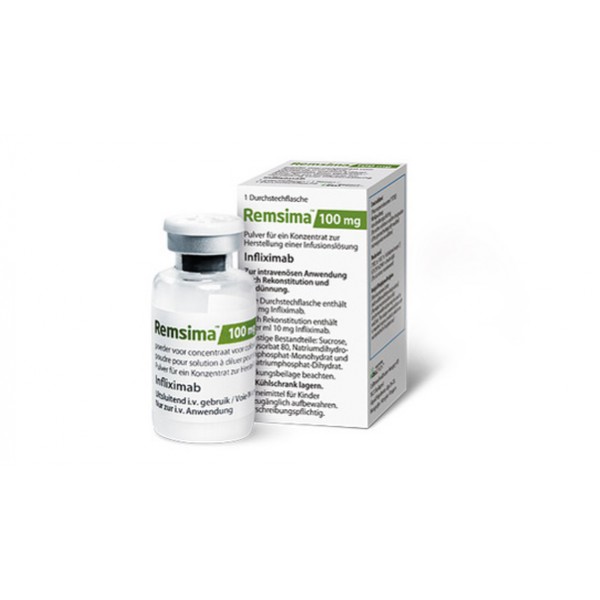
Remsima 100 mg.
Product Code: Remsima 100 mg.
Availability: In Stock
Product viewed: 2587


What Remsima is and what it is used for
Remsima contains the active substance called infliximab. Infliximab is of the type of protein of human and murine origin.
Remsima belongs to a group of medicines called "TNF inhibitors". It is used in adults to treat the following inflammatory diseases:
• Rheumatoid arthritis
• Psoriatic arthritis
• Ankylosing spondylitis (Behterev's disease)
• Psoriasis.
Remsima is also used in adults and children over 6 years of age in:
• Crohn's disease
• Ulcerative colitis.
Remsima works by blocking a protein called "tumor necrosis factor alpha" (TNFα). This protein is involved in the inflammatory process of the body and blocking it can suppress inflammation.
Rheumatoid arthritis
Rheumatoid arthritis is an inflammatory disease of the joints. If you suffer from active rheumatoid arthritis, you will first be treated with other medicines. If you do not respond adequately to these medicines, you will be given Remsima, which will be given to you in combination with another medicine called methotrexate:
To suppress the signs and symptoms of your disease,
• To slow down the damage to your joints,
• to improve your physical condition.
Psoriatic arthritis
Psoriatic arthritis is an inflammatory disease of the joints, usually accompanied by psoriasis. If you suffer from active psoriatic arthritis, you will first be treated with other medicines. If you do not respond adequately to these medicines, you will be given Remsima:
• In order to suppress the signs and symptoms of your disease,
• To slow down the damage to your joints,
• to improve your physical condition.
Ankylosing spondylitis (Behterev's disease)
Ankylosing spondylitis is an inflammatory disease of the spine. If you suffer from ankylosing spondylitis, you will first be treated with other medicines. If you do not respond adequately to these medicines, you will be treated with Remsima:
• In order to suppress the signs and symptoms of your disease,
• to improve your physical condition.
Psoriasis
Psoriasis is an inflammatory disease of the skin. If you suffer from moderate to severe or severe plaque psoriasis, you will first be treated with other medicines or, for example, with phototherapy. If you do not respond adequately to this treatment, you will be treated with Remsima to help suppress the signs and symptoms of your disease.
Ulcerative colitis
Ulcerative colitis is an inflammatory disease of the colon. If you suffer from ulcerative colitis, you will first be treated with other medicines. If you do not respond adequately to these medicines, you will be given Remsima to treat your illness.
Crohn's disease
Crohn's disease is an inflammatory bowel disease. If you suffer from Crohn's disease, you will first be treated with other medicines. If you do not get enough of these medicines, you will be treated with Remsima:
• In order to treat an active form of Crohn's disease,
• to reduce the number of pathological strokes (fistulas) between the gut and the skin that can not be treated with other medicines or by surgery.
What you need to know before using Remsima
You should not be given Remsima
• if you are allergic to infliximab (the active ingredient of Remsima) or any of the other ingredients of Remsima (listed in section 6),
• if you are allergic to murine-derived proteins,
• if you have tuberculosis (TB) or other serious inflammatory disease such as pneumonia or sepsis (a serious bacterial infection of the blood),
• if you have moderate to severe or severe heart failure.
If any of the above applies to you, Remsima should not be given to you. If you are not sure before taking Remsima, talk to your doctor.
Warnings and precautions
Talk to your doctor before taking Remsima:
If you are already being treated with any medicine containing infliximab
• Tell your doctor if you have been treated with infliximab-containing medicines in the past and have been treated with Remsima again.
• If your infliximab treatment has been discontinued for more than 16 weeks, there is an increased risk of allergic reactions when it is started again.
Infections
• If you have an infection, even very mild, tell your doctor before taking Remsima.
• If you have lived or traveled in areas where infections such as histoplasmosis, coccidioidomycosis or blastomycosis are common, tell your doctor before starting treatment with Remsima.
• During treatment with Remsima, you may be more prone to developing infections. If you are 65 or older, your risk is higher.
• These infections may be severe and include tuberculosis, infections caused by viruses, fungi or bacteria or other opportunistic infections, as well as sepsis, which in rare cases can be life-threatening.
Tell your doctor immediately if you develop signs of infection during treatment with Remsima. These signs include fever, cough, flu-like symptoms, malaise, redness and warming of the skin, lesions or dental problems. Your doctor may recommend a temporary suspension of Remsima.
Tuberculosis (TB)
• If you have or have ever had tuberculosis, or have been in close contact with a person suffering from or suffering from tuberculosis, it is very important to tell your doctor about this.
• Your doctor will examine you for tuberculosis. Patients treated with Remsima have reported cases of tuberculosis, rarely even in patients treated with TB drugs. Your doctor will reflect these studies in your Patient Signal Card.
• If your doctor thinks that you are at risk of becoming infected with tuberculosis, you may be prescribed medications for tuberculosis before starting treatment with Remsima.
If you develop symptoms of tuberculosis during treatment with Remsima, tell your doctor immediately. These symptoms include persistent cough, weight loss, fatigue, fever, night sweats.
Hepatitis B (HBV)
• Tell your doctor if you are a carrier or if you have had hepatitis B before starting treatment with Remsima.
Tell your doctor if you think you are at an increased risk of contracting HBV.
• Your doctor will examine you for HBV.
• In patients who are carriers of the hepatitis B virus, treatment with TNF inhibitors, such as Remsima, may cause reactivation of the virus, which in some cases may be life-threatening.
Problems with the heart
• Tell your doctor if you have any heart problems, such as mild heart failure.
Your doctor will carefully monitor your heart condition.
Tell your doctor immediately if you develop new or worsening symptoms of heart failure during treatment with Remsima. These symptoms include shortness of breath or swelling of the legs.
Cancer and lymphoma
• If you have or have had lymphoma (a type of cancer of the blood) or any other type of cancer, tell your doctor before taking Remsima.
• In patients with severe rheumatoid arthritis, the risk of developing lymphoma may be higher than the average.
• In children and adults, administration of Remsima may increase the risk of developing lymphoma or other cancers.
• Some patients who have been treated with TNF-blockers, including Remsima, have developed a rare type of cancer called hepatocellular T-cell lymphoma. The majority of these patients are adolescents or young men and most of them also have either Crohn's disease or ulcerative colitis. This type of cancer usually ends with death. Almost all patients also received medications known as azathioprine or 6-mercaptopurine in addition to TNF-blockers.
• Some patients treated with infliximab developed certain types of skin cancer. Tell your doctor if any changes in the skin or skin conditions occur during or after treatment.
Pulmonary diseases or smoking
• Before starting treatment with Remsima, tell your doctor if you suffer from a pulmonary disease called Chronic Obstructive Pulmonary Disease (COPD) or if you smoke a lot.
• COPD patients and patients who smoke a lot may be at increased risk of developing cancer during treatment with Remsima.
Diseases of the nervous system
• Before starting treatment with Remsima, tell your doctor if you suffer or have ever suffered from a disease affecting the nervous system. This includes multiple sclerosis, Guillain-Barre syndrome, if you have had convulsions or have ever been diagnosed with "optic neuritis".
If you develop symptoms of neurological illness during treatment with Remsima, tell your doctor immediately. These symptoms include changes in vision, weakness in the arms or legs, numbness or tingling of any part of your body.
Before starting treatment with Remsima, tell your doctor if you have pathological skin movements (fistulas).
Vaccinations
• Tell your doctor if you are recently vaccinated or you are coming.
• You should not be given certain vaccines during Remsima treatment.
• Some vaccinations can cause infections. If you have received Remsima while you were pregnant, your baby may be at increased risk of developing such an infection for approximately 6 months after the last dose you received during pregnancy. It is important to inform your baby's doctor and other healthcare professionals about your Remsima treatment so that they can decide when your baby can be vaccinated.
Therapeutic Infectious Agents
• Tell your doctor if you have recently received or are being treated with a therapeutic infectious agent (such as an infusion of BCG used to treat cancer).
Operations or dental manipulations
• Tell your doctor if you are going to have surgery or dental procedures.
• Tell your surgeon or dentist that you are being treated with Remsima by showing them your Patient Signal Card.
Children and adolescents
The information above also applies to children and adolescents. Additional:
• Some children and adolescents treated with TNF-blockers such as Remsima have developed cancers, including atypical types, which in some cases have had a fatal outcome.
• As compared to adults, more children receiving Remsima have developed infections.
• Prior to initiating treatment with Remsima, children should be given the recommended vaccination.
In children, Remsima should only be used to treat Crohn's disease or ulcerative colitis. These children must be at least 6 years of age.
If you are not sure if any of the above applies to you, ask your doctor before starting treatment with Remsima.
Other medicines and Remsima
Patients with inflammatory diseases take medication to treat their condition. These medicines can cause side effects. Your doctor will advise you on which other medicines you will continue to take during treatment with Remsima.
Tell your doctor if you are using, have recently used or are likely to be used
Pregnancy and breastfeeding
• If you are pregnant or are breast-feeding, think you may be pregnant or are planning to become pregnant, ask your doctor before taking this medicine. Remsima treatment is not recommended during pregnancy.
• During treatment with Remsima, as well as for 6 months after the end of treatment, you should avoid becoming pregnant. Make sure you use contraceptives during this time.
• During treatment with Remsima, as well as for 6 months after the end of treatment, you should not breast-feed.
• If you have received Remsima during pregnancy, your baby may be at an increased risk of developing an infection. It is important to inform your baby's doctor
And other healthcare professionals for your Remsima treatment so that they can decide when your baby can be vaccinated (see vaccinations for more information).
Driving and using machines
Remsima is not expected to affect your ability to drive or use machines. If you notice dizziness after Remsima infusion, do not drive or use tools or work with machines.
Remsima contains sodium
This medicine contains sodium less than 1 mmol (23 mg) per dose, ie. Practically does not contain sodium.
3. How will Remsima be given?
How Remsima is used
• Remsima will be given to you in a hospital or clinic by a doctor or nurse.
• Your doctor or nurse will prepare the Remsima infusion solution.
• The Remsima solution will be injected slowly (over a period of about 2 hours) into one of your veins - usually a vein of the hand. This is called "intravenous infusion" or "infusion of a slow drop". After your third infusion, your doctor may decide to give you Remsima for 1 hour.
• While you are taking Remsima as well as for 1 to 2 hours afterwards, you will be monitored.
How much Remsima will be given to you
•
Your doctor will determine your dose (in mg) and decide how often you will be given
Remsima. It will depend on your illness, your body weight and how well you are
You are affected by treatment with Remsima.
•
The table below shows the times you will be given the drug.
First course
Week 0
Second course
2 weeks after the first course
Third course
6 weeks after the first course
Follow-up courses
In 6 to 8 weeks - according to the disease
Rheumatoid arthritis
The recommended dose is 3 mg per kilogram of body weight.
Psoriatic arthritis, ankylosing spondylitis (Behterev's disease), psoriasis, ulcerative colitis and Crohn's disease
The recommended dose is 5 mg per kilogram of body weight.
Use in children and adolescents
In children (6 years of age and older) treated for Crohn's disease or ulcerative colitis, the recommended dose is the same as for adults.
If you receive more Remsima than you should
As this medicine is administered by a doctor or nurse, it is unlikely that you will be given too high a dose. No side effects are known due to the administration of a too high dose of Remsima.
If you forget or miss the Remsima infusion
If you forget or miss a designated infusion of Remsima, as soon as possible, arrange a new infusion.
If you have any further questions on the use of this medicine, ask your doctor.
Possible side effects
Like all medicines, this medicine can cause side effects, although not everyone gets them. Most side effects are mild to moderate. However, serious side effects that require treatment may occur in some patients. Adverse reactions may also develop after stopping treatment with Remsima.
Tell your doctor immediately if you notice the following:
• Signs of an allergic reaction such as swelling of the face, lips, mouth or throat, which may cause difficulty swallowing or shortness of breath, skin rash, hives, swelling of the palms, feet or ankles. An allergic reaction may develop within 2 hours after the infusion or later. Other signs of an allergic reaction that may occur up to 12 days after the infusion include muscle pain, fever, joint and jaw pain, sore throat or headache.
• Signs of cardiac damage such as shortness of breath, swelling of the legs or changes in heart rate.
• Signs of infection (including tuberculosis) such as fever,
Fatigue, persistent cough, shortness of breath, flu-like symptoms, weight loss, night sweats, diarrhea, soreness, dental problems, or burning urination.
• Signs of pulmonary damage such as cough, difficulty in breathing or tightness in the chest.
• Signs of neurological damage (including eye problems) such as seizures, numbness or tingling of any part of the body, weakness in the arms and legs, changes in vision such as double vision or other eye problems.
• Signs of liver damage such as yellowing of the skin or eyes, darkening of the urine or pain in the right subcutaneous tissue, fever.
• Signs of a specific immune-disturbed disease (lupus) such as joint pain or sun-sensitive rashes on the cheeks or arms.
• Signs of low blood cell counts such as persistent temperature,
Bleeding or easy appearance of bruising, paleness.
Tell your doctor immediately if you notice any of the signs listed above.
Very common side effects (may affect more than 1 in 10 people)
• Abdominal pain, nausea
• Viral infections such as herpes or influenza
• Infections of the upper respiratory tract such as sinusitis
•Headache
• Infusion-related side effects
• Pain.
Common side effects (may affect up to 1 in 10 people)
• Changing liver function, elevated liver enzymes (detected by blood tests)
• Pulmonary or breast infections such as bronchitis or pneumonia
• Difficult or painful breathing, chest pain
• Bleeding in the stomach or intestine, diarrhea, stomach upset, stomach acid, constipation
• Hives (rash), itchy rash or dry skin
• Disturbed balance or dizziness
• Fever, increased sweating
• Circulatory disorders such as low or high blood pressure
• Bloating, hot flushes or nose bleeds, hot and red skin
• Fatigue or weakness
• Bacterial infections such as blood poisoning, abscess or skin infection (cellulitis)
• Blood problems such as anemia or a reduced number of white blood cells
• Swollen lymph nodes
• Depression, sleep disturbances
• Eye problems including redness and infections
• Accelerated cardiac activity (tachycardia) or palpitations
• Pain in the joints, muscles or back
• Infection of the urinary tract
• Psoriasis, skin problems such as eczema and hair loss
• Injection site reactions such as pain, swelling, redness or itching
• Cold chills, fluid build-up under the skin, causing swelling
• numbness or tingling.
Uncommon side effects (may affect up to 1 in 100 people)
• Poor bleeding, swelling of the vein
• Skin problems such as blistering, warting, abnormal skin coloring or pigmentation, swelling of the lips
• Severe allergic reactions (eg anaphylaxis), an immunosuppressive disease called lupus, allergic reactions to foreign proteins
• Slower than normal wound healing
• Liver enlargement (hepatitis) or gall bladder, hepatic impairment
• Drowsiness, irritability, confusion, nervousness
• Eye problems such as blurred or weakened eyes, puffiness, barley
• Newly discovered or worsening heart failure, delayed heart rate
• Fainting
• Convulsions, nervous system disorders
• Perforation or bowel obstruction, abdominal pain or cramps,
• Pancreas enlargement (pancreatitis)
• Fungal infections such as candidiasis
• Pulmonary problems (such as pulmonary edema)
• Accumulation of fluid around the lungs (pleural effusion)
• Infections of the kidneys
• Low platelet counts, high white blood cells
• Vaginal infections.
Rare side effects (may affect up to 1 in 1,000 people)
• Type of blood cancer (lymphoma)
• Transmission of insufficient oxygen from the blood to the organs, blood circulation problems such as narrowing of the blood vessel
• Inflammation of the cerebral envelope (meningitis)
• Infections due to a weakened immune system
• Hepatitis B if you have had hepatitis B in the past
• Abnormal tissue edema or enlargement
• Bleeding of small blood vessels (vasculitis)
• Immune system disorders that may affect the lungs, skin and lymph nodes (such as sarcoidosis)
• Uninterested or lack of emotion
• Serious skin diseases such as toxic epidermal necrolysis, Stevens-Johnson syndrome, erythema multiforme, skin problems such as blisters
• Serious nervous system disorders such as transverse myelitis, multiple sclerosis-like illness, optic neuritis, and Guillain-Barré syndrome
• Accumulation of fluid between the heart's lining (pericardial effusion)
• Serious lung problems (such as interstitial lung disease)
• Melanoma (a type of skin cancer).
Other side effects (not known)
• Cancer in children and adolescents
• Rare blood cancer mainly affecting young people (hepatocellular T-cell lymphoma)
• Hepatic failure
• Merkel cell carcinoma (a type of skin cancer)
• Worsening of a condition called dermatomyositis (manifested as a skin rash accompanied by muscle weakness).
Additional side effects in children and adolescents
Children who received infliximab for treatment of Crohn's disease showed some differences in adverse reactions compared to adults who received infliximab for treatment of Crohn's disease. Adverse reactions occurring more frequently in children are: decreased red blood cell count (anemia), blood in stools, decreased white blood cell count (leukopenia), redness or redness (redness), viral infections, decreased neutrophil count Infection control cells (neutropenia), bone fracture, bacterial infection and respiratory allergic reactions.
Reporting of side effects
If you get any side effects, talk to your doctor. This includes all possible side effects not listed in this leaflet. You can also report side effects directly through the national reporting system listed in Appendix V. As you report side effects, you can contribute to getting more information about the safety of this medicine.
5. How to store Remsima
Remsima will be stored by the medical specialists in the hospital or clinic. In case you need the storage requirements, they are:
• Keep out of the reach and sight of children.
• Do not use this medicine after the expiry date which is stated on the label and carton after EXP. The expiry date refers to the last day of that month.
• Store in a refrigerator (2 ° C-8 ° C).
• It is recommended that when Remsima is prepared for infusion, use it as quickly as possible (within 3 hours). However, if the solution is prepared under aseptic conditions, it
Can be stored for 24 hours in a refrigerator from 2 ° C to 8 ° C. Do not use this medicine if its color changes or if it contains particles.
6. Package Contents and Additional Information
What Remsima contains
• The active substance is infliximab. Each vial contains 100 mg of infliximab. After reconstitution, each ml contains 10 mg of infliximab.
• The other ingredients are sucrose, polysorbate 80, sodium dihydrogen phosphate monohydrate and disodium phosphate dihydrate.
What Remsima looks like and contents of the pack
Remsima is supplied in glass vials containing powder for concentrate for solution for infusion. The powder is white.
Remsima is manufactured in packs of 1, 2, 3, 4 or 5 vials. Not all pack sizes may be marketed.
Write a review
Your Name:Your Review: Note: HTML is not translated!
Rating: Bad Good
Enter the code in the box below:
Related Products
Enbrel solution for injection 25 mg. 4 vials What is Enbrel..
999.00€
SIMPONI 50 mg pen. 1 JANSSEN - CILAG What Simponi is and..
1,499.00€
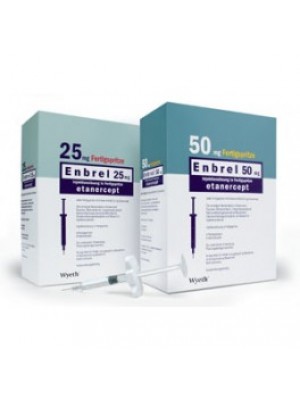
Enbrel solution for injection 50 mg. 4 vialsWhat is Enbrel a..
1,499.00€