Your shopping cart is empty!
Welcome visitor you can login or create an account.
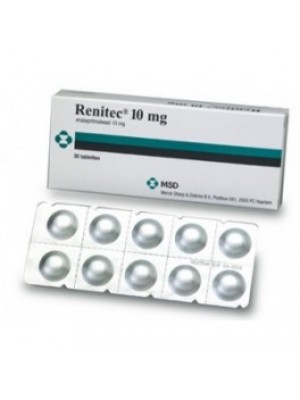
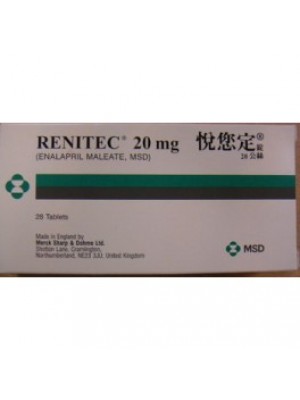
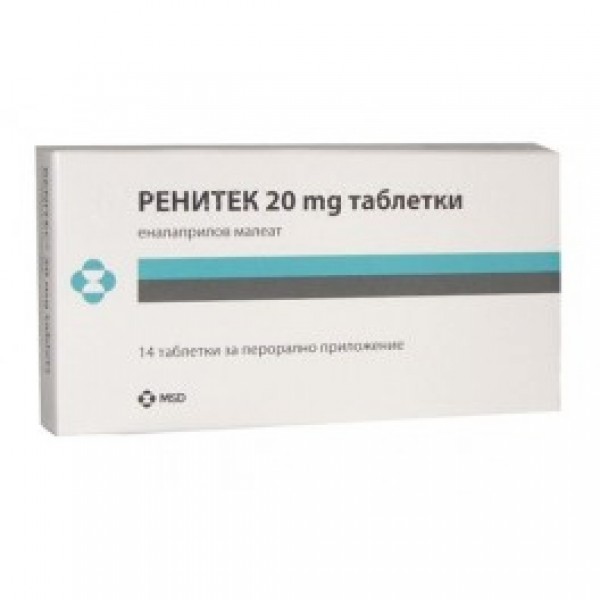
RENITEC 20 mg. 14 tablets
Product Code: RENITEC 20 mg. 14 tablets
Availability: In Stock
Product viewed: 967


RENITEC 20 mg. 14 tablets
WHAT RENITEC AND WHAT IT IS USED
RENITEC medicine from the group of so-called angiotensin converting enzyme (ACE) inhibitors.
RENITEC dilates blood vessels, thus easier for the heart to pump blood to all parts of the body. This leads to lower high blood pressure. In patients with heart failure, Renitek helps the heart to function better.
Why the doctor prescribed meRENITEC ?
The doctor has prescribed RENITEC to treat your hypertension (high blood pressure) or heart failure (weakening of heart function). Renitek applies also for the prevention of symptomatic heart failure.
In many patients with heart failure who have exhibited symptoms Renitek slows the progression of heart failure, limits the need for hospitalization for heart failure and helps these patients to prolong their lives.
In many patients with early-stage heart failure before the development of symptoms her Renitek helps prevent the progression of heart failure and slowing the progression of symptoms (eg, shortness of breath, tiredness after light physical activity such as walking, or swelling of the feet). Such patients are less likely to require hospitalization for heart failure.
Using Renitek patients with heart failure can reduce their risk of heart attack.
Information for patients with high blood pressure
What is blood pressure?
The pressure of the heart to pump blood to all parts of the body is called blood pressure. Without such pressure, it is not possible blood circulation. Normal blood pressure is part of good health. Blood pressure changes throughout the day, depending on physical activity, emotional arousal and stress level.
Blood pressure is recorded with two numbers, such as 120/80. The higher number corresponds to the pressure created by the heart during its contraction. The lower unit registers the pressure in the circulatory system between two cuts of the heart.
What is high blood pressure (hypertension)?
You have high blood pressure, if it remains above normal, even at rest. The pressure in the circulatory system increases and the narrowing of the blood vessels, which hinders the passage of blood.
How do I know that you have high blood pressure?
Usually high blood pressure are not accompanied by any symptoms. The only way to tell if you have high blood pressure is to measure it. Therefore, blood pressure should be measured regularly.
Why hypertension should be treated?
If left untreated, high blood pressure can damage vital organs like the heart and kidneys. You may feel fine and have no symptoms, and hypertension can lead to stroke, heart attack, heart and kidney failure or blindness. Elevated blood pressure can be treated and controlled with medicines such as successfully Renitek.
Your doctor will determine which blood pressure are the most suitable for you. Remember these values with the help of the doctor strive to achieve them.
Information for patients with heart failure.
What is heart failure?
Heart failure means that the heart muscle can not pump blood with sufficient force to ensure the necessary amount of blood around your body. Heart failure and heart attack are not the same thing. Some patients have heart failure after a heart attack; there are other reasons for the occurrence of heart failure.
Patients who are at an earlier stage of heart failure may have no symptoms. However, when heart failure progresses, patients may have symptoms such as shortness of breath or fatigue after mild exercise such as walking. May occur accumulation of body fluid into various areas of the body, which in most cases there is a first ankles and feet. In severe heart failure patients may have symptoms even at rest.
Why heart failure should be treated?
Each of the symptoms of heart failure can significantly limit your daily activity. Your doctor may recommend several drugs that affect the manifestations of heart failure (eg Renitek and / or diuretic). If you follow the prescription of your doctor, your ability to perform normal activities can be greatly improved. You will begin to breathe a lot easier to get tired a lot less and less to receive edema.
In patients with heart failure who have no symptoms, treatment with drugs such as Renitek may help slow the progression of the disease and the onset of new symptoms. In some patients with heart failure who have symptoms was found that Renitek slows the deterioration of the disease and enables the prolongation of life. It was also found that many patients Renitek reduces the risk of heart attack and limits the need for hospitalization due to heart failure.
2. BEFORE YOU TAKE RENITEC
Do not take RENITEC:
if you are allergic to any of its ingredients (see What is Renitek);
if the previous treatment with drugs of this class (ACE inhibitors) have received allergic reactions such as swelling of the face, lips, tongue and / or throat with difficulty in breathing or swallowing. You should not take Renitek if you have had these types of reactions without a known cause or if you have been diagnosed with hereditary or idiopathic angioedema;
if you are pregnant after the third month (It is recommended to avoid taking Renitek during early pregnancy - see "Pregnancy and lactation").
If you are not sure whether you can take Renitek, consult your doctor.
Take special care with Renitek
Tell your doctor about all your medical problems and about any allergies.
Tell your doctor if you have heart problems, if you are on dialysis or are being treated with diuretics, if you have recently had excessive vomiting or diarrhea. You should also report if you salt - restricted diet, are taking potassium supplements or potassium-sparing agents, potassium-containing salt substitutes if you have diabetes or kidney problems, as they can lead to a significant increase in the level of potassium in the blood which can have serious consequences. In these cases you may need a dose adjustment of Renitek or monitoring the level of potassium in the blood. If you have diabetes or if you are taking oral antidiabetic drugs or insulin, monitor regularly the level of glucose in the blood, especially during the first month of treatment with Renitek.
Tell your doctor if you have ever had an allergic reaction with swelling of face, lips, tongue and / or throat with difficulty in swallowing or breathing.
Tell your doctor if you suffer from low blood pressure (you may notice this as faintness or dizziness, especially when standing).
Before surgery or anesthesia (even at the dental manipulation) tell the surgeon or dentist that you are taking Renitek. This is necessary because during anesthesia may be a sudden drop in blood pressure.
Use in children
Renitek been studied in children. For more information, contact your doctor.
Taking other medicines
Basically Renitek can be taken with other drugs. It is important to inform your doctor about all the medicines you take, including those obtained without a prescription. Medicines can influence each other. In order to clarify the dose of Renitek, it is very important to know whether the doctor you are taking other medicines that lower blood pressure, diuretics, potassium-containing medicines (including replacement salt in the diet), antidiabetic agents (oral antidiabetics or insulin), lithium-containing (medicines used for treating certain types of depression), non-steroidal anti-inflammatory agents or any medication for the treatment of pain and arthritis, including treatment of gold-containing agents or tricyclic antidepressants, sympathomimetics, and antipsychotics.
Taking Renitek with food and drink
Renitek can be taken during meals or between meals. Most people Renitek with a glass of water.
Pregnancy and lactation
Ask your doctor or pharmacist before taking any medicine.
Pregnancy
Not recommended for use in pregnant RENITEC.
Angiotensin - converting enzyme (ACE) inhibitors, including RENITEC, can damage or even kill the fetus if taken during the second and third trimesters of pregnancy.
No one knows whether the application of Renitek only during the first three months of pregnancy may have adverse effects.
If you are pregnant or plan to become pregnant, you should tell the doctor to prescribe an alternative treatment.
Breastfeeding
Renitek secreted in very small quantities in human milk. So if you are breastfeeding or plan to breastfeed, you should consult a doctor.
Driving and using machines
The individual response to treatment may vary. Some side effects have been reported when taking Renitek can affect the ability to drive or operate machinery in some patients. (See What are the side effects that can cause Renitek?)
Important information about some of the ingredients of Renitek
Renitek contains lactose. If your doctor has told you that you have an intolerance to some sugars, contact your doctor before taking this product.
3. HOW TO TAKE RENITEC
The doctor will select the appropriate dose depending on your condition and whether you are taking other medicines.
Take Renitek every day exactly as the doctor. It is very important the adoption of Renitek to last as long as the doctor considered. Do not take more than the prescribed tablets.
High blood pressure
For most patients, the recommended starting dose is usually 10 to 20 mg, once daily. Some patients may need a lower starting dose. The usual dose for an extended course of treatment is 20 mg once daily.
Heart failure
The recommended starting dose is usually 2.5 mg once daily. Your doctor will increase this amount step by step until you reach the appropriate dosage for you. The usual dose for an extended course of treatment is 20 mg per day taken in one or two doses.
Be especially careful when you take your first dose or if your dose was increased. If you experience any symptoms such as dizziness or vertigo, tell your doctor.
If you take more dose RENITEC
In case of overdose, contact a physician immediately to let you be timely medical assistance. The most common symptoms include a feeling of dizziness or vertigo, due to sudden or excessive fall in blood pressure.
If you forget to take RENITEC
Must take Renitek as prescribed. However, if you miss a dose, do not take an extra tablet, just carry on as usual program.
4. POSSIBLE SIDE EFFECTS
Any medication can have side effects and adverse, so-called side effects.
Like all medicines Renitek can cause side effects, although not everybody gets them.
Stop immediately making RENITEC and contact a doctor in the following cases:
with swelling of the face, lips, tongue or throat which may cause difficulty in swallowing or breathing;
swelling in hands, feet or ankles;
if a hives.
You should know that black patients are at increased risk of this type of reactions to ACE inhibitors.
The initial dose may cause a greater reduction in blood pressure compared with the subsequent long-term treatment. You may notice this as faintness or dizziness and occupation of lying could help. If this bothers you, talk to your doctor.
Other side effects include:
Very common (affects more than 1 in 10 patients):
feeling of dizziness, weakness or fainting;
blurred vision;
cough.
Common (affects less than 1 in 10 patients):
low blood pressure, changes in heart rate, increased heart rate, angina pectoris or chest pain;
headache, fainting (syncope);
change in taste, shortness of breath;
diarrhea or abdominal pain, rash;
fatigue, depression;
allergic reactions as a result of which swells the face, lips, tongue or throat, difficulty swallowing or breathing;
beer increased blood potassium levels, elevated levels of creatinine in the blood (both usually established by test).
Uncommon (affects less than 1 in 100 patients):
sudden drop in blood pressure;
fast or irregular heartbeat (palpitations);
infarction (probably due to very low blood pressure in some high-risk patients, including those with problems in blood flow to the heart or brain);
anemia (including aplastic and hemolytic);
stroke (probably due to very low blood pressure in high-risk patients);
confusion, insomnia or drowsiness, nervousness;
tingling or numbness;
dizziness;
ringing in the ears (tinnitus);
runny nose, sore throat or hoarse;
asthma;
slow movement of the food in the intestine, pancreas inflammation;
nausea (feeling sick), indigestion, constipation, anorexia;
upset stomach (gastritis irritations), dry mouth, ulcers, impaired renal function, renal failure;
increased sweating;
itchy rash or hives;
fall of hair;
muscle cramps, flushing, malaise, fever (fever), impotence;
high protein levels in the urine (measured by test);
low sugar or sodium in the blood, high levels of blood urea (all measured by a blood test).
Rare (affects less than 1 in 1000 patients):
Raynaud's phenomenon, in which the hands and feet can become very cold and white, because of reduced blood supply;
changes in blood test results such as a decrease in the number of red and white blood cells, decreased hemoglobin, decreased platelets in the blood;
bone marrow suppression;
autoimmune diseases;
unusual dreams or disturbed sleep;
pulmonary infiltrates;
inflammation of the nose;
pneumonia;
inflammation of the cheeks, gums, tongue, lips, throat;
reduced amount of urine;
erythema multiforme;
Stevens-Johnson - serious skin condition in which the skin gets red and peeling, scaly and bleeding ulcers, or separation of the top layer of skin from the lower layers;
liver problems such as reduced liver function, inflammation of the liver, jaundice (yellowing of the skin or eyes), elevated liver enzymes or bilirubin (measured with a blood test);
breast enlargement in men.
Very rare (affects less than 1 in 10,000 patients):
swelling of the intestine (intestinal angioedema).
Not known:
syndrome of inappropriate antidiuretic hormone (SIADH).
It has been reported symptom complex which may include some or all of the following events: fever, inflammation of the blood vessels (serositis / vasculitis), muscular pain (myalgia / myositis), joint pain (arthralgia / arthritis), excessive antibodies, which are formed in autoimmune diseases (positive ANA test), increased speed of erythrocyte sedimentation rate (ESR), increasing the amount of eosinophils (a certain type of leukocytes) in the blood and increased levels of white blood cells. May appear rash, photosensitivity or other dermatological manifestations.
If any of the side effects gets serious, or if you notice other effects not listed in this leaflet, please tell your doctor or pharmacist.
5. HOW TO STORE RENITEC
Keep out of reach of children.
Keep RENITEC at temperatures below 25 ° C.
Write a review
Your Name:Your Review: Note: HTML is not translated!
Rating: Bad Good
Enter the code in the box below:
Related Products