Your shopping cart is empty!
Welcome visitor you can login or create an account.
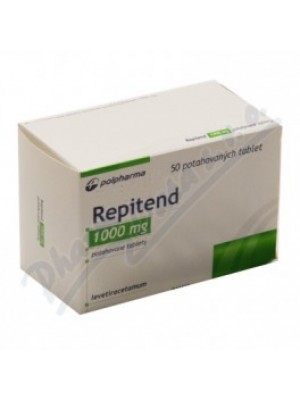
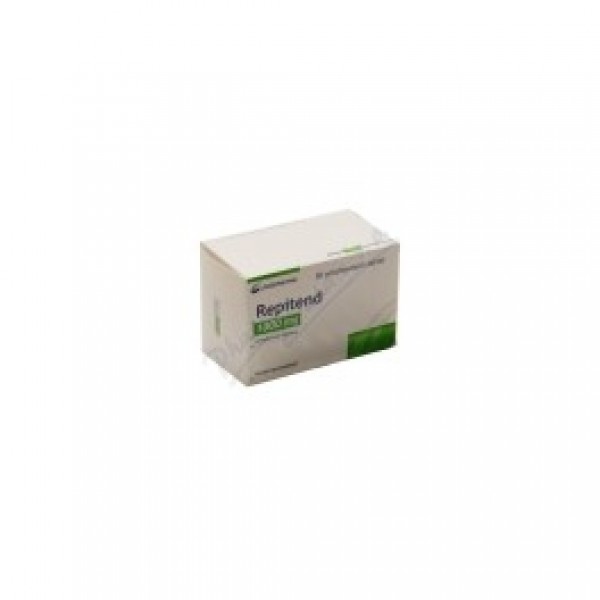
REPITEND solution of 100 mg. / Ml. 300 ml.
Product Code: REPITEND solution of 100 mg. / Ml. 300 ml.
Availability: In Stock
Product viewed: 860


REPITEND solution of 100 mg. / Ml. 300 ml.
WHAT REPITEND AND WHAT IT IS USED FOR?
Repitend is an antiepileptic medicine (a medicine used to treat seizures in epilepsy). Repitend used:
• own in patients from 16 years of age with newly diagnosed epilepsy, to treat partial onset seizures with or without secondary generalization.
• in addition to other antiepileptic medicines to treat:
- Partial onset seizures with or without generalization in patients from 1 month of age myoclonic seizures in patients from 12 years of age with Juvenile mioklonichnaepilepsiya.
- Primary generalized tonic-clonic seizures in patients from 12 years of age with idiopathic generalized epilepsy.
2. BEFORE YOU TAKE REPITEND
Do not take Repitend:
• If you are allergic (hypersensitive) to levetiracetam or any of the other ingredients of Repitend.
Take special care with Repitend:
• If you have kidney problems, follow your doctor's instructions. Goy / she may decide if your dose should be adjusted.
• If you notice any slowdown or unexpected puberty development of your child, please tell your doctor.
If you notice an increase in seizure severity (eg increased number), please inform your doctor.
Small number of people being treated with antiepileptics such as Repitend have had thoughts of harming or killing themselves. If you have symptoms of depression and / or suicidal ideation, please contact your doctor. If you notice an increase in seizure severity (eg increased number), please inform your doctor.
Small number of people being treated with antiepileptics such as Repitend have had thoughts of harming or killing themselves. If you have symptoms of depression and / or suicidal ideation, please contact your doctor.
Taking other medicines
Please tell your doctor or pharmacist if you are taking or have recently taken any other medicines, including medicines obtained without a prescription.
Taking Repitend with food and drink
You may take Repitend with or without food. As a precaution, do not take Repitend alcohol.
Pregnancy and lactation
Ask your doctor or pharmacist before taking any medicine. If you are pregnant or think you may be pregnant, please inform your doctor. Repitend should not be used during pregnancy unless clearly necessary. The potential risk to your unborn child is not known. Studies with levetiracetam in animals have shown adverse reproductive effects, but at doses that are substantially higher than those that you need to control your seizures. Breastfeeding is not recommended during treatment.
Driving and using machines
Repitend can affect your ability to drive or operate any tools or machines since Repitend can cause drowsiness. This is more likely at the beginning of treatment or after dose escalation. You should not drive or use any tools or machines until it is established that your ability to perform such activities is not affected.
Important information about some of the ingredients of Repitend
Repitend 100 mg / ml oral solution contains methyl parahidroksibenzoag (E218) and propyl parahydroxybenzoate (E216) which may cause allergic reactions (possibly delayed).
If the doctor tells you that you have an intolerance to some sugars, tell your doctor before you start taking this medicine.
3. HOW TO TAKE REPITEND?
Always take Repitend exactly as prescribed by your doctor. If you are not sure, ask your doctor.
Repitend should be taken twice daily, once in the morning and once in the evening, at the same time each day.
Take the oral solution as directed by your doctor.
Mono therapy
Dosage in adults and adolescents (16 years old):
Usual dose: between 10 ml (1000 mg) and 30 ml (3000 trig) each day, divided into 2 daily.
When you start taking first Repitend, your doctor will prescribe a lower dose for 2 weeks before giving you the lowest general dose.
Add-on therapy
Dosage in adults and adolescents (12-17 years) weighing 50 kg or more:
Usual Dose: between 10 ml (1000 mg) and 30 ml (3000 mg) each day, divided into 2 daily.
Dosage in infants (6-23 months), children (2-11 years) and adolescents (12-17 years) with iodine weight 50 kg:
Usual Dose: between 0,2 ml (20 mg) and 0,6 ml (60 mg) per kg of body weight each day, divided into 2 daily. The exact amount of oral solution must be measured to dose-dependently with a syringe of 3 ml, graduated in 0,1 ml or a 10 ml syringe calibrated in 0,25 ml.
Weight Starting dose: 0,1 ml / kg twice daily Maximum dose: 0,3 ml / kg twice daily
6 kg 0,6 ml twice daily 1,8 ml twice daily
8 kg 0,8 ml twice daily 2,4 ml twice daily
10 kg 1 ml twice daily 3 ml twice daily
15 kg 1,5 ml twice daily 4,5 ml twice daily
20 kg
2 ml twice a day 6 ml twice daily
25 kg 2,5 ml twice daily 7,5 ml twice daily
50 kg of 5 ml twice daily 15 ml twice daily
Dosage in infants (1 month to less than 6 months):
Usual Dose: between 0,14 ml (14 mg) and 0,42 ml (42 mg) per kg of body weight each day, divided into 2 daily. The exact quantity of oral solution must be measured out with a syringe of 1 ml, graduated in 0,05 ml.
Weight Starting dose: 0,1 ml / kg twice daily Maximum dose: 0,3 ml / kg twice daily
4 kg 0,3 ml twice daily
0,85 ml twice daily
5 kg 0,35 ml twice daily 1,05 ml twice daily
6 kg 0,45 ml twice daily 1,25 ml twice daily
7 kg 0,5 ml twice daily 1,5 ml twice daily
Method of administration:
Repitend oral solution may be diluted in a glass of water. Instructions for use:
• Open the bottle: press the cap and turn it counterclockwise.
Place the syringe into the adapter to the neck of the bottle. Make sure it is well secured.
• Take the syringe and put it in the adapter opening.
• Turn the bottle upside down.
Fill the syringe with a small amount of solution by pulling the piston down, then return the plunger up to remove possible bubbles finally pull the plunger down to the graduated measure corresponding to the quantity in milliliters (ml), prescribed by your doctor. Turn the bottle upright. Remove the syringe from the adapter.
Empty the contents of the syringe in a glass of water or baby bottle (bottle) by pressing the plunger down.
• Drink everything in the glass.
• Wash the syringe with water.
Close the bottle with the plastic screw cap.
Duration of treatment:
Repitend be used as a chronic treatment. You should take Repiten as long as advised by your doctor.
Do not stop taking Repitend without advice from your doctor, as this could increase your seizures. If your doctor decides to stop your treatment with Repitend, he / she will explain how to gradually stop taking Repitend.
If you take more dose Repitend
Possible side effects of overdose Repitend are drowsiness, anxiety, aggression, attention deficit, respiratory depression and coma.
Tell your doctor if you take more dose Repitend. Your doctor will take the best possible treatment of overdose.
If you forget to take Repitend
Tell your doctor if you have missed one or more doses. Do not take a double dose to make up the missed dose.
If you stop taking Repitend
If stopping treatment, as with other antiepileptic drugs, taking Repitend should be discontinued gradually to avoid an increase of seizures.
If you have any further questions on the use of this product, ask your doctor or pharmacist.
4. POSSIBLE SIDE EFFECTS
Like all medicines Repitend can cause side effects, although not everybody gets them.
Tell your doctor if you develop any of the following effects and they worry you.
Some of the side effects like sleepiness, tiredness and dizziness may be more common at the beginning of treatment or when increasing the dose. These effects are expected to decrease over time.
The frequency of possible side effects listed below is defined as follows: Very common (affects more than 1 patient in 10) Common (affects 1 to 10 patients in 100) Uncommon (affects 1 to 10 of 1000 patients) Rare (affects 1 to 10 of 10 000 patients) Very rare (affects less than 1 in 10,000 patients) Not known (from the available data can not be estimated)
Very common:
somnolence (sleepiness); asthenia / fatigue (tiredness).
Common:
infection, nasopharyngitis; reduce the number of platelets;
• anorexia (loss of appetite), weight increase; anxiety, depression, emotional lability / mood swings, hostility or aggression, insomnia, nervousness or irritability, personality disorders (behavioral problems), mental status changes (slow thinking, unable to concentrate);
• dizziness (sensation of unsteadiness), convulsion, headache, hyperkinesia (hyperactivity), ataxia (impaired coordinated movements), tremor (involuntary trembling), amnesia (loss of memory), disturbance in balance, disturbance in attention (loss of concentration ), memory impairment (forgetfulness); diplopia (double vision), blurred vision; vertigo (sensation); cough (increase of pre-existing cough);
abdominal pain, nausea, dyspepsia (indigestion), diarrhea, vomiting; rash, eczema, pruritus; myalgia (muscle pain); accidental injury.
Not known:
reduction in red and / or white blood cells;
• weight loss;
abnormal behavior, anger, anxiety, confusion, hallucination, mental disorder, suicide, suicide attempt and suicidal thoughts; paraesthesia (tingling);
• inflammation of the pancreas, liver failure, hepatitis (inflammation of liver) test abnormal liver function;
• hair loss, blistering of the skin, mouth, eyes and genital area, skin rash.
If any of the side effects gets serious, or if you notice any side effects not listed in this leaflet, please tell your doctor or pharmacist.
5. HOW TO STORE REPITEND?
Keep out of the reach and sight of children.
This medicinal product does not require any special storage conditions.
Do not use after the expiry date stated on the carton and bottle after "EXP". The expiry date refers to the last day of that month. Do not use after 7 months of first opening the bottle.
Medicines should not be disposed of via wastewater or household waste. Ask your pharmacist how to dispose of medicines no longer required. These measures will help to protect the environment.
6. FURTHER INFORMATION
What Repitend?
The active substance is levetiracetam. 1 ml contains 100 mg levetiracetam. The other ingredients are acesulfame potassium (E950), ammonium glycyrrhizate, citric acid monohydrate, glycerol (E422), maltitol liquid (E965), methyl parahydroxybenzoate (E218), propyl parahydroxybenzoate (E216), sodium tsigrat flavor of grape (aromatic substances, naruralni flavoring substance, flavoring preparation, propylene glycol (E 1520), triacetin (E1518), coumarin), purified water
Write a review
Your Name:Your Review: Note: HTML is not translated!
Rating: Bad Good
Enter the code in the box below:
Related Products